
The Constitution promises a right that most Americans treat as automatic: a trial by jury. But in many criminal cases, the most consequential decision happens before any witness is sworn.
Do you want twelve citizens to decide whether the government proved its case beyond a reasonable doubt, or do you want one judge to do it?
That choice is the difference between a jury trial and a bench trial. It is not just a preference about courtroom style. It changes how evidence is heard, how persuasion works, how long the case takes, and sometimes how predictable the outcome feels.
One more reality check: most criminal cases end in plea bargains, not trials. But when a case is headed to trial, the forum choice can shape everything that follows.
Join the Discussion
The constitutional baseline
The right to a criminal jury trial sits in two places:
Article III, Section 2 provides that the trial of all crimes, except impeachment, shall be by jury. In practice, this is the federal constitutional baseline for federal criminal prosecutions, and it operates alongside the modern “petty offense” doctrine discussed below.
The Sixth Amendment guarantees, in “all criminal prosecutions,” the right to a speedy and public trial “by an impartial jury.” The Supreme Court has held that this jury-trial right applies in state court as well through the Fourteenth Amendment (the incorporation doctrine).
Two clarifications matter in real life.
Not every offense triggers the jury right. The Supreme Court has treated “petty” offenses as outside the constitutional requirement for a jury, generally when the maximum authorized jail time is six months or less (with nuance for additional penalties).
The jury right belongs to the defendant. That means it can usually be waived, but only under strict rules designed to ensure the waiver is real, informed, and voluntary.
Bench trial vs. jury trial in one sentence
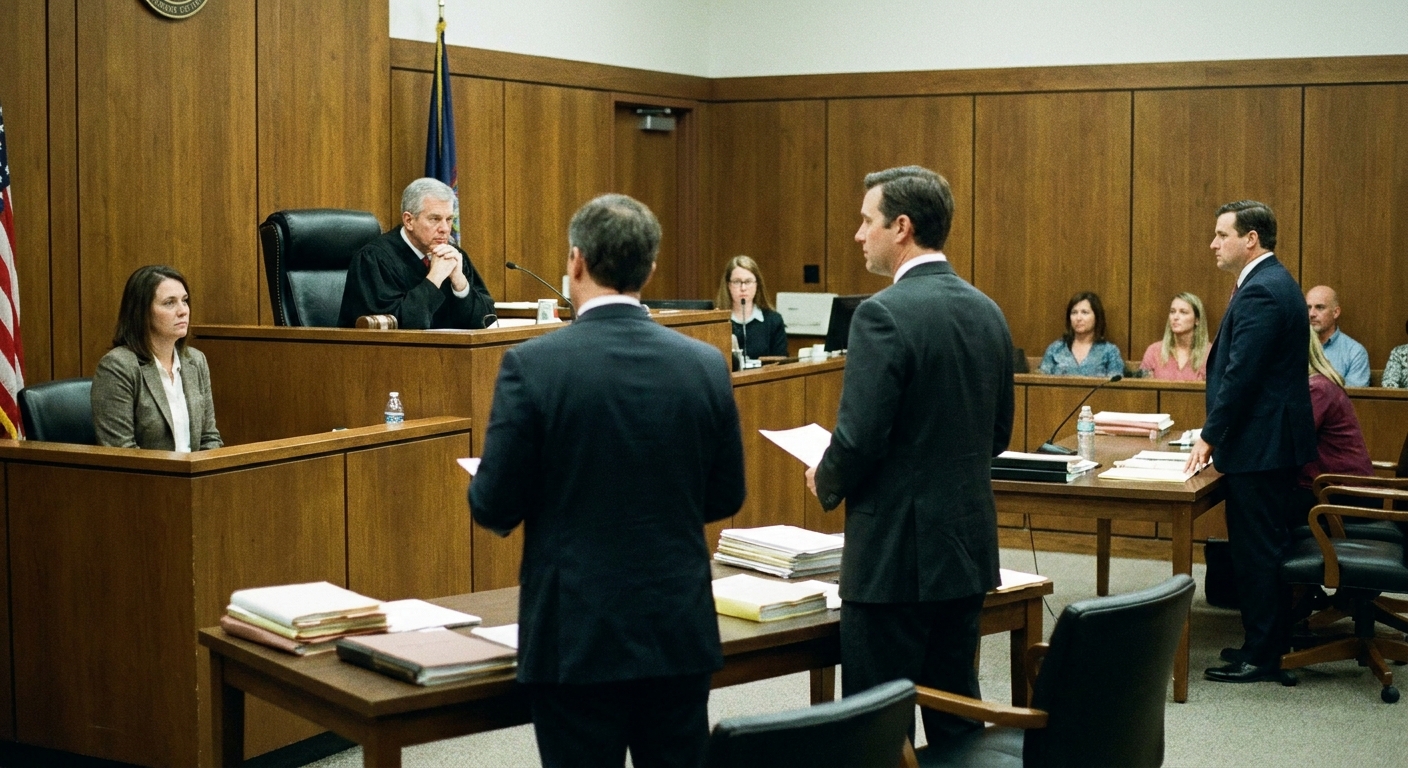
A jury trial uses a group of citizens to decide facts and guilt, while a bench trial puts the judge in both roles: the judge decides the law and also serves as the factfinder.
Same burden of proof. Same presumption of innocence. Largely the same rules of evidence. Different audience, different psychology, different strategic incentives.
Who decides what
In a jury trial
The judge decides the law. That includes rulings on evidence, motions, and what legal standards apply.
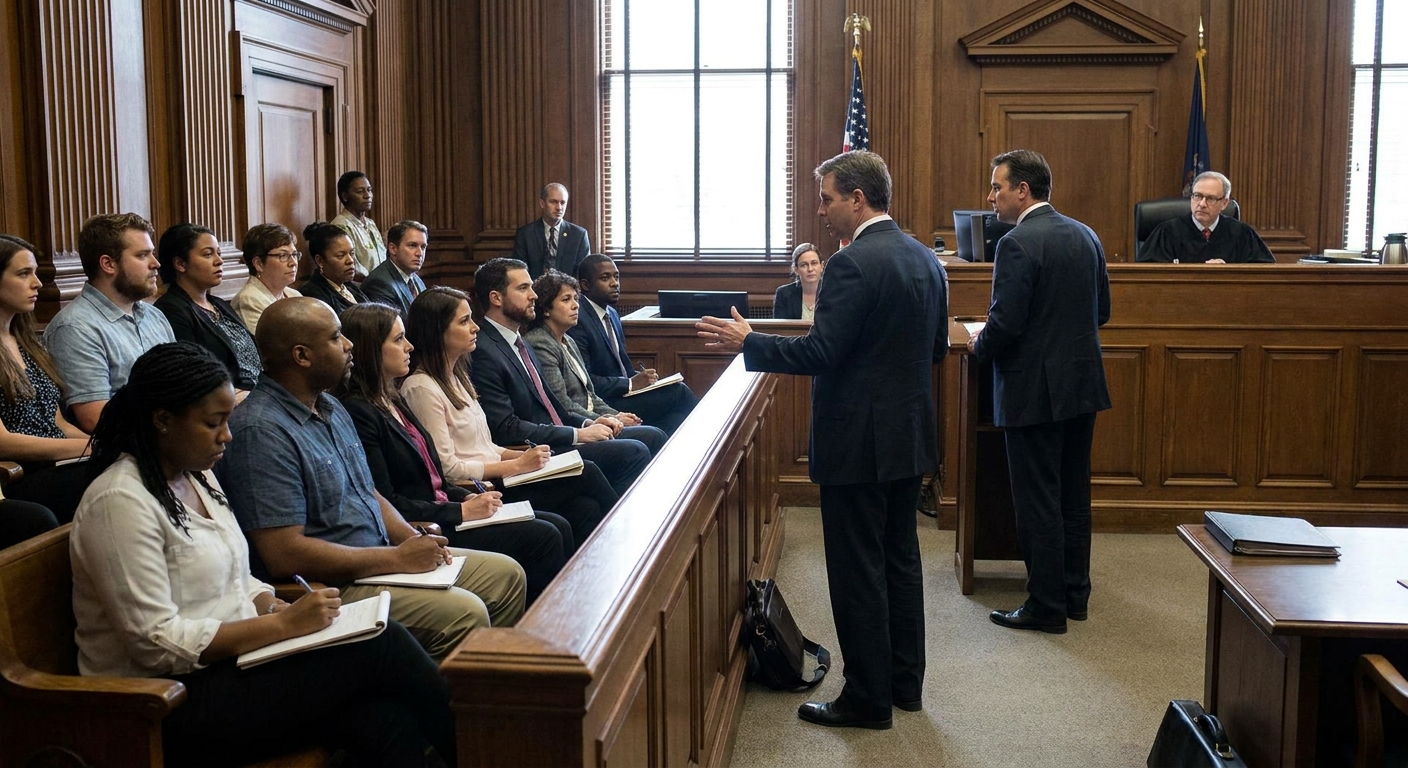
The jury decides the facts. Jurors decide what happened, which witnesses to believe, and whether the prosecution proved each element beyond a reasonable doubt.
The judge instructs the jury. Jury instructions are often where cases are quietly won or lost, because they tell jurors what they must find, and what they must ignore.
In a bench trial
The judge decides everything at trial. The judge rules on evidence and also decides credibility and guilt.
The judge issues a verdict. Sometimes it is immediate. Sometimes it comes later as written findings, especially in complex matters.
There is no jury to instruct. That does not mean legal framing disappears. Lawyers may still fight hard over the correct legal standard, elements, and what the judge should find as fact, sometimes through proposed findings and conclusions.
This is why bench trials can feel more like a legal problem-solving session, while jury trials can feel like storytelling under constraints.
Waiving a jury
You do not “request” a bench trial the way you request a continuance. You typically waive a constitutional right. Courts take that seriously.
Federal criminal cases
In federal court, the baseline rule is in Federal Rule of Criminal Procedure 23(a). A defendant may waive a jury trial only if:
the waiver is in writing,
the government consents, and
the court approves.
That consent requirement surprises people. In federal court, the prosecution can often block a bench trial even if the defendant wants one.
State criminal cases
States set their own rules, but the theme is consistent: the waiver must be knowing, intelligent, and voluntary. Many states require the waiver to be:
on the record, in open court,
made by the defendant personally (not just by counsel), and
accompanied by a judge’s questions confirming the defendant understands the right being surrendered.
Some states also require the prosecutor’s consent, like federal court does. Others do not. If you are reading this because you are actually facing charges, the only safe answer is: your jurisdiction’s rules matter.
Speed
Bench trials are often faster for reasons that have nothing to do with shortcuts and everything to do with logistics.
No jury selection. Voir dire can take hours, days, or weeks in high-profile cases.
Fewer “jury-friendly” pauses. In jury trials, evidence issues and sidebar conferences can interrupt the story in ways that are necessary but time-consuming.
Streamlining is easier. Lawyers sometimes stipulate to background facts that would otherwise require foundational testimony. Judges in bench trials may also allow a more efficient presentation because there is less risk of jury prejudice, even though the governing evidence rules still apply.
Scheduling is simpler. Courts do not have to coordinate a pool of jurors, manage juror hardships, and plan around longer trial blocks.
But speed cuts both ways. A jury trial can pressure both sides to negotiate because it is resource-intensive. A bench trial can remove that pressure and make it easier for the case to simply proceed to verdict.
Strategic tradeoffs
Most defendants do not choose bench or jury based on civic theory. They choose based on risk. The key question is not “Which is better?” It is “Which decision-maker is more likely to see this case the way we need it to be seen?”
Why a defendant might choose a bench trial
The case turns on technical legal concepts. Some defenses are hard to translate into a clean narrative for laypeople. A judge may be more comfortable with specialized terminology, records, or procedural nuance.
The evidence is emotionally charged. Graphic allegations, disturbing photos, or facts that trigger strong moral instincts can create a risk that jurors punish the defendant for being adjacent to something ugly, even if the legal proof is thin.
The defendant’s image may play poorly. Prior convictions may be excluded, but other factors can still shape perception. Some defendants prefer a judge who is trained to separate personality from proof.
The defense wants reasoned findings. In some cases, a written decision can help shape appellate issues more clearly than a jury’s unexplained guilty verdict.
There is a specific evidentiary dispute. If the defense believes key evidence should be excluded, it may prefer a judge who can compartmentalize, although the risk is that judges are human too.
Why a defendant might choose a jury trial
The defense is a story about doubt. Jurors are often the audience for themes like mistaken identification, unreliable informants, overreach, or a rushed investigation.
Community norms matter. In some cases, the defendant wants jurors to bring common sense skepticism about government power, policing, or prosecutorial overcharging.
Unanimity creates a real hurdle. For serious criminal offenses, a conviction requires a unanimous jury in both state and federal court. That means the defense may only need to persuade one juror to prevent a conviction, even if that does not end the case.
The judge has a known track record. Bench trials put the entire fate of the case in the hands of one repeat decision-maker. If that judge is viewed as prosecution-friendly, a jury can feel like a fairer lottery.
There is also a quieter reality: some lawyers prefer juries because they distrust the idea that a judge can fully separate “legal admissibility” from “human reaction” after hearing everything at close range.
Judge-only factfinding
The bench trial’s defining feature is also its biggest gamble: the judge is the factfinder.
That can create real benefits:
Less performative pressure. Lawyers may argue more directly and waste less time on theatrics.
Cleaner handling of legal issues. The judge can focus on whether the elements are actually proven, not whether a narrative feels satisfying.
Potentially fewer surprises. Experienced judges have seen common patterns in witnesses, policing, and forensic testimony.
But it can also create real risks:
No buffer. With a jury, the defense can sometimes win by persuading a single juror to hold out. With a bench trial, the defense must persuade one person entirely.
Bench trials can reward “professional credibility.” Judges may find certain types of witnesses, including police officers and experts, inherently more credible based on experience, even when the defense attacks their assumptions.
Implicit bias still exists. Legal training does not erase unconscious judgments. It may only change how they are expressed.
Unanimity and hung juries
The jury system bakes in a structural obstacle to conviction that bench trials do not have: group agreement.
For serious criminal offenses, the Constitution requires a unanimous jury to convict in both state and federal court. If the jury cannot agree, you can get a hung jury and a mistrial. That does not mean the defendant “wins,” but it can change the bargaining landscape dramatically. Prosecutors must decide whether to retry the case, offer a better plea, or dismiss.
In a bench trial, there is no hung jury. There is just a verdict.
Appeals
Defendants sometimes believe a bench trial is easier to appeal because there is a judge’s reasoning to scrutinize. That is sometimes true, but it comes with a tradeoff.
Legal errors are appealable either way. Improper admission of evidence, incorrect legal standards, and constitutional violations can be raised after both bench and jury trials.
Factfinding is hard to overturn. Appellate courts usually defer heavily to the trial factfinder, whether that factfinder is a jury or a judge. If the trial judge makes credibility findings in a bench trial, those findings can be especially difficult to dislodge.
Jury verdicts are opaque. Juries do not explain themselves. That can make it harder to pinpoint the precise path to guilt, but it can also make some errors harder to prove were outcome-determinative.
What defendants consider
Most bench versus jury decisions boil down to a handful of practical questions:
Is the defense technical or intuitive?
Is the evidence emotionally explosive?
How strong is the prosecution’s narrative?
How credible are the key witnesses likely to seem to ordinary people?
What is this judge’s reputation and prior rulings?
Do we want the unanimity hurdle that a jury creates?
Do we want speed, or do we want time and pressure?
And under all of it is one uncomfortable truth: trial choice is often about predicting human decision-making under uncertainty.
If you are facing charges, this is not a DIY decision. The waiver rules are technical, the consequences are high, and the right move depends on facts your lawyer will see more clearly than the internet can.
Civil bench trials
Bench trials are not uniquely criminal. Civil cases frequently use judge-only trials, especially when the dispute is about contracts, injunctions, administrative records, or other issues where a judge is already the natural decision-maker.
The Seventh Amendment preserves a jury right in many federal civil cases, but parties can waive it, and many disputes never reach a jury due to settlement pressure or dispositive rulings like motions to dismiss or summary judgment.
In civil court, bench trials are often chosen for efficiency and predictability. In criminal court, the stakes and constitutional posture make the choice feel less like case management and more like a bet.
Why the choice matters
The jury is not just a factfinding tool. It is also a civic institution, a way ordinary people sit in judgment of the government’s power to punish. That is why the Founding generation treated juries as a cornerstone, not an accessory.
But the jury right is still a right, not an obligation. The Constitution gives defendants a shield, then allows them, under strict standards, to set it down.
If you want one takeaway: a bench trial and a jury trial apply the same burden of proof, but they ask different humans to weigh doubt. That difference can shape everything that follows.
Quick FAQs
Is a bench trial always faster than a jury trial?
Often, but not always. Bench trials usually avoid jury selection and can be scheduled more easily, but complex evidence issues can still take time.
Can a defendant demand a bench trial?
Not universally. In federal court, the government must consent and the judge must approve. State rules vary.
Is a bench trial “easier” for the prosecution?
Not inherently. Some cases become harder for prosecutors when a judge focuses tightly on legal elements and proof instead of narrative impact. Other cases become easier when the prosecution’s key witnesses tend to be treated as credible by experienced judges.
Does choosing a jury trial mean you get a better chance of acquittal?
Not automatically. It depends on the facts, whether the charge is one that carries the constitutional jury right, and whether your strongest argument is emotional resonance, common sense doubt, or technical legal reasoning.