
Most people hear “change of venue” and think it means the defendant is getting a better judge, a friendlier jury, or a procedural reset. In reality, it is something narrower and more constitutional than that. It is a tool courts use when the place where a crime is charged becomes an obstacle to the basic promise of a fair trial.
The Constitution does not guarantee a trial in the most convenient county or the least angry town. It guarantees a trial that is fair, with an impartial jury, and it places real weight on where a prosecution may be tried. When those requirements collide, courts sometimes move the case.
Quick definitions: a change of venue moves the courtroom to a new location; a change of venire keeps the courtroom but brings in jurors from somewhere else; and in federal practice you will also hear transfer, which typically refers to moving the case to a different federal district under procedural rules.
Join the Discussion
The constitutional frame
Venue disputes sit at the intersection of three constitutional ideas that often get blended together:
- The Sixth Amendment promises “an impartial jury” and, in federal prosecutions, ties trials to “the State and district wherein the crime shall have been committed.”
- Article III similarly requires that the “Trial of all Crimes” be held in the state where the crimes were committed.
- Due process supplies the broader fair-trial backstop when local conditions make a fair trial unrealistic. In federal cases, that is the Fifth Amendment. In state cases, it is the Fourteenth Amendment.
That creates a healthy tension. The law cares about place, but it also cares about whether the process can realistically produce an impartial verdict. A jury drawn from a community that has already decided the outcome is not an impartial jury in any meaningful sense.
One important nuance: the federal Constitution’s venue and vicinage language applies directly to federal prosecutions. In state court, the “proper location” for trial is largely set by state constitutions, statutes, and court rules, with federal constitutional limits coming primarily from the Fourteenth Amendment guarantee of fundamental fairness and the incorporated right to an impartial jury.
What a venue change changes
Venue is about geography, not the charges. When a court grants a change of venue, it typically changes one or more of the following:
- Where the trial is held (a different county or federal district).
- Where the jury is drawn from (because jurors come from the new venue’s jury pool).
- Sometimes, where pretrial proceedings occur, depending on local practice and the judge’s orders.
It does not automatically mean a new judge, and the details differ by system. In federal court, a Rule 21 transfer to another district will usually mean the case is assigned to a judge in the transferee district, although visiting-judge arrangements can occur in limited circumstances. In state court, whether the same judge continues often depends on the state’s assignment rules and the type of transfer.
Why courts move a case
1) Pretrial publicity
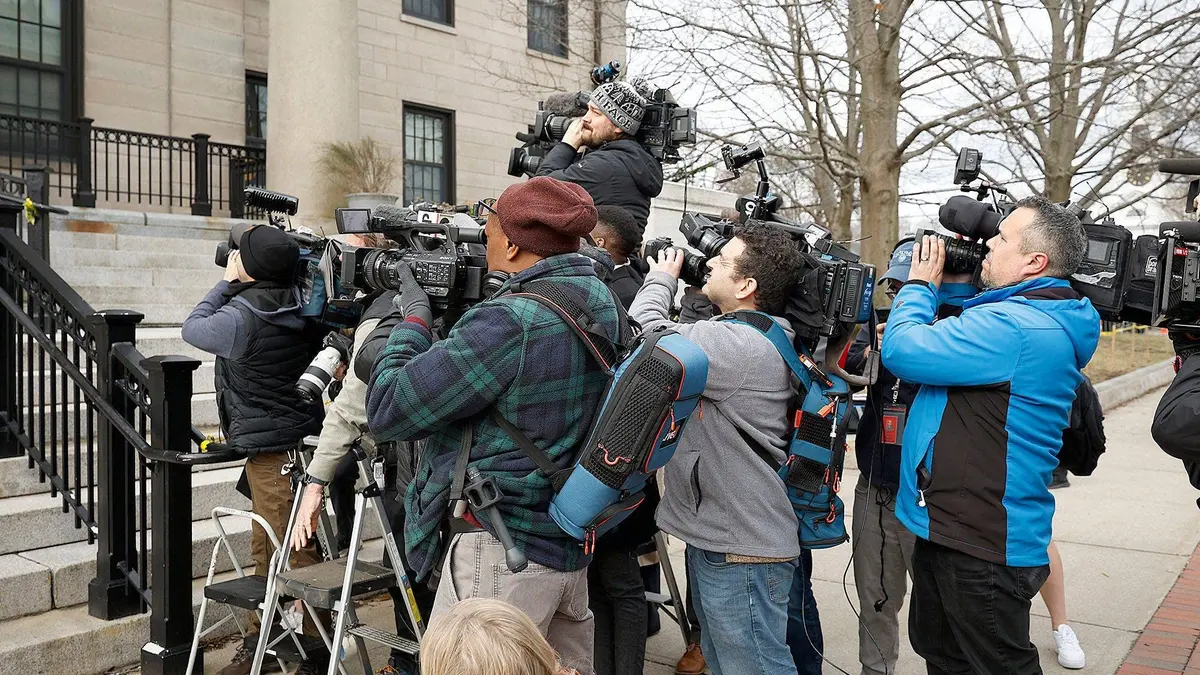
Sometimes a case becomes a local civic obsession: nonstop TV segments, talk radio outrage, viral clips, podcast deep dives, and neighbors swapping theories like it is a community sport. The legal concern is not simply “people heard about the case.” The concern is fixed opinions that jurors cannot realistically set aside.
Courts distinguish between ordinary publicity and the kind that can poison the jury pool. Factors that commonly matter include:
- Whether coverage contains confessions, inflammatory allegations, or excluded evidence.
- Whether reporting is saturation-level and sustained over time.
- Whether the coverage is closely tied to local identity: “this happened to us.”
- Whether the community is small enough that the case is inescapable.
2) Community bias and local entanglement
Not all bias comes from headlines. In some cases, the problem is that the community itself is tangled up in the story. Think of a small county where:
- The victim is widely known.
- The defendant or their family is well known.
- Law enforcement, witnesses, and potential jurors overlap socially.
- The alleged crime strikes a local nerve: a school, a church, a factory, a protest, a political dispute.
The constitutional goal is not to find jurors who feel nothing. It is to find jurors who can follow the evidence and the judge’s instructions rather than the town’s instincts.
3) Safety and courtroom security
Venue can also shift because the court is trying to prevent intimidation or violence. When threats target jurors, witnesses, attorneys, or the judge, or when the courthouse cannot reasonably handle security needs, moving the proceedings can be the least disruptive way to protect the process.
Courts are careful here. “Security” cannot become a vague excuse to relocate a case for convenience. But when safety risks are concrete, protecting the trial’s integrity can require a new location.
The Supreme Court backdrop
The Court has long recognized that an impartial jury is not guaranteed by good intentions alone. In a line of cases involving heavy publicity and community hostility, the Court has emphasized that due process can be violated when local conditions make a fair trial unlikely, even if the formal steps of jury selection were followed.
Two ideas show up again and again:
- Actual prejudice: you can point to jurors who were biased or to a record showing that the jury could not be impartial.
- Presumed prejudice: the atmosphere is so saturated and hostile that the court treats prejudice as effectively built in, even without a juror admitting bias.
Concrete anchors help. The Court found due process problems in publicity and atmosphere cases like Rideau v. Louisiana (televised confession in the community), Irvin v. Dowd (widespread hostility reflected in the jury pool), and Sheppard v. Maxwell (a trial environment overwhelmed by press and disorder). On the other side of the line, Skilling v. United States underscores how rare presumed prejudice is in modern practice, especially in larger communities with time for temperature to drop and robust voir dire to do its work.
How a venue motion works
A change of venue request is usually made by the defense, because the defendant is the one with the constitutional right to an impartial jury. Prosecutors can seek venue changes too in some state systems, particularly when witness safety or local disruption is severe. In federal court, the standard change-of-venue mechanism is framed around the defendant’s motion under Rule 21, with the government typically opposing, consenting, or litigating the record rather than initiating the transfer.
Step 1: The motion
The moving party files a written motion identifying the legal basis and the facts. That often includes:
- Examples of news coverage and social media reach.
- Affidavits from investigators or jury consultants.
- Public opinion polling (sometimes).
- Specific facts about the community and the case’s local footprint.
Step 2: The hearing and the judge’s options
A judge does not have to choose between “move the case” and “do nothing.” Common alternatives include:
- Expanded voir dire: longer, more searching jury questionnaires and individual juror questioning.
- Continuance: delaying trial to let publicity cool, though the Sixth Amendment right to a speedy trial limits this option.
- Sequestration: isolating jurors during trial, which is burdensome and increasingly uncommon.
- Change of venire: importing a jury from another county while holding the trial in the original courthouse, used in some state systems.
- Gag orders and protective orders: limited tools aimed at trial participants, not the press.
Step 3: Jury selection becomes the test
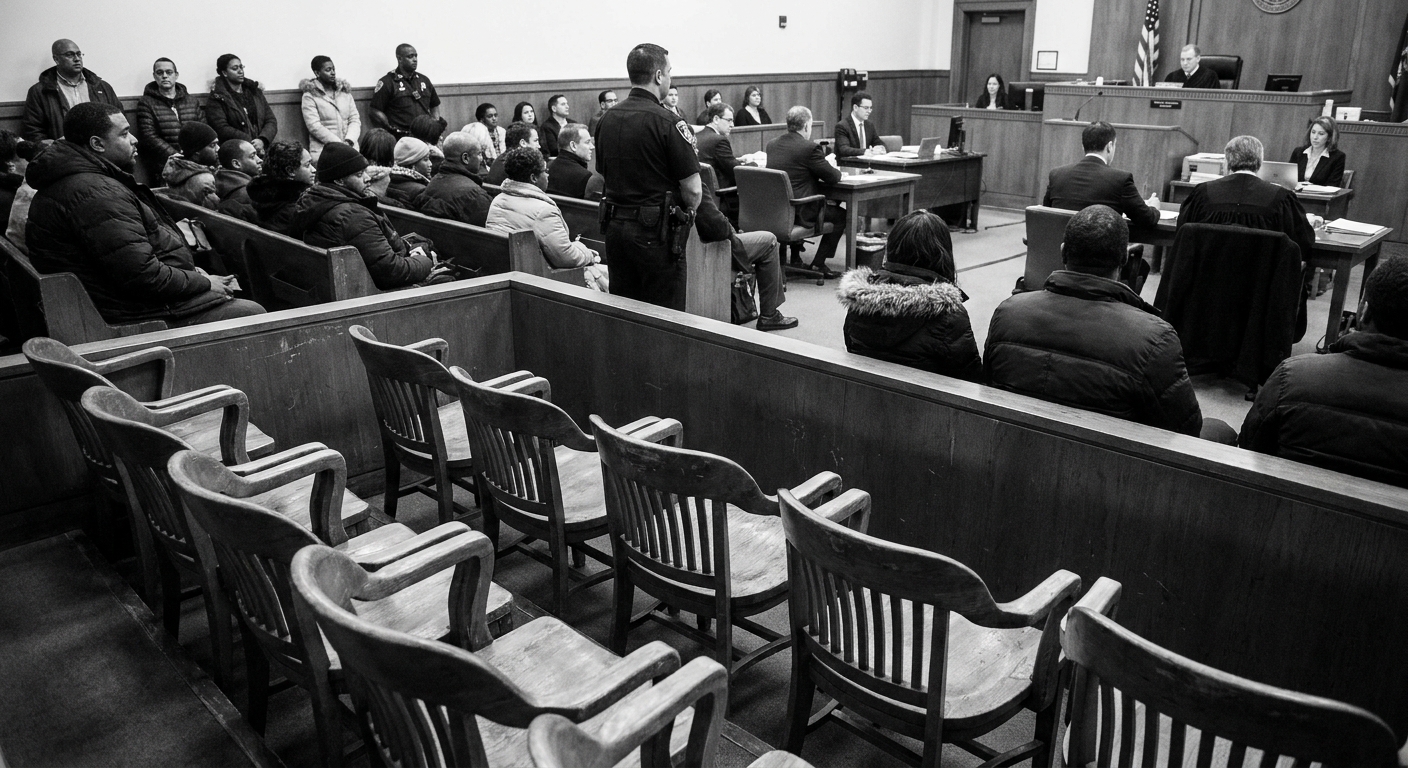
In many cases, the court will wait to see how jury selection goes. If a large share of potential jurors admit they cannot be fair, or if the questioning reveals deep community hostility, that record becomes the strongest argument for moving the case.
A real-world example
If you want a concrete illustration, consider the federal prosecution of Timothy McVeigh for the Oklahoma City bombing. The trial was moved from Oklahoma to Denver, in large part because of the intense local impact and saturation-level attention, and the practical difficulty of seating an impartial jury close to a community that had lived through the crime. It is a reminder of the basic point: sometimes the most “local” place is exactly where impartiality is hardest to find.
Federal vs state practice
Venue rules are not identical across the American system. States set many of their own procedural standards, and the federal system follows federal statutes and the Federal Rules of Criminal Procedure. The constitutional floor is the same in its demand for fairness and impartiality, but the mechanics differ.
Federal court (high-level)
In federal criminal cases, venue is generally proper where the offense occurred, and moving a case is governed largely by Rule 21 of the Federal Rules of Criminal Procedure.
- Rule 21(a) allows transfer if prejudice in the current district is so great that the defendant cannot obtain a fair and impartial trial.
- Rule 21(b) allows transfer for convenience and in the interest of justice, considering practical factors like location of witnesses and evidence.
That second category surprises people. It is not about escaping bias. It is about logistics and fairness in a different sense: whether the case is being tried in a place that imposes unnecessary burdens given where the facts and people are.
State court (high-level)
In state court, change-of-venue rules are usually set by state constitutions, statutes, and court rules. Many states use familiar concepts, but with state-specific procedures such as:
- Venue changes between counties within the same judicial circuit.
- Change of venire, where the jurors move but the courtroom does not.
- Different burdens of proof, filing deadlines, and appellate standards.
The federal Constitution still matters because the Fourteenth Amendment requires basic fairness in state criminal trials, including the ability to seat an impartial jury. But the day-to-day steps, and the vocabulary, are often local.
What judges look for
Courts tend to evaluate venue requests through a practical lens: is there a realistic path to an impartial jury here, or is the community too invested in a particular outcome?
Factors frequently cited include:
- Size of the community and the ease of finding uncommitted jurors.
- Tone and content of coverage, including whether it is inflammatory or repetitive.
- Time between the peak of publicity and trial.
- Connections between jurors and key players in the case.
- Voir dire results, often the most persuasive evidence.
- Safety conditions that could intimidate jurors or witnesses.
Can prosecutors oppose it?
Yes, and they often do. A venue change can disrupt witnesses, increase costs, and complicate logistics. Prosecutors also have their own interest in trying the case where it occurred, especially when the community is the one harmed by the alleged crime.
But this is where the hierarchy matters. The public’s interest in a local trial is real, yet it yields to the defendant’s right to an impartial jury. A conviction that cannot survive a fair-trial challenge is not a victory. It is a retrial waiting to happen.
What a venue change cannot fix
Moving a case is not a magic eraser. In national news cases, publicity follows the defendant across state lines. And even in smaller cases, jurors in the new venue may still have strong opinions about crime, policing, or the type of allegation involved.
That is why courts treat venue as one tool among many. The deeper goal is not to find jurors who have heard nothing. It is to find jurors who can still be governed by the evidence and by the presumption of innocence, instead of by the mood of the crowd.
And if the system gets it wrong, the consequences can be serious. In extreme cases, an unfair-trial record can support reversal on appeal, or post-conviction relief, including federal habeas review in state cases where a due process violation is established.
The takeaway
A change of venue is the legal system admitting something the public rarely says out loud: place matters. Community can shape perception, and perception can shape verdicts. The Constitution tries to keep that influence in check with one deceptively simple demand: impartiality.
When pretrial publicity turns into a local narrative of guilt, when community ties make neutrality unrealistic, or when safety threats distort the courtroom, venue becomes more than a procedural detail. It becomes a constitutional safeguard. Not to help the defendant escape accountability, but to make sure any verdict, guilty or not, is earned the right way.