The Logan Act is one of those laws that feels like it should be in bold type across the front of a civics textbook. It criminalizes a private citizen attempting to conduct unauthorized diplomacy with a foreign government in a way meant to affect a dispute with the United States. Yet most Americans only hear about it when a political controversy erupts and someone asks, usually in a cable news tone, whether a rival has committed “a Logan Act violation.”
Here is the quieter truth: the statute exists, it is still on the books, and it is almost never enforced. That combination creates the Logan Act’s modern identity. It is a real criminal law that often functions more like a warning label than a prosecutorial tool.
Join the Discussion
What the Logan Act says
The Logan Act is codified at 18 U.S.C. § 953. It makes it a crime for a U.S. citizen, acting without U.S. authority, to communicate with a foreign government (or its agents) with certain intent.
Plain-English paraphrase
If you are a private U.S. citizen, and you are not authorized by the United States, you cannot directly or indirectly contact a foreign government or its agents with the intent to influence that government regarding disputes or controversies between that government and the United States, or with the intent to defeat U.S. measures.
The statutory text (modern codification)
18 U.S.C. § 953 provides, in substance, that any citizen of the United States, wherever located, who without authority of the United States “directly or indirectly commences or carries on any correspondence or intercourse” with any foreign government or its officer or agent, with intent to influence that government regarding any “disputes or controversies” with the United States, or to defeat U.S. measures, may be fined under Title 18, imprisoned for up to three years, or both.
Important caveat: This page summarizes the statute for civic education. Statutory wording and penalties can be amended. For exact language, consult the current U.S. Code.
Not legal advice: This is general information, not legal advice for any particular situation.
What prosecutors must prove
Most “Logan Act” talk collapses under a simple question: What would the government have to prove beyond a reasonable doubt? The statute has several moving parts, and each can be hard to establish.
- The defendant is a U.S. citizen (the statute is written in terms of citizens, not all persons).
- No authority from the United States to engage in the communication. This is not only about holding office. It can also involve being formally tasked or empowered.
- “Correspondence or intercourse” with a foreign government or its officers or agents, directly or indirectly. That can include intermediaries, messages, or back channels.
- A qualifying subject matter, meaning a “dispute or controversy” with the United States, or measures of the United States that the citizen intends to defeat.
- Specific intent to influence the foreign government on that dispute or controversy, or to defeat U.S. measures.
In practice, the hardest parts are usually authority and intent. The statute is not a general ban on Americans talking to foreigners. It targets private diplomacy aimed at the relationship between a foreign government and the United States.
Why charges are rare
There are several reasons the Logan Act is rarely charged, and they are not all political. Some are structural.
1) Intent is hard to prove
It is not enough that a person talked. Prosecutors would need evidence that the person’s purpose was to influence a foreign government in a U.S. dispute or to defeat U.S. measures. That is a mental state question, often proven through messages, witness testimony, or contemporaneous notes. Many real-world contacts look ambiguous.
2) “Authority” is contested
Modern foreign policy involves elected officials, transition teams, former officials, informal envoys, and private experts who are sometimes asked to carry messages. If “authority” is contested, a prosecutor risks turning a case into a trial about custom and practice rather than a clean statutory violation.
This gets especially complicated with lawmakers. The Executive Branch has traditionally argued it holds primary (and in many contexts exclusive) authority to conduct diplomacy on behalf of the United States. Members of Congress, by contrast, often point to their Article I powers, oversight responsibilities, and long-standing practice of meeting foreign leaders as a form of inherent institutional authority. That separation-of-powers tension is a major reason why applying the Act to senators or representatives is so difficult in practice.
3) First Amendment risk
The First Amendment does not contain a “foreign policy exception” for private speech. The Logan Act regulates communicative activity, which invites constitutional challenge. Even if a prosecution is legally defensible, the government could lose and end up narrowing its own power through adverse precedent.
4) Other laws often fit better
If the conduct involves classified information, acting as a foreign agent, bribery, campaign finance violations, hacking, or obstruction, there are more frequently used statutes with established case law and clearer elements. Prosecutors tend to prefer tools that have been tested.
5) Diplomatic costs
A Logan Act prosecution can require airing sensitive communications and foreign government interactions in open court. Even with protective orders, the risk of exposing intelligence sources, diplomatic strategies, or fragile negotiations can deter charges.
Who can authorize talks
The statute turns on whether a citizen acted “without authority of the United States,” so readers naturally ask: authority from whom?
In real life, the clearest authorizations tend to flow from the Executive Branch, since it conducts day-to-day diplomacy. Formal roles (like being an appointed official) are obvious, but authority can also be specific and situational, such as being asked to deliver a message or serve as an emissary.
Outside the Executive Branch, the picture gets murkier. Members of Congress engage in foreign travel and meetings as part of oversight and fact-finding, and they may view that as within their institutional remit. Transition teams occupy an even stranger space: they are not yet the government, but they are preparing to become it. These gray areas help explain why the Logan Act is a frequent talking point and an infrequent charge.
How it fits the Constitution
The Constitution splits foreign affairs powers in a way that encourages a “one voice” approach, without giving Congress a simple clause that says, “private diplomacy is illegal.” Instead, the Logan Act is a statutory attempt to reinforce a constitutional design.
- Article II assigns the President significant foreign relations authority, including receiving ambassadors and, with Senate consent, making treaties and appointing ambassadors.
- Article I gives Congress major foreign affairs tools, including regulating foreign commerce, declaring war, funding the military, and creating laws needed to carry out federal powers.
The Logan Act tries to prevent private citizens from inserting themselves into that official architecture. It is a guardrail around institutional legitimacy. The United States negotiates through actors accountable to constitutional processes, elections, and oversight, not through whoever can get a meeting.
Origin: George Logan
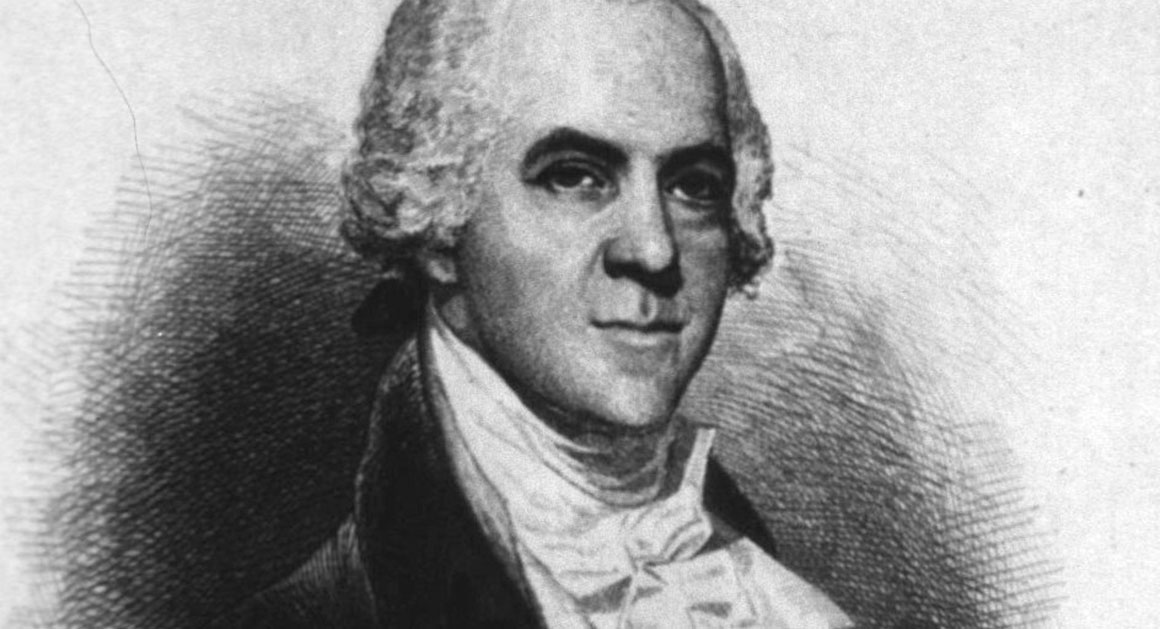
The statute is named after Dr. George Logan, a Pennsylvania physician and Quaker who traveled to France in 1798 during the Quasi-War period, a tense and undeclared naval conflict between the United States and France.
Logan met with French officials and returned claiming he had helped ease tensions. His political opponents saw it differently. To them, a private citizen had tried to conduct his own foreign policy, potentially undermining the sitting administration’s efforts.
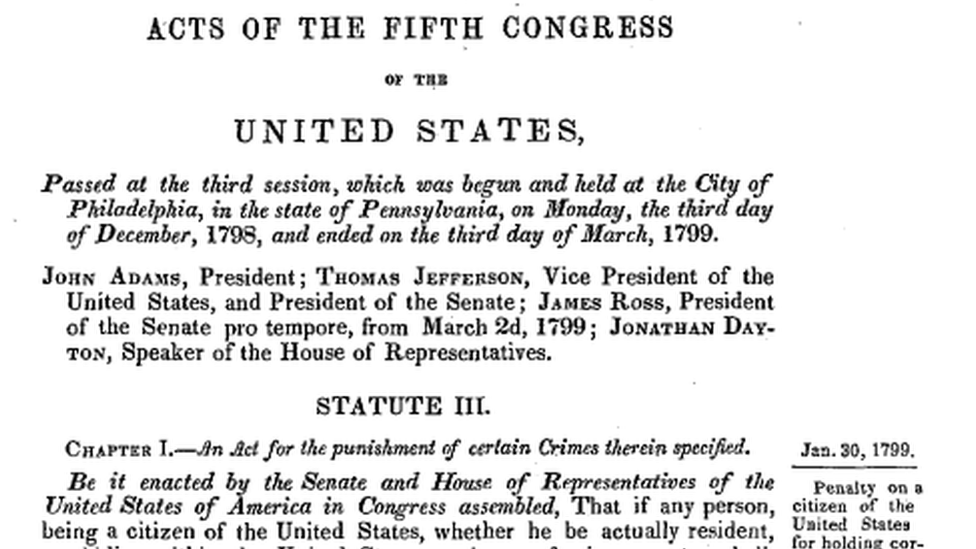
Congress responded with the Logan Act in 1799. The law was not just about one man. It was about anxiety in a young republic: if foreign governments can shop for American interlocutors, they can exploit internal factionalism.
First Amendment tensions
The Logan Act sits at an uncomfortable intersection. It is a foreign policy statute that regulates communication itself. That is why scholars repeatedly ask whether it can survive modern First Amendment doctrine.
Speech versus conduct
The government can regulate certain conduct even when it involves communication. But a law that criminalizes “correspondence” can look like it is punishing speech because of its topic and purpose.
Overbreadth and vagueness
Critics argue the statute’s phrases, like “disputes or controversies” and “defeat the measures,” can be read broadly. If a law is too vague, people cannot tell what is prohibited. If it is overbroad, it might chill protected speech because citizens avoid lawful advocacy out of fear.
Political speech is protected
Foreign policy advocacy is still political speech. Meeting with foreign officials to argue for a policy position can resemble lobbying or activism, which are generally protected forms of expression and association.
Why this is not the end of the story
Supporters of the statute argue it targets a narrow category: unauthorized attempts to influence a foreign government in a dispute with the United States, especially in ways that could undercut official negotiations. A court could also interpret the statute narrowly to avoid constitutional problems, focusing on concrete interference rather than ordinary advocacy.
One reason charges are rare is that the government has limited appetite to be the test case that forces courts to decide exactly how the Logan Act interacts with the First Amendment.
Notable references
The Logan Act’s history is less about convictions and more about recurring moments when it is invoked, debated, or dusted off as a possible response to controversial back-channel diplomacy.
- 1798: Dr. George Logan travels to France and meets with French officials during escalating U.S.-France tensions.
- 1799: Congress enacts the Logan Act.
- 1803: The only widely documented early Logan Act indictment is often described as involving a Kentucky newspaper editor, Francis Flournoy. Accounts vary in detail, but it is commonly summarized as a case tied to published advocacy that touched on U.S. disputes and foreign alignment. The matter did not produce a conviction and is frequently cited as a rare example of the Act being used in court.
- 1852: Jonas Phillips Levy is reportedly indicted after writing a letter to the President of Mexico. The case is generally described as ending without a conviction, with charges dropped.
- 19th to 20th century: The Act appears intermittently in political debate but remains largely dormant as a prosecutorial instrument.
- 1960s to 1980s: The statute is periodically mentioned in connection with private diplomacy controversies, but without resulting convictions.
- 2007: Congressional and media discussions reference the Logan Act amid debates about members of Congress and private actors engaging foreign leaders over Iraq policy.
- 2015: Public debate resurfaces after an open letter to Iranian leaders from U.S. senators during nuclear negotiations, raising questions about what counts as “authority” and whether public political messaging fits the statute’s core target.
- 2016 to 2017: The Act is repeatedly referenced in commentary related to transition-period contacts with foreign officials.
- 2020s: The Logan Act continues to be cited in debates over unofficial diplomacy, including travel and meetings by former officials and private citizens. Prosecutions remain exceedingly rare.
Notice the pattern: the Logan Act is a frequent reference and a rare enforcement tool. That gap is part of why the law remains controversial. It is also why careful phrasing matters: there are no known convictions under the Act, and the best-known courtroom episodes end without one.
What makes a case plausible
“Chargeable” is not the same as “provable” or “wise to prosecute.” But if you are trying to understand what conduct could plausibly fit the statute, look for a cluster of facts that make the elements clean and the intent unmistakable.
Signs a case tightens
- Direct outreach to a foreign government official, not merely commentary or public advocacy.
- Clear evidence of no authorization, including an explicit denial from relevant federal authorities and no plausible official role.
- A concrete U.S. dispute, such as an active negotiation, sanctions regime, hostage situation, or ongoing diplomatic crisis.
- Specific intent evidence, for example recorded statements, messages, or witness accounts showing the citizen aimed to influence the foreign government’s stance in a way that cuts against U.S. measures.
- An attempt to defeat an identifiable U.S. measure, such as urging a foreign government to ignore sanctions, stall treaty talks, or refuse terms being pursued by U.S. negotiators.
- Secrecy that suggests a back channel, such as concealed intermediaries or instructions to keep U.S. officials in the dark. Secrecy is not an element, and secrecy alone is not unlawful. Legitimate diplomacy can be private too. It is simply a fact that can become circumstantial evidence of intent in the wrong setting.
What often falls short
- Public speech aimed at voters, the media, or broad audiences, even when it discusses foreign policy.
- General academic or advocacy meetings without evidence of intent to influence a foreign government in a specific U.S. dispute.
- Routine congressional travel or constituent-facing diplomacy where authorization, oversight, and official capacity complicate the “without authority” element.
The key is that a plausible case would look less like political conversation and more like an unauthorized negotiation attempt with a foreign state over an active U.S. conflict or policy measure.
Keep, fix, or repeal
Serious debate about the Logan Act tends to split into three camps, none of which requires partisan assumptions.
1) Keep it
Some argue that even rare enforcement has value. The statute signals that foreign policy is conducted by accountable officials, and that private freelancing can create national security risk.
2) Narrow it
Another approach is reform. Congress could clarify key terms, tighten the intent requirement, define “authority” more explicitly, or create safe harbors for public advocacy and transparent meetings while preserving a prohibition on covert negotiation.
3) Repeal it
Critics contend the law is too old, too vague, and too speech-adjacent to be a legitimate criminal statute today. They argue that existing laws and political accountability are sufficient without a rarely used criminal prohibition that can be invoked selectively.
What to remember
- The Logan Act is real federal law, codified at 18 U.S.C. § 953.
- It targets U.S. citizens acting without U.S. authority who communicate with a foreign government with intent to influence disputes with the United States or to defeat U.S. measures.
- There are no known convictions, and charges are rare because intent and authority are hard to prove, First Amendment challenges loom, and other statutes often fit better.
- The statute’s continued existence reflects a constitutional instinct: the United States should speak with one official voice in foreign affairs, even in a loud and factional democracy.
If the Constitution is a structure, the Logan Act is an attempt to keep too many people from grabbing the steering wheel at once. Whether it is a necessary guardrail or an outdated restriction is still an open question. But understanding what the law actually requires is the first step toward having that debate responsibly.