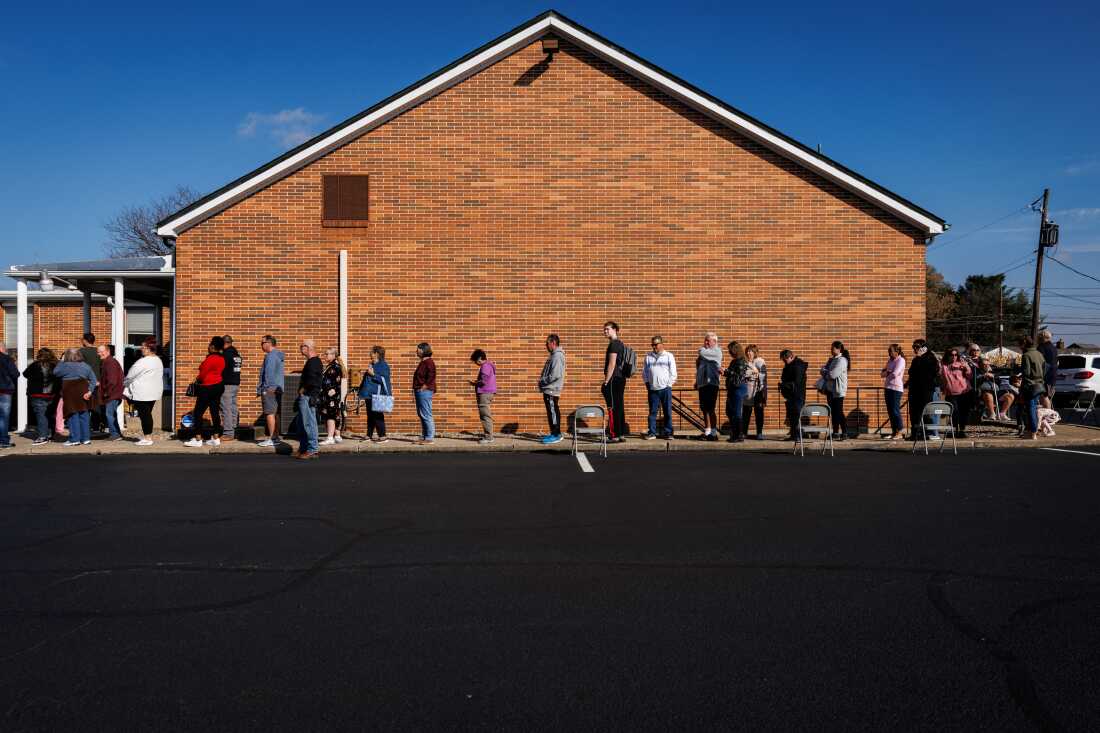
You can learn a lot about a country by asking what it charges for.
For decades, parts of the United States charged people to vote. Not as a fundraising gimmick, and not as a neutral administrative fee, but as a deliberate filter. If you could not pay, you did not participate. If you did not participate, you had no peaceful leverage over the laws that governed you.
That is the problem the Twenty-Fourth Amendment was written to solve. It does not overhaul election law. It does something more focused and, in practice, more revolutionary: it takes money off the table as a condition for voting in federal elections.
Join the Discussion
What poll taxes were
A poll tax was a fee assessed on individuals, often as a prerequisite to vote. In some places it was literally called a poll tax. In others, it appeared as a required payment tied to voter qualification.
The amount could look modest on paper, but in many jurisdictions the primary function was not revenue. It was control.
How small fees became big barriers
Poll taxes worked because they stacked disadvantages:
They hit the poor first. A fee that is trivial to one person can be disqualifying to another.
They compounded over time. Some states required payment for multiple years before you could vote, creating back taxes that were harder to climb out of.
They were paired with other obstacles. Literacy tests, complicated registration rules, and intimidation did the rest.
One concrete example: Virginia long used a poll tax of $1.50. The number is not the point. The point is what it did in practice when combined with cumulative payment requirements and discretionary administration.
Jim Crow context
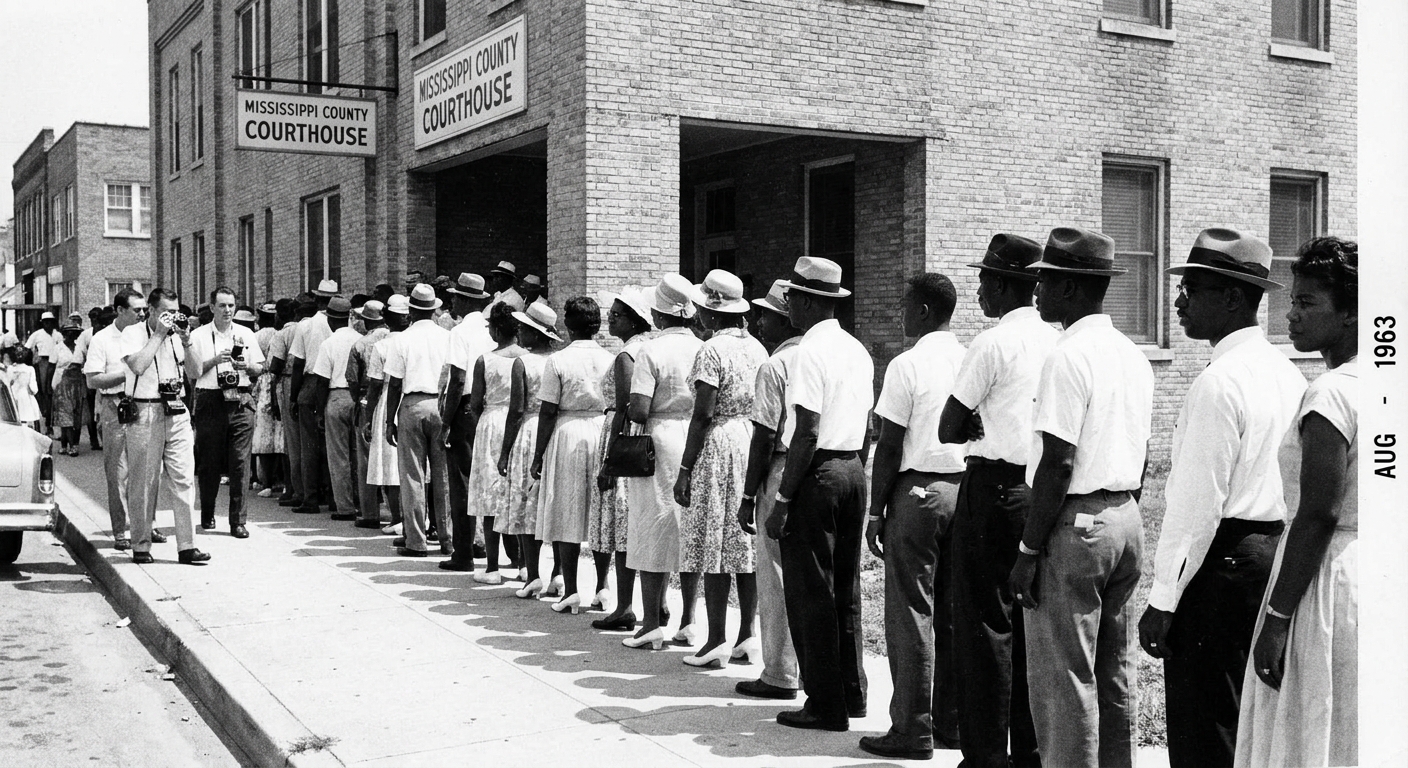
After the Civil War, the Fifteenth Amendment barred denying the vote on account of race. But many states, especially in the former Confederacy, constructed rules that were race-neutral on paper and racially targeted in effect. Poll taxes became part of the Jim Crow toolkit because they could be defended as general fiscal policy while operating as political exclusion.
When you hear that a constitutional rule is neutral on its face, remember this history. Neutral language can still produce non-neutral power.
Why an amendment was needed
One reason the Twenty-Fourth Amendment mattered is that, for a long time, the Supreme Court did not treat poll taxes as constitutionally forbidden. In Breedlove v. Suttles (1937), the Court upheld Georgia’s poll tax. That decision helped entrench the idea that states could attach a price tag to participation, at least within then-existing doctrine.
So reformers were not just arguing with state legislatures. They were arguing against a legal baseline that had already been blessed by the Court. In that setting, an amendment was structural. It did not ask permission. It changed the rules.
What the 24th Amendment says
The Twenty-Fourth Amendment, ratified in 1964, is short and unusually direct. It provides that the right of citizens to vote in federal elections cannot be denied or abridged “by reason of failure to pay any poll tax or other tax.” The text also makes clear it applies to “any primary or other election” for federal office.
Two details people miss
It is limited to federal elections. The text covers elections for President, Vice President, Senators, and Representatives. It does not, by its own terms, ban poll taxes in state or local elections.
It is not just about poll taxes by name. The phrase “or other tax” matters. The amendment is aimed at the concept: conditioning the vote on payment.
In other words, the Twenty-Fourth Amendment is a constitutional refusal to treat voting like a subscription service.
Why it passed in 1964
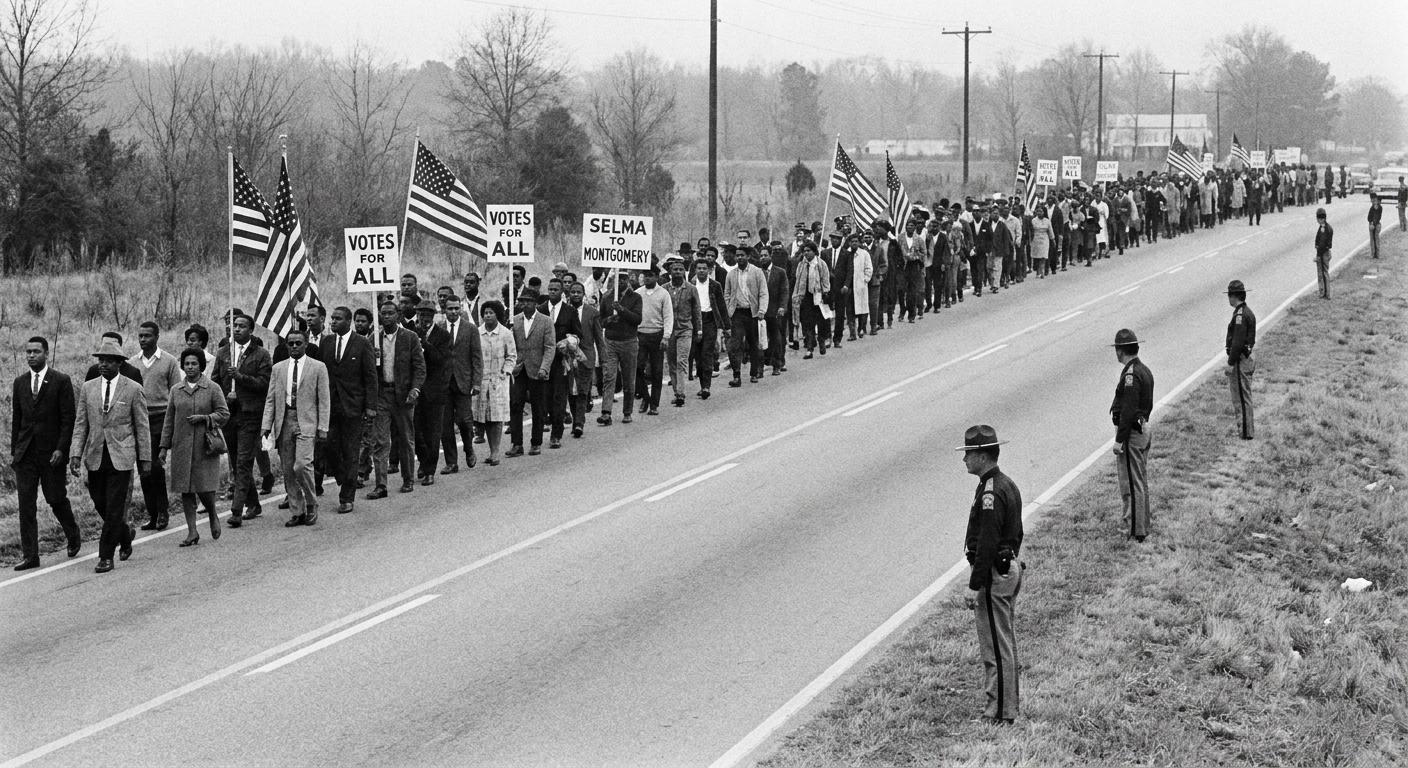
The timing was not accidental. The early 1960s were a hinge point where civil rights activism forced national institutions to decide whether equal citizenship was going to remain rhetoric or become enforceable reality.
Poll taxes had already been criticized for decades, including by presidents and civil rights groups. But constitutional amendments do not move on moral clarity alone. They move when the politics of delay becomes more costly than the politics of action.
What the 24th did that statutes could not
A federal statute can be repealed by a later Congress. A constitutional amendment cannot. Ratification told voters and state governments: this is not a temporary policy preference. It is a structural rule about legitimacy.
Harper and state elections
Even though the Twenty-Fourth Amendment is textually limited to federal elections, the constitutional story does not end there.
Harper v. Virginia Board of Elections (1966)
Two years after ratification, the Supreme Court decided Harper v. Virginia Board of Elections (1966). The case involved a poll tax in state elections, which the Twenty-Fourth Amendment does not explicitly cover.
The Court struck Virginia’s tax anyway, holding that making voter eligibility depend on payment violates the Equal Protection Clause of the Fourteenth Amendment. The Court’s key line is worth quoting precisely: “Wealth, like race, creed, or color, is not germane to one’s ability to participate intelligently in the electoral process.”
So the timeline looks like this:
1937: Breedlove upholds a state poll tax.
1964: The Twenty-Fourth Amendment bans poll taxes in federal elections.
1966: Harper bans poll taxes in state elections through equal protection.
The combined effect is broader than the amendment alone. The country built a two-part lock: one textual (the 24th), one doctrinal (equal protection). And like most doctrine, the second lock depends on how courts apply it over time, case by case.
How later law fits
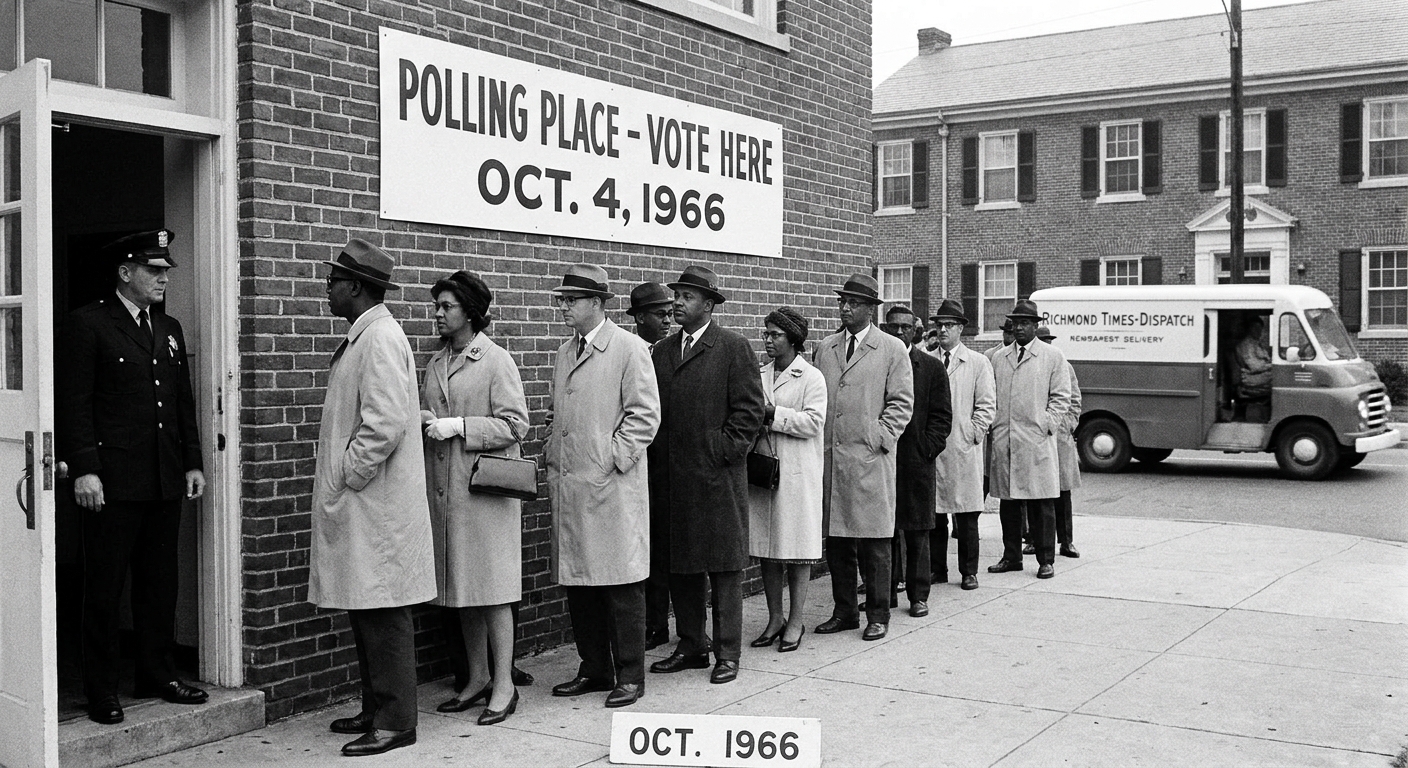
If the Twenty-Fourth Amendment is the constitutional statement, later voting-rights law is the enforcement ecosystem that grew around it.
The Voting Rights Act
The Voting Rights Act of 1965 attacked an interconnected set of barriers, including literacy tests and discriminatory election practices. It did not come from the Twenty-Fourth Amendment, but it shared the same basic insight: voting rules can be engineered to shrink the electorate without ever announcing that goal.
The modern voting-rights conversation tends to orbit around the Fourteenth Amendment, the Fifteenth Amendment, the Voting Rights Act, and election administration cases. The Twenty-Fourth Amendment sits quietly in that constellation, but it supplies a clean constitutional principle: you cannot condition access to the federal ballot on payment.
Why fees still trigger lawsuits
Most states no longer call anything a poll tax. The litigation today is about whether certain fees function like one.
The question courts keep circling is not “Is this labeled a poll tax?” It is: does this policy make voting turn on payment?
Common modern flashpoints
Voter ID costs. States often argue that IDs are required for election integrity, not revenue. But lawsuits raise a practical problem: if the required ID costs money, and the state does not provide a truly free and accessible alternative, the fee starts to look like a gate. Courts often draw lines between direct prerequisites to casting a ballot and incidental burdens that exist in the background of modern life.
Document fees. Fees for birth certificates or other underlying documents can operate as the real cost of complying with voting rules, even if the election office itself is not charging at the door.
Rights restoration tied to legal financial obligations. When voting eligibility depends on paying fines, fees, restitution, or court costs, critics argue that the state is conditioning the franchise on wealth. Supporters argue the payments are part of a sentence or legal obligation, not a voting fee. This argument moved from theory to national headline with Florida’s Amendment 4 and the litigation over whether returning citizens had to satisfy financial obligations before reenfranchisement.
Absentee ballot and ballot-return rules. Courts sometimes confront whether ancillary costs, like postage requirements, meaningfully burden the right to vote. The analysis often turns on how avoidable the cost is and whether the state has, in effect, made payment part of the mechanism of voting.
The legal friction point
Not every expense associated with voting is a constitutional violation. Getting to the polls costs time and sometimes money. The constitutional problem arises when the government sets payment as a condition for casting a ballot or having it counted, or when it designs a rule where payment is the predictable separator between who votes and who does not.
The Twenty-Fourth Amendment gives plaintiffs a sharp tool in federal elections. Outside that context, challenges often lean on equal protection, due process, and federal statutes, depending on the policy and the jurisdiction.
Federal and state elections
Because the Twenty-Fourth Amendment names federal offices, it is most straightforward in cases involving:
Presidential elections
U.S. Senate elections
U.S. House elections
But elections are often consolidated. One ballot can include federal, state, and local races. That creates an administrative reality: a state cannot require payment as the price of receiving or casting a ballot that includes federal contests. In practice, bundling makes “federal-only” rules hard to segregate at the polling place.
Harper largely resolved the poll tax problem for state elections by constitutionalizing the principle through equal protection. Even so, the Twenty-Fourth Amendment remains important because it is explicit. It says what it says.
What the 24th teaches
Some amendments announce broad ideals. The Twenty-Fourth Amendment does not. It targets a mechanism.
That is its power.
The amendment recognizes something modern Americans sometimes forget: you can undermine democracy without banning voting outright. You just have to make participation expensive, confusing, or risky enough that people self-select out.
A simple test
When you see a voting rule that involves money, ask two questions:
Is payment a condition of casting a ballot or having it counted?
Who is most likely to be screened out by that payment?
The Twenty-Fourth Amendment is a reminder that constitutional equality is not only about what the law says. It is about what the law does, and who it leaves behind when it does it.
Quick takeaways
Poll taxes were used to suppress participation, especially among poor voters and Black voters in the Jim Crow South.
Breedlove v. Suttles (1937) upheld a poll tax, helping explain why a structural fix became necessary.
The Twenty-Fourth Amendment (ratified 1964) bans poll taxes and similar taxes as a condition for voting in federal elections, including primaries for federal office.
The Supreme Court extended the anti-poll-tax principle to state elections in Harper v. Virginia Board of Elections (1966) under the Fourteenth Amendment’s Equal Protection Clause.
Modern litigation often focuses on whether fees connected to voting, identification, documentation, or reenfranchisement operate as unconstitutional wealth barriers, including high-profile disputes like Florida’s post-Amendment 4 fights over legal financial obligations.