
The Supreme Court has agreed to hear a Colorado dispute that sits at a familiar constitutional crossroads: when a state offers public benefits to private groups, how far can it go in setting the terms without crossing the First Amendment’s protections for religious exercise?
The case arises from Colorado’s state-funded universal preschool program and a requirement that participating providers follow a nondiscrimination rule. Catholic entities in the Denver area say that condition effectively shuts them out because it conflicts with their religious teaching on same-sex relationships and gender identity.
Join the Discussion
What Colorado’s universal pre-K program does
Colorado voters approved the statewide preschool program in a 2020 referendum. The basic idea is straightforward: the state uses taxpayer funding to help families pay for preschool at the provider of their choice.
Like many public programs that rely on a network of providers, Colorado attaches participation requirements. One of them is a nondiscrimination provision that, among other things, bars a preschool from refusing admission based on sexual orientation or gender identity of the child or the child’s parents.
Who is suing and why
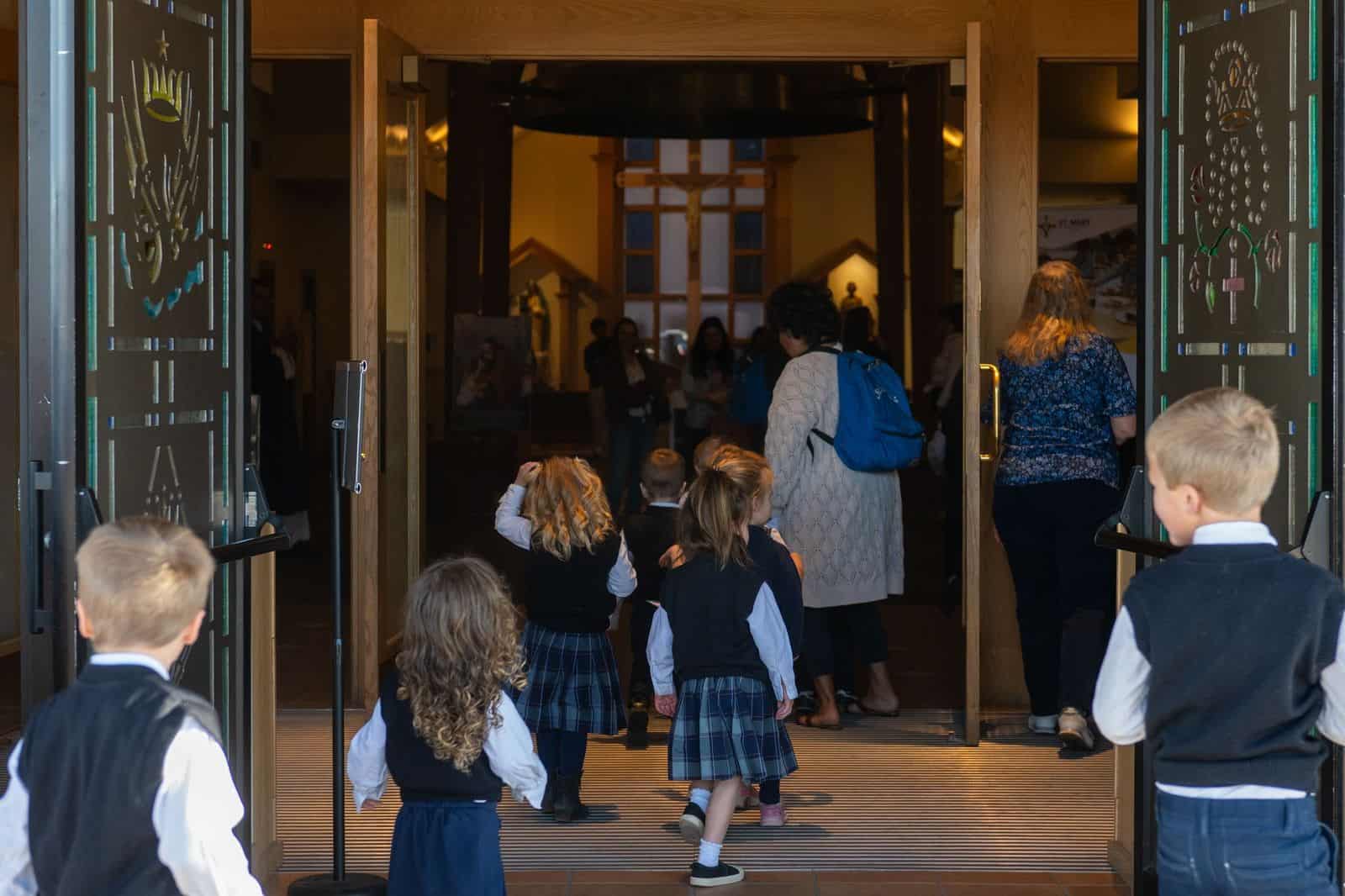
The Archdiocese of Denver, which runs 34 preschools, is the lead plaintiff. Two Catholic parishes in Littleton and Lakewood are also involved, along with two parents, Daniel and Lisa Sheley, who have five children, including two currently in preschool.
The Catholic plaintiffs say they are being forced to choose between participating in a generally available public program and operating consistently with Catholic doctrine. In a joint statement, the Sheleys framed their claim as a family choice issue: All we want is the freedom to choose the best preschool for our kids without being punished for our faith. Colorado promised families a universal preschool program, then cut out families like ours because we chose a Catholic education
.
The dispute has also drawn federal attention. The Trump administration filed a brief supporting the archdiocese and urging the justices to take the case.
The constitutional tension
It helps to separate two ideas that often get blurred together in public debate.
- Nondiscrimination rules reflect the state’s decision about how publicly supported services should be offered to the public.
- Free exercise protections reflect a constitutional limit: government cannot single out religious practice for special burdens, and in some situations it must treat religious providers the same as secular ones.
When a program is designed to be widely accessible, excluding religious providers because they are religious can trigger serious First Amendment concerns. But states also argue they have authority to set neutral, across-the-board conditions for participation in a public program, especially when the government is paying for a service it wants delivered under certain standards.
The key legal question
A major point of friction in this case is how the Court’s 1990 precedent Employment Division v. Smith applies. In plain terms, Smith is often read to mean that a generally applicable law does not have to include religious exemptions simply because it burdens someone’s faith.
The Catholic plaintiffs are trying to show that Colorado’s program is not operating like a truly uniform rulebook. They point to other ways providers can make choices within the program and argue those exceptions matter. For example, participating preschools can prioritize children with disabilities and children from low-income families. In their view, once the state allows discretionary exceptions, it cannot insist on zero flexibility when the exception is requested for religious reasons.
Colorado’s response is narrower: it says the Court should focus on the nondiscrimination provision itself. The state maintains that this specific requirement has no exemptions, so it should be treated as an evenhanded condition that applies to every provider that wants to take part.
How the case got here
The Archdiocese sued in 2023. It lost in federal district court and then again in the U.S. Court of Appeals for the 10th Circuit, which covers Colorado and several neighboring states.
Colorado Attorney General Phil Weiser, a Democrat, is defending the policy. A spokesperson for Weiser declined to comment.
Now the Supreme Court will step in, with oral arguments expected in a future sitting. The Court’s current 6 to 3 conservative majority has, in several recent cases, been receptive to claims that religious organizations should not be excluded from public programs simply because they are religious.
Why it matters beyond Colorado
This is not only a dispute about one state’s preschool dollars. It is a test of how states can design public benefit programs in an era when the Court has strengthened protections for religious participation in government programs.
For families
If families are promised a universal program, the practical question is whether that universality includes faith-based options when the state funds follow the child.
For states
States want predictable standards for providers who accept public money. If the Court requires more religious carveouts, states may respond by rewriting programs, narrowing provider networks, or increasing oversight to avoid case-by-case exceptions.
For the First Amendment
At the constitutional level, the Court could clarify when a condition on funding becomes a penalty on religious exercise, and what counts as a truly neutral rule. Depending on how the justices frame it, the decision could also affect future arguments about Smith and whether laws with any discretionary exceptions must also accommodate religious requests.
What to watch
- How the Court describes the program: Is it a broad public benefit available to many private providers, or a state service delivered under strict state terms?
- Whether exceptions elsewhere in the program matter: The outcome may turn on whether the Court treats the nondiscrimination requirement as isolated, or as part of a wider regulatory scheme with built-in flexibility.
- The remedy: If the Catholic plaintiffs win, the state could be required to admit religious providers under the same terms as others, or the Court could signal that Colorado must choose between enforcing its condition and maintaining the program’s current structure.
However the Court rules, this case will be another marker in a long-running constitutional conversation: when public dollars support private choices, how should the Constitution balance equal access rules with the freedom of religious institutions to operate according to their beliefs?