
You can sue many people and entities in American court. A company. A neighbor. A city. Sometimes even the federal government, but only where Congress has clearly waived immunity.
A foreign country is different. Not because it is too powerful to be sued, but because the United States has decided, as a matter of law and diplomacy, that foreign states start with immunity and only lose it in specific situations.
That legal switchboard is the Foreign Sovereign Immunities Act of 1976, usually shortened to FSIA. If a case is against a foreign state, FSIA is not just a defense. It is the rulebook for whether a U.S. court has subject-matter jurisdiction at all, and it largely shapes the personal-jurisdiction analysis through its service and statutory predicates.
Join the Discussion
What FSIA actually does
FSIA answers three practical questions that show up in almost every suit involving a foreign state:
- Jurisdiction: Can a U.S. court hear the case, or is the defendant immune?
- Service of process: If the case can be heard, how do you properly serve a foreign state?
- Enforcement: If you win, can you collect and from what property?
The core idea is simple: foreign states are presumptively immune from suit in U.S. courts. But immunity has exceptions. If an exception applies, the court can proceed.
One critical distinction: immunity is about being sued at all. It is not the same thing as “you lose on the merits.” A plaintiff can clear the immunity hurdle and still fail to prove liability.
Who counts as a “foreign state” under FSIA
FSIA covers more than a national government sitting in its capital.
Under the statute, a “foreign state” generally includes:
- The foreign state itself (the country).
- Political subdivisions (for example, a province or state in a federal system).
- Agencies or instrumentalities of the state, which often includes state-owned enterprises if they meet FSIA’s statutory definition (including separate legal status and qualifying ownership or “organ” status).
This is where a lot of litigation starts. A defendant may look like a commercial company, but if it is majority-owned by the state (and otherwise qualifies as an instrumentality), FSIA can control the case.
FSIA generally does not apply to:
- Individual foreign officials sued in their personal capacity. After Samantar, those cases typically involve common-law foreign official immunity and related doctrines rather than FSIA itself.
- Private companies based abroad with no state ownership or control.
Immunity is the default, exceptions do the work
FSIA is built around enumerated exceptions. Think of them as doors. If you cannot fit through a door, you stay outside the courthouse.
The most commonly litigated exceptions include:
- Waiver (explicit or, in limited situations, implied).
- Commercial activity (the workhorse exception in business disputes).
- Expropriation (property taken in violation of international law, with U.S. nexus requirements).
- Torts occurring in the United States (with important carve-outs).
- Arbitration-related exceptions (enforcing certain arbitral awards and agreements).
- Terrorism-related exceptions (highly technical and limited, with separate enforcement rules under a patchwork that can include FSIA plus other statutes, such as TRIA, depending on the case).
There is no one-size-fits-all answer. Whether an exception applies depends on facts, where things happened, what was exchanged, and what the plaintiff is really complaining about.
The commercial-activity exception
If FSIA has a “main street,” it is the commercial-activity exception. It is the part that tries to separate a state acting like a government from a state acting like a market player.
FSIA’s commercial-activity exception generally allows suits based on:
- Commercial activity carried on in the United States by the foreign state, or
- An act performed in the United States in connection with commercial activity elsewhere, or
- An act outside the United States in connection with commercial activity elsewhere that causes a direct effect in the United States.
“Commercial” means nature, not motive
A foreign government can have political reasons for everything it does. FSIA largely ignores that. The question is whether the state’s conduct is the kind of thing private parties do.
Examples that are often commercial in nature:
- Buying or selling goods
- Borrowing money through bonds or loans
- Signing ordinary contracts
- Operating a state-owned business like an airline or shipping company
Examples that are usually sovereign (not commercial):
- Regulating markets
- Issuing visas
- Taxation and customs enforcement
- Military and police actions
- Diplomatic decisions
The “direct effect” hook
Plenty of state commercial conduct happens abroad. The U.S. connection often comes from where the consequences land.
Classic scenario: a foreign state signs a contract requiring payment in U.S. dollars into a U.S. bank account, then does not pay. Plaintiffs argue the breach had a “direct effect” in the United States because the payment was due here.
Courts fight about what counts as “direct.” It generally means “immediate,” not necessarily “substantial,” and it usually requires more than a downstream ripple.
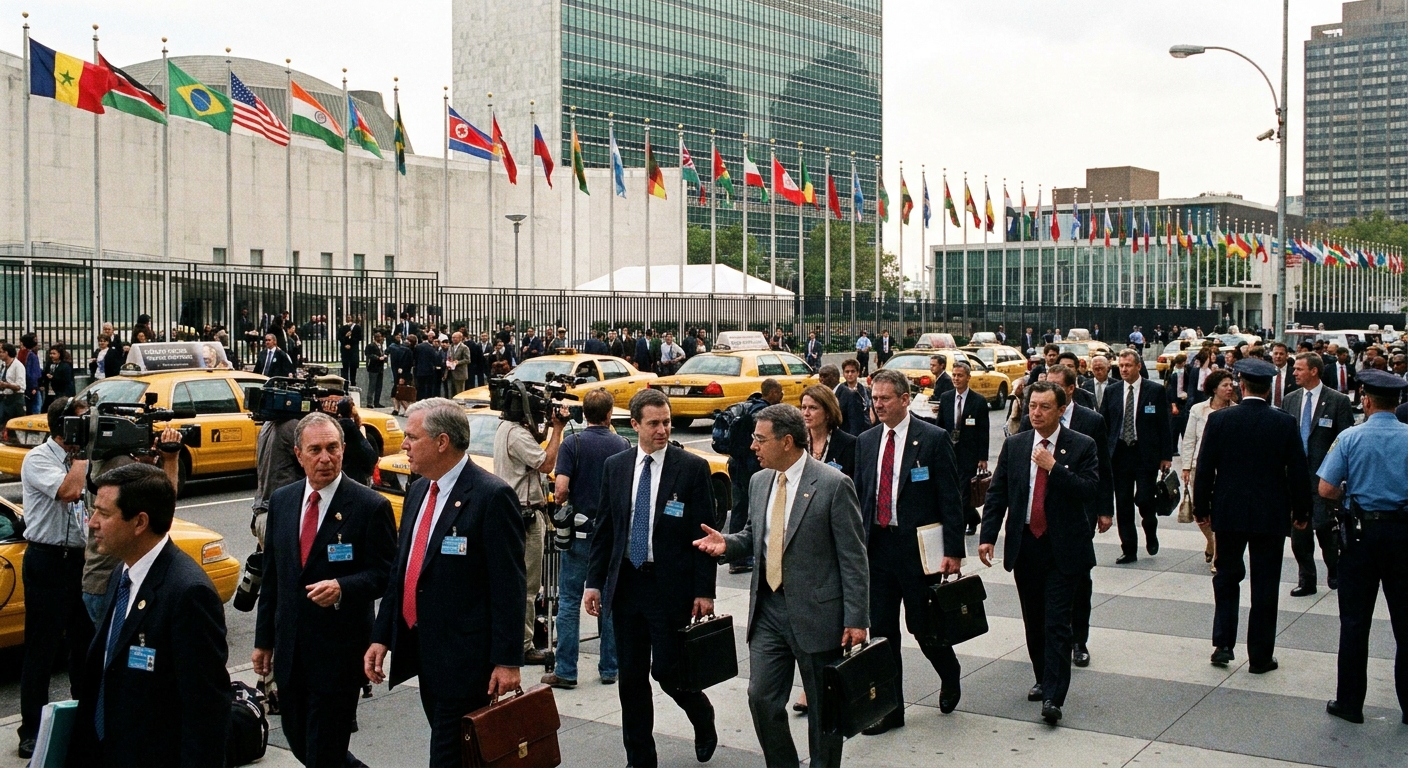
FSIA and diplomacy
Foreign sovereign immunity is a legal doctrine with foreign-policy consequences. That is the point.
Before FSIA, immunity decisions were heavily influenced by the State Department. Congress enacted FSIA to move immunity determinations into courts and make the rules more predictable. But the diplomatic context still matters.
Here is how the diplomatic dimension still shows up:
- Reciprocity concerns: How the U.S. treats foreign states can influence how U.S. government entities are treated abroad.
- Embassy and diplomatic property: Separate protections apply under international law and U.S. statutes, even when immunity from suit is gone.
- Political sensitivity: Cases involving major allies, wartime conduct, or sanctions regimes often create pressure points, even if the legal test is “just FSIA.”
FSIA tries to keep courts focused on statutory categories. Real-world consequences can still shape how aggressively parties litigate and how carefully courts read the boundaries.
Service of process
If you sue a foreign state, you cannot serve it like a domestic defendant. FSIA has its own service rules, and courts take them seriously.
Service under FSIA follows an ordered ladder. Plaintiffs generally must attempt methods in sequence, moving to the next only if the prior method is unavailable.
In broad terms, the statute contemplates options like:
- Special arrangements for service (if the parties agreed to one).
- Service through applicable international conventions (where relevant and actually applicable to service on a foreign state).
- Mailing certain required documents to the foreign state’s ministry of foreign affairs using specified methods.
- Diplomatic channels through the U.S. Department of State as a last-resort pathway.
What makes this practical, and painful: a plaintiff can have a strong merits case and still lose months or years on service problems. Judges may dismiss without prejudice, which sounds gentle until you discover you are up against a statute of limitations or an asset flight risk.
If you are reading this for a real dispute, the takeaway is not “serve them somehow.” It is “serve them exactly as FSIA requires, and document every step.”
Immunity vs liability
FSIA is mainly about jurisdiction and immunity. Once an exception applies, the lawsuit proceeds like other civil litigation in many respects, but there are two common points of confusion.
1) No immunity is not proof of wrongdoing
The commercial-activity exception, for example, just means the court may hear a contract or tort claim arising from commercial conduct. The plaintiff still must prove breach, causation, damages, and any other elements of the underlying claim.
2) FSIA does not always supply the claim
FSIA provides the “can we sue?” framework. The “what are we suing for?” part often comes from state law, federal statutes, international law theories incorporated into U.S. law, or arbitration enforcement mechanisms. Some FSIA-related terrorism provisions operate differently, but the general point holds: jurisdiction and liability are separate problems.
Where these cases get heard
Most FSIA litigation plays out in federal court. And even when a case starts in state court, foreign states often have a path to remove it to federal court, where FSIA issues are typically addressed.
Also note the boundary lines. FSIA is a gatekeeper, but it is not the only doctrine in the room. Even when an FSIA exception applies, defendants may still raise separate defenses that have nothing to do with immunity, like act of state, political question, forum non conveniens, or ordinary merits defenses.
How FSIA differs from suing individuals, diplomats, or U.S. agencies
Suing a foreign individual
FSIA is about states and state entities, not most individuals. When plaintiffs sue foreign officials, courts may apply common-law immunity doctrines and consider whether the acts were “official acts,” whether the person is a sitting head of state, and how the executive branch weighs in.
This means two lawsuits based on the same event can behave very differently depending on whether the defendant is the state, a state-owned company, or an official.
Suing diplomats
Diplomats are covered by separate protections, including treaty-based diplomatic immunity and domestic implementing statutes. Even if you have a valid grievance, the legal system may be structurally closed to you until immunity is waived.
Suing the United States
Domestic sovereign immunity exists too, but it runs through a different set of waivers and statutes, such as the Federal Tort Claims Act. A common trap is assuming “the government can be sued in X situation, so a foreign government can too.” FSIA is its own universe with its own exceptions, procedures, and enforcement limits.
Enforcement
FSIA cases are famous for a reason: even after you win, collecting can be brutally difficult.
FSIA draws another major line between:
- Immunity from suit (can you get into court), and
- Immunity from attachment and execution (can you seize assets to satisfy a judgment).
Even when a foreign state is not immune from being sued, its property can still be immune from seizure unless a separate exception applies.
Practically, plaintiffs often look for assets that are:
- In the United States, and
- Used for commercial activity (not sovereign functions like diplomatic operations).
Embassies and consulates are typically protected. Many central bank and monetary authority assets can also be difficult to reach, especially when they are held for the bank’s own account, though the details depend on the asset and the exception being invoked.
Litigation can turn into a scavenger hunt for attachable property, followed by a second wave of legal fights about what the property is used for and who really owns it.

A practical FSIA checklist
If you are trying to understand whether an FSIA case is even possible, these are the questions that matter early:
- Who exactly is the defendant? The foreign state, a ministry, a state-owned company, or an individual official can change the legal framework.
- Which FSIA exception are you relying on? “It feels unfair” is not an exception. “Commercial activity with a direct U.S. effect” might be.
- Where did the key acts occur? Location drives the exception analysis.
- What is the U.S. nexus? Payment in the U.S., performance in the U.S., property in the U.S., or an immediate effect here.
- Can you serve properly under FSIA? Plan for time, translation, and strict sequencing.
- Is there something to collect against? A paper judgment against a state with no reachable commercial assets in the U.S. can be functionally worthless.
- Are there parallel routes? Arbitration clauses, investment treaty claims (including ICSID in some contexts), or diplomatic negotiations can matter as much as litigation.
Why FSIA matters
FSIA is not in the Constitution’s text. But it sits at the junction of constitutional structure: Congress’s power over foreign commerce, the federal courts’ jurisdiction, and the executive branch’s responsibility for foreign relations.
In practice, FSIA is how the United States translates a delicate proposition into enforceable rules: foreign states are equals in international law, but they sometimes act like ordinary market participants in our courts. When they do, FSIA decides whether the courthouse doors open, how the papers get served, and whether any judgment can be turned into something real.
And that last part is the most honest lesson of all: with foreign sovereigns, law and diplomacy are not separate lanes. They are the same road, just viewed from different angles.