
You can feel the difference between these two standards in real life, even if you have never said their names out loud.
Reasonable suspicion is the legal threshold for an officer to briefly stop you and investigate. Probable cause is the higher threshold that usually justifies an arrest or a full search for evidence.
Both come from the Fourth Amendment’s ban on “unreasonable searches and seizures.” The Amendment does not define either phrase. The Supreme Court built the vocabulary over decades of cases, trying to translate a constitutional principle into street-level rules that work at 2 a.m. on the shoulder of a highway.
Join the Discussion
Two standards, two questions
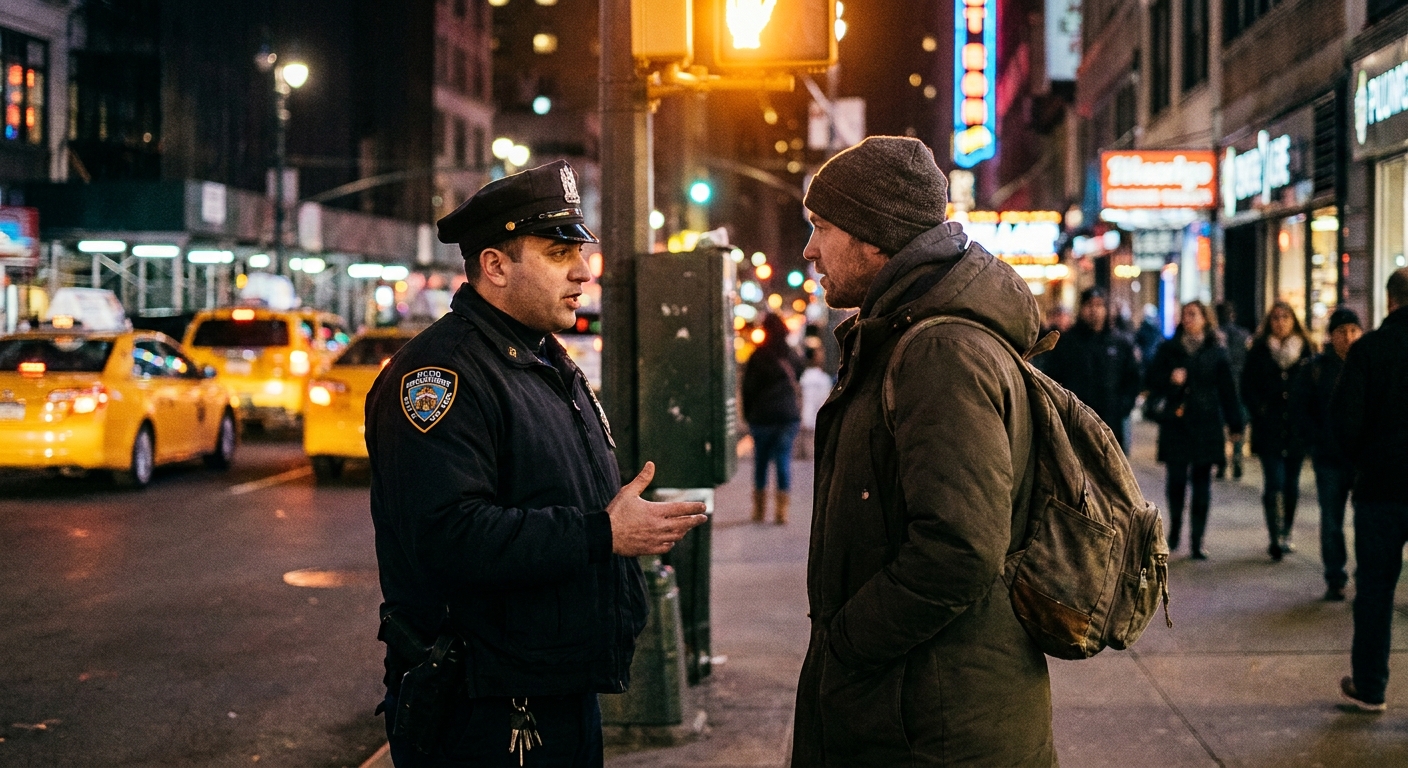
Reasonable suspicion: “Something may be happening.”
Reasonable suspicion is less than probable cause, but more than a hunch. Courts describe it as specific, articulable facts that, taken together, suggest criminal activity may be afoot.
That last part matters. The officer has to be able to explain what they observed and why it added up to suspicion, not just say, “I had a bad feeling.”
Probable cause: “There is a fair probability.”
Probable cause is the classic Fourth Amendment threshold for a search warrant and, in most settings, for an arrest. It does not mean certainty. It means a fair probability, based on facts and circumstances, that a crime occurred or that evidence will be found in the place to be searched.
Probable cause is also what judges look for when signing warrants. The Constitution requires warrants to be supported by probable cause and to “particularly” describe the place to be searched and the things to be seized.
Examples that show the gap
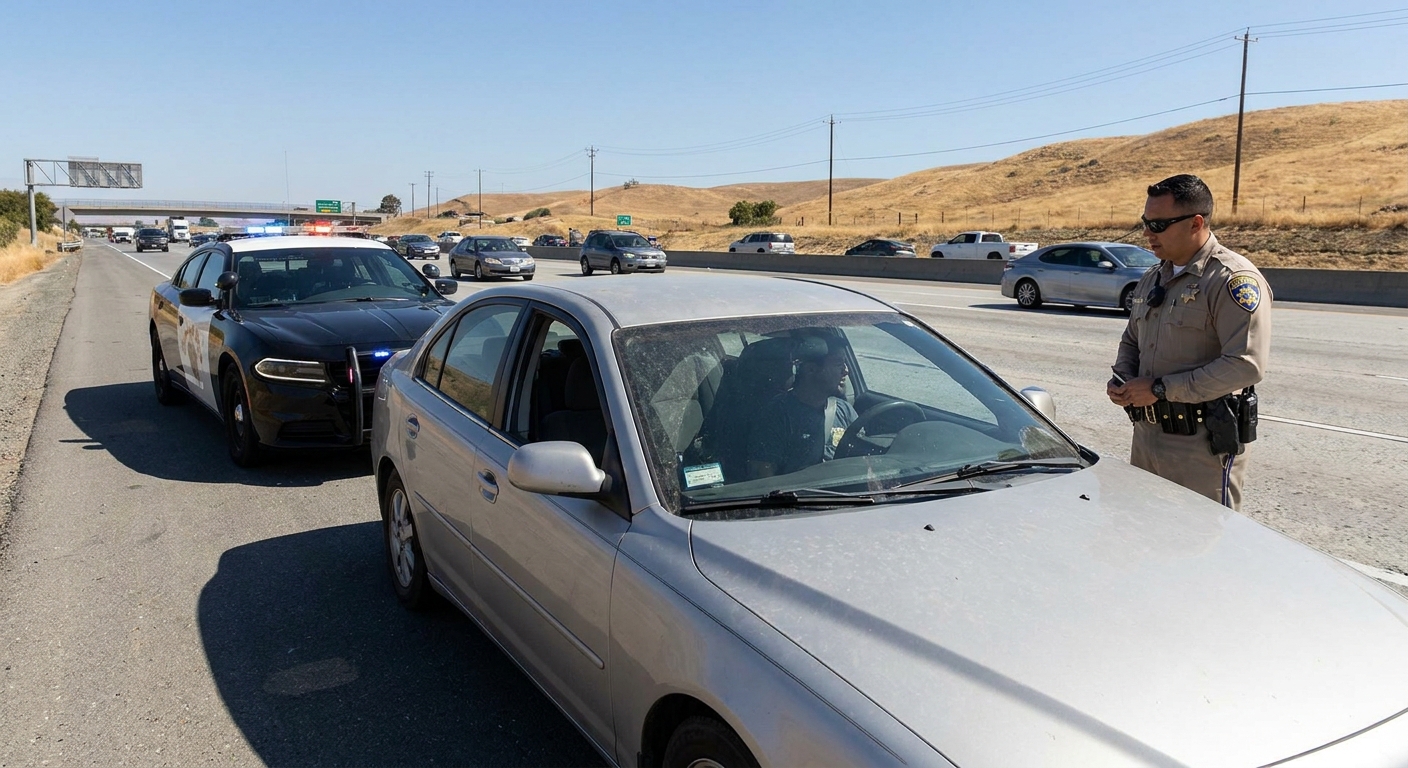
Traffic stop: a violation is enough
If an officer sees you drift across the center line, speed, or run a stop sign, that observed violation generally supplies the legal justification to stop the car. Many vehicle stops also begin as investigatory stops, like suspected impaired driving, which can be supported by reasonable suspicion based on specific observations.
What the stop allows: brief detention, basic questions, checks for license and registration, and actions tied to officer safety.
What it does not automatically allow: a search for evidence inside the car or its containers. Those steps may require probable cause, consent, or a recognized exception.
Pat-down frisk: safety, not evidence
A “frisk” in Fourth Amendment law is not a general search for drugs, papers, or proof. It is a limited pat-down of outer clothing for weapons when an officer reasonably suspects the person is armed and dangerous.
This is the core of Terry v. Ohio (1968): the Court permitted a brief stop based on reasonable suspicion, and a limited frisk when safety concerns are justified.
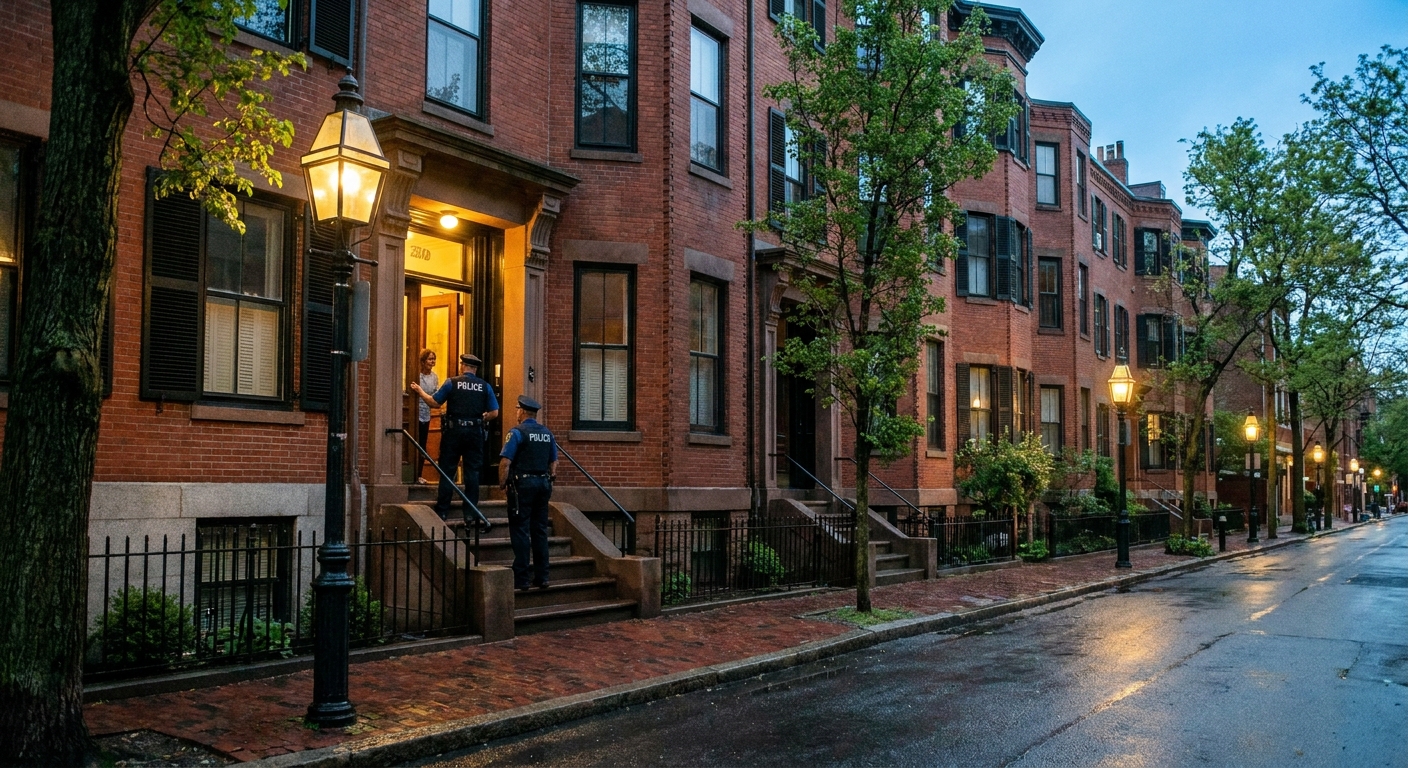
Home search: warrant plus probable cause
Courts treat the home as the Fourth Amendment’s highest-protection space. If police want to search your house for evidence, the standard path is a warrant issued by a judge based on probable cause.
There are exceptions, but they are exceptions for a reason. Courts generally view broad “investigation” inside homes on a lesser standard as incompatible with the Amendment’s core protection of private spaces.
How stops grow into searches
Here is the constitutional logic that people often miss: a Terry stop is a seizure, but it is supposed to be a limited seizure. The law tolerates the lower standard because the intrusion is smaller and the purpose is investigation, not custody.
Once officers move from a brief stop into a search for evidence beyond a weapons pat-down, courts start asking whether the situation has matured into probable cause, whether the person gave valid consent, or whether a defined exception applies.
Stop vs. arrest
A lawful Terry stop can involve temporary restraint, but it is not meant to become a de facto arrest without probable cause. How do courts tell the difference? They look at the totality of circumstances, including:
- How long the detention lasted
- Whether officers moved the person to another location
- The degree of force or restraint used
- Whether the actions were tied to safety and investigation, or drifted into custody
Frisk vs. search
A Terry frisk is not permission to search pockets or containers just because an officer is curious. The touchstone is weapons. If, during a lawful frisk, an officer feels an object whose identity as a weapon is immediately apparent, they can retrieve it.
If the object’s identity as contraband is immediately apparent without manipulation, courts have allowed seizure under the “plain feel” doctrine recognized in Minnesota v. Dickerson (1993). But a frisk cannot be used as a pretext to squeeze, slide, or explore in order to figure out what something is.
When suspicion becomes cause
In real encounters, the facts often build in layers. Officers may start with reasonable suspicion and develop probable cause as they observe more.
- DUI example: weaving plus glassy eyes and slurred speech may justify an investigatory stop and field questions. Add failed sobriety tests or an admission of drinking and the facts can rise toward probable cause for arrest.
- Vehicle contraband example: a stop for a traffic violation may start with one issue, but visible paraphernalia, a credible admission, or other corroborated evidence can increase the justification for a search depending on the jurisdiction and circumstances.
Probable cause in plain English
Probable cause is sometimes described as a “fair probability.” That is deliberately flexible because life is flexible. Courts ask whether the facts would lead a reasonable person to think evidence is likely present or a crime likely occurred.
What can create probable cause?
- Direct observation (for example, seeing someone break into a car)
- Reliable witness reports (especially when corroborated)
- Physical evidence (like visible stolen property)
- Admissions (statements by a suspect)
- Corroborated tips (anonymous tips usually need verification)
What probable cause is not
- A gut instinct with no specifics
- “He looked nervous” standing alone
- A generalized profile untethered to observable facts
Key search exceptions
Warrants are the baseline for many searches, especially homes, but there are well-known exceptions. Many still involve probable cause, but some allow narrower actions on reasonable suspicion, usually tied to safety:
- Consent: a voluntary, valid “yes” can allow a search within the scope of consent.
- Plain view: if an officer is lawfully present and evidence is immediately apparent, it may be seized.
- Exigent circumstances: urgent situations, like imminent destruction of evidence or an emergency, can justify action without a warrant.
- Search incident to arrest: limited authority tied to an arrest, with important limits for vehicles after Arizona v. Gant (2009).
- Inventory searches: standardized inventory procedures after impoundment can permit searches even without a traditional probable cause analysis, depending on compliance with policy.
- Protective vehicle search for weapons: under Michigan v. Long (1983), officers may conduct a limited protective search of areas within reach for weapons when they reasonably suspect a person is dangerous and may gain immediate control of weapons.
Common misconceptions
Misconception 1: “If police can stop you, they can search you.”
A stop based on reasonable suspicion does not automatically authorize a search for evidence. A frisk is narrower than a search and is justified only when the officer reasonably suspects you are armed and dangerous.
Misconception 2: “Reasonable suspicion means 51 percent sure.”
Neither standard is a math formula. Reasonable suspicion is a commonsense judgment based on specific facts. Probable cause is a stronger commonsense judgment, but still short of certainty.
Misconception 3: “Probable cause means police must be right.”
Probable cause can exist even if the person later turns out to be innocent or the search does not find evidence. The legality turns on what was reasonable to believe at the time, based on the facts then known.
Misconception 4: “A warrant is always required for a search.”
The Fourth Amendment makes warrants the constitutional default for many searches, especially homes. But the Supreme Court has recognized multiple warrant exceptions. Many exceptions still hinge on probable cause or consent, but some limited intrusions can rest on reasonable suspicion, especially when officer safety is the focus (like a Terry frisk or a protective vehicle search for weapons).
Context matters
These standards can shift by setting. Courts apply different rules in contexts like border searches, schools, and probation or parole supervision. The general theme still holds: as the intrusion gets bigger, the Constitution usually demands a stronger justification, but the details depend on where you are and why the search is happening.
Quick reference
- Stop (brief detention): typically requires reasonable suspicion of criminal activity.
- Frisk (pat-down for weapons): requires reasonable suspicion the person is armed and dangerous.
- Full search (for evidence): typically requires probable cause, often with a warrant depending on place and circumstances.
If you remember nothing else, remember the direction of travel: as the intrusion gets bigger, the Constitution demands a stronger reason.