
You can feel it in the phrasing: Just a few questions. Step over here. Mind if I pat you down?
Many Fourth Amendment conflicts do not begin with a battering ram and a warrant. They begin with a pause on a sidewalk or shoulder of a road, where an officer suspects something is off but does not yet have enough to make an arrest.
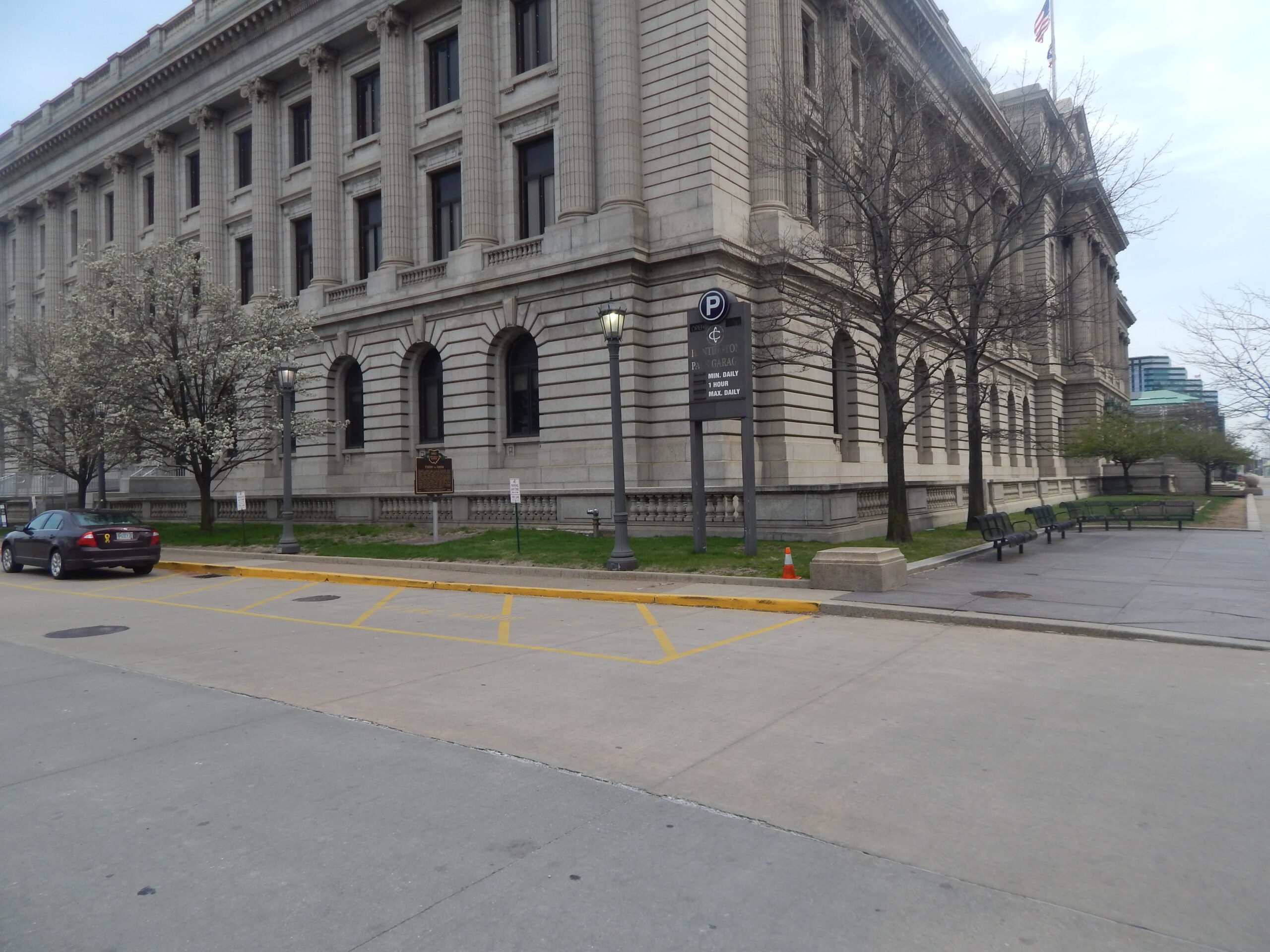
That constitutional gray zone has a name. It is the Terry stop, after Terry v. Ohio (1968). And it runs on a different legal fuel than an arrest. Not probable cause, but reasonable suspicion.
Join the Discussion
What a Terry stop is, and what it is not
The Fourth Amendment prohibits “unreasonable searches and seizures.” A stop is a seizure, even if it is brief and even if the officer never says the word “detained.” But not every police interaction is a stop. A consensual encounter, where a reasonable person would feel free to leave, is not a seizure.
In Terry v. Ohio, the Supreme Court held that police may temporarily detain someone for investigation when the officer has reasonable suspicion that “criminal activity may be afoot.”
A Terry stop is not a full arrest. The constitutional trade is time and scope. Police get a limited detention based on less than probable cause, but they must keep it limited and tied to the reason for the stop.
Reasonable suspicion vs probable cause
- Reasonable suspicion is a particularized, objective basis for suspecting crime based on specific facts and reasonable inferences. It is more than a hunch, less than probable cause.
- Probable cause is a fair probability, based on the totality of circumstances, that a crime has been committed and that the person to be arrested committed it, or that evidence of a crime will be found in a place to be searched.
If you want the larger framework behind probable cause and how it connects to court-authorized searches, see our separate page on the search warrant requirement. Terry is the branch of Fourth Amendment law for moments when officers detain someone on less than probable cause.
When a stop becomes an arrest
A Terry stop can feel like an arrest because it often involves authority, commands, and a restriction on movement. But constitutionally, the question is whether the officer’s actions are still reasonably related to a brief investigation, or whether they have crossed the line into a de facto arrest that requires probable cause.
Courts look at the totality of the circumstances. Common factors include:
- Duration: the longer the detention, the harder it is to justify as a stop.
- Movement: transporting someone to a stationhouse or another location often looks like an arrest (with limited exceptions).
- Force and restraints: handcuffs, drawn weapons, or placing a person in a patrol car can be allowed during a Terry stop for safety, but these measures must be justified by the circumstances and not used as routine.
- Purpose: whether police are diligently pursuing the investigation that justified the stop.
There is no stopwatch in the Constitution. But there is a theme: the government cannot call something “brief” while treating it like custody.
The frisk: a pat-down for weapons, not a search for evidence
Terry also authorized a second step, but only under a second justification. Even if an officer may stop you, they may not automatically frisk you. A frisk requires reasonable suspicion that the person is armed and presently dangerous.
The frisk is limited in scope. It is a pat-down of outer clothing to find weapons. It is not supposed to be a general search for drugs, wallets, phones, or “anything illegal.”
The “plain feel” rule
What if, during a lawful pat-down for weapons, the officer feels something that is obviously contraband? In Minnesota v. Dickerson (1993), the Court allowed seizure when the contraband’s identity is “immediately apparent” by touch, but it rejected frisks that become exploratory squeezing or manipulation.
And pockets are not categorically off-limits. If the pat-down reveals an object whose contour makes it reasonably seem like a weapon, or if contraband is immediately apparent under “plain feel,” an intrusion can be lawful. The problem is when a weapons check turns into rummaging without a weapons-based reason or a valid exception.
How long can police prolong a stop?
A Terry stop must last no longer than necessary to address the reason for the stop and to handle related safety concerns. The Supreme Court has repeatedly emphasized that officers must be diligent and must keep the stop tied to its mission.
Traffic stops and the “mission” of the stop
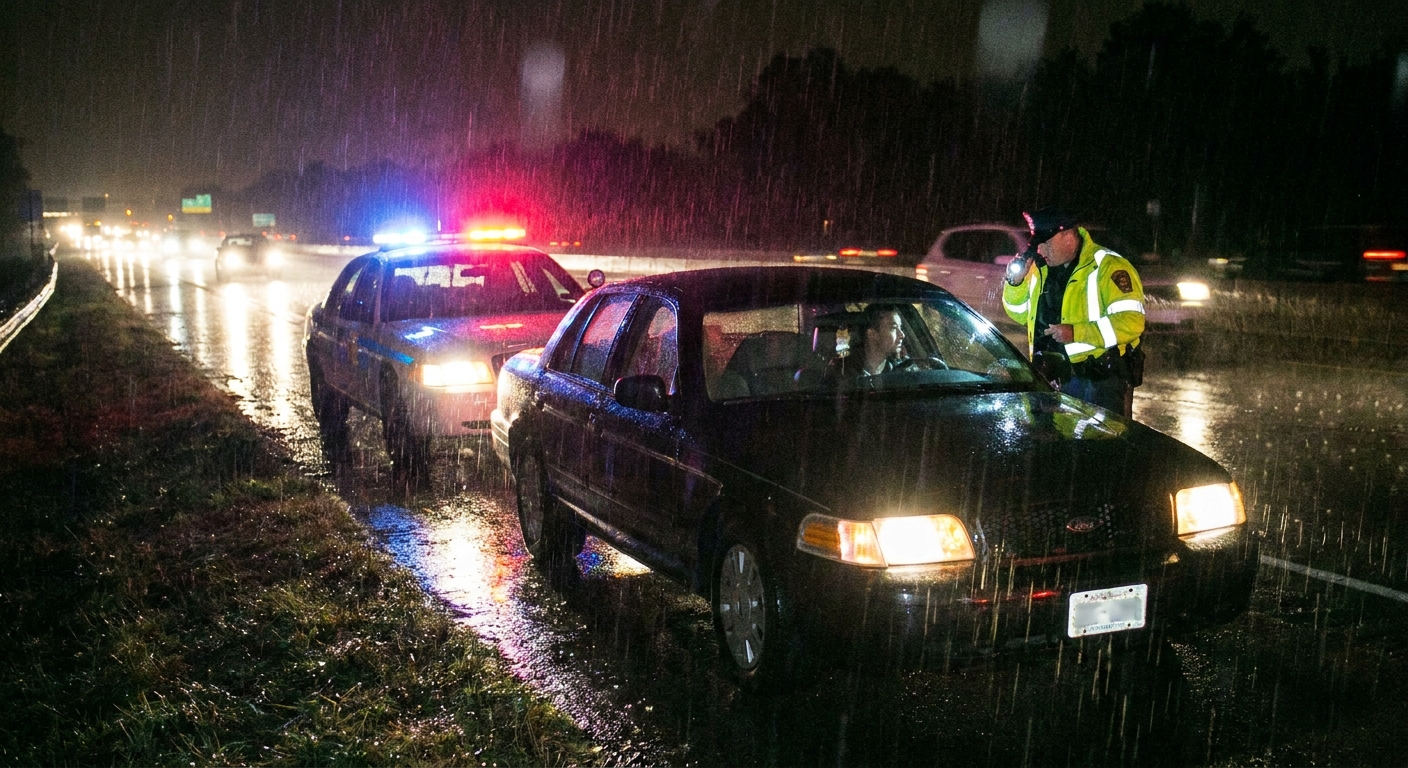
A traffic stop is treated as a kind of Terry stop. It starts with a traffic violation, and its mission includes tasks like checking a driver’s license, confirming registration and insurance, and running routine warrant checks. It also includes ordinary safety precautions.
In Rodriguez v. United States (2015), the Court held that police may not extend a completed traffic stop to conduct a dog sniff without independent reasonable suspicion. A few minutes can matter if the added time is not justified by the stop’s purpose.
A concrete example: if an officer is still writing the citation and asks small talk questions while doing it, courts often treat that as part of the same stop. But if the officer finishes the ticketing tasks, then keeps the driver waiting to call for a K-9 unit, that added delay generally needs separate reasonable suspicion (or valid consent).
Questions and consent during a stop
Officers often ask unrelated questions during a stop. Courts generally allow questioning, but not if it measurably prolongs the detention without justification. And consent matters. If police ask to search and you consent, the analysis changes because the search is no longer justified solely by Terry.
Common fact patterns
1) Pedestrian stops
“Stop and identify” scenarios typically hinge on the specifics the officer can articulate. Courts look for observable facts that connect the person to suspected crime, not generalized suspicion of a neighborhood or a vague “he looked nervous.”
Whether you must identify yourself can also depend on state law. In Hiibel v. Sixth Judicial District Court (2004), the Supreme Court upheld a state “stop-and-identify” statute as applied during a valid Terry stop. Not every state has the same rules, and the scope of what may be required can vary.
Examples that often show up in case law:
- Matched descriptions: clothing and location consistent with a recent report.
- Specific behavior: casing a storefront, repeated back-and-forth movements, or evasive conduct combined with other facts.
- Reliable tips: an informant tip with predictive detail can support reasonable suspicion. A bare anonymous tip often cannot without corroboration (see Florida v. J.L. (2000)).
2) Traffic stops
Traffic stops generate enormous Fourth Amendment litigation because they are frequent and because a minor violation can become the gateway to a broader investigation. Courts commonly analyze:
- The basis for the stop: an actual observed traffic violation generally suffices, even if the officer’s subjective motive is different (see Whren v. United States (1996)).
- Ordering occupants out: officers may generally order drivers and passengers out of the vehicle during a lawful stop for safety (see Pennsylvania v. Mimms (1977) and Maryland v. Wilson (1997)).
- Frisking occupants: requires reasonable suspicion the person is armed and dangerous, not just that the stop is “high risk.”
- Searches of the vehicle: a frisk doctrine can extend to a limited sweep of areas where a weapon may be placed or hidden if there is reasonable suspicion of danger (see Michigan v. Long (1983)), but broader vehicle searches typically require a different exception or probable cause.
3) Stops based on flight or “high crime area”
Courts are wary of formulas like “high-crime area plus nervousness.” But context can matter. In Illinois v. Wardlow (2000), the Court held that unprovoked headlong flight in a high-crime area can contribute to reasonable suspicion. The key word is contribute. It does not create a blank check.
What you can do during a stop
This is not legal advice, but there are a few constitutional basics that help people understand what is happening in real time.
- Ask if you are free to leave: If the officer says yes, it is likely a consensual encounter, not a detention. If the officer says no, you are being seized under the Fourth Amendment.
- Do not physically resist: If you believe the stop or frisk is unlawful, the safer place to contest it is later in court.
- Consent is powerful: A search that would otherwise require a warrant or probable cause can become lawful if consent is voluntary. You can refuse consent. You can also limit consent.
- Frisk is not a full search: A Terry frisk is about weapons. A pat-down does not automatically authorize reaching into pockets, unless the officer reasonably believes an object could be a weapon, or contraband is immediately apparent under the “plain feel” rule.
How Terry fits with warrants and probable cause
Terry is often described as an exception, but it is more accurate to call it a compromise. The Fourth Amendment’s core model is: probable cause, and usually a warrant. Terry acknowledges that policing sometimes happens faster than paperwork.
But the Constitution collects its price anyway. If government can seize you on reasonable suspicion, then courts demand that the seizure remain brief, targeted, and justified. The moment a stop becomes prolonged, invasive, or custodial without probable cause, it drifts away from Terry and toward the warrant-and-probable-cause world the Fourth Amendment was designed to prefer.
When the line is crossed, the usual courtroom fight is over suppression: whether evidence found after an unlawful stop or frisk must be excluded under the exclusionary rule.
Quick case list
- Terry v. Ohio (1968): reasonable suspicion allows brief investigatory stop; frisk allowed with suspicion of being armed and dangerous.
- Pennsylvania v. Mimms (1977) and Maryland v. Wilson (1997): officers may order drivers and passengers out during traffic stops.
- Michigan v. Long (1983): protective search of vehicle areas for weapons with reasonable suspicion of danger.
- Minnesota v. Dickerson (1993): “plain feel” doctrine; no manipulation beyond a weapons pat-down.
- Whren v. United States (1996): traffic stop valid when there is an objective violation, regardless of subjective motive.
- Florida v. J.L. (2000): bare anonymous tip generally insufficient for reasonable suspicion without corroboration.
- Illinois v. Wardlow (2000): flight plus context can contribute to reasonable suspicion.
- Hiibel v. Sixth Judicial District Court (2004): states may require a suspect to disclose their name during a valid Terry stop under certain stop-and-identify laws.
- Rodriguez v. United States (2015): cannot prolong traffic stop for dog sniff without independent reasonable suspicion.