
You can feel it in the first five seconds of a police interaction: the subtle shift from “conversation” to “compliance.”
And the most common pressure point is a deceptively simple demand: “What’s your name?” or “Let me see your ID.”
Whether you must answer depends on three moving parts that do not always line up neatly: your state’s stop-and-identify statute (if it has one), whether the officer has reasonable suspicion to detain you, and whether giving identifying information would amount to self-incrimination in your situation. This article maps the legal terrain, explains the Hiibel rule, and lays out the practical boundaries that matter on the street.

Join the Discussion
The first question
Most confusion about stop-and-identify laws comes from treating all police interactions as the same. Constitutionally, they are not.
1) Voluntary encounter
An officer can walk up and ask questions. You can decline to answer and walk away, as long as you are not obstructing or interfering. In this setting, you generally do not have to identify yourself, even in many states that have stop-and-identify statutes, because those laws typically trigger only during a lawful detention.
2) Investigatory detention
If an officer has reasonable suspicion that you are involved in criminal activity, the Fourth Amendment allows a brief detention to investigate. This is the classic Terry v. Ohio stop.
In some states, during a lawful Terry stop, you can be legally required to state your name. In a smaller number of states, you may be required to provide additional identifying information as defined by statute. In other states, there is no general legal duty to identify yourself, even during a Terry stop.
3) Arrest
Once you are under arrest, the officer can book you and identify you through fingerprints, databases, and other procedures. Refusing to provide basic booking information can have consequences that vary by jurisdiction. It can mean continued detention while identity is confirmed, or it can trigger separate charges in some places. That is a different world than a sidewalk stop.
The practical tell: If you ask, “Am I free to leave?” and the answer is “no,” you are in detention territory. That is where stop-and-identify laws, if they exist, start to matter.
What Hiibel held
The modern stop-and-identify conversation begins with Hiibel v. Sixth Judicial District Court of Nevada (2004).
Nevada had a statute requiring a person, during a lawful Terry stop, to “identify himself.” Hiibel refused. He was arrested and convicted for that refusal. The Supreme Court upheld the law as applied.
The Fourth Amendment
The Court said it is not inherently unreasonable under the Fourth Amendment to require a detained person to disclose their name, when the stop itself is lawful. The request is treated as a modest part of confirming or dispelling suspicion.
The Fifth Amendment
Hiibel also argued that stating his name could incriminate him. The Court rejected that argument on the record in that case, because he did not show a realistic risk that his name itself would be incriminating.
But the Court left an important door open: if providing identifying information would be genuinely incriminating in a particular situation, the Fifth Amendment can still matter.
What Hiibel did not do
- No nationwide “must show ID” rule. States still decide whether to pass stop-and-identify statutes and how broadly to write them.
- No collapse of the stop vs. encounter line. If you are not lawfully detained, the statute (usually) does not apply.
- No blessing for fishing expeditions. The officer still needs reasonable suspicion to detain you in the first place.
Two basic regimes
Across the country, you can roughly sort jurisdictions into two legal regimes.
Regime A: Stop-and-identify statute
These states authorize officers to require some form of identification during a lawful investigatory stop. Many are “name only” statutes. Some require more, like a name plus address, or “credible and reliable” identification, or an explanation of conduct. Enforcement and penalties vary, and court decisions can narrow what the statute means in practice.
Regime B: No general stop-and-identify duty
In these states, absent a specific context (driving, regulated activities, certain venues, probation or parole conditions, some emergency orders), there is typically no general criminal offense for a pedestrian refusing to identify themselves. Police can ask. You can refuse. If the stop is otherwise lawful, the officer may continue investigating without your name, but they usually cannot arrest you solely for refusing to identify, unless another law applies.
Important caveat: Even where there is no stop-and-identify law, giving a false name can be its own crime. Silence and deception are not treated the same way.
State law reality
The biggest trap in this topic is oversimplifying state-by-state rules. “Stop-and-identify” coverage is sensitive to statutory wording, state court interpretations, and how refusal is charged (or not charged). Laws also change and get re-codified.
So treat any state list as a starting point, not a verdict. If you need high confidence for a specific state, look up (1) the statute text, and (2) recent appellate cases interpreting it.
How to verify fast
- Search your state code for terms like “stop and identify,” “failure to identify,” “loitering and prowling,” or “obstructing.”
- Check whether the law applies only when you are “lawfully detained,” and what it demands (name only vs. name and address vs. “credible and reliable” ID).
- Look for a state appellate or supreme court case that answers: can you be arrested just for refusing, and what counts as compliance.
Examples only
Because the risk of misclassification is real, the safer takeaway is the pattern, not the roster. Still, to make the landscape concrete, here are commonly cited examples that often appear in discussions of stop-and-identify statutes, with the understanding that you should confirm current law and case limits before relying on them:
- Often cited as having a stop-and-identify statute (confirm scope): Nevada, Arizona, New Mexico, Colorado, Alabama, Indiana, Louisiana, Ohio, Utah, Wisconsin.
- Often cited as having no broad pedestrian stop-and-identify duty (confirm exceptions): California, Pennsylvania, Virginia, Washington, Massachusetts, Oregon.
Even within those examples, details vary. Some statutes require more than a name. Some courts interpret “identify” as verbal information, not papers. And some jurisdictions rely heavily on other statutes in practice (like obstruction), which can change the on-the-street outcome even if the stop-and-identify statute is narrow or absent.
Name vs. ID card
“Identify yourself” sounds like “show me a plastic card.” Legally, those are not always the same demand.
Many laws are name-only
Hiibel upheld a law requiring a suspect to state their name during a lawful stop. It did not require a person to carry papers. Many state laws track that approach.
Some laws require more
In some jurisdictions, the statute or local interpretation can move closer to “provide credible and reliable identifying information,” which may include an address or date of birth, or may be satisfied by information that checks out. Whether an officer can demand an actual government-issued ID card depends on the text and the courts.
If you do not have ID
In a name-only regime, not carrying an ID is usually not the problem. The question is whether you must state identifying information. If the law demands a document, it often uses explicit language. Do not assume a card is required just because it is requested.
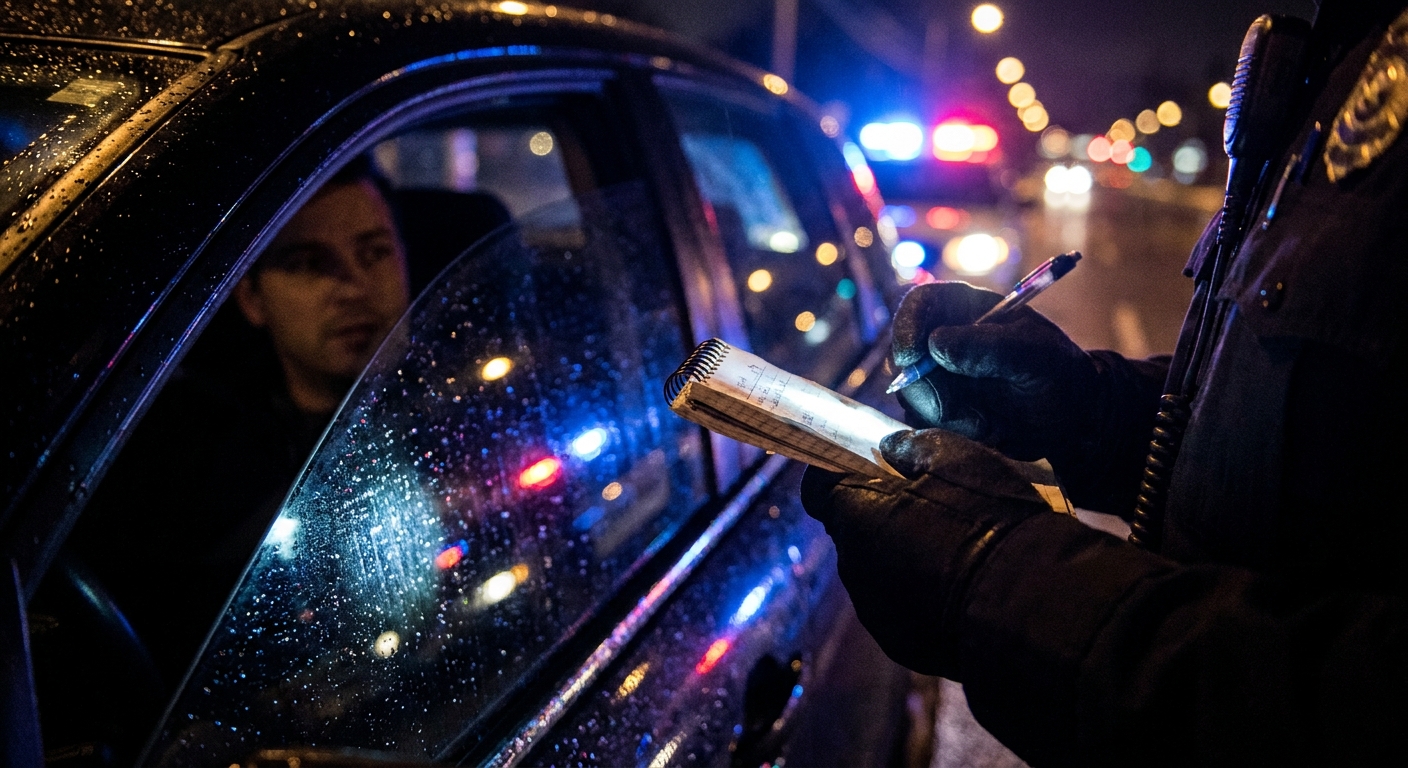
Traffic stops are different
If you are driving, states universally require a driver to present a valid driver’s license upon request. Registration and proof of insurance are generally required to be produced on demand, but the details are not identical everywhere (for example, electronic proof is allowed in many places, and “failure to carry” can be treated differently than “failure to have”).
Reasonable suspicion
Stop-and-identify statutes do not give police a blank check to detain anyone and demand names. The Fourth Amendment still requires the stop itself to be justified.
What it is
Reasonable suspicion is specific, articulable facts that suggest criminal activity. It is more than a hunch, less than probable cause. Courts look at the totality of the circumstances.
What it is not
- Usually not enough by itself: being in a “high-crime area.”
- Usually not enough by itself: looking nervous.
- Not a crime: refusing to answer questions during a voluntary encounter.
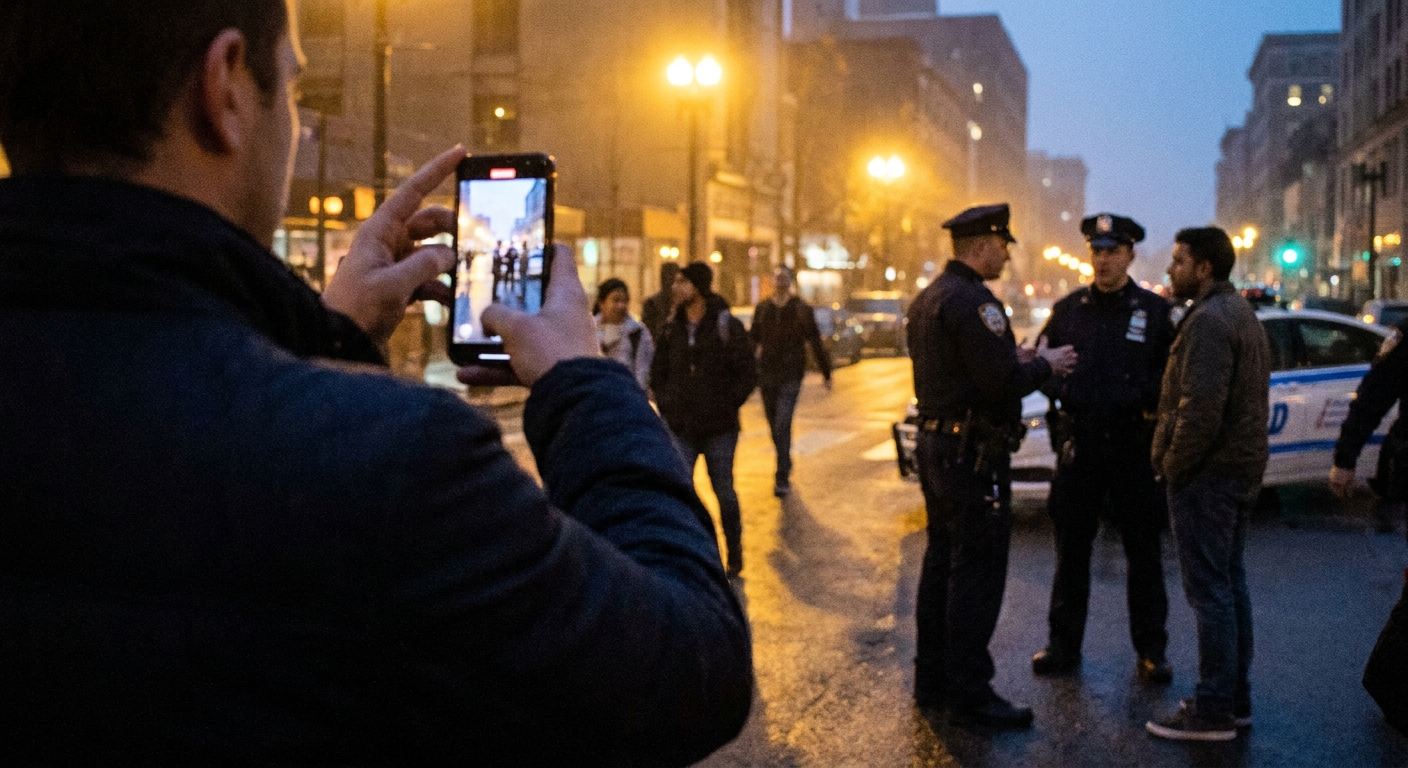
- Not inherently suspicious: recording police from a lawful distance.
Those first two factors can sometimes contribute under the totality of circumstances, but standing alone they are commonly insufficient.
If the stop is not supported by reasonable suspicion, then an “identify yourself” demand may be built on an unlawful seizure. In court, that can matter for suppression of evidence. On the street, the reality is harsher: you may still be detained, and sorting out legality often happens later.
Miranda basics
Miranda warnings are one of the most misunderstood features of American law. They do not appear the moment an officer speaks to you. They appear when two conditions are met: custody and interrogation.
Terry stops and custody
Most brief street detentions are treated as non-custodial. That means an officer can ask questions without Miranda warnings, and your answers can potentially be used in court.
Miranda is not the whole Constitution
You still have the right not to incriminate yourself, and you still have Fourth Amendment protection against unreasonable seizures. Miranda is a procedural safeguard, not the entire Constitution.
Booking questions
Even after arrest, routine biographical questions are often treated differently than investigative questioning. That is one reason a name request can be treated as relatively low-level, while probing questions about what you did can raise different issues.
What can be demanded
Here is the practical boundary line that people are usually searching for.
In a voluntary encounter
- Police may ask: your name, where you are going, what you are doing, for consent to search, for ID.
- You may refuse: to answer, to show ID, and to consent to a search.
- Key move: ask “Am I free to leave?” If yes, leave calmly.
In a lawful Terry stop
- Police may ask: questions aimed at confirming or dispelling suspicion.
- What you must answer is narrower: in stop-and-identify states, you may be required to provide identifying information as defined by statute (often your name). Beyond that, you generally do not have a broad duty to answer investigative questions.
- You can still refuse: consent searches. You can also decline to answer questions that could incriminate you, while remaining calm and non-physical.
In an arrest
- Police can search you incident to arrest and transport you for booking.
- Miranda may apply if you are interrogated while in custody.
Obstruction and resisting: Many states criminalize obstructing, resisting, or delaying. Definitions vary, and they can be stretched in the heat of a confrontation. Non-physical refusal and silence are different from physical resistance. Keep your hands visible, do not pull away, and do not turn a legal argument into a wrestling match.
Common special cases
Even in “no general duty” states, specific contexts can change the rules.
- Driving: license required on demand, and registration and insurance are generally required.
- Regulated activities: hunting and fishing licenses, certain alcohol-regulated venues, secured facilities, and similar settings can carry identification requirements.
- Firearms carry: some states require permit holders to display a permit on demand, or impose a duty to inform. Others do not. This is highly state-specific.
- Probation or parole: conditions can require identification and compliance beyond what applies to the general public.
Low-risk scripts
Constitutional rights are not magic words. But clear, non-inflammatory language can preserve arguments and reduce escalation.
To clarify the encounter
- “Officer, am I being detained, or am I free to leave?”
To comply narrowly where required
- “My name is [Name]. I do not consent to any searches.”
- “I am going to remain silent beyond what you are requiring me to provide.”
To decline where not required
- “I do not wish to answer questions. Am I free to leave?”
If asked to consent to a search
- “I do not consent to a search.”
None of this guarantees the officer will agree with your legal analysis in the moment. It does help create a clean record of what you did and did not agree to.
After the stop
If the interaction feels wrong, the cleanest leverage is often after-action documentation, not on-scene debate.
- Note the time, location, patrol car number, and officer names or badge numbers if visible.
- If you recorded, preserve the original file and back it up.
- If you are cited or arrested, ask a lawyer about the statute in your jurisdiction and whether the stop was lawful.
Bottom line
The phrase “stop-and-identify” sounds like a universal rule. It is not. It is a state-by-state patchwork that generally activates only when the officer has a lawful basis to detain you.
- If the encounter is voluntary, you can usually decline and leave.
- If you are detained, the officer must have reasonable suspicion.
- If your state has a Hiibel-style law, you may have to state your name during that lawful stop, but that does not automatically mean you must produce a card.
- Miranda is not the trigger for most street questions, but the Fourth and Fifth Amendments still shape what police can do and what you can refuse.
Knowing which regime your state follows does not make an interaction pleasant. It does make it legible. And in constitutional life, legibility is power.