
When a president issues a large batch of commutations outside the usual Justice Department review pipeline, the resulting internal scramble can make clemency sound like a paperwork problem.
It is not. It is a constitutional design feature, and a political accountability problem.
The Constitution gives the president a switch labeled mercy, and it is wired directly into federal criminal punishment. The Department of Justice can advise. It can recommend. It can run a careful vetting process designed to prevent mistakes. But it cannot require the president to use it.
Join the Discussion
What the Constitution says
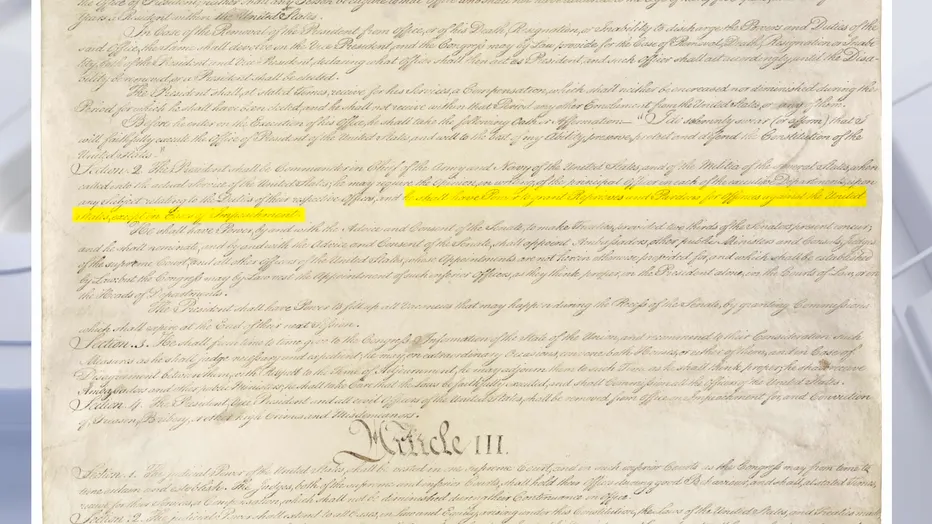
The president’s clemency authority comes from one clause in Article II.
Article II, Section 2, Clause 1 provides that the president “shall have Power to grant Reprieves and Pardons for Offences against the United States, except in Cases of Impeachment.”
That is the whole grant. It does not prescribe forms, timelines, or required consultations. It does not mention the Attorney General. It does not require the president to explain the decision, or even announce it in a particular way.
When people ask whether a president can issue clemency “without DOJ vetting,” they are really asking whether the Constitution makes DOJ part of the decision. It does not.
At the same time, the effects of clemency often depend on other law: statutes defining collateral consequences, agency rules, and court doctrine about scope and implementation. The Constitution supplies the power. The rest of the system determines how far relief travels.
Pardon vs. commutation
“Clemency” is the umbrella. Under it are several tools, including reprieves (delays of punishment) and remissions (relief from fines or forfeitures, including criminal forfeiture in appropriate cases). The two that show up most in headlines are pardons and commutations, and they do different things.
Pardon
- What it does: Forgives the federal offense. A pardon can remove some legal disabilities that attach to a conviction, depending on how the relevant statute treats those disabilities.
- What it does not automatically do: It does not erase history. A pardon does not rewrite court records, and it does not guarantee expungement (which is governed by statute, and in federal court is quite limited). It also does not automatically wipe away every collateral consequence. For example, a state licensing board may still consider the underlying conduct, and some immigration consequences are controlled by separate statutory schemes rather than a pardon alone.
- When it can happen: Often after conviction, but it can be issued earlier. The Supreme Court has recognized that a pardon can be granted before conviction for federal conduct (for example, Ex parte Garland).
Commutation
- What it does: Reduces a sentence. Think of it as changing the punishment while leaving the conviction in place.
- How it works in practice: A commutation does whatever the written grant says. It can cut prison time, convert a term to time served, reduce a fine, or leave parts of the sentence intact. If supervised release is changed, that is because the commutation specifies it. If it is not specified, agencies typically treat the remaining components of the sentence as unchanged.
- What it does not do: It typically does not restore rights or remove collateral consequences tied to the conviction. It is not the same thing as being “forgiven.”
This is why “commutations bypassed normal vetting” is such a loaded line. A commutation can free someone tomorrow, even though the conviction and its downstream effects remain.
Does DOJ have to vet clemency?
No. The DOJ process is policy, not constitutional law.
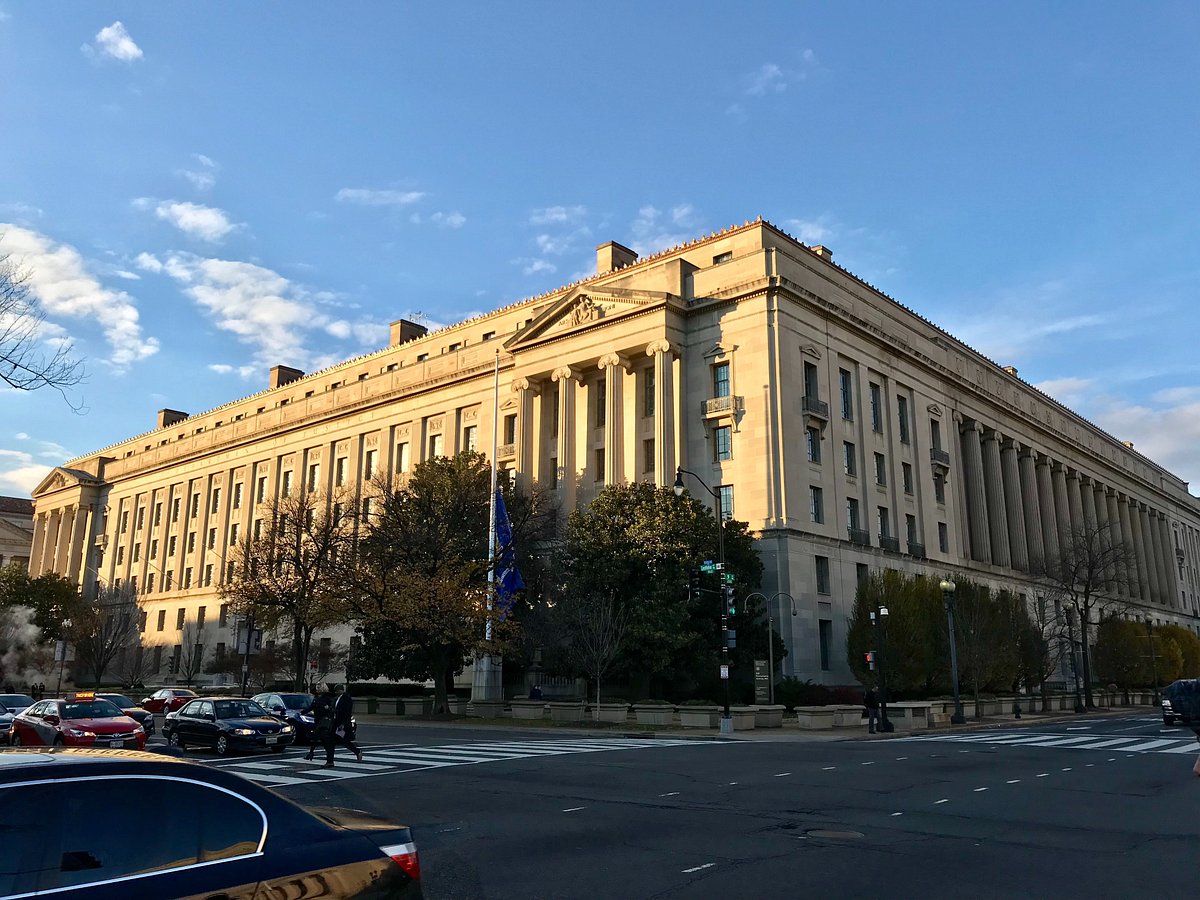
Inside the executive branch, clemency requests often run through the Office of the Pardon Attorney, which is housed at DOJ. That office collects applications, gathers records, consults prosecutors and judges, and provides recommendations.
But the key word is recommendations. The president can:
- follow the DOJ process
- modify it
- ignore it
- or build a separate track through White House counsel or other advisers
That is not a loophole. It is how the clause is structured. The power belongs to the president personally as head of the executive branch, not to the department that prosecutes federal crimes.
The tension you see in stories about “scrambling” is a separation-of-roles issue inside the same branch of government: prosecutors are trained to be methodical, documented, and reversible. Clemency is allowed to be quick, discretionary, and final.
Why clemency is so broad
The framers did not design clemency as an afterthought. They designed it as a safety valve.
Even a fair criminal justice system produces hard cases: excessive sentences, outdated laws, humanitarian emergencies, cooperation that comes too late to matter at sentencing, or situations where punishment no longer serves its purpose. The clemency power is a way to correct or soften outcomes without reopening the entire judicial process.
That also means clemency is intentionally not built like a trial. It is not meant to have opposing counsel, evidentiary hearings, or an appeal. It is executive mercy, not judicial review.
Constitutional limits
The clemency power is enormous, but it is not infinite. The limits that matter are few, and very specific.
1) Federal offenses only
Article II covers “Offences against the United States,” meaning federal crimes. A president cannot pardon or commute a state conviction. Governors (and state boards, depending on the state) control state clemency, and a federal grant does not bind state consequences as a matter of state law.
2) No undoing impeachment remedies
The clause has one explicit exception: “except in Cases of Impeachment.” This does not mean a president cannot pardon an impeached official for related crimes. It means the president cannot use clemency to undo the constitutional remedy of impeachment, removal, or disqualification imposed by Congress.
3) Courts do not review the reasons, but they may address validity and scope
Courts generally do not second-guess the reasons for a clemency decision, and they generally treat a valid grant as conclusive. Litigation, when it happens, is usually about questions like authenticity, the legal scope of the written grant, and how to implement its terms in a judgment or sentence calculation, not whether the president had a good reason.
And none of this creates immunity for separate wrongdoing. Bribery, fraud, or other crimes connected to a clemency scheme remain prosecutable as crimes, even though the clemency act itself is still legally effective.
4) It does not rewrite private or state consequences
Clemency affects federal criminal liability and punishment. It does not, by itself, rewrite civil judgments, private contracts, or state-law consequences. Where a pardon changes outcomes beyond sentencing, it is usually because some other law ties a federal disability to the conviction in a way the pardon alters.
What bypassing vetting changes
Legally, a commutation is effective when the president grants it, typically memorialized in a written grant or warrant. The delivery-and-acceptance doctrine that sometimes comes up with pardons is usually less central to commutations, which operate directly on the sentence as written.
Practically, bypassing the usual DOJ pathway can create real-world friction because the bureaucracy that must implement the decision needs precision:
- The Bureau of Prisons needs the exact terms to calculate release dates and custody status.
- Probation offices need to know whether supervised release is unchanged, shortened, or terminated.
- Courts and clerks may need to update judgments or docket notes to reflect the grant’s terms.
- Prosecutors and victims may learn after the fact, depending on how the White House communicates it.
A scramble can be real even when everything is lawful. If the written grant is terse or silent on supervised release, for example, agencies may have to confirm whether “time served” means custody only, the entire sentence package, or something in between. The Constitution answers who may decide. It does not guarantee the decision will arrive in the neat order that agencies prefer.
Conditions
Yes, conditions are often permissible. Historically and in Supreme Court doctrine, pardons can be offered with conditions, and acceptance can matter. Commutations can also be structured with terms, such as converting a sentence to time served while leaving supervised release intact.
Conditions still live inside the basic purpose of clemency: adjusting criminal punishment. They operate by offering relief on specified terms, and a recipient can forgo the benefit rather than accept the condition. A condition also cannot be used as a back door to punish a different offense or to impose obligations that are untethered from the relief being granted.
Can clemency be reversed?
Generally, once clemency is finalized, it is treated as final. The details can get technical, especially regarding whether a pardon grant was completed and whether it required acceptance, but the broad principle is that clemency is not designed to be tentative or revisable.
That finality is part of why internal vetting exists in the first place. The DOJ process is a quality-control mechanism for an authority that is hard to unwind.
Why it clashes with modern expectations
Modern Americans are used to the idea that government action should follow a documented, auditable process. Prosecutorial discretion has internal rules. Sentencing has guidelines. Agencies have notice-and-comment procedures.
Presidential clemency does not fit that mold, because it predates the administrative state. It is a constitutional power from an era that assumed a single, accountable actor would sometimes need to act quickly and personally.
Congress and DOJ can build voluntary processes and transparency norms, and presidents can choose to follow them. Congress can also require reporting, documentation, or implementation procedures for executive agencies that carry out a grant. But if you want enforceable legal constraints that operate as conditions precedent on the president’s decision itself, you would need a constitutional amendment. Short of that, the checks are mainly political: public scrutiny, congressional oversight, and elections.
Quick FAQ
Can the president pardon someone for a state crime?
No. The president’s Article II clemency power covers federal offenses only.
Can the president pardon someone who has not been charged yet?
A pardon can be issued before conviction for federal conduct. That is constitutionally recognized, though it is controversial as a matter of policy.
Does a commutation mean the person is innocent?
No. A commutation changes the sentence, not the conviction.
Does DOJ have to review or approve clemency?
No. DOJ review is an internal executive-branch process that advises the president. It is not a constitutional requirement.
Can Congress limit the pardon power by statute?
Congress can define federal crimes and punishments, and it can structure administrative processes inside agencies, but it cannot take away or condition the president’s Article II clemency authority by ordinary law.