
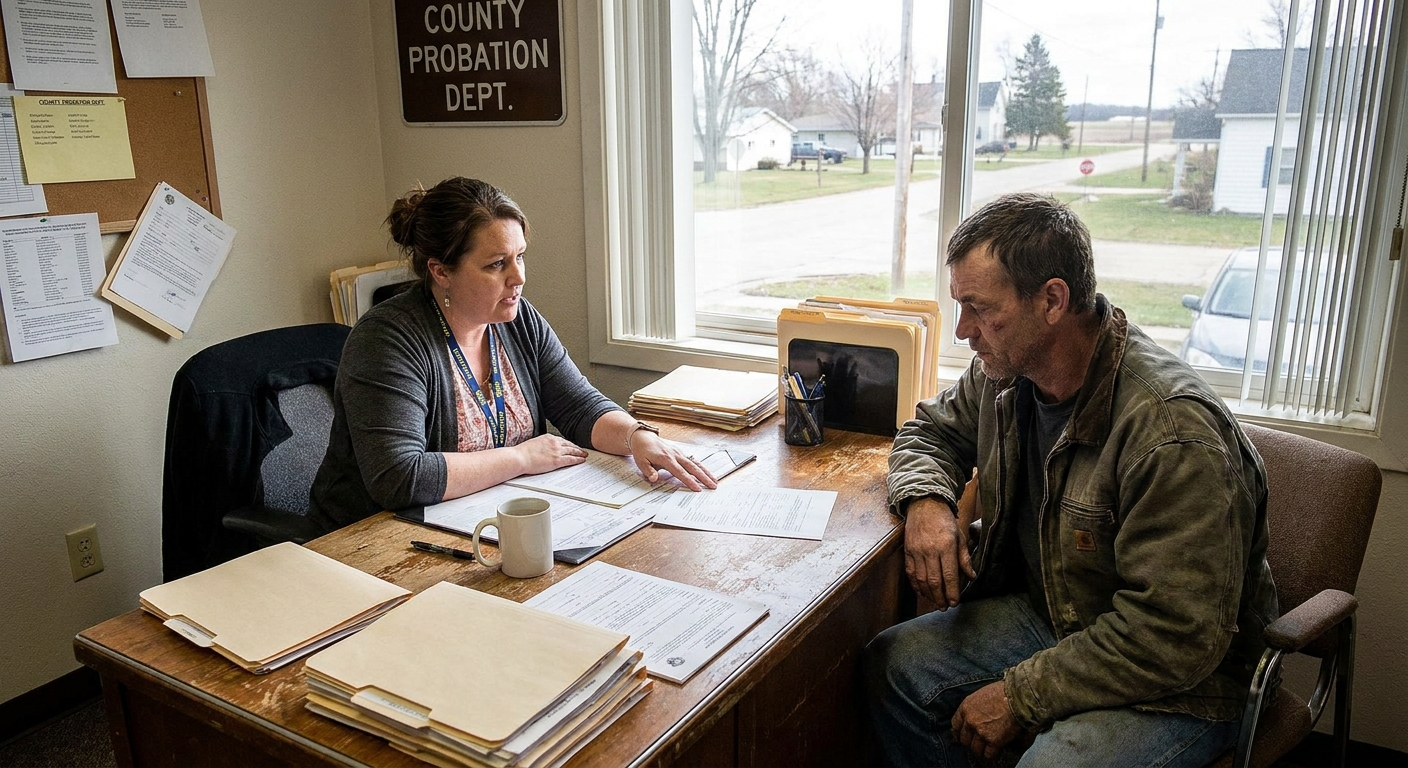
Probation and parole can feel like they blur into everyday life. You report. You test. You keep curfews. You ask permission before you travel. It is supervision, not a court proceeding.
Revocation is different. Revocation is the moment the system stops monitoring and starts deciding whether you keep your conditional freedom at all. It is also where constitutional procedure becomes most visible: notice, a hearing, and a limited set of due process protections that look familiar, but do not look like a full criminal trial.
Join the Discussion
Supervision vs. revocation
Day-to-day supervision
Probation and parole both impose conditions. Typical conditions include reporting requirements, employment rules, drug and alcohol testing, limits on contact with certain people, and restrictions on travel or firearms.
Most of that is administrative. A missed appointment can trigger a warning, a sanction, or a request to modify conditions. The supervising officer often has discretion, and the process is usually informal.
The revocation process
Revocation is the formal process that can end probation or parole and place someone back in custody. The decision is not whether the person committed the original offense. That part is already settled by a conviction or plea. The decision is whether the person violated the conditions of release, and if so, what should happen next.
That distinction explains why revocation proceedings have due process, but not the full menu of trial rights.
What due process requires
The Constitution does not list “probation revocation” or “parole revocation.” The protections come largely through the Fourteenth Amendment’s Due Process Clause for state systems and the Fifth Amendment’s Due Process Clause for the federal system.
The Supreme Court set the basic framework in two landmark cases:
- Morrissey v. Brewer (1972), which held that parole revocation requires certain minimum due process protections.
- Gagnon v. Scarpelli (1973), which extended similar protections to probation revocation and addressed when counsel may be required.
These cases treat revocation as a serious deprivation of liberty, but still different from a prosecution for a new crime.
Notice
Revocation starts with an allegation, sometimes called a violation report, violation petition, or a warrant request. Due process generally requires:
- Written notice of the claimed violations.
- Disclosure of the evidence the government plans to rely on, usually enough for a meaningful chance to respond, subject to practical limits that can vary by jurisdiction (for example, safety concerns or how an agency handles files).
In practice, the level of detail varies. Some notices read like a checklist. Others describe dates, witnesses, and the underlying conduct. If notice is vague, defense lawyers often attack the proceeding on basic fairness grounds: you cannot contest what you cannot understand.
The hearing steps
Morrissey described a two-stage approach that many systems still resemble, even if the names and paperwork differ.
Not every jurisdiction uses both stages in every case. Some systems combine steps, and some move straight to a final hearing, especially if the person is not taken into custody on a warrant or hold.
1) The preliminary hearing
This is a quick, early check. The question is whether there is probable cause or a similar threshold showing that a violation occurred, enough to hold the person for a final decision.
If someone is arrested on a violation warrant, the preliminary step matters because time matters. Detention while waiting for a final hearing can function like punishment even before the system has made its formal decision.
2) The final revocation hearing
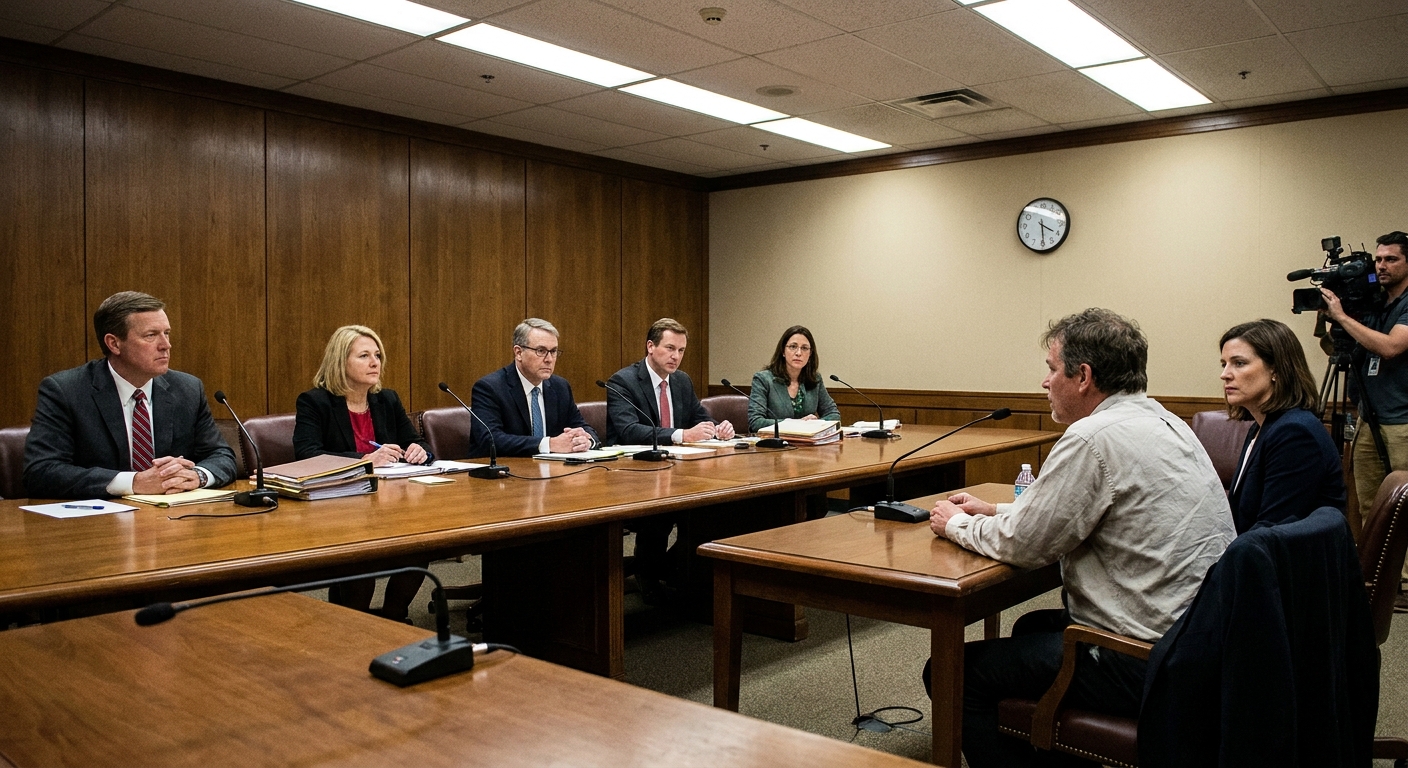
The final hearing decides whether a violation happened and what consequence follows. Due process at this stage usually includes:
- A neutral decisionmaker, such as a judge, parole board member, or hearing officer.
- An opportunity to be heard and present evidence.
- The ability to call witnesses when appropriate.
- A limited right to confront and cross-examine adverse witnesses, unless the government shows good cause to proceed without live testimony. The exact confrontation standards vary by jurisdiction.
- A written statement or recorded explanation of the evidence relied on and the reasons for revocation.
Timing: Morrissey also emphasized that hearings must occur within a “reasonable time.” What that means in practice varies widely, from days to weeks, and sometimes longer depending on custody status, court calendars, and local rules.
Why it is not a trial
If you have watched courtroom TV, revocation can feel like a trial that forgot to bring the jury and the strict rules. That is not an accident. Revocation is generally treated as a continuation of the original sentence, so it is not handled as a new “criminal prosecution” for Sixth Amendment purposes.
No jury
Revocation is typically decided by a judge or board, not a jury. The Sixth Amendment jury trial right is tied to “criminal prosecutions,” and revocation is generally treated as something else.
Lower burden of proof
A new criminal charge must be proven beyond a reasonable doubt. Revocation is usually proven by a lower standard such as preponderance of the evidence or a similar “reasonable satisfaction” standard, depending on the state or federal system.
Looser evidence rules
Hearsay is more likely to be admitted. Documentary evidence is common. Some systems allow lab reports or officer reports without the same confrontation requirements as a trial, as long as there is a sufficient reliability showing, good cause for not presenting a witness, or both. The exact test is jurisdiction-dependent.
The Fifth Amendment in practice
People on supervision often must answer questions truthfully as a condition. That creates tension with the privilege against self-incrimination when questions overlap with new alleged crimes. Courts have wrestled with when statements are “compelled” and how they may be used. As a practical matter, revocation can pressure a person to choose between cooperating and protecting themselves.
Right to counsel
In a criminal prosecution, the Sixth Amendment right to counsel is robust. Revocation is more conditional.
When counsel is required
Under Gagnon v. Scarpelli, there is not an automatic constitutional right to appointed counsel in every revocation. Instead, counsel may be required case by case, especially when:
- The person denies the violation and the case turns on disputed facts.
- There are substantial reasons that justify or mitigate the violation and the person cannot effectively present them without a lawyer.
How it works in practice
Many states provide broader rights to counsel than the constitutional floor, either by statute, court rule, or state constitutional interpretation. Some provide counsel as a matter of policy in most revocation hearings. Others provide counsel in narrower categories.
In federal supervised release revocation, the right to counsel is recognized by rule (see Fed. R. Crim. P. 32.1), and counsel is commonly appointed for eligible defendants.
Outcomes
Revocation can produce consequences that surprise people because it can impose custody or other penalties without a new criminal conviction.
Common outcomes
- No violation found, supervision continues as before.
- Modification of conditions, such as added treatment, more reporting, electronic monitoring, or community service.
- Short custody sanctions in systems that use “graduated sanctions.”
- Revocation and imposition of custody, often tied to the remaining suspended sentence (probation) or a return to incarceration time (parole).
Violations that are not crimes
You can be revoked for behavior that would never lead to a criminal conviction, like missing appointments, failing to maintain employment, drinking alcohol when prohibited, or associating with prohibited individuals. The system can treat those as violations of a privilege, not new crimes requiring a trial.
Revocation without a new conviction
Some jurisdictions can revoke based on the underlying conduct of a new arrest even if the new criminal case is dismissed or never filed, because the revocation burden of proof is lower and the evidence rules differ. Other jurisdictions limit this in various ways. The high-level point is that the two proceedings run on separate tracks.
Federal vs. state
The minimum due process requirements from the Supreme Court apply broadly, but the machinery varies widely.
Federal system
The federal system uses probation and, more commonly today, supervised release after prison. Revocation is handled in federal court, typically before a judge, under federal statutes and rules. Federal revocation custody exposure is also capped by statute, which means the maximum time a judge can impose on revocation depends on the underlying offense class and related limits.
State systems
States vary on almost everything that matters to a person living through the process:
- Whether parole revocation is decided by a parole board, an administrative law judge, or a court.
- How quickly preliminary and final hearings must occur.
- Whether counsel is appointed automatically or only in specified situations.
- Whether the state uses structured sanction grids, mandatory revocation rules, or wide discretion.
- Whether and how a person can appeal a revocation decision.
If you are comparing jurisdictions, the best lens is not “probation versus parole,” but “who decides, what standard applies, what evidence is allowed, and what remedies exist if the process goes wrong.”
If you get a violation notice
Revocation moves fast, and small choices early can matter later. If you or someone you love gets served with a violation notice:
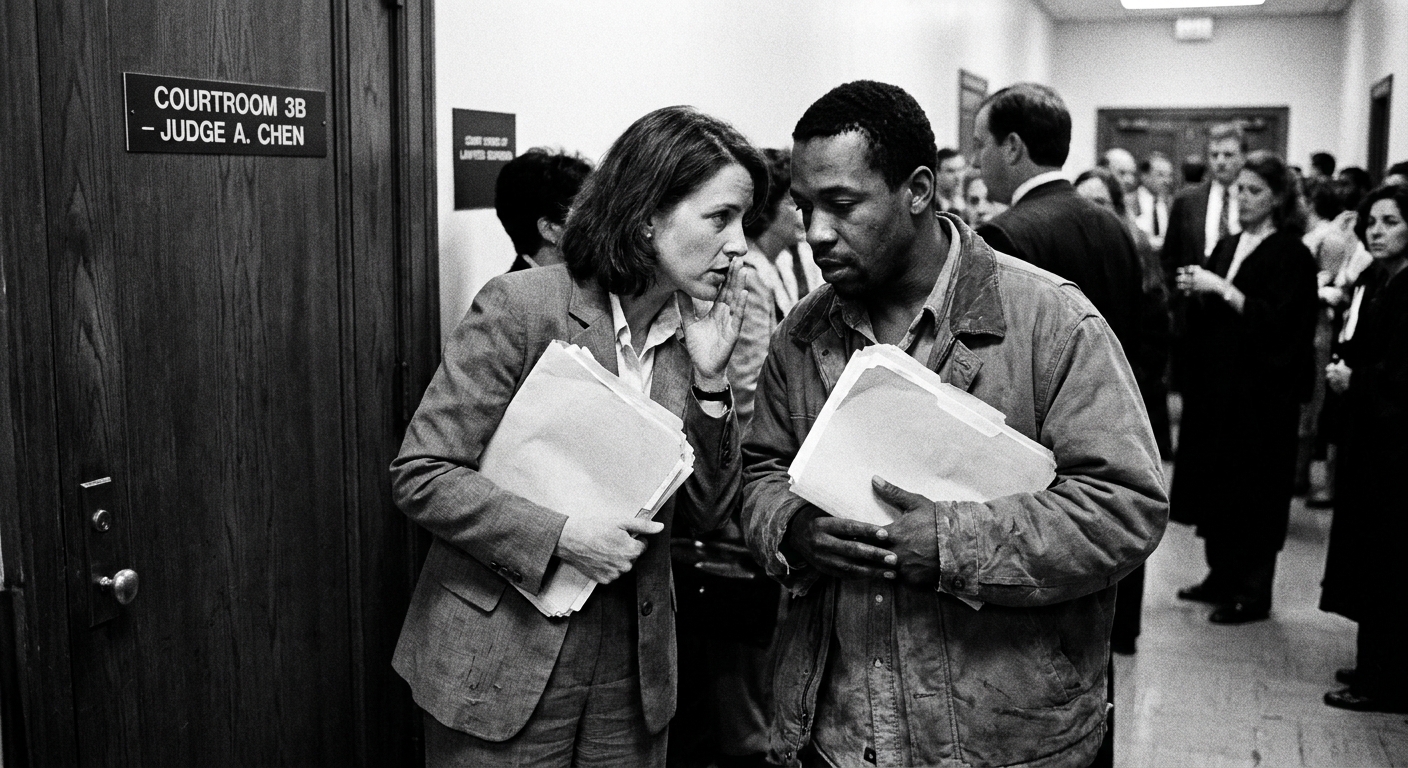
- Ask about counsel immediately. If you cannot afford a lawyer, ask whether appointed counsel is available in your jurisdiction and for your type of hearing.
- Ask what evidence they will rely on. Request the violation report and the supporting documents (test results, police reports, treatment notes, attendance logs), subject to local rules.
- Preserve your records. Save texts, emails, pay stubs, clinic sign-in sheets, GPS or travel proof, and anything that shows compliance, misunderstanding, or mitigation.
- Line up witnesses early. Employers, counselors, family, and program staff can be the difference between “noncompliance” and context.
- Be careful with statements. If the allegation overlaps with a new criminal investigation, get legal advice before giving detailed explanations.
Appeals and remedies
What you can do after an adverse decision depends on the system. Some revocations can be reviewed by an administrative appeal within the agency, some can be appealed through the courts, and some are challenged through habeas-style petitions or motions to reconsider. Deadlines can be short. If you think notice was inadequate, evidence was unreliable, or you were denied a fair chance to respond, that is the kind of issue a lawyer will want to preserve early.
What due process is doing
Due process in revocation is often described as “minimum” for a reason. It is meant to prevent the most dangerous kind of error: losing liberty based on vague accusations, secret evidence, or a decision made without a meaningful chance to respond.
But the Constitution is also candid about what revocation is. It is not a fresh trial where the government must prove a new crime to a jury beyond a reasonable doubt. It is a decision about whether a conditional release remains deserved under the terms of the original sentence.
That tension is the whole story. Supervision is routine until it is not. And when it stops being routine, the protections you get are real, but they are built for a different question than guilt or innocence.
Quick takeaways
- Revocation is a separate process from a new criminal prosecution.
- Due process typically includes written notice, disclosure of key evidence, and a hearing before a neutral decisionmaker.
- Many systems use a preliminary check and a final hearing, but the structure and timing vary.
- There is usually no jury, the burden of proof is lower, and evidence rules are more flexible. Confrontation standards vary by jurisdiction.
- The right to counsel exists in many cases, but the constitutional baseline is not automatic in every revocation.
- Federal and state systems share the same constitutional floor but differ widely in procedure, custody exposure, and review options.