
When a president announces a fresh round of pardons, the same question spikes in search traffic for a reason: the power looks almost unlimited. And in one narrow sense, it is.
In a public statement, President Donald J. Trump said he had “signed Pardons for six people,” described them as “persecuted” and “being sent to prison,” and added, “I AM SETTING THEM ALL FREE, RIGHT NOW!” That rhetoric is political. The constitutional machinery underneath it is not.
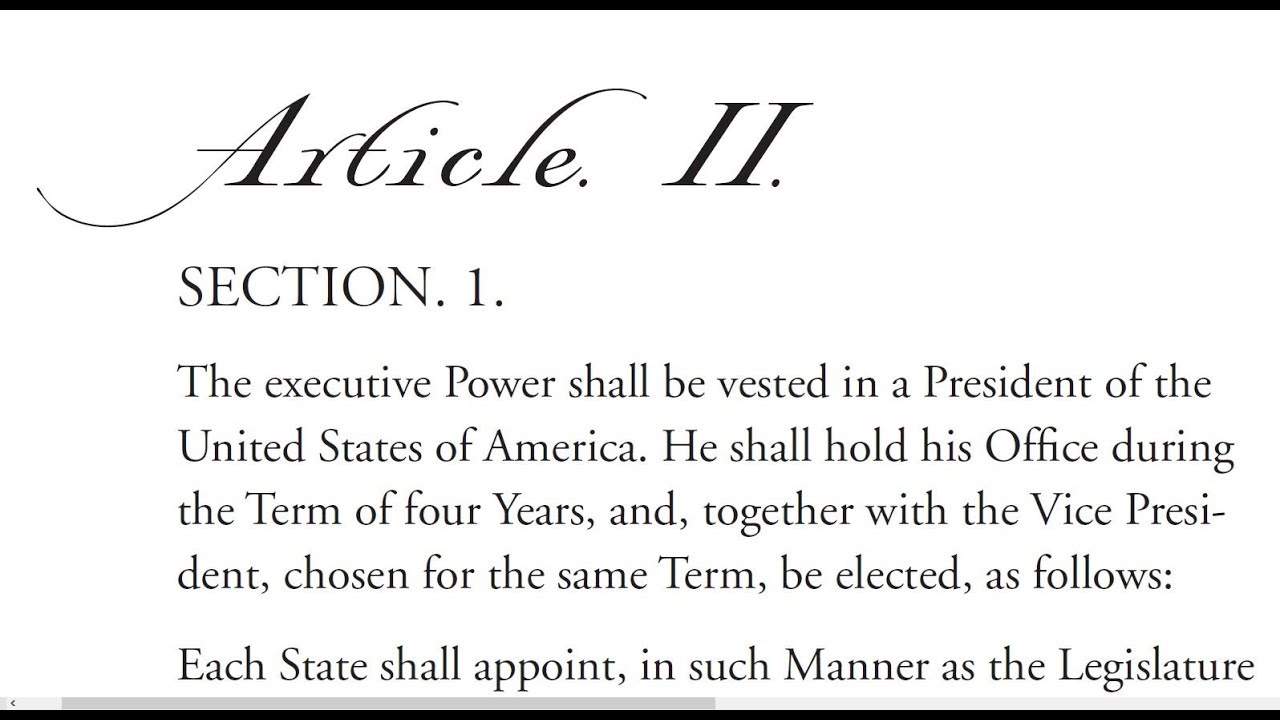
The pardon power is one of the most direct forms of presidential authority in the entire Constitution. It is also one of the least subject to judicial review on the merits. To understand what just happened in any given pardon announcement, you have to start with one sentence in Article II.
Join the Discussion
Where the power comes from
The presidential pardon power comes from Article II, Section 2 of the U.S. Constitution. The relevant phrase is short:
The president “shall have Power to grant Reprieves and Pardons for Offences against the United States, except in Cases of Impeachment.”
That sentence does most of the work. It tells you:
- Who can do it: the president.
- What it applies to: “Offences against the United States,” meaning federal offenses.
- What the main exception is: impeachment.
Everything else people argue about is usually a question of interpretation, tradition, and the way the Department of Justice administers the process.
What a presidential pardon can cover
A presidential pardon can reach broadly across federal criminal law. In practice, pardons commonly address convictions for federal crimes like tax offenses, fraud, federal firearms violations, immigration-related federal crimes, and federal drug offenses.
Federal only
The biggest limit is also the simplest: a president cannot pardon state crimes. If someone is convicted under a state statute in a state court, only the state’s clemency authority can help.
That means a person can be pardoned federally and still face:
- state prosecution for the same underlying conduct (if a state statute applies)
- state probation or parole consequences
- state-level licensing and regulatory actions
Before or after conviction
Nothing in Article II requires a conviction first. Historically, presidents have issued pardons:
- after conviction (the most common)
- while a case is pending
- before charges, sometimes called a preemptive pardon
This is why pardon power debates flare when a pardon appears to short-circuit the ordinary criminal process. But constitutionally, “before conviction” is not a loophole. It is baked into the breadth of “grant Reprieves and Pardons.”
Specific acts, or a category of acts
Pardons can be narrow or sweeping. A pardon might name a single offense and docket number. Or it might cover a set of conduct over a date range, using language such as “all offenses arising from” specified facts or a defined period. The controlling question is usually practical: does the pardon’s language clearly cover the federal exposure at issue?
Acceptance (rare, but real)
A pardon is generally treated as something the recipient can accept or reject. Rejections are unusual, but the possibility matters because it reinforces what a pardon is: an executive act offered to a person, not a court judgment rewriting the past.
Pardon vs. commutation vs. reprieve
People say “pardon” as a catch-all. The Constitution actually names two tools.
- Pardon: forgiveness of the offense. It can remove or reduce certain federal legal consequences tied to guilt, but it does not expunge the conviction or make the underlying history disappear.
- Reprieve: a temporary delay, typically of a sentence, often used in death penalty contexts.
- Commutation (not named in Article II but long treated as part of clemency): a reduction of the sentence without wiping out the conviction.
A practical way to remember it: a commutation changes the punishment; a pardon forgives the offense and can lift some legal disabilities.
Both are executive clemency, and both can be politically explosive.
Does a pardon mean “innocent”?
No. Constitutionally and legally, a pardon is not a judicial finding of innocence. It is an executive act of mercy or forgiveness.
That matters because modern pardon announcements often come packaged with a narrative: persecuted, railroaded, targeted, weaponized. Those claims may be sincerely held, and they may be part of the president’s justification. But they are not a legal prerequisite for a valid pardon.
Article II does not require the president to prove:
- prosecutorial misconduct
- unfair charging
- new evidence
- procedural error at trial
The Constitution gives the president discretion to pardon even when the conviction was lawful, the trial was fair, and the evidence was strong.
What a pardon cannot do
The pardon power is broad, but it is not magic. There are firm lines it cannot cross.
It cannot stop impeachment
The Constitution’s explicit exception is “except in Cases of Impeachment.” A president cannot pardon an official to prevent the House from impeaching them or the Senate from convicting and removing them. Impeachment is a political remedy for abuse of office, not a criminal sentence.
Also, impeachment consequences can include disqualification from holding future office. A pardon does not erase that.
It cannot reach state offenses
This is the most misunderstood limitation in everyday conversation. Federal pardons do not wipe away state convictions. They also do not block state prosecutors from bringing state charges based on the same conduct, assuming state law covers it.
It does not bind private actors
A pardon affects federal criminal consequences. It does not force private employers, private associations, or private platforms to treat the pardoned person as if nothing happened. It may help with federal disabilities, but it does not compel private forgiveness.
It does not end civil exposure
A pardon addresses federal criminal liability. It generally does not erase civil liability, such as private lawsuits for damages based on the same conduct.
It does not automatically erase every consequence
Some effects of a conviction are collateral and regulatory. A pardon can help, but the details depend on the specific federal statute, the agency involved, and what state law does with the underlying record.
Can courts review a pardon?
Usually, courts will not review the merits of a president’s clemency decision. But courts can be involved at the edges, especially to confirm validity and interpret scope when there is a real dispute about what a document covers or whether it is, in fact, a pardon.
That is why the pardon power is often described as one of the president’s most unilateral authorities. It is not because it has no consequences. It is because the Constitution assigns the choice to the president and gives the judiciary very little room to second-guess the decision itself.
So what is the real check on the pardon power?
The primary check is not legal. It is political.
- Elections: voters can punish or reward presidents for how they use clemency.
- Congressional oversight: Congress can investigate patterns of abuse, pressure agencies, and hold hearings.
- Impeachment: if a pardon is tied to bribery or other high crimes and misdemeanors, impeachment is the Constitution’s explicit backstop.
This is a feature of the design: the Framers placed clemency in one accountable official, not a committee, because mercy was supposed to be decisive. The tradeoff is that it can also be controversial.
Do claims of “weaponized prosecution” change the constitutional test?
They change the argument, not the authority.
A president does not need to prove political targeting to issue a valid pardon. Likewise, a president’s belief that a prosecution was unfair does not convert a pardon into a judicial ruling that the case was illegitimate. It remains an executive decision.
That distinction matters for civic literacy: if you think pardons are meant only to correct proven injustice, you will misread the Constitution. Pardons can correct injustice, but they can also express policy disagreement, signal reconciliation, or simply dispense mercy.
Quick answers to common searches
Can the president pardon federal crimes?
Yes. Article II explicitly authorizes pardons for “Offences against the United States,” meaning federal crimes.
Can a president pardon someone for a state crime?
No. Governors and state clemency boards handle state convictions.
Can a president pardon themselves?
The Constitution does not expressly answer this, and the Supreme Court has not ruled on it. Any attempt would trigger immediate litigation and a crisis-level separation of powers fight. The safer statement is: the text is silent, and the legality is unsettled.
Does a pardon erase the conviction?
It can remove some federal legal consequences tied to the conviction, but it does not automatically expunge records in every system or force private actors to disregard the underlying conduct.
Can the president pardon contempt of Congress?
If it is a federal criminal offense, it is within the general scope of Article II, subject to the impeachment exception and any disputes about the precise statutory basis. These conflicts are often as political as they are legal.
Does the DOJ process matter?
Traditionally, applications move through the Department of Justice and the Office of the Pardon Attorney. But constitutionally, a president can grant clemency with or without that process.
Why this power stays controversial
The pardon clause is one of the Constitution’s bluntest instruments. It is only a few words long, but it can undo years of investigation, prosecution, and sentencing in a stroke.
That is a feature of the design: to vest mercy, correction, and finality in one nationally elected officer. The cost is that every new round of pardons forces the country back to the same civic question: when is clemency justice, and when is it favoritism?
The Constitution answers only part of that. It tells you who can do it and what they can reach. The rest is left where the Framers often left the hardest questions: to politics, public judgment, and the next election.