
You can think of a preliminary hearing as the criminal system asking an uncomfortable but essential question early on: Should this felony case keep going?
It is not a trial. It is not a final verdict. It is closer to a screening mechanism where a judge decides whether the government has shown enough evidence to justify moving the defendant deeper into the process.
That “enough” is a low threshold, but it matters. A preliminary hearing is often one of the first moments when a case is tested in an adversarial setting, with a defense lawyer allowed to challenge the state’s proof in real time, though the scope of that challenge can vary by jurisdiction.
Join the Discussion
When preliminary hearings happen
Preliminary hearings most commonly appear in felony cases. They often occur after an initial appearance in lower court and before the case is positioned for trial level proceedings. The sequence is not uniform: in many jurisdictions there is an early arraignment or reading of the complaint first, while in others the preliminary hearing happens before an information is filed and before any later arraignment in the trial court.
The logic is similar either way. Before the government can push a person through full felony prosecution, it must clear an early evidentiary checkpoint.
Felony focus, with state variation
States structure felony charging in different ways:
- Some states commonly use preliminary hearings as the main probable-cause screen.
- Some states rely heavily on grand juries and use preliminary hearings less often.
- Some states allow prosecutors to choose between a grand jury indictment and a preliminary hearing route, depending on the case and strategy.
In many jurisdictions, a preliminary hearing is associated with cases that start by complaint or a similar charging document, rather than a grand jury indictment. Other states use different tools (such as an information filed early, or forms of direct filing), and some still hold preliminary hearings in limited circumstances even after certain filings. If the prosecutor proceeds by grand jury and obtains an indictment, the preliminary hearing is often skipped.
Misdemeanors usually do not get one
Most misdemeanor cases move forward without a preliminary hearing. That does not mean there is no judicial oversight. It means the system generally treats misdemeanors as less procedurally elaborate, with the case heading more directly toward motions, negotiation, or trial.
Many cases never reach a hearing
In the real world, many cases resolve before any preliminary hearing happens. Some defendants waive the hearing. Others reach a plea deal early. Sometimes the prosecution dismisses or amends charges before the hearing date.
What the prosecutor must prove
The key phrase at a preliminary hearing is usually probable cause. That standard is much lower than “beyond a reasonable doubt.”
Probable cause, not guilt
At this stage, the judge is not deciding whether the defendant is guilty. The judge is deciding whether there is enough evidence to support two basic conclusions:
- A crime was committed (or, in some states’ phrasing, that an offense occurred).
- The defendant likely committed it (a reasonable basis to proceed against this person).
Because it is not a determination of guilt, the probable-cause threshold is intentionally low. The point is to keep the system from grinding forward on pure speculation.
Rules of evidence can be looser
Many jurisdictions allow evidence at a preliminary hearing that would face stricter limits at trial, though how much looser varies widely. Hearsay rules, for example, may be relaxed to varying degrees depending on state law. The result is a proceeding that looks like testimony and cross-examination, but does not always operate with the same evidentiary tightness as a jury trial.
What happens in court
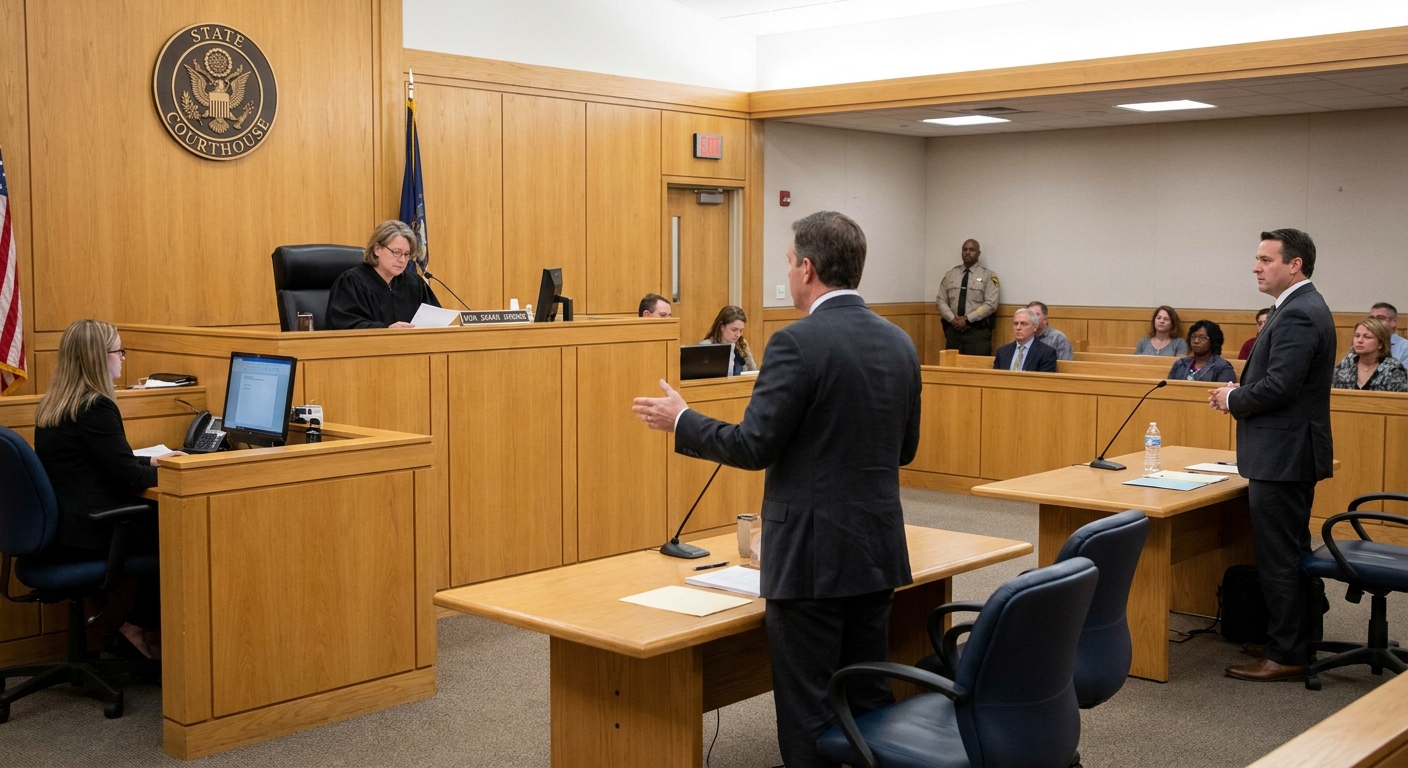
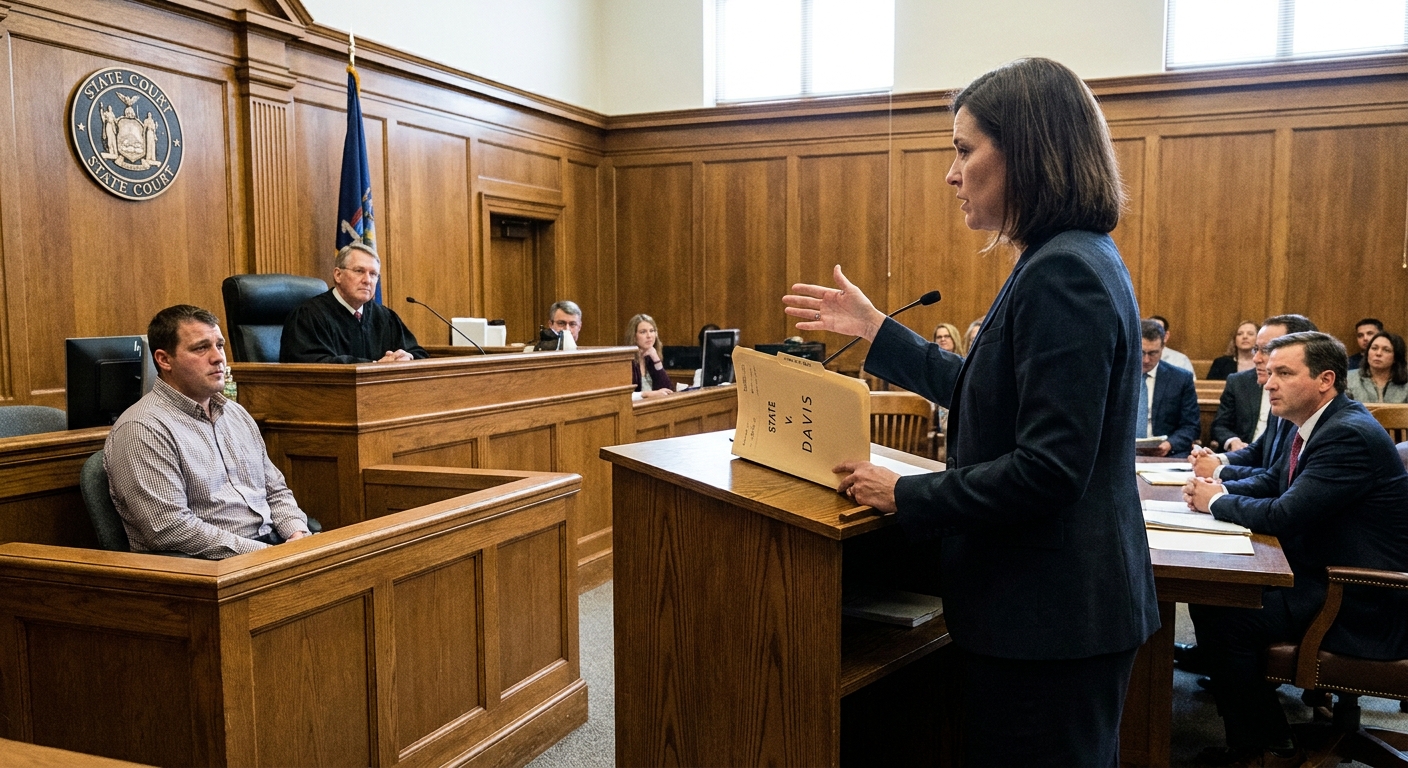
A preliminary hearing is typically held in front of a judge, not a jury. The prosecution presents a basic version of the case, often through one or more witnesses such as an investigating officer or an alleged victim. The defense can cross-examine those witnesses, and sometimes present its own evidence.
Even that basic outline comes with local rules. Some courts limit the scope of cross-examination to probable-cause issues. Some permit the prosecution to rely heavily on an officer’s summary testimony. Some require more live, first-hand testimony. The details depend on the jurisdiction and the judge.
Key rights and choices
Defendants generally have the right to counsel at this stage. Defendants also have the right to remain silent, and many do not testify because anything said under oath can be used later. While cross-examination is a hallmark of a preliminary hearing, the extent of confrontation and the form of testimony allowed can be more limited than at trial, depending on state law.
Defense goals
The defense may use the hearing to:
- Expose weaknesses in the state’s timeline, identification, or physical evidence.
- Lock in testimony under oath that can be used later for impeachment if a witness changes their story at trial.
- Argue for reduced charges when the evidence does not support the felony level alleged.
- Preview suppression issues in limited ways, depending on local procedure and how the judge handles disputes about legality of searches or statements.
Even when the defendant is “bound over” in the end, the record created in a preliminary hearing can shape plea negotiations and future motions.
Preliminary hearing vs. grand jury
Both a preliminary hearing and a grand jury serve a similar function: they are supposed to prevent the government from pursuing a serious criminal case without adequate basis. But they do it in dramatically different ways.
Who decides
- Preliminary hearing: A judge decides probable cause in open court.
- Grand jury: A panel of citizens decides whether to indict, typically in a closed proceeding.
Who participates
- Preliminary hearing: The defense is present and can cross-examine witnesses, though the scope and format may be limited by local rules.
- Grand jury: The prosecutor presents evidence. The defense is usually not present, and there is generally no cross-examination.
Transparency
Preliminary hearings are generally more transparent. Grand jury proceedings are typically secret by design. That secrecy is often defended as protective of witnesses and investigative integrity. It also means the process is less adversarial.
In practical terms, preliminary hearings often feel like the system letting the defense take a meaningful look under the hood, while a grand jury is more like the system checking its own work behind a closed door.
Preliminary hearing vs. trial
If a preliminary hearing is a gate, a trial is the verdict. They are built for different constitutional jobs.
Different standards
- Preliminary hearing: Probable cause.
- Trial: Proof beyond a reasonable doubt.
Different decision-makers
Trials can be decided by a jury (the classic model) or by a judge in a bench trial. Preliminary hearings are almost always judge-run.
Different stakes
A preliminary hearing does not end with “guilty” or “not guilty.” It ends with a procedural decision about whether the state has enough to continue and, in some cases, whether the charges should be adjusted where authorized by law.
Common outcomes
Preliminary hearings do not have many possible endings, but each one can change a defendant’s leverage and the prosecutor’s next move.
1) Bind over
The most common result is that the judge finds probable cause and the defendant is bound over (often called “held to answer”) for further proceedings. What comes next varies by state, but commonly the prosecutor files an information by a deadline, the case is assigned to the trial court, and the defendant is scheduled for the next arraignment and pretrial dates.
2) Dismissal
If the judge finds insufficient evidence to establish probable cause, the judge can dismiss some or all charges. In many jurisdictions, that dismissal can be without prejudice, meaning the prosecutor may be able to refile if new evidence emerges or if procedural defects are corrected.
3) Reduction of charges
Sometimes the evidence supports wrongdoing, but not at the level charged. A judge may reduce a felony to a lesser offense or hold the defendant to answer on fewer or lesser counts, where state law authorizes it.
4) Plea talks accelerate
Even when nothing formally changes, a preliminary hearing can inform plea discussions. When testimony under oath exposes gaps or credibility problems, the “value” of the case can change for both sides.
5) Bail and custody can be affected
In some jurisdictions, what happens at or after a preliminary hearing can influence release conditions, bail arguments, or detention decisions. In others, bail is handled on a separate track. The relationship between the hearing and custody is highly local.
Constitutional context
The Constitution does not mandate a single step-by-step criminal procedure playbook for the states, and it does not require a preliminary hearing in every case. But constitutional guardrails shape what this stage is trying to accomplish.
Probable cause and restraint
The Fourth Amendment’s probable cause principle is part of the broader idea that the state needs a justified basis to restrain liberty. A preliminary hearing is one common way to test whether that basis exists in a serious case, though jurisdictions can satisfy probable-cause review through other procedures as well.
Grand jury is federal
The Fifth Amendment requires a grand jury indictment for “capital, or otherwise infamous crime” in federal cases. States are not uniformly required to use grand juries for felony charges, which is one reason preliminary hearings remain central in many state systems.
That design choice creates a kind of procedural federalism: some states rely on citizen-run grand juries, others rely on judge-run preliminary hearings, and many use both depending on circumstance.
FAQs
Is a preliminary hearing the same as an arraignment?
No. An arraignment is typically where charges are formally read and a plea is entered. A preliminary hearing is an evidence-based proceeding focused on probable cause.
Can a case be dismissed at a preliminary hearing and still come back?
Often yes. Many dismissals at this stage are without prejudice. Whether it can be refiled depends on state law, the reason for dismissal, and any applicable deadlines.
Do defendants have to present evidence?
Usually no. The burden is on the prosecution to show probable cause. Defense strategy varies. Sometimes the best move is cross-examination only, sometimes presenting evidence helps, and sometimes the hearing is waived to avoid revealing defense strategy early.
Can you waive a preliminary hearing?
In many jurisdictions, yes. Waiving can speed up the case or preserve strategy, but it also gives up a chance to test the state’s witnesses early.
The bigger picture
A preliminary hearing is easy to misunderstand because it looks like a mini-trial but functions like a filter. The prosecutor is not required to prove guilt. The defense is not required to prove anything. The judge is not there to deliver a final moral judgment.
The judge is there to answer a narrower question with oversized consequences: is there enough here to justify moving forward with the process of a felony prosecution?
That is not a thrilling question. It is a constitutional one. And for a defendant, it can be the first moment the state has to say its case out loud, under the discipline of cross-examination (as permitted in that jurisdiction), with a judge listening for whether “probably” is actually supported by facts.