
When a president claims he can do three things at once, keep a strategic waterway open (or blockade it), release sanctions money into a U.S.-monitored escrow channel, and lock in “highest level” nuclear inspections “long into the future,” the constitutional question is not whether the goals are wise. The question is whether one office can legally do all of that without Congress.
The short civics answer is: a president has real, fast-moving power in foreign affairs and as commander in chief, but sanctions and money are often statutory, and long-term nuclear commitments are usually more durable when Congress has a role. The longer answer depends on what exactly the president is doing, what statutes Congress has already passed, and whether U.S. forces are being used in a way that triggers war powers limits.
Join the Discussion
The three claims in one announcement
Statements like this typically bundle three legally distinct actions:
- Military posture: ordering U.S. naval forces not to impose a blockade, or to prepare to reinstate one.
- Economic restrictions: easing sanctions enforcement, issuing waivers or licenses, or authorizing limited releases of blocked funds into a controlled channel.
- Diplomatic nuclear terms: negotiating inspection commitments, verification mechanisms, and timelines.
Each one touches a different part of the Constitution: Article II (commander in chief and diplomacy), Article I (war declarations, commerce regulation, appropriations), and the modern reality that Congress has enacted extensive sanctions statutes that presidents must follow.
Can a president blockade the Strait of Hormuz?
Blockade is often treated as a belligerent act
Historically, a naval blockade has often been treated as a belligerent act under international law and in state practice, because it involves stopping and searching ships and potentially using force. Under the Constitution, Congress has the power to declare war (Article I, Section 8), while the president is commander in chief of the armed forces (Article II, Section 2). The friction point is predictable: presidents can move forces quickly, but sustained hostilities traditionally implicate Congress.
U.S. history offers examples of “blockade-like” measures being understood as major escalations, including the 1962 Cuba “quarantine,” which was framed carefully for legal and diplomatic reasons even as it carried obvious risk of conflict.
What presidents can do quickly
Presidents generally have authority to position naval forces, protect U.S. personnel, and respond to imminent threats. They can also direct rules of engagement and certain maritime operations, but the legal footing matters. Interdictions and coercive stops are legally sensitive and typically need a clear domestic and international law basis, such as self-defense, a specific authorization from Congress, or applicable U.N. authorities.
What makes a blockade different
A true blockade usually means interdicting international shipping, including neutral vessels, and it can foreseeably trigger armed conflict. That is why it is often argued to be the kind of escalation that, constitutionally, should not become a prolonged policy without congressional authorization.
Where the War Powers Resolution fits
The War Powers Resolution of 1973 is Congress’s attempt to force consultation and time limits when U.S. forces are introduced into hostilities or situations where hostilities are imminent. Whether a specific naval operation counts as “hostilities” has been contested for decades, and administrations have sometimes disputed when the clock is triggered. Still, if a blockade involves forcible interdiction or likely armed exchanges, War Powers reporting is highly likely, and the 60 and 90 day constraints become harder to ignore as operations intensify or persist.
Bottom line: A president can order ships into position and may initiate certain limited actions, but a sustained or comprehensive blockade that risks ongoing hostilities is the kind of thing that quickly collides with Congress’s Article I war powers and the War Powers Resolution framework.
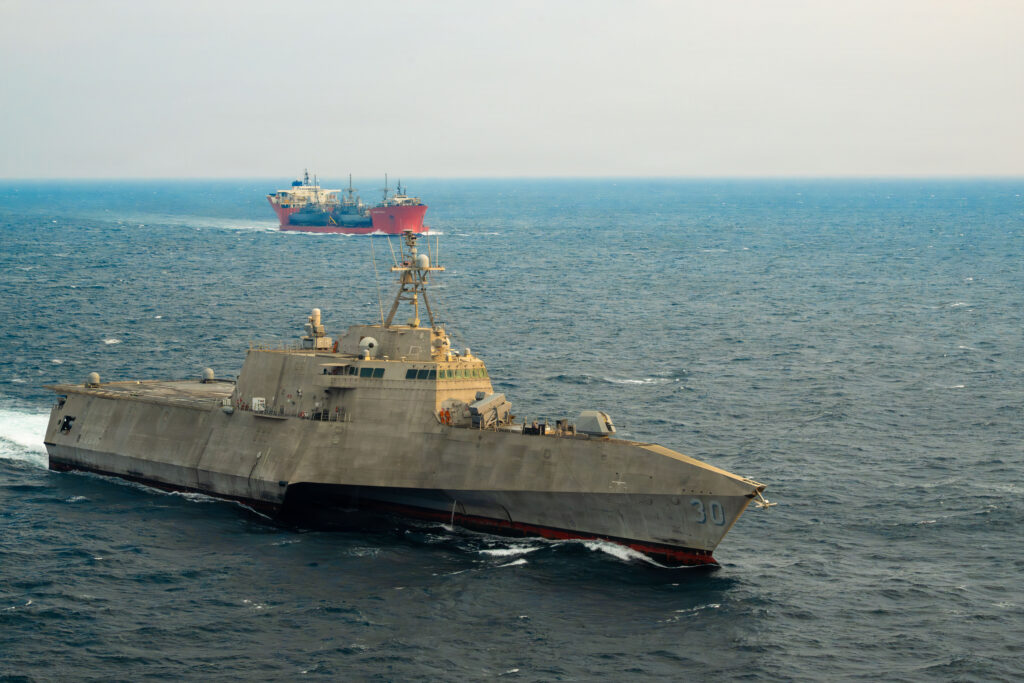
Can a president “keep the strait open”?
Yes, in a different sense. Choosing not to impose a blockade is usually within the president’s operational discretion as commander in chief. Declining to escalate is almost always easier legally than escalating.
But even here, words can outpace law. “Keeping the strait open” might mean:
- Diplomatic signaling that the U.S. will not attempt to interdict shipping.
- Defensive naval presence to deter attacks and protect U.S.-flagged or allied vessels, sometimes in coordination with partner navies.
- Escort operations and armed responses to threats.
The closer it gets to repeated uses of force or ongoing escort and protection missions under threat, the more the legal conversation turns back to the same question: has Congress authorized this level of sustained military engagement, and what is the asserted international law basis for the operation?
Can a president lift Iran sanctions?
Only sometimes, because most sanctions are statutory
Modern U.S. sanctions regimes are not simply “presidential policy.” They are often built from federal laws that require sanctions, define who must be sanctioned, and specify the conditions for relief. When Congress mandates sanctions, a president cannot repeal them unilaterally.
What the president often can do depends on the statute:
- Waivers: Many sanctions laws allow the president to waive sanctions on national security grounds, sometimes with certifications or reporting to Congress.
- Licenses and authorizations: The Treasury Department, usually through OFAC, can issue general or specific licenses permitting otherwise prohibited transactions, if the statute and regulations allow it.
- Enforcement discretion: Within limits, the executive branch prioritizes investigations and penalties, but it cannot lawfully authorize what the law flatly forbids.
One important nuance: some sanctions statutes include narrow exceptions and can limit or forbid broader waiver or licensing flexibility. In those cases, “we are lifting sanctions” may be more rhetoric than legal reality unless Congress changes the law.
“Releasing money” is legally specific
Statements about releasing “money” can refer to different buckets:
- Blocked Iranian assets in the U.S. under sanctions authorities.
- Foreign-held funds whose movement is restricted by U.S. secondary sanctions.
- Proceeds from permitted sales routed through restricted channels.
If funds are blocked by statute, releasing them may require meeting statutory conditions or using an available waiver authority, and it may also trigger statutory notification or certification requirements. If funds are blocked by executive order under delegated authority, the president may have more room to modify the order, but still within the boundaries Congress set in the underlying law.
Bottom line: “Lifting sanctions” is rarely a single switch the president controls. It is a mix of statutory requirements, executive orders, Treasury regulations, and available waiver or licensing pathways.
What about a U.S.-controlled escrow?
An “escrow” arrangement is often a workaround designed to fit inside sanctions law rather than defy it. In practice, many “escrow” structures are not the United States literally holding the money. They often involve restricted accounts at foreign banks or other controlled channels where transfers and end uses are conditioned on U.S. licensing and compliance rules.
It can be structured so that:
- Funds do not go directly to a sanctioned government account.
- Disbursements are limited to permitted humanitarian categories like food and medicine.
- Payments are routed through monitored financial channels with Treasury oversight.
Constitutionally, there is a separate issue: Congress controls federal spending. If the arrangement involves U.S. government money, U.S. appropriations, or new spending commitments, it implicates Article I’s power of the purse.
If, instead, the “escrow” is foreign money whose movement is being conditioned by U.S. sanctions authorities, the key question becomes statutory: does existing sanctions law authorize this licensing and control structure, and were any required notifications to Congress made?
There is also a transparency question. Escrow language can sound like a policy promise, but the real legal mechanism is usually buried in Treasury licenses, waiver determinations, and compliance terms.
Can a president set nuclear inspection terms long term?
Treaty versus executive agreement
The Constitution’s Treaty Clause requires Senate consent by a two-thirds vote for treaties (Article II, Section 2). But the United States also uses executive agreements, which can be made without that two-thirds treaty process.
In practice, nuclear and arms-related commitments may take several forms:
- Article II treaty: the most formally durable domestically, but hardest politically.
- Congressional-executive agreement: backed by statute or approval from both houses, often more durable than a purely executive deal.
- Sole executive agreement: made on the president’s independent constitutional authority, typically more vulnerable to reversal by a later president and more contestable if it conflicts with existing statutes.
Also, some nuclear-related commitments can intersect with specific statutory frameworks, including nuclear cooperation rules under the Atomic Energy Act. That does not always control inspection promises, but it is part of why Congress can become unavoidable when a deal needs legal implementation.
Inspections also implicate international institutions
When presidents talk about “highest level” nuclear inspections, they are often referring to inspection frameworks involving the International Atomic Energy Agency (IAEA) and safeguards agreements. The IAEA relationship is international, but the U.S. domestic question remains: what is the legal form of the U.S. commitment, and does it require changes to U.S. sanctions law or spending?
Durability is not the same as legality
A president can negotiate and announce inspection “terms,” but if the arrangement is not a Senate-ratified treaty or backed by statute, it can be politically and legally fragile. A later administration can often reverse a sole executive agreement by changing policy, revoking licenses, or reimposing sanctions where statutes require them.
Bottom line: A president can negotiate and enter certain agreements, but locking in long-term nuclear terms typically becomes durable only when Congress participates, either through the treaty process or through legislation.
The core tension: speed versus legitimacy
The Framers built a system that deliberately slows down the biggest decisions. Presidents were designed to be fast and unified. Congress was designed to be deliberative and plural.
That design shows up here:
- Military decisions can require speed, but sustained conflict implicates Congress’s war powers.
- Sanctions look like foreign policy, but they are often domestic law written by Congress.
- Nuclear commitments can be negotiated by the president, but the most binding forms require Senate consent or legislation.
This is why sweeping announcements in one paragraph can be misleading. The president may control the immediate posture, but the legal durability often depends on Congress, and on the precise statutory tools being used under the hood.
What to look for in the paperwork
If you are trying to translate a major foreign-policy statement into “what is legally real,” look for these documents and signals:
- War Powers notifications and any public descriptions of hostilities or imminent hostilities.
- Treasury actions, especially OFAC general licenses, specific licenses, waiver determinations, and any published compliance guardrails for restricted accounts.
- Statutory citations in executive orders or Treasury releases that explain the legal basis and any limits.
- Congressional briefings, certifications, or reporting requirements triggered by sanctions waivers and relief.
- The form of the nuclear arrangement, including whether it is submitted as a treaty, implemented via statute, or treated as an executive agreement.
Constitutional power is often less about what a president can say at a podium and more about what the law allows the executive branch to sign, spend, seize, license, or deploy.
Quick answers
Can the president block the Strait of Hormuz without Congress?
A president can order naval movements and may initiate limited actions, but a true blockade is a major use of military power that raises war powers issues quickly and will often implicate War Powers reporting depending on the operational facts.
Can the president keep Hormuz open without Congress?
Choosing not to impose a blockade is generally within presidential control. Keeping it open through sustained uses of force is a different question.
Who controls Iran sanctions money?
Congress sets many sanctions rules by statute. The executive branch, mainly Treasury, administers them through regulations, licenses, and waivers where authorized, and some statutes sharply limit flexibility.
Can a president make a nuclear deal without the Senate?
Yes, through executive agreements, but those are usually less durable and cannot override statutes. The most binding route is a Senate-approved treaty or legislation backing the deal.
Can Treasury put funds into escrow?
Sometimes, if sanctions law allows licensing and controlled channels, often via restricted foreign accounts with use limits and monitoring. If U.S. government funds are involved, Congress’s appropriations power becomes central.