
“Martial law” has become one of those phrases that can hijack the national nervous system in a single news cycle. It sounds like a button a president can press when politics get messy. It sounds like tanks, curfews, and soldiers replacing civilian government.
That is why the latest round of Trump-aligned chatter matters even though nothing has been declared. The story is not that the United States is suddenly under military rule. The story is that prominent MAGA voices are floating the concept as a supposed remedy. Once that happens, a constitutional question becomes a cultural one: Can a president actually do that?
And the most important civics lesson here is also the least satisfying: the Constitution does not give us a clean, one-paragraph “martial law clause.” What we have instead is a tangle of powers, statutes, and court-developed limits that only make sense once you separate slogans from legal authority.
Join the Discussion
First: Martial law is not the Insurrection Act
In popular debate, people use “martial law” as shorthand for any aggressive domestic use of troops. Legally, that is a category error.
Martial law is the idea of the military displacing ordinary civilian authority, at least temporarily. The defining feature is not simply troops on the street. It is the substitution of military control for normal civil governance and, in extreme forms, the sidelining of civilian courts.
The Insurrection Act, by contrast, is a statutory mechanism for deploying military forces domestically under certain circumstances while the civil government still exists and is supposed to remain in charge. It is not a free pass to suspend the Constitution. It is a way to use force to enforce the law when enforcement has broken down.
So when political figures casually drop “martial law” into election-adjacent conversations, they are usually doing one of two things: conflating these concepts out of ignorance, or deliberately leveraging the fear that comes with the phrase.
What does the Constitution say about martial law?
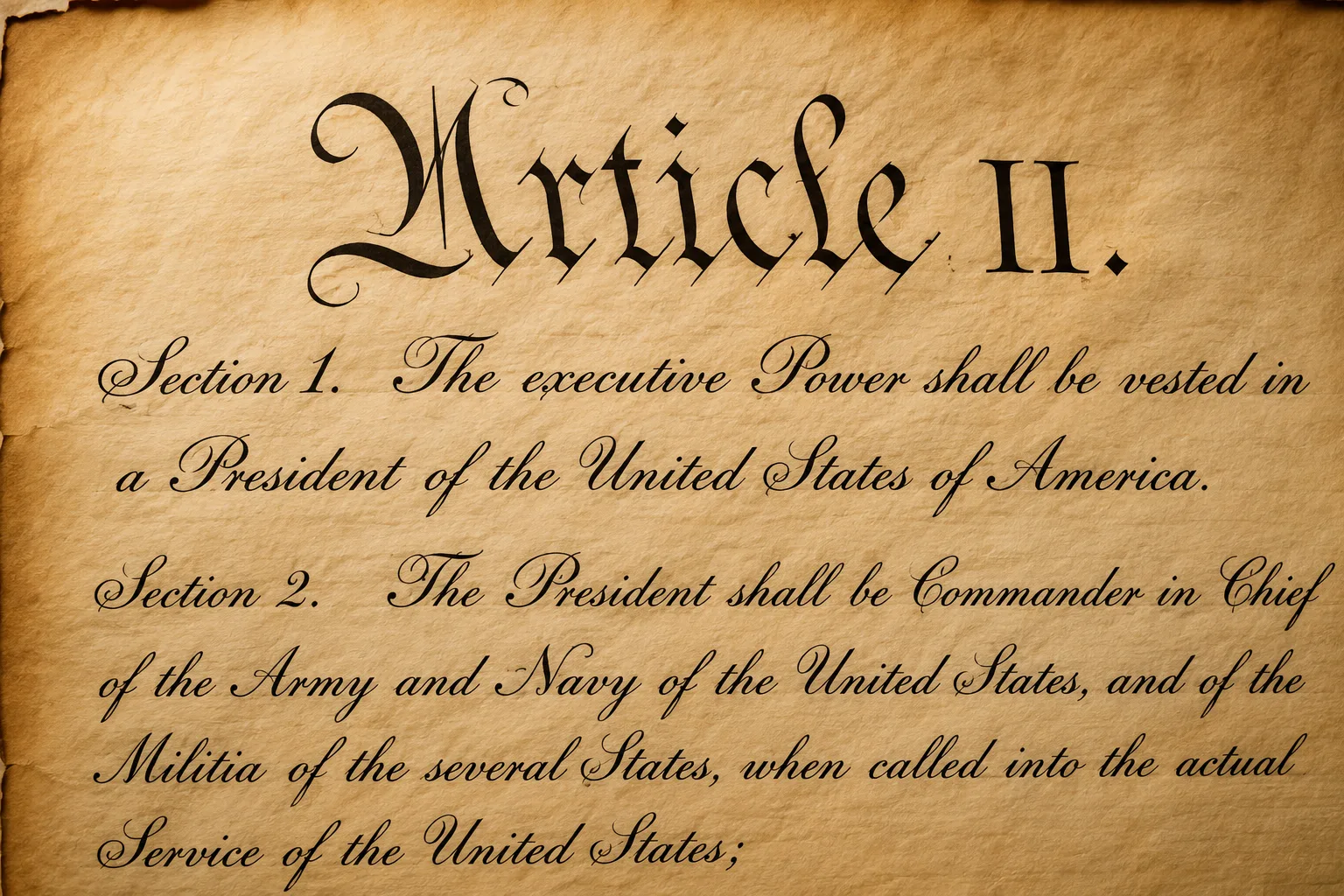
The Constitution famously makes the president the Commander in Chief of the armed forces. But it does not spell out a presidential power to impose martial law nationwide, or to govern states by military decree, or to override elections because “emergency.”
Instead, the Constitution builds a system that assumes civilian supremacy.
- Congress writes the laws that structure the military and controls funding.
- States retain their own police powers and election administration in the ordinary course.
- Courts exist to adjudicate disputes, including disputes about executive power.
That is why “martial law” is constitutionally radioactive. If you imagine the military replacing civil authority, you are imagining the temporary displacement of the very institutions the Constitution is designed to keep operating.
Emergency power is real. It is just not unlimited.
The United States does have emergency authorities. That is not controversial. Every modern government does. The controversy is always the same: who decides there is an emergency, what powers activate, and when it ends.
What makes the current wave of martial law talk different from ordinary emergency-preparedness planning is its implied purpose. The chatter is not about hurricanes, earthquakes, or a localized breakdown of order. It is about using military authority as a political pressure tactic in moments of unrest or election-related conflict.
Constitutionally, that matters because the moment you move from “restore order so law can function” to “use force to resolve political legitimacy,” you are no longer in the world of emergency management. You are in the world of regime behavior.
Who can “declare martial law” in the United States?
This is where online debate tends to drift into confident claims that are not actually grounded in a single controlling constitutional sentence.
At the federal level, a president can direct the military. A president can also invoke statutory authorities that allow domestic deployments under certain conditions. But the leap from “deployment” to “martial law” is not a simple legal step. It is a fundamental change in the relationship between civilian government and military force.
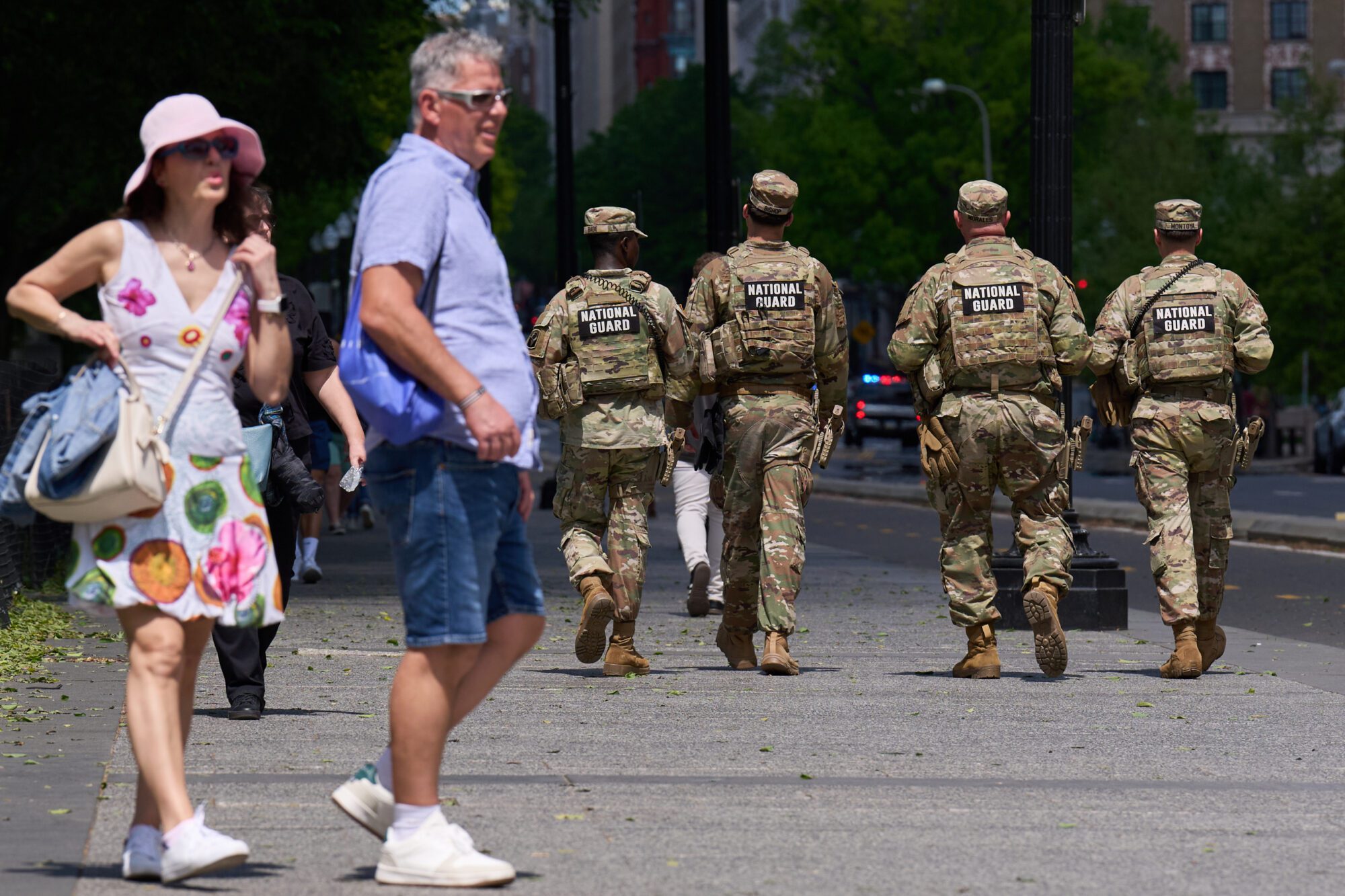
At the state level, governors can deploy National Guard forces under state authority, particularly in emergencies and civil disturbances. That can look dramatic and still remain squarely within civilian control.
In other words, there is no routine American mechanism where a president simply announces martial law the way one announces a national holiday. If you hear it discussed that way, you are listening to rhetoric, not civics.
Why election-related martial law talk is constitutionally explosive
There is a reason “martial law” gets attached to election anxiety. Elections are the core legitimacy mechanism of the republic. If you can suspend, “pause,” redo, or override an election by invoking force, then the vote is no longer sovereign. The gun is.
The Constitution’s structure assumes the opposite:
- States administer elections under a web of state law and federal constitutional constraints.
- Disputes move through courts and legislatures, not through military commands.
- The transfer of power is a legal process, not a battlefield outcome.
That is why martial law rhetoric around protests, fraud claims, or contested political outcomes lands like a threat even when framed as hypothetical. It points at the one thing our system is not supposed to require for continuity: coercion.
A plain-English test: “Does this keep civilian government running?”
When you are trying to evaluate breathless claims online, use a simple test. Not a partisan test. Not an emotional test. A constitutional one.
If troops are used domestically, is the goal to support civilian law enforcement and keep civilian courts open?
If yes, you are likely in the territory of domestic deployment under legal authority, controversial as it may be.
Or is the goal to replace civilian decision-makers, override civil courts, or resolve political disputes by force?
If that is the aim, you are no longer debating policy. You are debating whether constitutional government continues to exist in practice.
What to watch for when “martial law” goes viral
Because this topic cycles back every time the country hits a high-conflict moment, it helps to know what separates a scary headline from an actual legal turning point.
- Specific legal basis: Are people citing a real statute or order, or only using the phrase “martial law” like a vibe?
- Clear scope: Are they describing a limited deployment to address a defined breakdown, or an open-ended promise to “take control” broadly?
- Civil institutions: Are civilian courts functioning? Are governors, mayors, and legislatures still exercising authority?
- Exit conditions: Is there a defined endpoint, or is the “emergency” treated as a permanent justification?
The Constitution is not fragile because it lacks words. It is fragile because it relies on people in power acting as if they are bound by it.
The civic point hiding in the panic
When allies of a major political figure “openly discuss” martial law, the danger is not immediate tanks rolling down Pennsylvania Avenue. The danger is normalization. It is the slow rebranding of extraordinary power as an ordinary option.
The United States has mechanisms to respond to unrest and violence. It also has a constitutional culture, or at least it is supposed to, that treats military rule as a failure state, not a governing style.
So if you are hearing martial law pitched as a cure for political conflict, hear it for what it is: an argument that the normal constitutional process is optional when your side is dissatisfied with the outcome. That is not “law and order.” That is a different system entirely.