

If you have ever dealt with a school rule, a workplace policy, or even a library code of conduct, you already understand the basic idea behind a court order: once an authority with jurisdiction issues a clear instruction, you do not get to treat it as optional just because you dislike it.
That simple principle is at the heart of a fast-moving dispute over renovations at East Potomac Park, home to D.C.’s municipal East Potomac Golf Links. A federal judge has temporarily barred the federal government from taking certain further steps there without meeting specific notice requirements and, in one key area, getting a court order first, even as President Donald Trump says the project will proceed and his administration will appeal.
Join the Discussion
What the judge ordered
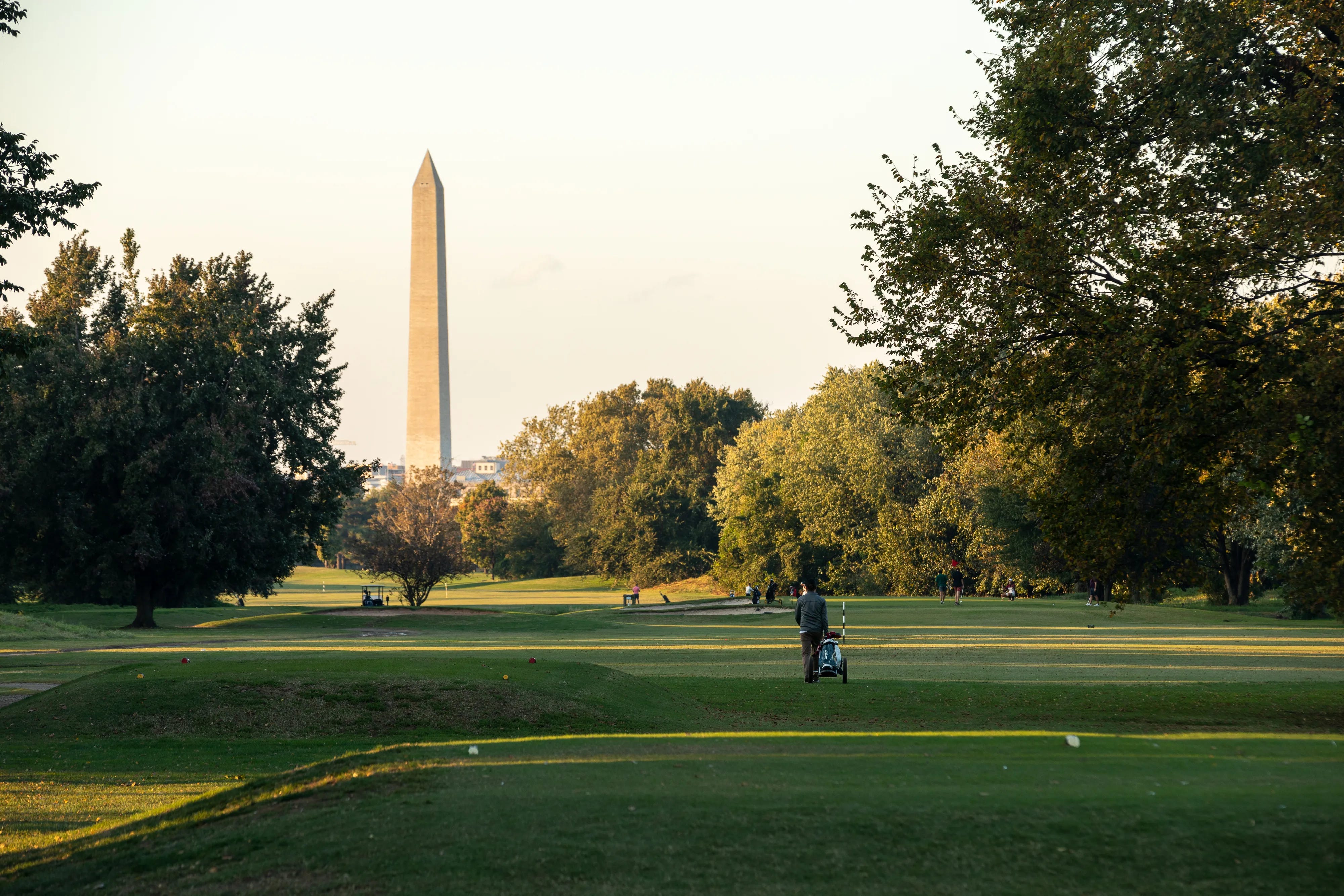
U.S. District Judge Ana Reyes issued a preliminary injunction in the case brought by the D.C. Preservation League and two local golfers. The order does not resolve the lawsuit permanently. Instead, it pauses specific actions while the parties litigate the underlying legal questions.
Two parts of the injunction matter most right now:
- No more tree damage without a court order. Reyes ordered the government not to cut down, “or substantially prune or otherwise damage or impair” any trees at East Potomac Park without a court order.
- Advance notice before closures or irreversible changes. Reyes also required the government to provide “no less than ten business days' written advance notice” before closing or making any “irreversible modification” to any part of the park while the case plays out.
Reyes extended what was initially a two-week halt to tree removal into this broader preliminary injunction.
Why the court stepped in

The case accelerated after the government cut down 430 trees with less than a day’s notice. That triggered tense court hearings, including sworn testimony from officials at the Department of the Interior and the National Park Service.
In her opinion, Reyes describes repeatedly declining to intervene in the dispute, while warning against unannounced major alterations, until “the Government did what it assured all it would not do.”
A major theme in Reyes’ opinion is the gap between what President Trump has said publicly and what government officials and Justice Department lawyers told the court. Reyes summed up that tension sharply: “Rarely, if ever, has the United States Department of Justice urged a federal court not to believe the sitting president. And yet, here we are.”
Reyes concluded that there does appear to be a golf course renovation plan that plaintiffs call the “Washington National Plan,” despite the administration’s denials. “To be sure, the Court cannot pinpoint the exact date at which the Plan became final,” she wrote. “But it determines without hesitation that it occurred at some point well before October 15, 2026.”
Reyes also rejected the government’s explanation that it cleared hundreds of healthy, non-invasive trees on short notice to enact vegetation recommendations from a 2019 National Park Service report, calling that justification “pretextual.”
She also emphasized that she had resisted becoming a day-to-day supervisor of park maintenance. As she put it: “The Court earlier stated, ‘I am not the Lorax. I do not speak for the trees.’ The Court still does not speak for the trees. It speaks only for the rule of law.”
What Trump says happens next
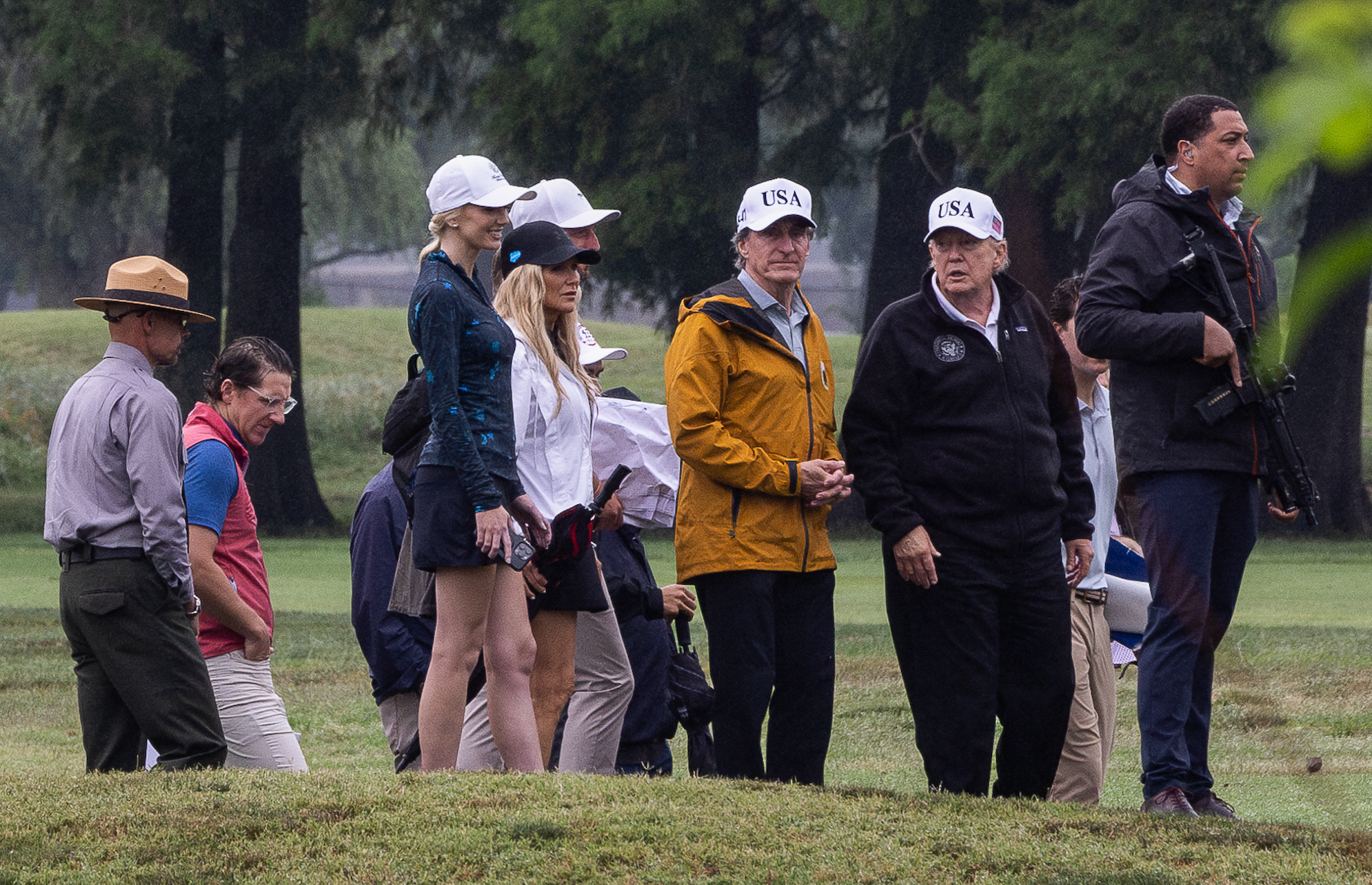
In a late Monday post, Trump said the Department of the Interior will appeal the ruling. He also repeated his position that construction will begin on Nov. 15 and the park will be closed for 15 months, adding that the “judge has absolutely no right to hold up this very important and beautiful Project.”
Trump also wrote: “To have to give advanced notices to a judge who has no expertise in Golf, Architecture, Landscaping, Construction, or anything else having to do with building such a World Class Project, is not fair, appropriate, or Constitutional.”
Reyes’ preliminary injunction, meanwhile, sets the current restrictions on tree impacts, closures, and other irreversible modifications while the lawsuit continues.
The judge wants answers
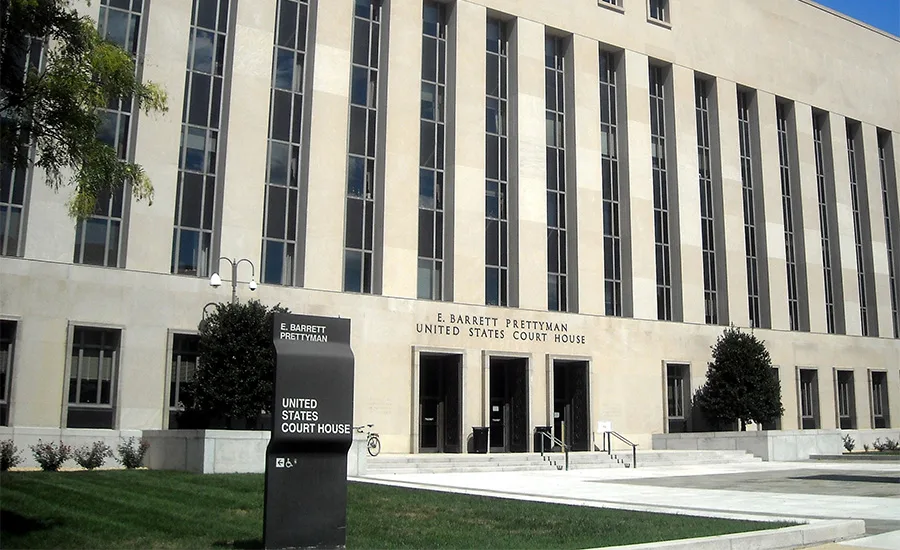
After Trump’s post, Reyes took two immediate actions in open court:
- She made a formal record of the president’s statement.
- She gave the government about 24 hours to clarify whether there is a plan to close East Potomac in mid-November and, if so, “how that can be reconciled” with what government lawyers previously told the court.
She also said she would schedule a status hearing for either Friday or Monday.
The deeper issue
This may look like a local land-use fight, but Reyes framed her role as protecting process and legality, not grading design choices or debating golf architecture. In her words: “By issuing this preliminary injunction, the Court does not end the round: it simply marks the ball until the parties can fully and fairly litigate this case.”
The lawsuit’s core concern is that the government is treating major changes as smaller, separate actions in order to avoid required review. Reyes wrote that the Interior Department likely violated the National Environmental Protection Act “by impermissibly segmenting its review of the Plan’s environmental effects.”
Where things stand
Reyes’ order temporarily blocks further tree cutting and tree damage without a court order, and it requires at least ten business days’ written notice before any closure or irreversible modification to the park while the lawsuit continues.
Trump has said the Interior Department will appeal and has continued to argue publicly that work should begin soon. Meanwhile, Reyes has demanded a prompt clarification from the government about whether it intends to close the park in mid-November, and how that squares with sworn testimony and prior representations in court.
One last detail worth keeping in mind: during a July hearing, administration officials acknowledged that major renovations would require federal environmental and historic preservation reviews. Yet later, administration lawyers floated an “alternative argument” that the renovations cannot be reviewed under the Administrative Procedure Act, an argument Reyes declined to credit.
The bigger questions about what East Potomac becomes and whether the perimeter road remains are still unresolved. But for now, the dispute is being shaped by a concrete set of limits Reyes put in place while the case moves forward.