
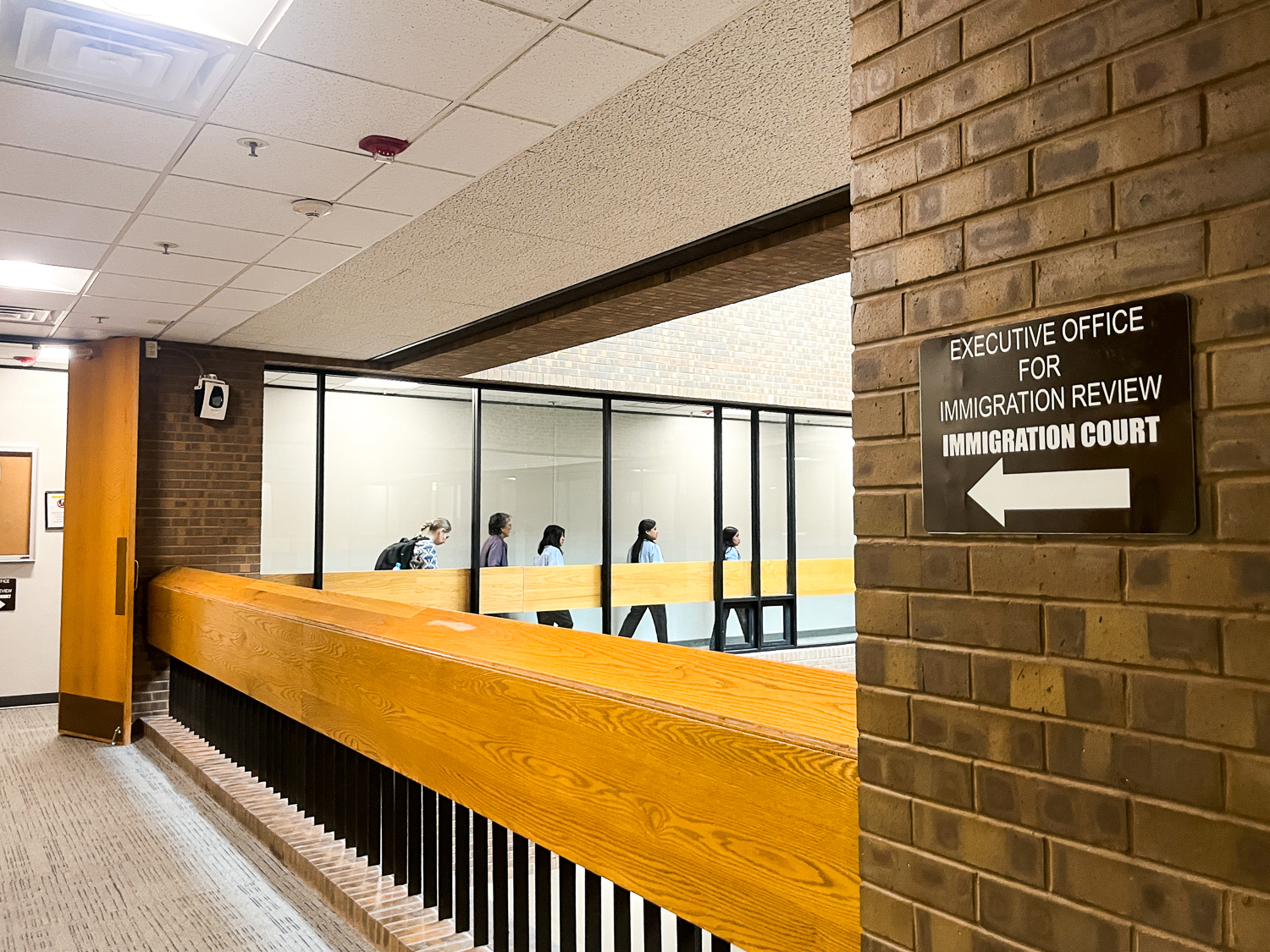
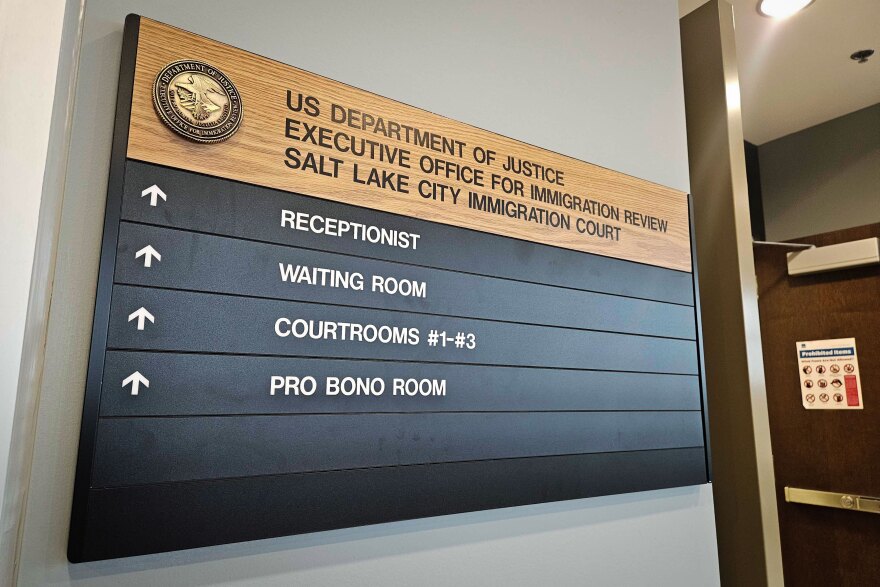
Immigration detention has a way of sounding simpler than it is. People hear “bond” and assume the rules are basically criminal bail with a different label. They are not. Immigration detention is civil custody, run mostly by the executive branch. In many cases, DHS (usually through ICE) makes the initial custody decision. Many (not all) detainees can then ask an immigration judge in the Department of Justice’s Executive Office for Immigration Review (EOIR) for a bond redetermination, with further review through the Board of Immigration Appeals (BIA) and, in some postures, federal habeas.
That is what makes the Constitution matter here. When the government locks someone up without a criminal conviction, the question is not just “does Congress allow it?” It is also: what does due process require before and during detention?
Note for readers: This piece explains the constitutional and procedural issues that recur in immigration detention litigation. Because detention disputes are highly fact-specific and vary by circuit, you should treat any single “recent ruling” as an example of a larger pattern, and check the controlling law where a case is being litigated.
Join the Discussion
What courts constrain
Most appellate fights in this area are not about whether the government can ever detain. Of course it can. The recurring question is whether the government can use categorical rules that foreclose any workable path to individualized consideration, especially when detention becomes prolonged or automatic in practice.
A concrete example is detention schemes where bond is categorically unavailable for certain groups, even if their individual circumstances suggest they are neither dangerous nor a flight risk. Another is prolonged custody where meaningful review does not occur for months, even though the person remains in civil confinement the entire time.
Courts also draw an important distinction between statutory limits (what the immigration statutes permit) and constitutional limits (what due process permits even if a statute authorizes detention). After Jennings v. Rodriguez (2018), that distinction matters even more: the Supreme Court rejected reading a bond-hearing requirement into the statute, pushing many disputes toward constitutional, as-applied arguments instead of statutory ones.
Bond hearing basics
An immigration bond hearing is usually held before an immigration judge. The question is not guilt or innocence, because immigration detention is civil. The question is whether the person should remain detained while removal proceedings continue.
What the judge typically considers
- Flight risk: Will the person appear for future hearings?
- Danger to the community: Is release a public safety risk?
- Community ties: Family, work history, length of residence.
- Immigration history: Prior removal orders, failures to appear, prior entries.
In criminal court, bail is constrained by the Eighth Amendment’s ban on “excessive bail.” In immigration, most challenges do not turn on the Excessive Bail Clause because immigration detention is not framed as criminal “bail.” Some litigants do invoke the Eighth Amendment by analogy, but courts more commonly do the constitutional work through the Fifth Amendment Due Process Clause and, in some cases, habeas review in federal court.
The statutes people mix up
“Mandatory detention” is not one rule. It is shorthand for several statutory tracks that treat different groups differently. A quick map helps:
- INA § 236(a): Discretionary pre-removal-order detention. Many people here can seek bond before an immigration judge.
- INA § 236(c): Mandatory pre-removal-order detention for certain noncitizens with specified criminal histories. Congress sharply limited bond eligibility in this category.
- INA § 235(b): “Arriving” noncitizens and many people in expedited removal contexts. Bond is often unavailable here, and parole becomes the practical release mechanism. Rules and practices can differ for asylum seekers versus other arriving or expedited-removal cases, but the common feature is that parole is typically discretionary with DHS rather than a bond decision by an immigration judge.
- INA § 241(a): Post-removal-order detention. Different timeline, different purposes, and different constitutional pressure points.
These categories are why one person may have a routine bond hearing while another is told, at least initially, that bond is off the table.
Why mandatory detention raises due process alarms
Mandatory detention sounds like a policy choice. Constitutionally, it becomes a question about process.
Due process does not always guarantee the outcome someone wants. It does not guarantee release. It does not guarantee the government will lose. But it does demand that when the government restrains liberty, especially for extended periods, it must use procedures that are meaningfully connected to the reasons for detention.
When detention is mandatory by category, the government is essentially saying: “We will not ask whether you are a flight risk. We will not ask whether you are dangerous. We will not ask whether detention is still justified months later. The category decides.”
Courts have been most skeptical when that logic produces prolonged civil confinement without a realistic opportunity for individualized review. After Jennings, outcomes vary significantly by jurisdiction, but the constitutional concern is consistent: prolonged detention with no meaningful review invites closer due process scrutiny.
The constitutional tools
Three constitutional ideas sit behind most immigration detention litigation.
1) Fifth Amendment due process
The federal government is bound by the Fifth Amendment: no person shall be “deprived of life, liberty, or property, without due process of law.” Two details matter.
- It says person, not citizen.
- It is about liberty, which includes freedom from physical restraint.
Due process is flexible, but not empty. The more detention looks prolonged, the more pressure builds for procedures that test whether the stated reasons for confinement still fit the individual case.
2) Habeas corpus
When the executive branch detains someone, the traditional mechanism for asking an independent court to check the legality of that custody is habeas corpus. In modern practice, habeas petitions are one pathway detainees use to argue that detention has become unlawful, unconstitutional, or disconnected from statutory authority, particularly where other review routes are limited.
3) Judicial review and separation of powers
Immigration enforcement is executive power. Detention decisions are often made by executive officers. Immigration courts themselves sit within the executive branch (EOIR at DOJ). That structure makes external judicial review important: Article III courts can review many legal questions through petitions for review in the courts of appeals, and some detention claims through habeas, depending on the posture and statutory limits.
What Supreme Court precedent says
The Supreme Court has not treated immigration detention as a constitutional free-for-all. But it also has not required criminal-style bail procedures across the board. Instead, it has drawn lines based on purpose, statutory text, and duration.
Detention tied to the removal process
In Demore v. Kim (2003), the Court upheld mandatory detention for a narrow category of noncitizens detained under INA § 236(c), emphasizing the government’s interest in completing removal proceedings and relying heavily on the assumption, based on the record then, that detention would generally be brief.
That “brief and process-tethered” premise matters. When real-world detention stops looking brief, lower courts have been more likely to entertain constitutional challenges, even if they disagree about the remedy.
Indefinite post-order detention is suspect
In Zadvydas v. Davis (2001), the Court interpreted the post-removal-order detention statute to avoid serious constitutional problems. It recognized a presumptively reasonable six-month period and a burden-shifting framework: after six months, if a detainee can show there is no significant likelihood of removal in the reasonably foreseeable future, the government must respond with evidence sufficient to rebut that showing.
Jennings changed the statutory playbook
In Jennings v. Rodriguez (2018), the Court rejected the idea that federal courts could read a general, periodic bond-hearing requirement into certain detention statutes as a matter of statutory interpretation. The practical effect was not to end the constitutional debate, but to redirect it: many arguments now proceed as constitutional challenges to prolonged detention in particular circumstances, and results can depend heavily on circuit law, case posture, and the statutory category of detention.
Immigration bond vs. criminal bail
It is tempting to ask: “If criminal defendants can seek bail, why can’t immigration detainees?” The honest answer is that the legal systems grew up differently.
- Criminal bail is part of a prosecution leading to trial and possible punishment. It is tightly bound to the judiciary, and the Eighth Amendment directly speaks to bail.
- Immigration detention is framed as civil custody to ensure appearance or effect removal. It is administered largely by the executive branch and governed by detailed statutes that create mandatory categories.
But the differences do not erase the shared constitutional core: physical confinement is a severe deprivation of liberty. When confinement is not the product of a criminal sentence, due process questions often become sharper, not softer.
What “a chance to seek release” means
When courts say detainees must have a chance to seek release, they are usually insisting on something concrete, not rhetorical.
A real hearing
The process cannot be illusory. A detainee needs an actual proceeding where arguments and evidence can be presented, and where the decision-maker has authority to order release when legal standards are met.
An individualized assessment
The government can use categories to guide policy, but due process pressure builds when the category becomes the whole decision. Individualized review asks whether this person presents flight risk or danger, and whether continued detention is still justified.
Standards, a record, and reasons
Due process is not just “you may speak.” It is also “the government must apply recognizable standards.” Written or oral reasons matter because they make later review possible, including in federal court where a detention challenge is properly before an Article III judge.
A note on burdens and variation
Bond hearing mechanics can vary by posture and jurisdiction. In many settings, the detainee bears the burden to show they are not a danger or a flight risk. Some courts and agency rules have also grappled with whether the government should bear a higher burden in prolonged detention scenarios. The takeaway is that “bond hearing” is not one uniform procedure nationwide.
What this explainer does not settle
This area of law is famously technical, and no single explainer can close the debate. Even when a detainee wins an individualized hearing in one case, the larger system remains a mix of statutes, regulations, and circuit-by-circuit constitutional doctrine.
- This explainer does not eliminate the statutory categories Congress labeled mandatory.
- This explainer does not guarantee bond will be granted, only that due process arguments may require a meaningful opportunity for individualized consideration when detention becomes prolonged or effectively automatic.
- This explainer does not resolve the broader national debate about immigration enforcement priorities or the design of the immigration court system.
What it does reinforce is a familiar baseline in American constitutional law: when the government locks people up, it needs procedures that match the gravity of that restraint. Not because courts want to run immigration policy, but because liberty cannot be left entirely to unchecked executive discretion.
Quick FAQ
Can the federal government detain immigrants without bond?
Yes, in some categories created by statute. But courts may require meaningful individualized review when detention becomes prolonged or when the legal scheme effectively blocks any real opportunity to seek release.
Do noncitizens have due process rights?
Yes. The Fifth Amendment applies to “persons,” and courts have long recognized that noncitizens in the United States are entitled to due process in many contexts, including restraints on physical liberty.
Is an immigration bond hearing the same as criminal bail?
No. Immigration detention is civil and usually handled in immigration court. The constitutional analysis typically runs through due process and, where available, habeas review more than the Eighth Amendment bail framework.
What is habeas corpus doing in an immigration case?
Habeas is a traditional mechanism for asking a federal court to review the legality of detention by the executive branch. It can be a key pathway for challenging prolonged or unlawful immigration custody, depending on statutory limits and case posture.
What is the difference between bond and parole?
Bond is a form of release typically ordered by an immigration judge in cases where the statute allows a bond hearing. Parole is a discretionary release mechanism usually controlled by DHS, and it is often the main release valve for many people detained under INA § 235(b).