
The federal government has significant power over the people and institutions it regulates. Often, that power shows up as forms, compliance checks, and rules that can change over time. Occasionally, it shows up as a ban.
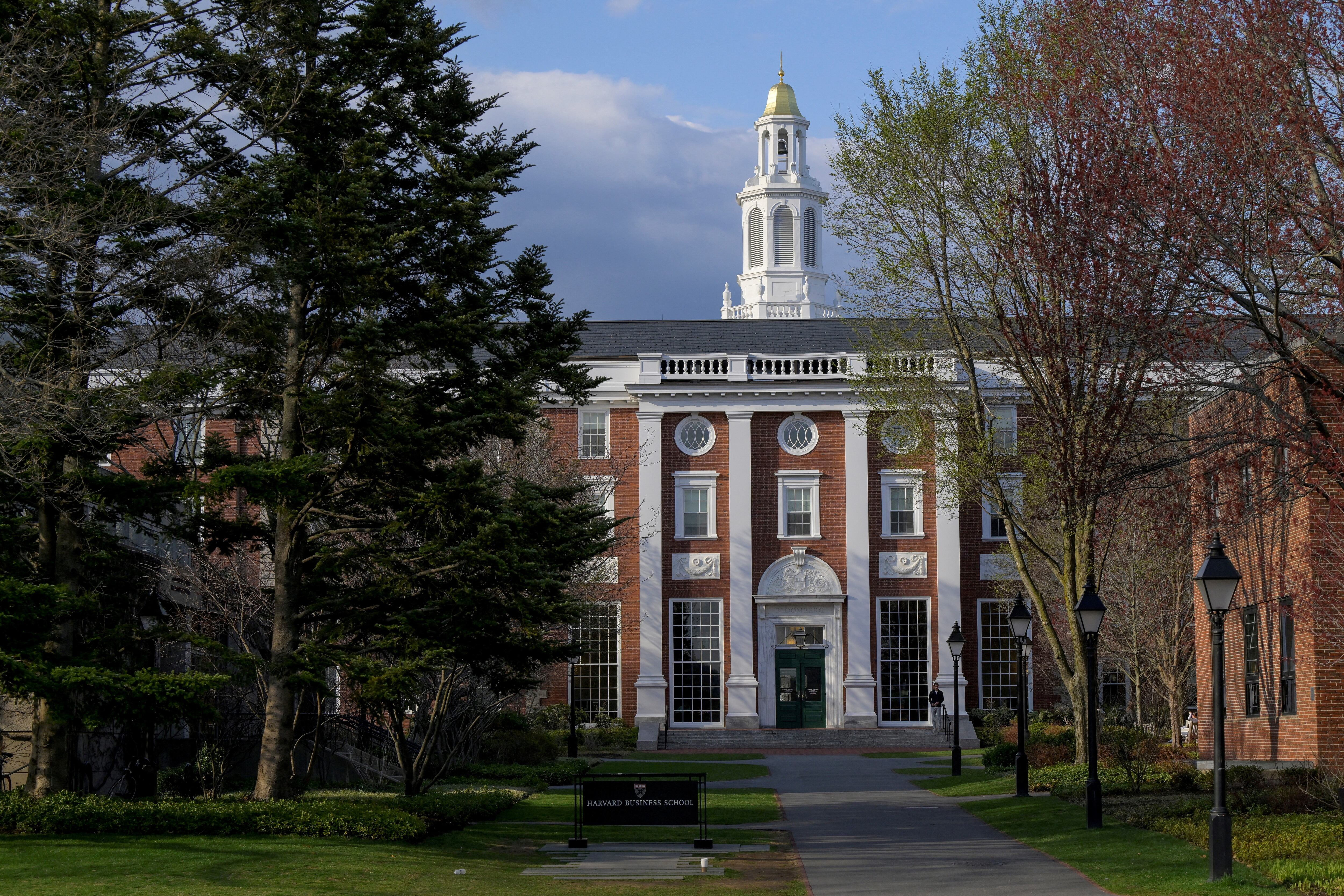
Harvard is suing the Trump administration after it banned the school from enrolling international students. Whatever your feelings about elite universities, the underlying question is broader than one campus: how easily can the state change who gets access to an institution, and what kind of process typically accompanies a decision with immediate consequences?
At the most practical level, “banned from enrolling international students” generally refers to restrictions that prevent a university from bringing international students into its programs through the usual enrollment channels. Harvard is challenging that restriction in court.
Join the Discussion
What it signals
A lawsuit like this is, at minimum, a demand for a clear legal explanation: what authority the government is relying on, and how that authority applies to the decision it made.
What can be said from the limited premise is straightforward. The administration imposed a ban that would stop Harvard from enrolling international students, and Harvard is challenging that move in court. In general terms, challenges like this ask a judge to review the government’s asserted authority and determine whether relief is warranted under the law. The precise arguments, and the record supporting them, belong to the filings and the court process rather than assumptions in advance.
What a ban can do
Even without the fine print, the functional effect is easy to describe at a high level. If a school is barred from enrolling international students, it may be unable to admit some or all international students through the normal admissions and enrollment cycle, depending on how the restriction is written and applied.
Prospective students could have to rethink plans already set in motion. Programs that rely on global recruitment might have to adjust quickly. Faculty labs, research teams, and student groups could feel uncertainty as soon as the next cohort becomes unclear.
Why it matters
International students are not a rhetorical prop. They are people making long-term bets with short-term visas: signing leases, paying tuition, joining labs, building communities, and often living with the awareness that their right to remain is conditional.
A restriction that blocks enrollment is not an abstract policy dispute to students caught near it. It can compress timelines, force last-minute decisions, and turn a carefully planned future into a scramble for alternatives. Those are common real-world pressures associated with this kind of action, which is one reason a legal fight like this can matter beyond institutional branding.
Power and process
These fights end up in court because courts are one place the public can see how power is being used, and whether it stays within legal limits. When a restriction has immediate and visible consequences, it often prompts scrutiny of the basics: authority, procedure, and review.
That scrutiny does not require assuming anything improper happened. But if the state can impose an enrollment restriction through government action, people will reasonably ask questions such as: What notice was given? What standards were applied? What opportunity, if any, existed to contest the decision before the effects spread? The lawsuit does not have to prove a specific procedural failure for those questions to be relevant. It only has to put the decision into a forum where answers can be examined.
The core issue
It is tempting to turn this into a tribal story: Harvard versus Trump, universities versus populists, borders versus globalism. That framing can be emotionally satisfying, but it can also distract from the civic mechanics underneath.
The core issue is whether government power in this area is constrained by rules that remain legible and enforceable even when the target is unpopular. If the answer is yes, this lawsuit is a normal part of accountability. If the answer is unclear, the ban could still function as a stress test, showing how dependent institutional and individual expectations can be on discretion rather than on clearly stated limits.

What to watch
As the case moves through court, the public can track a few plain questions without pretending to know the outcome.
- Scope: Is the government asserting a narrow power tied to a specific rule, or a broader power that could be applied widely?
- Process: What steps, if any, were taken before the restriction was imposed, and what record is offered to justify it?
- Standards: What rule is being enforced, and how consistently does the government argue it should apply across institutions?
- Remedy: If the ban is paused or overturned, what happens to students caught in the middle of an admissions cycle?
The bigger point
Harvard suing the Trump administration after a ban on enrolling international students is not only a headline about one institution flexing its legal muscle. It is also a reminder that government decisions can reshape lives quickly, sometimes before the public has time to absorb what changed.
If a government can impose a restriction like this, the country has reason to ask for clarity in return: clear authority, transparent reasoning, and meaningful review. Not because any particular outcome must be assumed, but because legitimacy depends on rules that can be explained, tested, and applied without guessing at the real standard after the fact.