
You can feel the tension every election cycle: someone is always “rigging,” “tricking,” or “confusing” the electorate. In 2026, the buzzwords are dark money, fake polls, and primary meddling.
Here is the hard truth that tends to disappoint everyone equally. Federal election law is not a general “fairness code.” It is a patchwork of disclosure rules, contribution limits, and fraud prohibitions, all hemmed in by the First Amendment’s protection for political speech.
So a lot of conduct that feels dishonest can still be legal, while some conduct that seems minor can trigger serious federal penalties. Outcomes often turn on a specific question: is this protected political speech, or is it conduct that corrupts, coordinates, or interferes with voting?
Join the Discussion
Start with the First Amendment
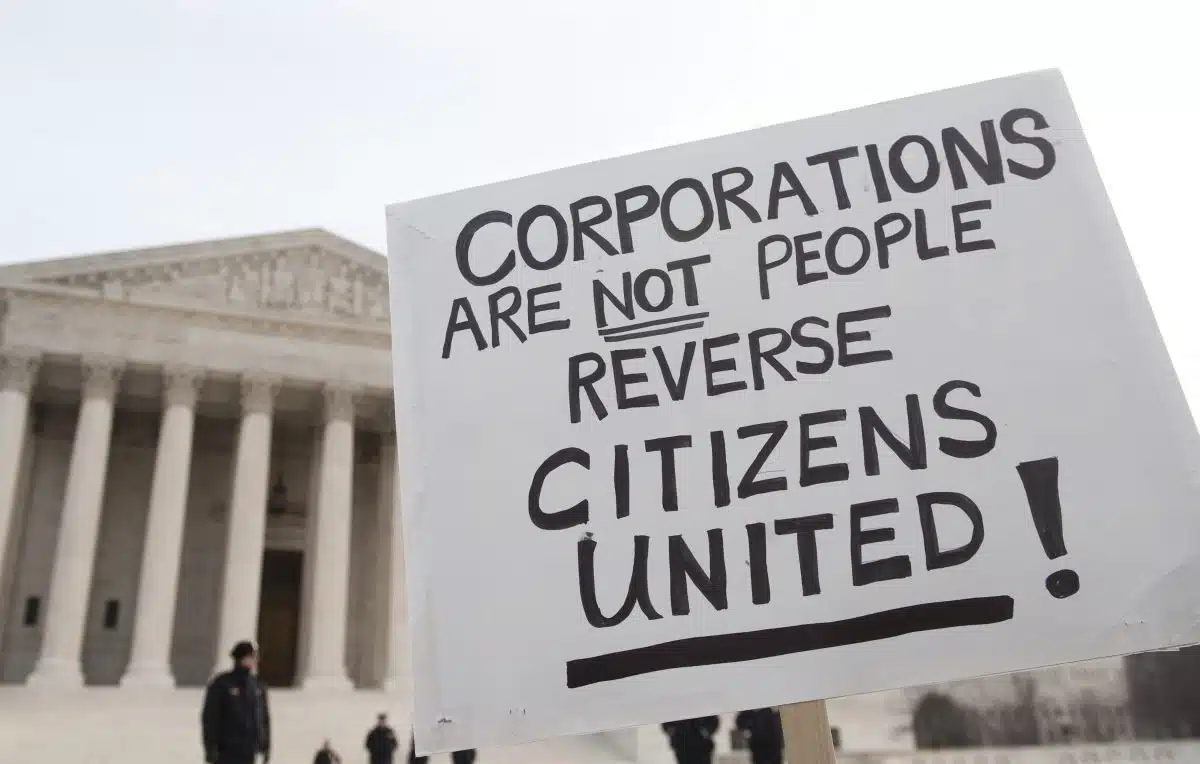
The constitutional hook is simple: spending money to spread a political message is treated as a form of speech. That principle sits at the center of modern campaign finance doctrine, especially after cases like Buckley v. Valeo (1976) and Citizens United v. FEC (2010).
One clarification upfront helps, because people naturally mash these together. The law tends to treat:
- Contributions (money given to candidates or their committees) as more regulable because they raise corruption and access concerns.
- Expenditures (money spent independently to advocate for or against candidates) as closer to pure speech, so limits are harder to defend.
Congress can regulate elections in meaningful ways, but it cannot regulate political advocacy the way it regulates ordinary commercial claims. In the campaign context, the Supreme Court has repeatedly said:
- Limits on direct contributions to candidates can be constitutional, largely to prevent corruption or its appearance.
- Limits on independent political spending face much tougher constitutional scrutiny, because independent advocacy is core political speech.
- Disclosure and disclaimer rules are often upheld as a less restrictive way to inform voters.
So when you hear “why does the law allow this,” the answer is often: because the First Amendment makes banning it harder than people assume.
What dark money is
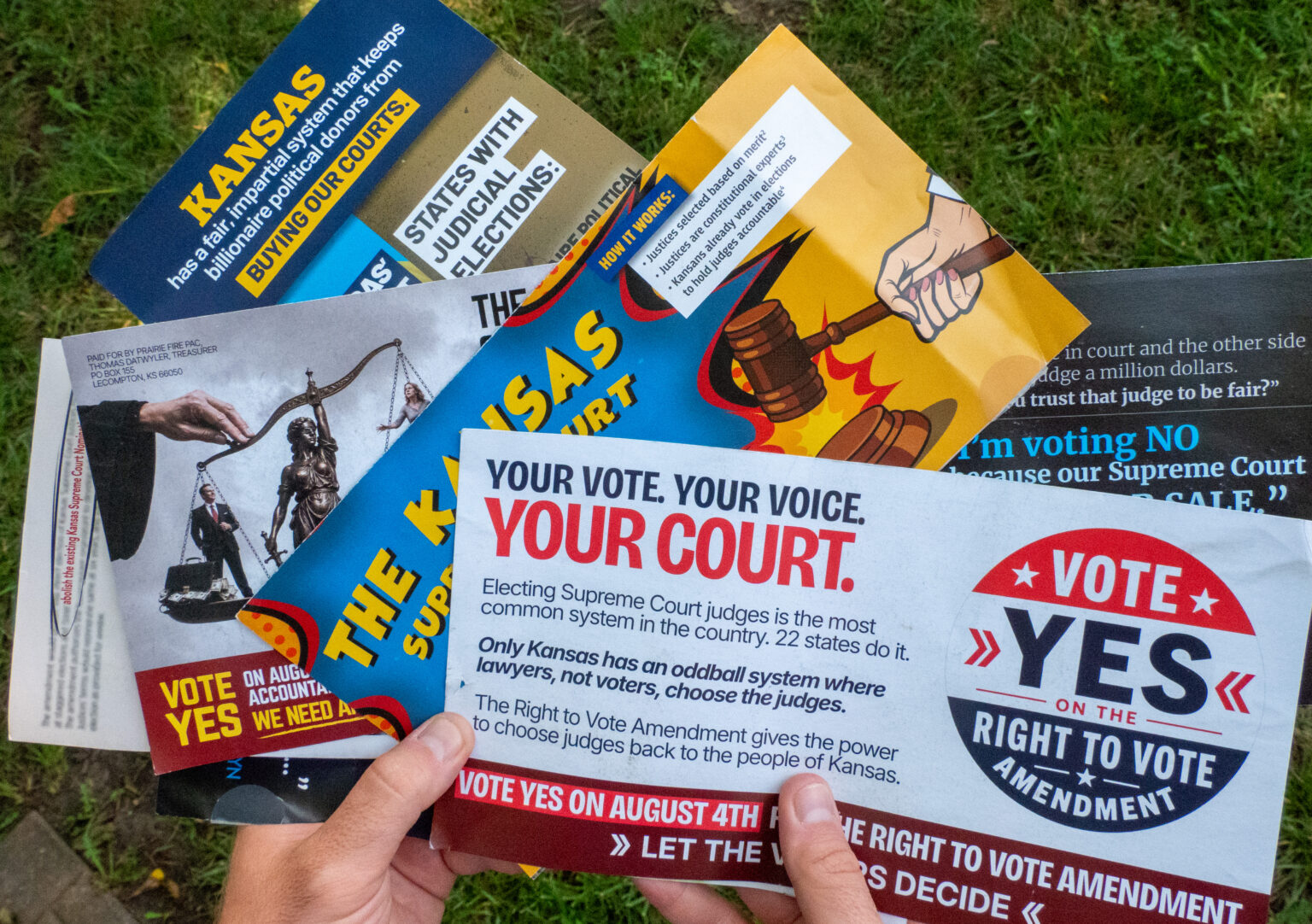
In everyday conversation, “dark money” usually means “political spending I cannot trace to a specific donor.” In legal terms, it usually refers to election-related spending by groups that do not publicly disclose their donors in a voter-friendly way.
Two different questions get blurred together
- Is the spending reported? Reporting triggers are technical. Some spending must be reported as independent expenditures (express advocacy or its functional equivalent), some as electioneering communications (certain broadcast, cable, or satellite ads close to an election), and some depends on whether the spender is a regulated political committee under federal law.
- Are the donors disclosed? Some entities, particularly certain nonprofit corporations, may not have to publicly list all underlying donors the way candidate committees and traditional PACs do.
So you can end up with a modern reality: a voter can see that “Group X” spent $2 million on ads, but cannot easily see who funded Group X.
Important nuance: donor disclosure can still be triggered
The “dark” label can be a little too categorical. In some circumstances, federal rules can require disclosure of donors connected to certain reported spending, especially when a donor gives for the purpose of furthering a specific reported activity. In practice, that earmarking standard is narrow and frequently litigated or contested in enforcement, which is one reason donor tracing often breaks down.
Not the same thing as a super PAC
Readers often mix these up. Super PACs can raise and spend unlimited amounts on independent expenditures, and they generally do disclose their donors through FEC reports. But people still experience opacity when money is routed through pass-through entities such as LLCs or nonprofits, because the FEC report shows the immediate donor, not necessarily the original source of the funds.
Federal law draws a sharp line between candidate spending and independent expenditures (spending not coordinated with a candidate). Independent expenditures are where modern outside spending flourishes, in part because constitutional doctrine treats them as less corrupting than direct contributions.
Disclosure and the FEC
Federal campaign finance law focuses heavily on who paid for a communication, whether it must be reported, and whether it was coordinated with a candidate.
1) Disclaimers on political ads
Many federal political communications must include “paid for by” disclaimers. If you see an ad that clearly advocates the election or defeat of a candidate and it lacks a disclaimer, that is not just shady. It can be a compliance problem.
Details matter. Disclaimer rules vary by medium and by whether the communication is express advocacy or a qualifying electioneering communication, and there are limited exemptions for certain small items.
2) Reporting spending to the FEC
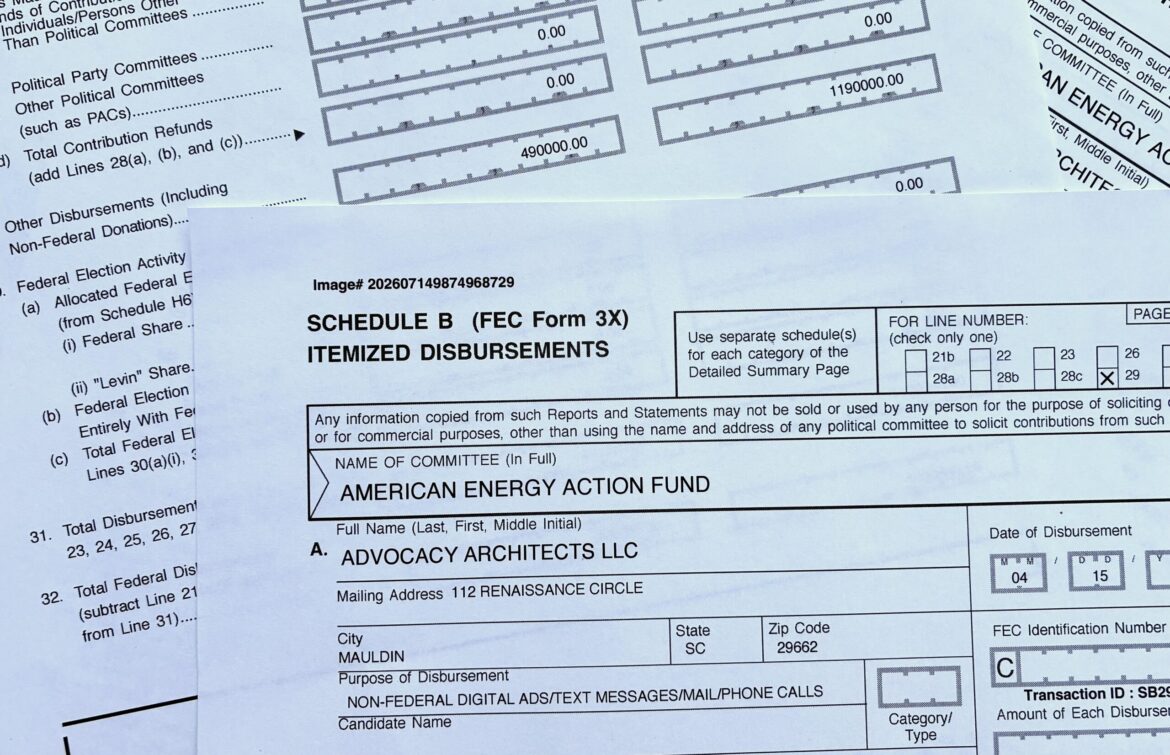
Committees and certain outside groups must file reports detailing receipts and disbursements. The requirements differ depending on whether the spender is a political committee or another entity making reportable independent expenditures or electioneering communications. These filings are public, which is why journalists and watchdogs can often trace spending patterns even when donors are harder to identify.
3) Coordination is the legal tripwire
If an outside group is coordinating with a candidate or party committee, the law may treat the spending as an in-kind contribution, which can violate contribution limits or reporting rules.
Coordination is not just a vibe. Under FEC regulations it is commonly described through prongs that look like: payment (someone other than the campaign paid), content (the communication is the kind the rules cover), and conduct (there was a qualifying interaction such as a request or suggestion, material involvement, or use of nonpublic strategic information).
What counts as coordination is fact-specific, but the concepts typically involve some mix of:
- Material involvement by the candidate or their agents in the communication’s content, audience, timing, or placement.
- Request or suggestion, meaning the spender acted because the campaign asked for, suggested, or signaled what it wanted.
- Common vendors or former employees sharing nonpublic strategic information that is used to shape the supposedly independent communication.
The catch is proof. Coordination cases are fact intensive, the evidence is often buried in communications and vendor relationships, and the FEC is a civil enforcement agency that can move slowly.
Are fake polls illegal?
Usually, no, at least not under federal election law in the way most people mean it.
That answer frustrates people because “fake poll” can mean several different things:
- A poll that is methodologically weak (tiny sample, biased questions, nonrepresentative respondents).
- A poll released selectively to create momentum or discourage opponents.
- A push poll that looks like a survey but is really a persuasion call.
- An outright fabricated poll where numbers are invented.
Federal law mostly does not regulate truthfulness in messaging
There is no broad federal “truth in political advertising” statute that polices misleading claims the way consumer protection laws police false product advertising. The Supreme Court has been wary of letting government become the referee of political truth, because that power can be abused.
So even a poll released in bad faith is often a speech problem more than a campaign finance problem.
Where risk can appear
- Fraud and defamation: Fabricating data in a way that defrauds donors or harms reputations can trigger state law liability, and sometimes federal exposure if interstate wires are used as part of a defined scheme.
- Disclaimer and reporting violations: If a “poll” is really a paid communication advocating for or against a candidate and it is distributed as an ad, the usual disclaimer and reporting rules may apply.
- Foreign national involvement: Federal law (52 U.S.C. § 30121) bars foreign nationals from making contributions, donations, expenditures, and, in certain contexts, from participating in spending decisions connected to U.S. elections. If a polling operation is a vehicle for prohibited foreign election spending, that is not merely an ethics question.
One more caveat: this article focuses on federal law. Some states have statutes aimed at knowingly false election communications, and their scope and constitutionality vary. So “legal” can depend on where the conduct occurs and what, exactly, was said.
Primary meddling
“Primary meddling” is a catch-all for tactics like boosting a weaker opponent in the other party’s primary, funding ads that highlight an extremist rival, or otherwise trying to shape who you will face in November.
People ask whether it is illegal because it feels like sabotage. But in most forms, it is political advocacy, and political advocacy is strongly protected.
What federal law cares about
- Source of the funds: Foreign nationals are barred from election-related contributions, donations, expenditures, and certain spending decisions (52 U.S.C. § 30121). Certain government contractor contributions are restricted. Those are brighter lines.
- Disclosure and reporting: If money is spent on express advocacy, reported independent expenditures, or qualifying electioneering communications, reporting obligations can attach.
- Coordination: If spending is coordinated with a candidate, it can become an illegal contribution or trigger other violations.
What federal law usually does not police
Federal law generally does not prohibit you from trying to influence which candidate wins the other party’s nomination through independent speech. That is not because Congress approves of the tactic. It is because regulating it would mean regulating the content and purpose of political speech.
Voter confusion and deception
The place where “trickery” most clearly collides with law is not campaign finance. It is voter deception and election administration.
Federal law does not ban every misleading political claim, and there is not one single federal “anti-misinformation about polling places” statute that covers all scenarios. But federal law does target certain behaviors that interfere with the act of voting itself, often through civil-rights and anti-intimidation theories. Common federal hooks include provisions of the Voting Rights Act and criminal statutes such as 52 U.S.C. § 10307 and 18 U.S.C. § 241, with other statutes (for example 18 U.S.C. § 242 or 18 U.S.C. § 594) sometimes relevant depending on the facts.
Examples that can create real exposure
- Impersonating election officials or sending materials that falsely appear to be from an elections office.
- False information about time, place, or manner of voting, especially when tied to intimidation, suppression efforts, or a coordinated scheme to deprive people of voting rights.
- Voter intimidation or threats aimed at keeping people from voting.
- Ballot fraud, including forging ballots or tampering with vote counts.
Some of this is policed through federal criminal statutes. Some is handled through the Voting Rights Act, other civil rights laws, and state election codes. The key distinction is this: speech about politics is broadly protected, but interference with voting can be punishable.
Why the law feels inadequate
If you came here hoping for a clear rule like “dark money is illegal” or “fake polls are illegal,” you have encountered a deeper constitutional design choice.
Our system tolerates a lot of hard-edged political behavior because the alternative is empowering government to decide which political speech is permissible. The Supreme Court has tended to prefer disclosure and anti-fraud enforcement over broad censorship of campaign messaging.
That does not mean anything goes. It means the legal levers are specific:
- Follow the money through reporting and disclaimers.
- Police coordination between supposedly independent spenders and candidates.
- Protect the act of voting from intimidation, deception aimed at voting logistics as part of a rights-depriving scheme, and outright fraud.
When people argue about reforms, they are often arguing about how far those levers can be pushed without running into the First Amendment wall.
Quick answers
Is dark money legal?
Much of it is legal in the sense that some organizations can engage in political spending without publicly listing all donors in a voter-friendly way. But whether any given activity is reported depends on technical categories (political committee rules, independent expenditures, and electioneering communications). The spending itself may still be subject to FEC reporting rules, disclaimer requirements, and anti-coordination rules. In narrower situations, donor disclosure can be triggered when contributions are tied to certain reported spending.
Are fake polls illegal?
Usually no under federal election law. Poor methodology, selective release, and even manipulative push polling are commonly legal. Legal problems are more likely if the poll is part of fraud, defamation, prohibited foreign involvement, or unreported paid advocacy. State laws can differ.
Is meddling in the other party’s primary illegal?
Usually no, if it is independent political advocacy using lawful funds and properly reported when required. Coordination and prohibited funding sources are where it can become unlawful.
What is the most clearly illegal trickery?
Conduct that interferes with voting itself: intimidation, impersonating officials, deception aimed at voting logistics as part of a scheme to deprive rights, ballot tampering, or other forms of election fraud.