
Budget reconciliation is often described like a cheat code: a fast-track tool that lets the Senate pass major fiscal legislation by simple majority vote under tight debate limits, so a filibuster cannot drag it out. In a 50-50 Senate, that “51” often means the vice president breaking a tie.
The Byrd Rule is the part everyone leaves out of that story.
It is the Senate’s internal alarm system for stopping reconciliation from turning into a policy free-for-all. The rule is not a simple “taxes and spending are allowed” test. A provision can touch revenues or outlays and still get tossed if it is not primarily budgetary, or if its budget effects are merely incidental to a bigger policy change.
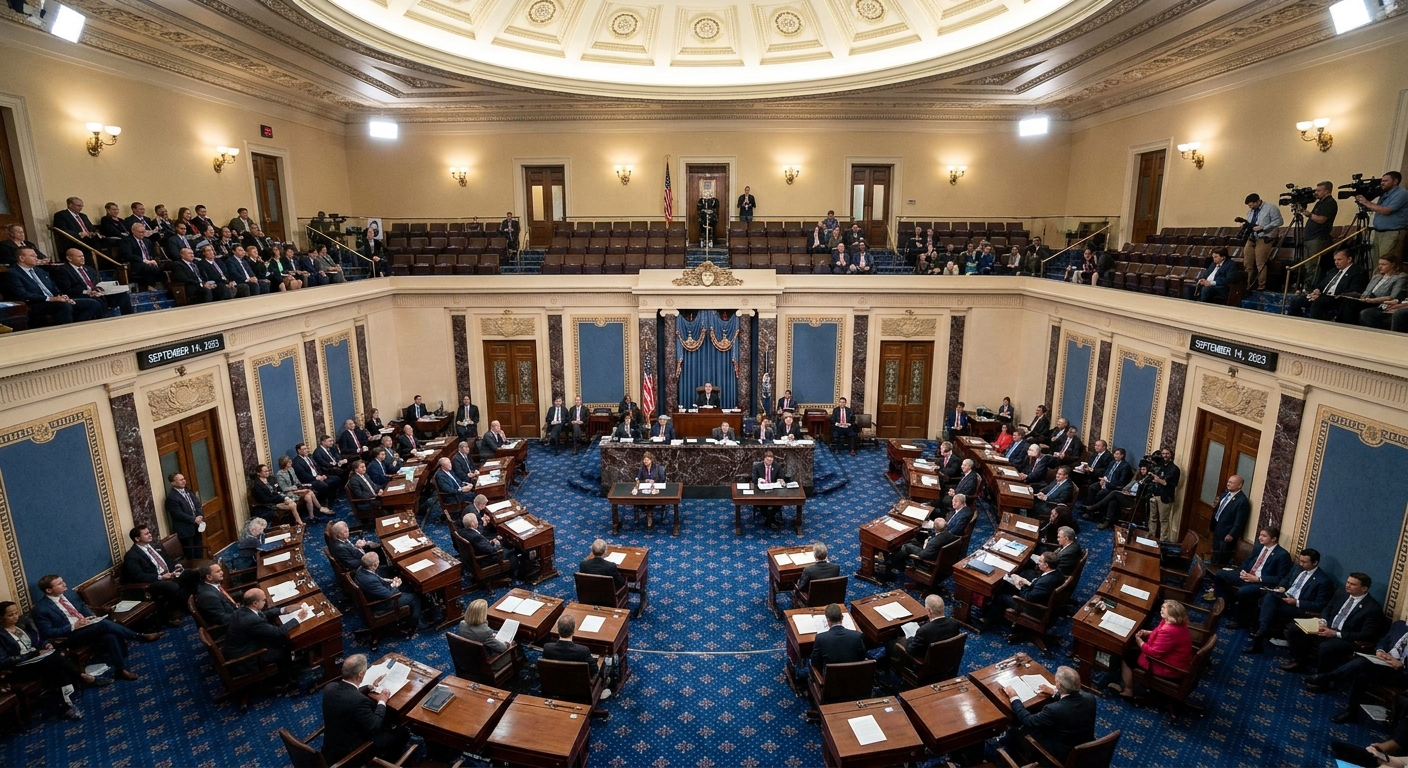
Join the Discussion
What it is for
Reconciliation exists because Congress needs a mechanism to align taxing and spending laws with the fiscal blueprint set by a budget resolution. That special status comes with a major trade: debate time is limited, amendments are constrained, and the bill can pass with 51 votes.
Senator Robert C. Byrd of West Virginia worried that the Senate would start using reconciliation to do anything that was politically hard to do under regular rules. In the 1980s and 1990s, the Senate was already testing that boundary.
The Byrd Rule is the Senate’s answer to a basic fear: if reconciliation can carry any policy, then the filibuster becomes optional whenever a majority is impatient.
So the Byrd Rule draws a boundary around reconciliation: you can use the fast lane for budget changes, but you do not get to bring unrelated policy along for the ride.
The basic idea
The Byrd Rule lets senators raise a point of order against “extraneous” material in a reconciliation bill. If the point of order is sustained, the offending provision is removed unless the Senate votes to waive the rule.
Two key features make it powerful:
It is targeted. It can strike specific provisions rather than killing the entire bill.
It is hard to waive. Waiving the Byrd Rule generally requires three-fifths of sworn senators, usually 60 votes, which defeats the main reason majorities use reconciliation in the first place.
That is why reconciliation bills get drafted with lawyerly precision. The goal is not only to win a majority vote. The goal is to survive Byrd Rule scrutiny.
What counts as extraneous
The Senate’s rule sets out six tests for what counts as “extraneous” in reconciliation. You do not need to memorize the list to understand how it works, but naming the tests helps explain why popular policies sometimes get stripped out.
1) No budget effect
If a provision does not change federal spending or revenues, it is the easiest Byrd Rule target. Reconciliation is supposed to adjust the fiscal ledger. Pure regulatory policy with no fiscal change is vulnerable.
2) Incidental budget effects
This is the most litigated category in practice.
A provision can change spending or revenues and still be struck if those fiscal effects are considered incidental compared to the policy change. In other words, if the real point is to regulate behavior and the budget impact is a side effect, the Byrd Rule can treat it as extraneous.
This is why lawmakers often try to write policies as taxes, credits, fees, or spending programs. The same policy idea can look “budget first” or “policy first” depending on how it is drafted.
3) Outside the committee’s instructions
A budget resolution can instruct particular committees to hit specific fiscal targets. If a reconciliation provision falls outside those instructions, it can be challenged.
4) Committee jurisdiction problems
Even if a provision has budget effects, it can still be vulnerable if it falls outside the jurisdiction of the committee that submitted it.
5) Deficit increases after the budget window
Reconciliation bills are scored over the budget window set by the budget resolution. In modern practice that window is commonly 10 years, but it is not a constitutional requirement and it can vary.
If a provision increases deficits outside that window, it can trigger a Byrd Rule problem. This is one reason sunsets exist. A policy may be written to expire before the end of the scoring window to avoid long-term deficit effects that would make it vulnerable.
6) Social Security is off-limits
The Byrd Rule blocks reconciliation from being used to change Social Security (OASDI), meaning the old-age, survivors, and disability insurance programs under Title II of the Social Security Act. This is separate from Medicare and Medicaid, which can be affected through reconciliation.
How reconciliation starts
Reconciliation is not just a Senate floor maneuver. It starts with a budget resolution passed by Congress, which can include reconciliation instructions telling specific committees to produce legislation that meets certain budget targets.
The House can pass reconciliation legislation too, and often does. But the Byrd Rule is a Senate constraint, and it is usually where the biggest procedural fights happen.
The parliamentarian
The Byrd Rule has teeth because the Senate has an umpire: the parliamentarian.
The parliamentarian is a nonpartisan Senate official who advises the presiding officer on what Senate rules and precedents require. In the reconciliation context, the parliamentarian helps evaluate whether provisions violate the Byrd Rule and whether points of order should be sustained.
Two things are easy to misunderstand here:
The parliamentarian does not write policy. The office interprets Senate rules and precedent.
The parliamentarian is not a judge. The presiding officer issues rulings, typically following the parliamentarian’s advice.
There is also a third reality worth keeping straight: the Senate can overturn the chair’s ruling by majority vote, and a presiding officer could rule contrary to the parliamentarian’s guidance. Both moves are uncommon because they invite escalation, retaliation when power flips, and a broader breakdown of procedural trust.
In modern practice, leaders from both parties usually treat the parliamentarian’s advice as controlling. That is less about mystique and more about self-preservation.
The Byrd Bath
Before a reconciliation bill hits the floor, senators and staff put it through what is informally called a “Byrd Bath.” It is a series of reviews and meetings where provisions are examined for Byrd Rule vulnerability.
The key question is rarely “Is this good policy?” It is “Can we defend this as primarily budgetary under Senate rules?”
That process shapes the bill you ultimately see. Some provisions are rewritten to strengthen their budget link. Others are dropped. Some are split into separate pieces, with the reconciliation-friendly parts staying and the rest pushed into a different legislative vehicle.
Common strikes
Because reconciliation bills often aim at huge policy goals, the provisions that get struck tend to follow patterns.
Regulatory mandates
Rules that tell private actors what they must do, without directly changing federal outlays or receipts, are frequent targets. Even when Congress can plausibly connect the mandate to budget effects, the “incidental” problem often lurks.
Broad policy statements
Sense-of-Congress statements, policy findings, or aspirational language are rarely helpful in reconciliation and can be easy Byrd Rule targets because they do not change the budget.
Long-term commitments
Permanent programs without offsets can run into the deficit-after-the-window restriction. This is where sunsets, phase-outs, and delayed effective dates appear, not because lawmakers love them, but because the Byrd Rule incentivizes them.
Jurisdiction and instruction overreach
If a committee writes provisions outside what the budget resolution instructed, or outside its jurisdiction, those pieces can be vulnerable. Reconciliation is tied to committee instructions upstream, not just floor tactics downstream.
Real examples
When the Byrd Rule bites, it often bites on high-profile ideas that are popular within a party but hard to frame as primarily budgetary.
Minimum wage (2021). During consideration of COVID-era reconciliation legislation, a proposal to raise the federal minimum wage was ruled out of order under the Byrd Rule because its budget effects were not considered primary relative to the policy change.
Immigration provisions (2021). Senate Democrats explored multiple immigration-related proposals for reconciliation, including versions tied to fees or parole authority. Several attempts were rejected under Byrd Rule analysis because the policy components outweighed the budgetary effects.
If something violates the rule
On the Senate floor, a senator can raise a Byrd Rule point of order against a specific provision. If the point is sustained, the provision is stripped from the bill.
The majority has a few options:
Rewrite or remove it before final passage.
Try to waive the Byrd Rule, which generally requires three-fifths of sworn senators, usually 60 votes.
Keep the policy goal alive elsewhere, by pursuing it in a non-reconciliation bill that must survive normal Senate rules.
In practice, that waiver threshold is the whole game. If you had 60 votes, you would not need reconciliation for most major legislation. The Byrd Rule is designed to force majorities to make a choice: either keep reconciliation narrow or find bipartisan support for broader policy.
How it shapes bills
The Byrd Rule does more than delete provisions. It changes legislative behavior.
Policy in fiscal clothing
Want to encourage or discourage behavior? Reconciliation nudges lawmakers toward taxes, credits, penalties, and subsidies. The result is a familiar modern pattern: major policy fights expressed through the Internal Revenue Code.
More temporary policy
Sunsets are not just political cover. They are often procedural survival strategies. A temporary provision can be scored within the budget window in a way a permanent one cannot.
Procedure becomes power
In the House, a majority can often do what it wants through the Rules Committee and party discipline. The Senate, by contrast, is a place where procedure can be outcome-determinative. The Byrd Rule is one of the clearest examples. It can decide which policies are possible under 51 votes, even when there is broad party agreement on substance.
Can the Senate ignore the parliamentarian?
The Senate is ultimately sovereign over its own rules. A presiding officer could, in theory, disregard the parliamentarian’s advice. The Senate could also vote to overturn the chair or to set new precedents about what counts as extraneous.
But this is where Senate procedure becomes Senate politics.
Overriding the parliamentarian is usually seen as a high-cost move because it invites retaliation the next time party control flips. It also undermines the idea that reconciliation is bounded by neutral rules rather than raw power.
That said, the possibility matters. It is one reason the Byrd Rule is not just a technicality. It is a pressure point where institutional norms, party incentives, and the filibuster debate intersect.
The Constitution link
The Byrd Rule is not constitutional law. It is a Senate rule, born from the Constitution’s grant that each chamber may “determine the Rules of its Proceedings” (Article I, Section 5).
But it has constitutional consequences in the real world. The Constitution gives Congress enormous power over taxation and spending. The Byrd Rule influences how that power is used by defining what can pass through the Senate on a simple majority.
When people say the Senate is built to slow down majorities, they are not only talking about the filibuster. They are also talking about internal guardrails like the Byrd Rule that decide whether a bill is treated as budgetary and therefore eligible for a fast-track path.
Takeaway
Reconciliation is powerful because it avoids extended debate and can pass by simple majority. The Byrd Rule is powerful because it prevents that path from becoming unlimited.
If you want to understand why reconciliation bills look the way they do, why provisions suddenly disappear, or why huge policy agendas get translated into tax credits and sunsets, you are really asking a Byrd Rule question.
It is not just parliamentary trivia. It is one of the Senate’s most effective tools for deciding what a simple majority can accomplish, and what must still run the 60-vote gauntlet.