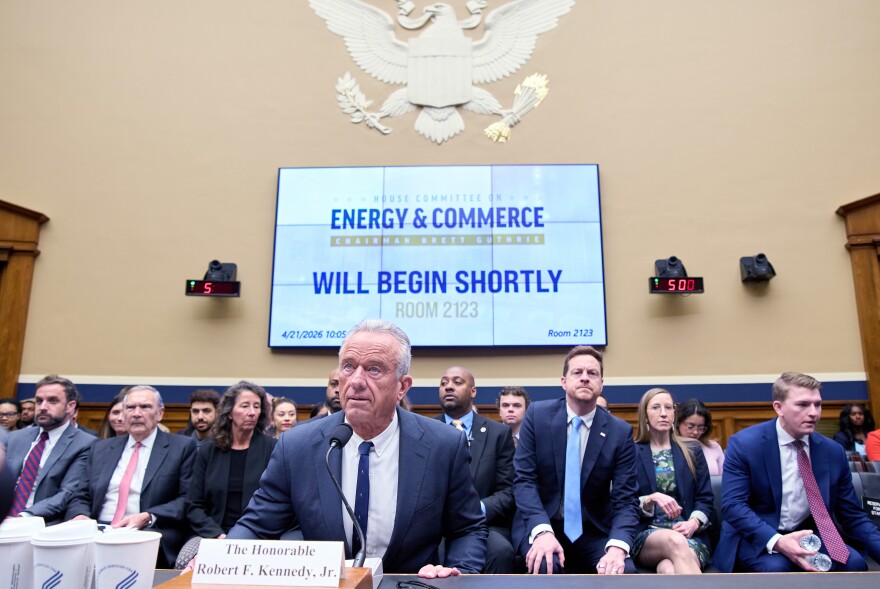
Congress does not have to win a criminal case to do its job. It does not have to prove guilt beyond a reasonable doubt. It does not even have to name a defendant.
Its job is simpler and, in a functioning republic, more relentless: find facts, expose failures, and fix the laws that allowed those failures to persist.
So when the House Oversight Committee pauses its Epstein-related work in the same week a high-profile witness was slated for questioning, the constitutional question is not just what happened. It is what this kind of pause does to the branch designed to ask uncomfortable questions in broad daylight.
Join the Discussion
What changed
The committee’s Epstein-related work has been inching closer to the places oversight is supposed to go: documents, witness schedules, and taped, on-the-record proceedings. Then the floor shifted.
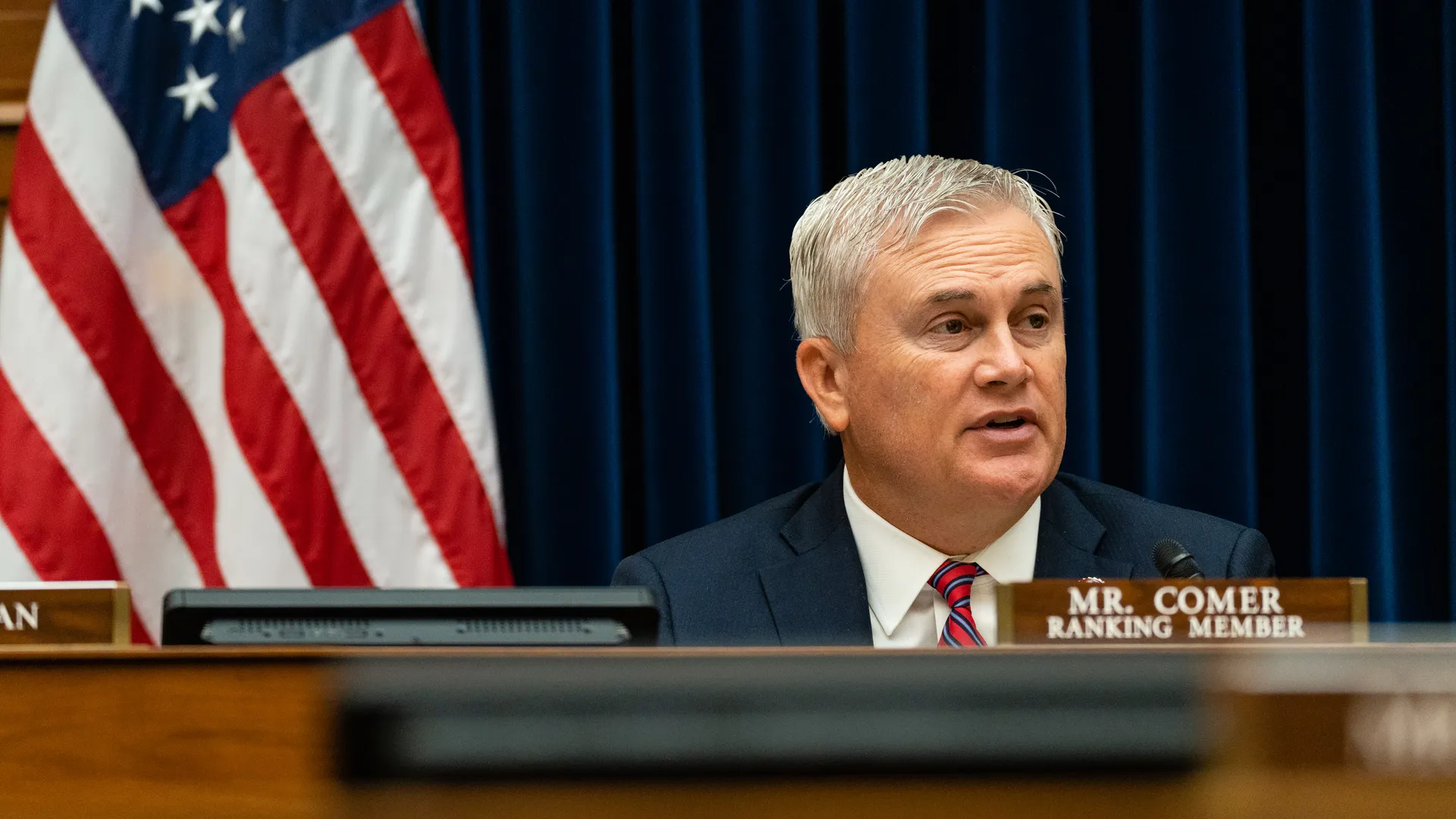
The House Oversight Committee canceled public hearings tied to the Epstein files. And instead of continuing with formal, on-the-record taped hearings, Chairman James Comer shifted the format toward informal “roundtables” that are not released publicly. Democrats objected in writing and accused Republicans of an ongoing cover-up, warning: “This shift doesn’t just affect Committee procedure, it limits Congress’s ability to uncover the truth and hold powerful actors accountable.”
At the center of the immediate controversy is Kathryn Ruemmler, a former White House counsel who later worked as an attorney at Goldman Sachs and is now a departing Goldman Sachs attorney. She was scheduled to be questioned in a closed-door session on April 21. With public hearings paused and the committee’s format in flux, it is unclear when, or if, the House Oversight Committee will question her about Epstein.
Members of Congress continue to press for the release of an estimated 37 missing files and for unredacted lists of “politically exposed persons,” a category that includes President Trump.
Why Ruemmler matters
The significance of Ruemmler is not abstract. It is specific, political, and tethered to one of the most sensitive pieces of post-9/11 lawmaking in modern history: the Justice Against Sponsors of Terrorist Act, known as JASTA, which allowed 9/11 families to sue the Kingdom of Saudi Arabia.
Questions surrounding Ruemmler’s ties to Epstein include whether she accepted “gratitude checks,” pricey gifts, and whether she advised President Obama on a controversial veto while Epstein was working with the Kingdom of Saudi Arabia to kill JASTA. Ruemmler has denied influencing Obama when he vetoed JASTA.
Thousands of emails showed Ruemmler was a close Epstein confidant, with Epstein calling her a “great defender” and Ruemmler referring to him as “Uncle Jeffrey.” That is not tabloid color. It is the kind of relational evidence that either clarifies how influence operated or helps powerful people keep pretending it did not.
Ruemmler also announced her planned departure from Goldman Sachs in a statement: “I made the determination that the media attention on me, relating to my prior work as a defense attorney, was becoming a distraction.” It is unclear when, or if, the House Oversight Committee will question her about Epstein.
Oversight is constitutional
The Constitution never says, in one neat sentence, “Congress shall conduct oversight.” That is not how the document works. It sets up powers that imply responsibilities. It creates branches that compete. And it assumes ambition will counteract ambition.
Congress’s oversight authority flows from its core Article I functions: legislating, appropriating, and, when necessary, impeaching. To legislate intelligently, Congress must be able to learn what the executive branch is doing and how private actors may be influencing or evading the law. That is why committees issue subpoenas. That is why witnesses testify under oath. That is why hearings are public when the public interest is at stake.
Oversight is not “extra.” It is one of the few tools the people have to look into closed systems without waiting for a prosecutor, a plea deal, or a statute of limitations clock to run out.
Subpoenas and the Maxwell problem
A subpoena is supposed to be Congress’s hard edge: a lawful demand for testimony or documents. But in modern Washington, subpoenas often behave more like invitations that come with a long negotiation period.
On Thursday, the Justice Department’s Office of the Inspector General announced it has launched an investigation into the DOJ’s handling of the Epstein files, stating that it will “evaluate the DOJ’s processes for identifying, redacting, and releasing records in its possession as required by the” Epstein Files Transparency Act.
Meanwhile, subpoena compliance has become its own political theater. Pam Bondi, the recently fired Attorney General, refused to answer a Congressional subpoena to testify about Epstein. She was replaced by Deputy Attorney General Todd Blanche.
That staffing change matters because the Epstein-related fight is no longer just about what files exist. It is about what the Justice Department says happened, what it will disclose, and who gets protected by process.
Last July, Blanche conducted a two-day, recorded interview with convicted sex trafficker Ghislaine Maxwell. Under limited immunity, Maxwell discussed her association with Jeffrey Epstein but did not implicate Donald Trump in wrongdoing. Blanche, Trump’s former criminal defense attorney, said Maxwell called the President a “gentleman.” Maxwell was then moved to a minimum-security prison, outraging her victims.
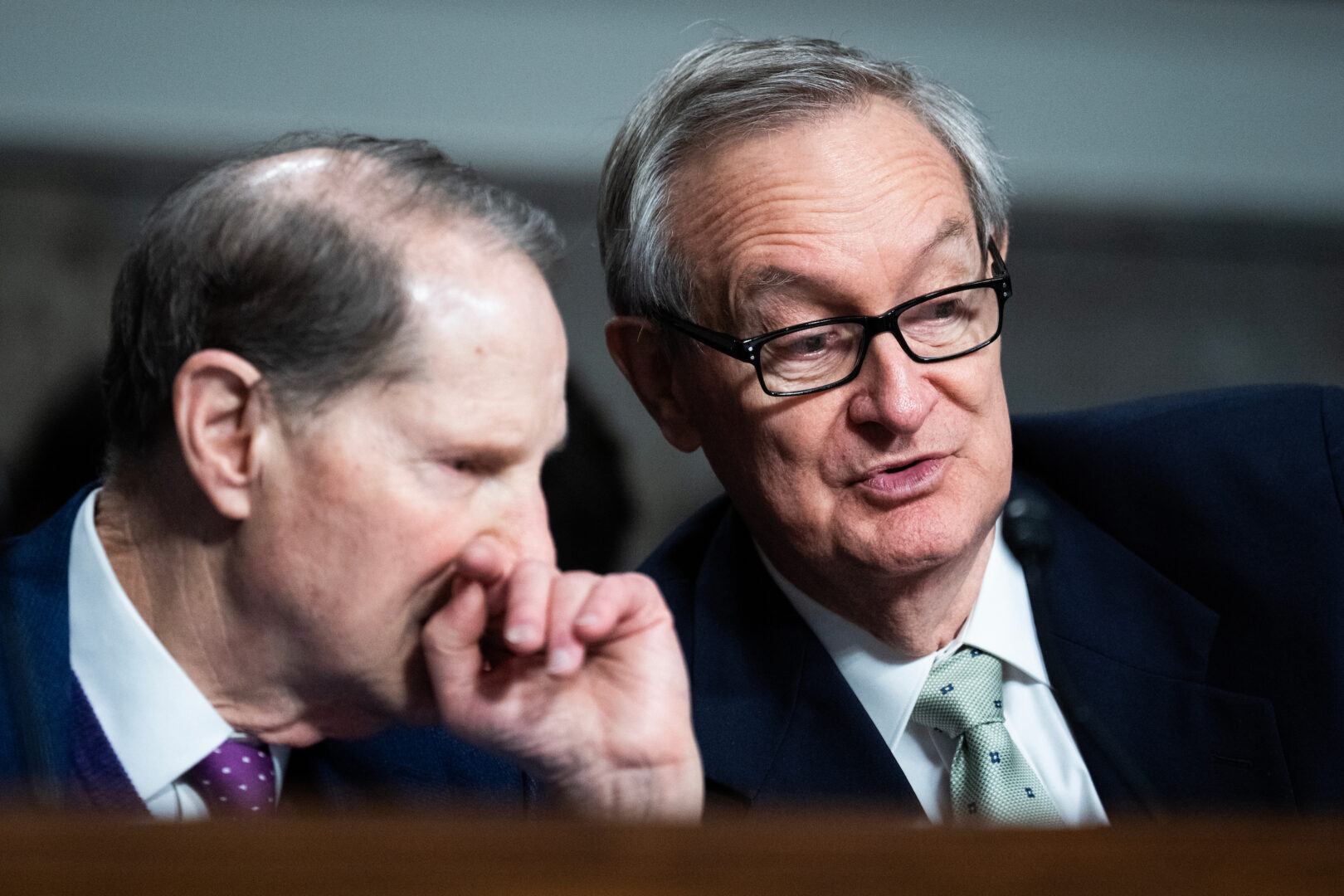
That is the backdrop for Senator Ron Wyden’s accusations. Wyden, who heads the Senate Finance Committee, has been conducting a long-term “follow the money” investigation into Epstein’s financial network, focusing on how major banks enabled his sex trafficking operation. Wyden accused Blanche of blocking production of certain records. Wyden wrote: “It has come to my attention that you are preventing the Drug Enforcement Administration from producing an unredacted copy of a report I requested regarding drug trafficking and money laundering by Jeffrey Epstein and several associates.” Wyden also described Blanche’s alleged interference as “highly disturbing,” citing what he characterized as “bizarrely favorable treatment of Ghislaine Maxwell, one of Epstein’s closest criminal associates.”
This is what institutional delay looks like. Nobody says “no” in a way that can be cleanly punished. They stall. They narrow. They negotiate. They move the conversation into private rooms where public pressure cannot follow.
Public record and private rooms
Closed-door interviews can be legitimate. Congress sometimes needs them to protect sources, avoid witness coordination, or review sensitive material. But a system built only on private sessions creates a public record problem: the citizen cannot evaluate what Congress discovered, what it ignored, or who it chose not to confront.
That matters in a scandal ecosystem like Epstein’s, where the central civic fear is not simply the original crime, but the possibility that influence insulated people from consequences.
When oversight moves from sworn testimony toward informal “roundtables,” the legal stakes change. The political stakes change too. Under oath, a witness risks perjury. In a loosely structured discussion, accountability becomes mushy, even if the facts discussed are explosive.
Other witnesses
Ruemmler is not the only high-profile figure hovering near the schedule. Other individuals with ties to Epstein, including Bill Gates and Commerce Secretary Howard Lutnick, were scheduled to testify in the coming weeks.
Lutnick’s presence in this story is not random. He is a plaintiff in the lawsuit filed by 9/11 families against the Kingdom of Saudi Arabia after his brother died in the World Trade Center towers. That means the JASTA subplot is not an abstract Washington fight for him. It is personal, legal, and politically combustible.
On Wednesday, Lutnick ducked questions about Epstein during his testimony at a Senate Appropriations subcommittee on his department’s fiscal year 2027 budget request. Senator Chris Van Hollen confronted Lutnick, accusing him of previously misleading the American people about the extent of his relationship with Epstein. Lutnick frequently dodged these inquiries, stating, “I am here to testify on the budget.”
Lutnick was scheduled to be questioned by the House Oversight Committee on May 6, but it remains unclear if the hearings will continue.
The clock favors the powerful
Americans tend to imagine that accountability is inevitable. That if something is true, it will surface. That if someone is guilty, they will be caught.
The Constitution does not promise inevitability. It offers tools, and then it relies on human beings to use them.
Delay is one of the most underrated forms of power in American government. Run out a congressional session. Wait for attention to shift. Litigate a subpoena. Move from public hearings to private meetings. Let memories dull and headlines fade. At the end, nothing dramatic has to happen. The system simply expires the moment.
That is why pauses matter. A “temporary” halt can be functionally permanent if the calendar is allowed to do the work that votes and verdicts cannot.
What Congress can do
Congress has real options, even when witnesses resist.
- Hold formal, on-the-record hearings. Congress can choose sunlight. It can put witnesses under oath and build an evidentiary record the public can evaluate.
- Enforce subpoenas through the courts. That is slow, but it is the standard modern path. It also tests whether the institution is serious enough to keep pushing when the news cycle moves on.
- Use appropriations power. Agencies respond to budgets. Oversight is not only about questions. It is about consequences.
- Write targeted legislation. If “missing files” and heavy redactions are the allegation, Congress can tighten disclosure rules and attach deadlines, penalties, and reporting requirements to the next funding bill.
- Refer potential crimes. Congress cannot prosecute, but it can refer evidence to prosecutors and insist the executive branch explain decisions not to proceed.
None of these are automatic. Each requires sustained will. That is the constitutional truth nobody likes to say out loud: oversight is less about what Congress may do than what Congress is willing to endure to do it.
A republic must confront
Epstein’s story has always been bigger than one man. It is about systems that looked away, institutions that moved slowly, and reputations that seemed to operate with their own set of rules.
Congress is one of the few bodies designed to interrogate that entire ecosystem, not as a trial, but as a civic autopsy. When public hearings are canceled and oversight drifts into private rooms just as key witnesses near the chair, the message the public receives is not procedural. It is psychological.
It tells ordinary Americans that accountability is optional, and that time is an ally reserved for the well-connected.
The Constitution gives Congress the power to investigate. What it does not give is a guarantee that Congress will choose discomfort over convenience. That choice is political. But the consequences are constitutional, because they determine whether oversight remains a muscle or becomes a myth.