Americans rarely vote on a single issue. But elections still tend to organize themselves around a few dominant anxieties, the problems voters feel in their bones when they pull into a gas station, watch local news, or scan their bank app.
A new national survey conducted April 17-20 offers a clear snapshot of those anxieties and the more important question that follows: which party voters trust to handle them. The results do not simply forecast campaign slogans. They sketch the fault lines likely to decide the next election’s balance of power.
Join the Discussion
The trust gap cuts both ways
On public safety and sovereignty issues, voters give Republicans a meaningful edge. Asked who would do a better job, respondents favored Republicans by:
- 16 points on border security
- 8 points on immigration
- 8 points on crime
- 6 points on national security
But the advantage flips on several kitchen-table and social-policy fronts. In the same survey, voters said Democrats would do a better job by:
- 21 points on healthcare
- 8 points on inflation
- 4 points on the economy
- 29 points on climate change
- 18 points on abortion
- 13 points on transgender issues
- 6 points on foreign policy
This is not a simple story of one party “winning” the national mood. It is a story of voters building two separate checklists. One is about control and order. The other is about cost, care, and autonomy. Midterms often come down to which checklist feels more urgent in October than it did in April.
Inflation is daily life
Constitutional government rests on legitimacy. And legitimacy, in practice, depends on whether ordinary life feels manageable. Right now, a large share of voters say it does not.
When asked to name the most important issue facing the country, 26% pointed to inflation and high prices, and 17% cited the economy and jobs.
The deeper numbers are even more revealing:
- 73% rate the economy negatively.
- Six in 10 rate their personal financial situation negatively.
- Seven in 10 say it feels like the economy is getting worse, up 15 points from 55% last April and matching a record high in this polling series.
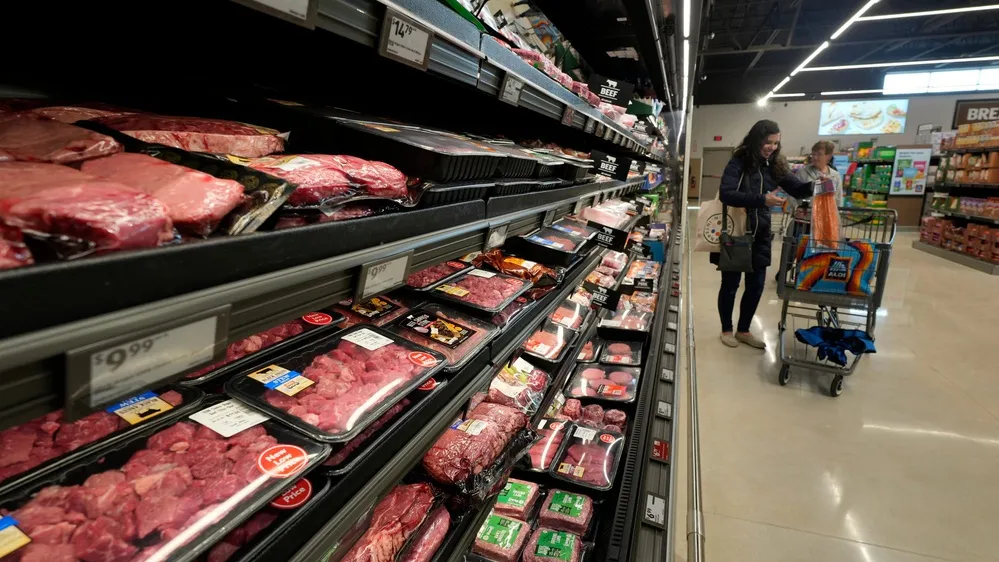
And cost pressures are not abstract. Majorities say prices are a “major” problem for their families when it comes to groceries (62%), gas (60%), healthcare (55%), and housing (52%).
These numbers matter because inflation is not only an economic issue. It is a civic one. When families feel cornered, trust erodes. Voters stop rewarding long-term policy arguments and start demanding immediate relief, even when immediate relief is politically easier to promise than to deliver.
Border and crime are signals
Border security, immigration, and crime are the kinds of issues that act as cultural proxies. Voters do not only evaluate outcomes. They evaluate seriousness.
That is why a 16-point advantage on border security is more than a policy preference. It suggests that many voters associate Republicans with enforcement and Democrats with drift, whether or not that perception fits the details of specific legislation.
It is also why these issues can surge late. A single highly publicized incident can dominate the conversation and collapse nuance into a gut-level verdict. Campaigns understand this. Expect messaging that treats “control” as a moral category, not a bureaucratic one.
Healthcare is a Democratic anchor
A 21-point edge on healthcare is enormous in modern polling. It reflects something deeper than any single program. It reflects a long-running public intuition that Democrats prioritize access and affordability while Republicans prioritize limiting government’s role.
Notably, healthcare also shows up in the cost-of-living numbers: 55% call healthcare prices a “major” problem for their families. That creates an opening for Democrats, but it also creates risk. If healthcare is a top concern and voters already trust Democrats more on it, then voters will also judge Democrats more harshly if costs continue to rise.
That is the hidden logic of issue ownership. The party that “owns” an issue gets the benefit of the doubt, until it does not.
The generic ballot is close
If the midterms were held today, 52% of voters say they would back the Democratic candidate in their House district, while 47% would support the Republican candidate. That is a five-point edge, within the poll’s margin of error.
But translating a national margin into seats is not a straight line. Republican pollster Daron Shaw offered two cautions. First, because more of the Democratic vote is stacked in heavily Democratic districts, Democrats may need to win the national House vote by one to three points to win a majority. Second, he noted that poll results do not become particularly predictive of the actual vote until late summer.
Even so, the energy gap leans Democratic: by a 68% to 60% margin, more Democrats than Republicans said they are “extremely” motivated to vote.
That matters because midterms are turnout machines, not persuasion seminars. The party that converts motivation into ballots can outperform issue-by-issue skepticism.
Both parties face backlash
Here is the most damning symmetry in the data: 61% say the Democratic Party is focused on the “wrong” issues, and an equal 61% say the same about Republicans. Both parties also sit at identical favorability ratings: 42% favorable and 58% unfavorable.
This is what a two-party system looks like when the electorate is dissatisfied but still forced to choose. Constitutionally, we like to imagine elections as clear consent. Politically, they often function as constrained choice, a decision made under frustration.
When both parties are unpopular, campaigns tend to become less about selling a vision and more about defining the other side as too risky to trust with power.
Trump still shapes the gravity
The survey puts President Donald Trump’s overall approval at 42% approve and 58% disapprove. On economic stewardship, the numbers are worse: 28% approve of his handling of inflation and 34% approve on the economy.
Midterms often become referenda on the president, whether voters want them to or not. When presidential approval is well underwater, the president’s party usually needs a counterweight: a salient threat, a cultural backlash, or a local candidate brand strong enough to break the national pattern.
This is where the earlier trust gaps snap into focus. Republicans may believe border and crime can override presidential drag. Democrats may believe healthcare, inflation, and the economy will keep the contest tethered to kitchen-table pain where the GOP is less trusted. Both theories can be true in different districts.
What the fault lines suggest
Read the issue numbers as a map, not a forecast. The map says:
- If the campaign is dominated by border security, immigration, crime, and national security, Republicans have the wind at their backs.
- If the campaign is dominated by healthcare, inflation, the economy, and abortion, Democrats have the clearer advantage.
- If voters keep believing both parties are focused on the wrong issues, the winners will be the candidates who look least like national parties and most like problem-solvers in their own communities.
Our constitutional system was designed to channel conflict into elections rather than violence. But it does not guarantee that elections will be satisfying, clarifying, or even coherent. It only guarantees that the public gets another turn.
The next turn is coming quickly. And this poll suggests the fight will not be over whether Americans are worried. It will be over which worry feels most immediate when voting begins.