
You can read a lot of American criminal procedure and come away with a lopsided impression: the Constitution is a map of what the government cannot do to the accused. Search and seizure. Self-incrimination. Counsel. Confrontation. Due process. Those rules are essential, and they are deliberately hard-edged.
But what about the person on the other side of the caption, the victim whose life is now being managed by a case number?
At the federal level, Congress tried to answer that in 2004 with the Crime Victims’ Rights Act, usually shortened to CVRA. It is a statute, not a constitutional amendment. It does not rewrite the Bill of Rights. What it does is build a set of participatory rights into the federal criminal process and then give victims a way to insist that those rights be taken seriously.

Join the Discussion
What it is and where it applies
The CVRA is codified at 18 U.S.C. § 3771. It applies in federal criminal cases and certain related proceedings. Its core coverage is straightforward: release and detention decisions, plea proceedings, and sentencing are squarely within the statute’s orbit.
Beyond that, the edges can get technical. The CVRA is also invoked in some post-judgment contexts, like supervised-release revocation and other proceedings that directly affect a victim’s interests, but how far it reaches into collateral litigation (for example, certain habeas or § 2255 disputes) can be litigated and circuit-dependent. In other words, the CVRA is not just “trial rights,” but its outer boundary is not always one-size-fits-all.
Two practical anchors matter:
- It is federal. If the case is prosecuted by a state or local district attorney under state law, the CVRA is not the governing victims’ rights instrument. A state victims’ bill, state constitution, or state statute will be.
- It is procedural and participatory. The CVRA is not a promise of a conviction. It is not a guarantee of a particular sentence. It is, in large part, a promise that victims will not be treated like spectators to their own trauma, at least not by default.
Who counts as a victim
The CVRA does not apply to everyone affected by a crime in the everyday sense. It uses a legal definition: a “crime victim” is a person directly and proximately harmed by the commission of a federal offense.
Most of the time, status is obvious. Sometimes it is disputed, especially in complex fraud cases, multi-victim events, or situations where harm is indirect. When that happens, courts may have to decide who qualifies to assert CVRA rights in the case.
Three rights people feel first
The CVRA contains a list of rights, but three show up constantly in real cases and real lives: the right to notice, the right to be present, and the right to reasonable protection. These are the rights that turn a victim from “we will call you if we remember” into a participant the system must plan around.
The right to notice
The CVRA gives victims the right to reasonable, accurate, and timely notice of public court proceedings and key events such as release, escape, or detention status changes involving the accused.
In plain language: the system is supposed to make it far less likely that you learn from social media that the defendant took a plea, or that you discover after the fact that a bail hearing changed the safety calculus for your family.
Notice is not simply courtesy. It is what makes other rights usable. A right to attend a hearing is meaningless if nobody tells you the hearing exists.
The right to be present
The CVRA also gives victims the right to not be excluded from public court proceedings, with a narrow exception when a court finds that a victim’s testimony would be materially altered by hearing other testimony.
This matters because federal courts have long been comfortable ordering witnesses out of the courtroom. The CVRA flips the default for victims: presence is the rule, exclusion is the exception, and a judge must justify it.
The right to reasonable protection
Victims have “the right to be reasonably protected from the accused.” The statute does not turn every case into witness protection, but it does require the system to take safety seriously.
“Reasonable protection” can include:
- Conditions of release that restrict contact or proximity
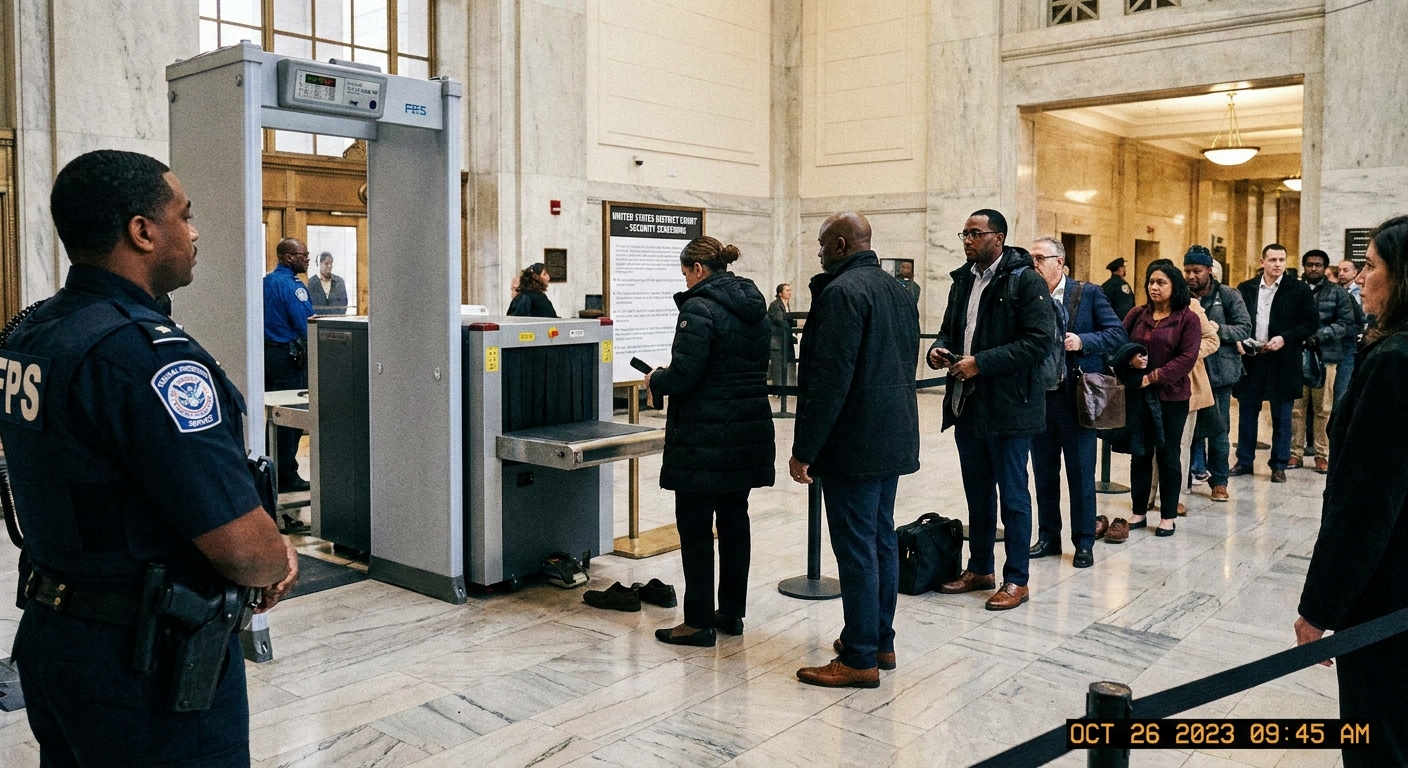
- Separate waiting areas in courthouses when available
- Orders that limit intimidation or harassment
- Practical coordination with law enforcement on safety concerns
The key word is reasonable. The right is real, but it lives in the same world as pretrial release standards, constitutional constraints, court rules, and limited resources.
Other CVRA rights
The CVRA’s list is broader than the headline trio. It includes rights that are less cinematic but often more consequential over months or years of litigation:
- To be reasonably heard at certain proceedings, including release, plea, sentencing, and other proceedings that directly affect the victim’s interests. This is the statutory foundation for many victim impact statements in federal court.
- To confer with the government attorney. This does not mean the victim directs prosecution decisions, but it does mean the prosecutor has obligations to listen and consider the victim’s views.
- To full and timely restitution as provided by law. Restitution has its own legal framework, and the CVRA reinforces that victims have standing to insist that courts take it seriously when statutes authorize it.
- To proceedings free from unreasonable delay. This right is often misunderstood. It is not an override of the defendant’s Sixth Amendment rights. It is a statutory command that delay needs justification and management, not shrugging acceptance.
- To be treated with fairness and with respect for dignity and privacy. This is the CVRA’s big-picture principle, and it is often invoked when courts are balancing public access against the victim’s privacy interests.
State victims’ bills vs. the CVRA
Every state has its own victims’ rights landscape. Many have a “victims’ bill of rights” statute. Some have victims’ rights in their state constitution. Those can be powerful, but they are not the same thing as the CVRA.
Federal source, federal forum
The CVRA is a federal statute governing federal proceedings. State provisions govern state proceedings. That sounds obvious until you hit a case that runs in parallel, such as a federal firearms prosecution alongside a state assault case, and victims discover that the rights language and enforcement tools are not identical.
Built for court enforcement
Many state systems provide rights but make enforcement difficult, vague, or largely political. One of the CVRA’s defining features is that it was designed to be invoked in the case itself, not just in policy debates.
The statute expressly allows a victim to assert rights in district court and, if necessary, seek appellate review through a mandamus petition. Section 3771(d)(3) also directs expedited consideration in the court of appeals. In practice, “expedited” is an instruction, not a magic wand, but it is still a meaningful procedural lever.
State constitutional rights can differ
A state constitutional provision can sometimes go further than the CVRA. It may cover more proceedings, impose clearer notice deadlines, or create additional rights tailored to the state’s system. But state protections can also differ sharply in remedies and in how courts interpret them.
The CVRA sits in a narrower lane: federal cases, federal courts, federal remedies.
Enforcement has limits
The CVRA is sometimes described as giving victims “standing,” and that is close enough for everyday conversation, but the details matter. The statute allows victims to assert their rights in the district court handling the case. If the court denies relief, the victim can seek review in the court of appeals through a mandamus petition, which is an extraordinary form of appellate oversight.
That enforcement structure is the CVRA’s muscle. But it comes with limits that keep the statute from becoming a parallel prosecution.
No veto over charging
The CVRA gives victims the right to confer with prosecutors, not the power to control them. Victims can object, be heard, and push back. But the executive branch still makes decisions about what charges to bring, what plea to offer, and what resources to allocate.
Remedies are often forward-looking
Even when a right is violated, the remedy may be forward-looking rather than case-rewriting. Courts are generally cautious about undoing pleas or reopening proceedings solely to cure a notice failure, especially when doing so would collide with other legal interests like finality or the defendant’s rights.
Relatedly, the CVRA is not a damages statute. Its enforcement mechanism is primarily about participation and process inside the criminal case, not a civil payout for being ignored.
It cannot override constitutional protections
Victims’ statutory rights have to fit alongside constitutional protections for the accused, as well as other statutes, rules, and trial-management realities. A victim’s right to be heard cannot erase the defendant’s right to counsel. A victim’s right to reasonable protection cannot become punitive detention without legal basis. A victim’s right to proceedings free from unreasonable delay cannot justify shortcuts that compromise due process.
In practice, CVRA disputes are often about balancing: How do we include the victim without converting participation into control? How do we protect privacy without sealing everything? How do we avoid delay without manufacturing speed?
How it works in real life
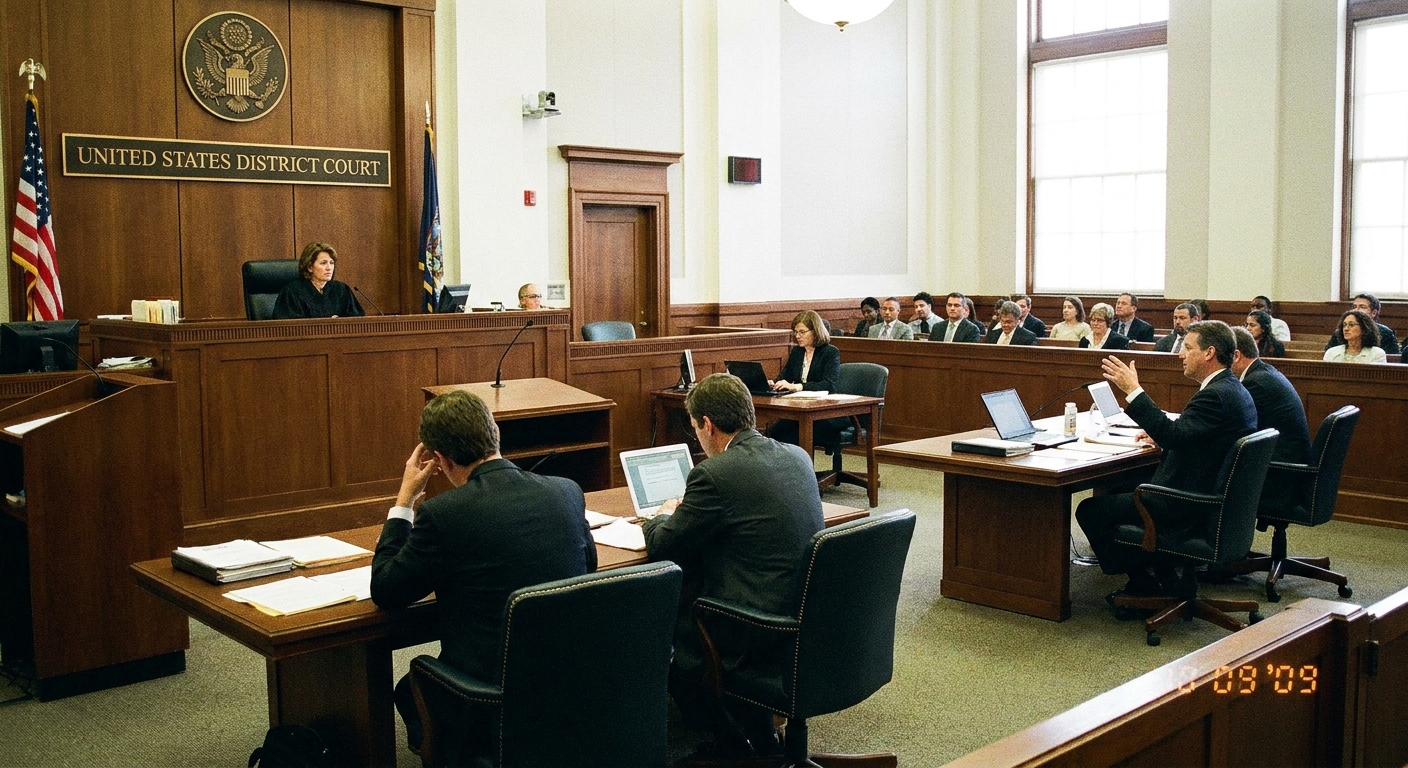
Most victims do not enforce the CVRA by drafting motions from scratch. In many federal cases, the first point of contact is the Victim-Witness program in the U.S. Attorney’s Office, often through a victim specialist or coordinator. Notice is commonly delivered through office outreach and court-related notification systems.
A simple example: a victim learns late that a plea hearing is scheduled. The practical step is usually to contact the assigned victim specialist or prosecutor immediately and ask to be heard on timing or terms, and to request future notice in a reliable way. If that fails, the legal step can be a motion in the criminal case asserting CVRA rights, followed by mandamus review if necessary.
Why “reasonable” shows up everywhere
If you read the CVRA closely, you keep tripping over the word reasonable: reasonable notice, reasonable protection, proceedings free from unreasonable delay. That word is doing legal work without being constitutional text.
“Reasonable” gives judges flexibility, but it also creates a predictable frustration. Victims want bright lines. Courts operate in standards.
So the CVRA often turns into questions like:
- Was notice “timely” given the reality of last-minute scheduling changes?
- Is it “reasonable” to clear a courtroom for safety, or does that conflict with public access?
- Is a delay “unreasonable” when a case is complex, or when counsel changes, or when discovery is massive?
The answer depends on context, and context is where litigation lives.
The deeper point
The CVRA is not part of the Bill of Rights because the Bill of Rights was written to restrain government power against the person it prosecutes. That architecture is intentional. It is one reason the American criminal system is recognizably liberal in the classical sense: skeptical of state force, protective of individual liberty, allergic to shortcuts.
But that architecture leaves a gap. For most of American history, a victim’s role in court was largely accidental: a witness if needed, a spectator if allowed, an afterthought if inconvenient.
The CVRA is Congress saying: participation is not charity. It is a right. In federal court, victims are entitled to notice, presence, protection, a voice, and basic respect, and they do not have to hope a busy office remembers them.
It does not solve every problem. It does not guarantee justice as a feeling or a verdict. It does something more procedural and, in the long run, more stabilizing. It makes the system acknowledge that victims are not merely evidence. They are citizens with rights inside the process that is supposedly being run in their name.
Quick takeaways
- The CVRA is a federal statute that gives crime victims enforceable rights in federal criminal proceedings.
- Its most practical protections are notice, presence, and reasonable protection from the accused.
- It generally covers release, plea, and sentencing, and it can reach some later proceedings, though the outer limits can be fact-specific and litigated.
- Enforcement is meaningful but not unlimited: it does not give victims control over charging, does not typically unwind cases, and it cannot override constitutional protections for the accused.