The headline claim that a president has “banned” specific outlets from the White House hits a nerve because it sounds like censorship. But the constitutional question is narrower and more technical: not whether the government can silence a newsroom, but whether the executive branch can deny physical access to a place it controls, and if so, under what limits.
That distinction is the key to understanding why press access fights are both harder and easier than they look. Harder, because the Constitution does not hand any reporter a guaranteed pass into the West Wing. Easier, because once the White House creates a credentialing system or other regular channel for access, it cannot administer that system as a political weapon without running into viewpoint discrimination and due process problems.
Join the Discussion
The First Amendment protects publishing, not guaranteed entry
The First Amendment says Congress shall make no law abridging the freedom of speech or of the press. It is a shield against government punishment for speaking, printing, broadcasting, or posting.
What it is not, at least as the Supreme Court has usually treated it, is a general entitlement to government information or government property. In other words, the First Amendment strongly protects a newsroom’s right to report on the president. It does not automatically guarantee that the president must let that newsroom stand inside the White House while it does so.
But that is not the end of the story. When the government does open a channel for access, like press credentials or a regular briefing process, the First Amendment can still constrain how that access is granted or denied. The baseline rule is “no guaranteed entry,” but the limiting principle is “no viewpoint-based gatekeeping once a system exists.”
What “ban” means in practice
“Ban” can mean several different things in practice, and the legal analysis depends on what the government is actually doing.
- Banning publication or threatening punishment for coverage is classic First Amendment territory and is almost always unconstitutional, absent extraordinary exceptions that courts have rarely upheld (for example, narrow national-security restraints in exceptional contexts).
- Denying a press credential is different. The White House controls access to secure facilities. It can impose neutral rules for safety, space, and order. But it cannot use those rules as a pretext to exclude disfavored viewpoints.
- Refusing interviews or declining to call on certain reporters is generally within the president’s discretion. The First Amendment does not require equal attention, equal airtime, or equal friendliness. Edge cases can be fact-specific if a generally available benefit is withheld to punish a viewpoint, but ordinary editorial-style choices about who gets a question are rarely treated as constitutional violations.
The hard constitutional line is viewpoint discrimination: excluding speakers because the government dislikes what they say.
Access is not a classic public forum
When courts analyze speech restrictions on government property, they often use “forum” doctrine: traditional public forums (streets, parks), designated public forums (spaces the government opens for expressive activity), and limited or nonpublic forums (spaces reserved for specific uses).
The White House is not a park. It is a secure workplace and residence. Even the press briefing room operates more like a limited-access space than an open public forum. That gives the executive branch more control than it would have over speech on a sidewalk outside the gates.
Courts do not always put every press-access dispute into a single neat doctrinal box. Some cases are framed in forum terms; others turn on due process, retaliation principles, or a mix. Still, the practical takeaway tends to converge: restrictions must be reasonable for the space and, crucially, not based on viewpoint.
Credentialing is where the law bites
The most important modern legal idea in press-access disputes is this: once the government creates a system for granting press credentials, it has to administer it using fair, objective criteria.
A leading case is Sherrill v. Knight (D.C. Circuit, 1977). It is not a Supreme Court decision, but it is influential in press-pass disputes. The court held that denial of a White House press pass cannot be arbitrary and must include basic procedural safeguards, commonly described as due process with First Amendment overtones. In practice, that means notice of the reasons and an opportunity to respond, and it means that a claimed security rationale should be grounded in facts rather than left as an unreviewable assertion.
That does not mean the White House must credential everyone. It does mean it should have clear standards, apply them consistently, and provide some process to contest denial or revocation, especially if the practical effect is to shut a reporter out of routine newsgathering opportunities available to similarly situated journalists.
Viewpoint discrimination is the tripwire
Viewpoint discrimination is the First Amendment’s flashing red light. It is not just treating outlets differently. It is treating them differently because of their perspective or the content of their coverage.
If a press pass is revoked because a reporter repeatedly violates neutral rules like security screening requirements, physical access boundaries, credential misuse, or disruptive conduct rules applied evenly across outlets, that is the kind of restriction courts are more likely to accept.
If the pass is revoked because the outlet is “unfair,” “hostile,” or “critical,” that starts to look like viewpoint discrimination. The government can respond to criticism. It cannot turn access rules into a reward-and-punishment system for favored coverage.
This is where many public disputes bog down. Administrations rarely say, out loud, “We are excluding you for your viewpoint.” They say “disruptive conduct,” “security concerns,” “space limitations,” or “policy changes.” Courts look for evidence that those stated reasons are real, supported, and consistently applied rather than selectively invoked.
A concrete example: the Acosta dispute
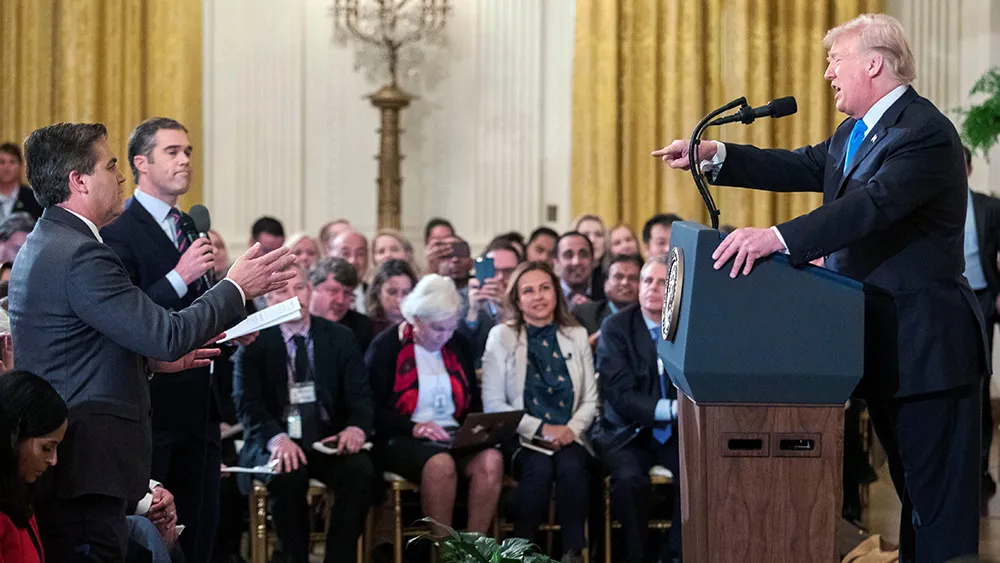
One modern illustration often cited in press-access discussions is the 2018 dispute over CNN reporter Jim Acosta’s White House press pass. Whatever one thinks of the underlying confrontation, the litigation spotlighted process: whether the credential revocation followed clear standards and provided fair procedures. That emphasis is typical. Courts are often reluctant to constitutionalize “who gets in,” but far more willing to scrutinize arbitrary or viewpoint-linked administration of an access regime the government itself created.
What about the WHCA?
The White House Correspondents’ Association (WHCA) is not the government. It is a private organization of journalists that has long played a practical role in allocating seats, managing pooling arrangements, and coordinating press logistics.
Because the WHCA is private, the First Amendment does not apply to it in the same way it applies to the government. Still, if the government effectively directs, controls, or uses a private intermediary to achieve viewpoint-based exclusions it could not do directly, that arrangement could raise constitutional issues. Whether that happens in any particular dispute is highly fact-dependent.
Three scenarios courts focus on
1) “You cannot enter the White House at all.”
This is the highest-stakes restriction and the most likely to generate litigation if it is targeted at specific outlets. The White House will emphasize security and executive control over a sensitive facility. Challengers will emphasize viewpoint discrimination, the lack of neutral standards, and the lack of fair process.
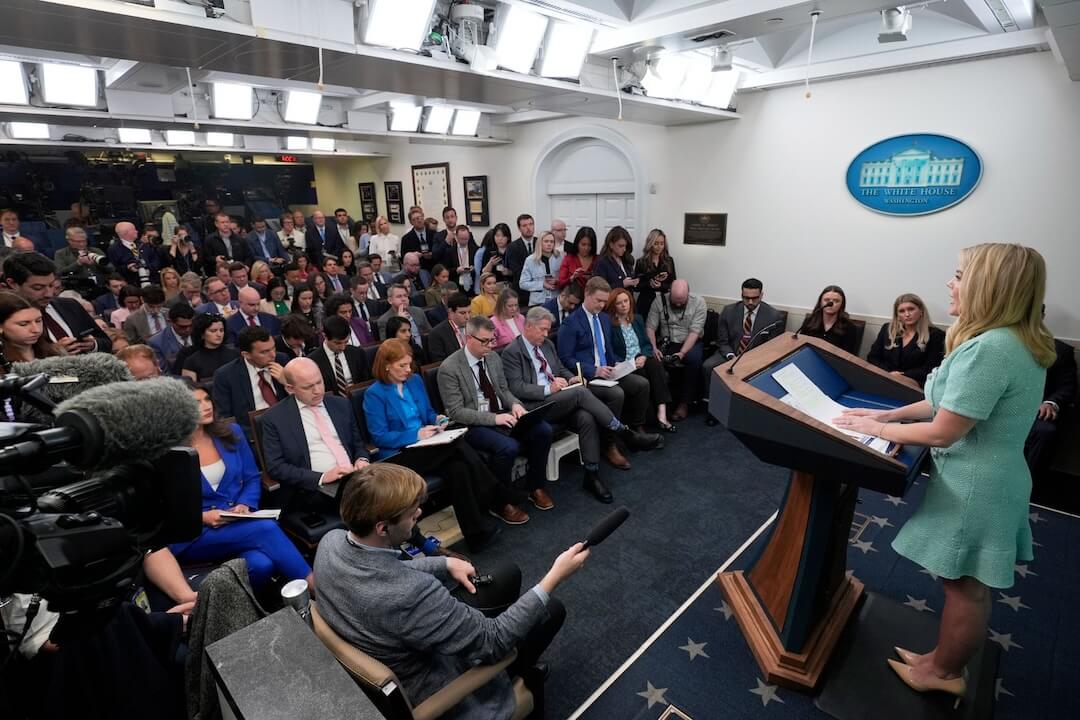
2) “You are removed from the press pool or briefing rotation.”
Pool decisions are often defended as logistical. But if the government is effectively controlling who is in the pool, and the exclusion tracks viewpoint, the First Amendment arguments become stronger. The details matter: who makes the decision, by what criteria, and with what consistency.
3) “We will not call on you, answer you, or give you interviews.”
This is usually lawful. The First Amendment prohibits retaliation that punishes speech, but it does not require an administration to provide equal access to officials’ time or attention. A press briefing is not a constitutional guarantee of Q&A parity.
What courts ask first
If a dispute over press access lands in court, courts often start with a checklist of concrete questions:
- What exactly was denied? A hard credential, a temporary day pass, a pool slot, or merely preferential treatment?
- Who made the decision? Secret Service, White House communications staff, an outside entity, or some combination?
- What written standards exist? Are they public, specific, and applied across outlets?
- What process exists to challenge the denial? In practice, due process usually means written notice, specific reasons, and a meaningful opportunity to respond or seek review.
- Is there evidence of viewpoint targeting? Statements, patterns, and comparative treatment of similarly situated outlets can matter.
Notice what is missing: a constitutional sentence saying “the press shall have access to the White House.” The argument is built indirectly, through the First Amendment’s hostility to viewpoint discrimination and through due process principles once a credentialing system exists.
Remedies and uncertainties
Even when a legal claim is strong, remedies can be messy. Press-access disputes often move fast, because the news cycle moves fast. Courts may issue temporary restraining orders or preliminary injunctions to preserve the status quo, or the parties may settle once procedures are clarified. Different circuits can also approach access disputes with slightly different emphases, which is another reason outcomes can be hard to predict.
The legal standard against viewpoint discrimination is strong. The practical proof required to show it can be harder, especially when the government cites security or operational reasons that courts are reluctant to second-guess.
Quick answers
Does the First Amendment guarantee reporters access to the White House?
No. The First Amendment powerfully protects the right to publish and criticize the government, but it does not automatically grant a right to enter secure government property.
Can the White House deny a press pass to a specific outlet?
Sometimes, but it is constrained. If the government has a credential system, it must apply neutral standards, provide basic fair procedures when denying or revoking access, and avoid viewpoint discrimination.
Can a president bar an outlet because it is “biased” or “unfair”?
That rationale is legally risky because it points directly at viewpoint discrimination. The government is on firmer ground when it relies on content-neutral, consistently applied rules tied to security and order.
Can the White House refuse to call on a reporter in a briefing?
Generally yes. The Constitution does not guarantee any particular reporter a question, an answer, or equal time.
What to watch for in any “ban” dispute
If you are trying to evaluate claims that particular outlets have been barred, focus on the mechanics. Is this a change to credentials? A change to pool assignments? A change to seating? A one-day restriction based on a stated incident? Or a broad exclusion tied to the outlet’s identity?
The First Amendment analysis will follow the paper trail: written rules, stated reasons, consistency, and evidence of viewpoint targeting. That is the constitutional reality of press access. It is not a right to enter every room, but it is also not a permission slip the government can revoke simply because it dislikes what it hears.