
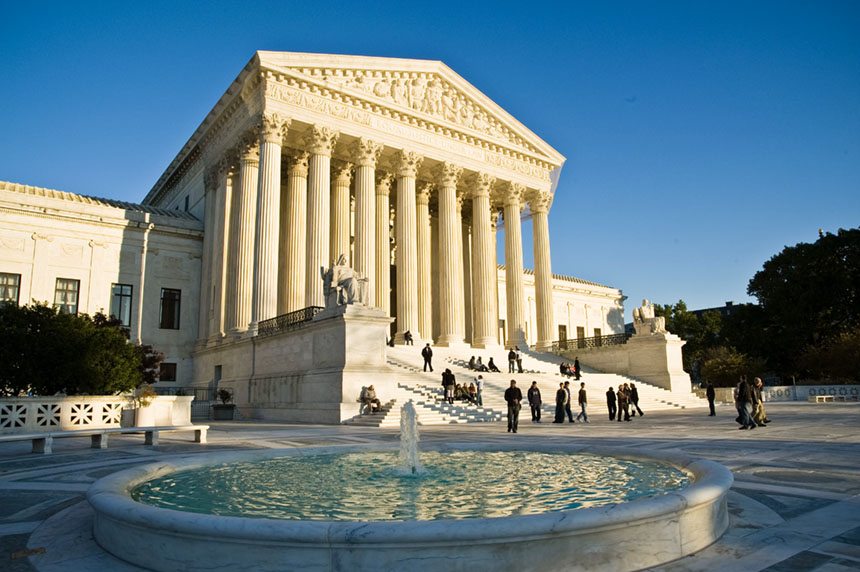
The Sixth Amendment promises what sounds like a civic birthright: the accused can demand a “speedy and public trial” before an “impartial jury.” Article III backs it up. The Declaration of Independence even lists the loss of jury trials as a hallmark of tyranny.
So here is the question I would have put on my classroom board in big block letters: if the right still exists, why do so few people actually use it?
The uncomfortable answer is that the jury trial has not been repealed. It has been priced out of reach. Modern criminal procedure keeps the courthouse theater lights on, but it runs the show backstage, through bargaining, leverage, and paperwork that most citizens never see.
Join the Discussion
The numbers that should stop you cold
In the United States, about 95 percent of felony convictions come from guilty pleas rather than verdicts. In federal court the plea rate is even higher: about 98 percent in fiscal year 2025, based on U.S. Sentencing Commission statistics.
The Supreme Court has admitted the reality out loud. In 2012 it observed that “criminal justice today is for the most part a system of pleas, not a system of trials.” That sentence should have caused a constitutional fire drill. Instead, it mostly became a shrug.
And it was not just a shrug. For more than half a century, the Court also praised plea bargaining as “highly desirable” and “an essential component of the administration of justice,” a posture that left prosecutors wide room to make trials feel like the worst option on the menu.
A democracy can survive without televised civics lessons. It cannot survive indefinitely when the people’s central check on government prosecution becomes a museum exhibit.
The trial penalty
To understand why trials are rare, you have to understand the “trial penalty.” It is not a fee listed on a government website. It is the predictable punishment gap between insisting on a trial and accepting a plea.
The National Association of Criminal Defense Lawyers summarizes the pattern bluntly: “trial sentences are roughly three times higher than plea sentences for the same crime on average and sometimes as much as eight or ten times higher.”
This is where the constitutional right gets hollowed out. A right that triggers steep punishment for exercising it starts looking less like a right and more like a dare.
And the pressure is not subtle. Prosecutors can stack charges, threaten mandatory minimums, or dangle the promise to drop counts if the defendant pleads. Defense attorneys, looking at the math and the risks, often advise clients to take the deal even when the evidence is debatable. Judges, facing crowded dockets, have institutional incentives to move cases along. Everyone benefits from speed except the idea of a trial itself.
Charge stacking
The plea system is powered by leverage, and leverage is often manufactured through charging decisions.
Consider the case of Munson P. Hunter III. Between 2013 and 2023, federal prosecutors said he “used fraudulently obtained Social Security numbers to open 14 bank accounts, acquire at least 18 credit cards, and apply for loans from the Small Business Administration.” The Justice Department said those alleged fraudulent acts cost others nearly half a million dollars.
After his 2023 arrest, Hunter faced 10 counts of bank and wire fraud with combined maximum penalties totaling 300 years in prison. Then came the offer that makes trials disappear: plead guilty to a single count of aiding and abetting wire fraud, and the government drops the other nine counts. Under the advisory federal guidelines, his expected range looked like 15 to 21 months.
That is not negotiation between equals. That is the state placing its thumb on the scale so hard the scale bends.
Sentencing without a jury
Here is another quiet mechanism most Americans do not learn until it hits them personally: even after a guilty plea to one charge, sentencing can incorporate conduct that was never admitted in court and never proved beyond a reasonable doubt to a jury.
In Hunter’s case, the offense he pleaded to involved $38,649 in a single transaction. At sentencing, however, the district judge treated him as responsible for $488,352 across 26 transactions. That shift moved his advisory guidelines range from 15 to 21 months to 41 to 51 months. The judge imposed 51 months.
This is the part that should make any constitutional reader sit up straight. The jury trial is supposed to be the moment when the government’s allegations meet the people’s skepticism. When sentencing effectively resurrects dropped or uncharged allegations, the bargain starts to look like a loophole around the jury’s job.
Appeal waivers
Plea bargaining does not merely replace the trial. It can also preempt the next line of defense: appellate review.
In federal court, plea agreements commonly include waivers of the defendant’s right to appeal the sentence. The problem is obvious the moment you say it slowly. The defendant is asked to give up the right to challenge a sentence before he knows what the sentence will be.
Hunter’s plea agreement included such a waiver. After sentencing, the judge imposed a supervised-release condition requiring him to participate in mental health treatment and to take “all mental health medications” prescribed by his treating physician. Hunter objected in open court, saying: “I want to take mental health programs, but I don't want to take any medication… I don't want to have to be forced to medicate.”
He later argued the condition violated a “constitutionally protected liberty interest in avoiding the unwanted administration of antipsychotic drugs.” An appellate court initially said his waiver blocked the claim.
A Supreme Court exception
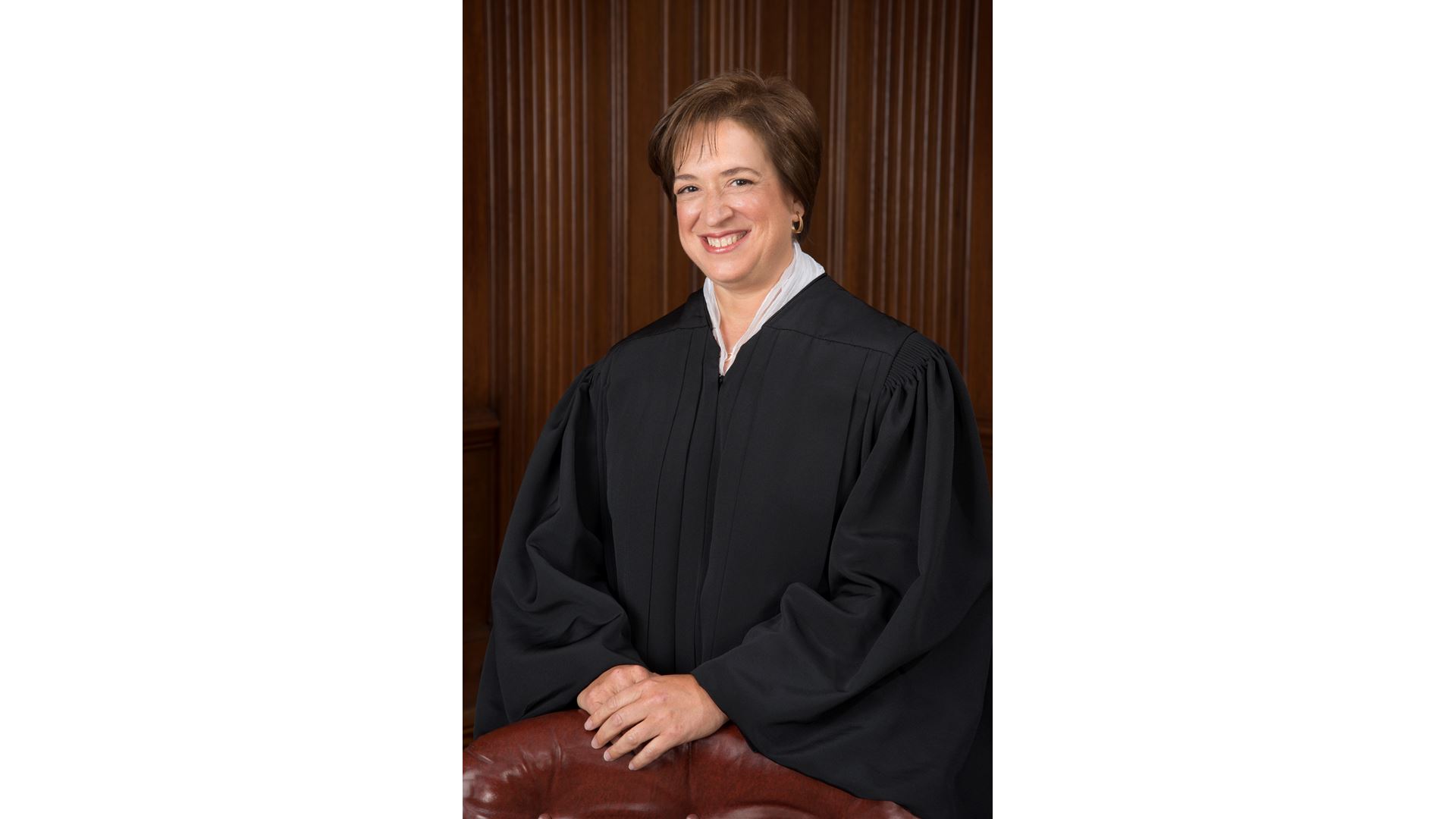
In Hunter v. United States, the Supreme Court held that “an agreement not to appeal a sentence is unenforceable when it would result in a miscarriage of justice.” Justice Elena Kagan wrote that a “miscarriage of justice” is “the kind of egregious error that would bring the judicial system into disrepute.” Her examples included release conditions that violate basic rights, sentences above the statutory maximum, and sentences “infected with a blatant constitutional error” such as racial bias.
And yes, the Court leaned into a bizarre hypothetical to make a serious point. Kagan referenced the idea of a sentence chosen by a judge who “let an orangutan pick a sentence out of a hat.” The judiciary’s gallows humor is telling: the system has normalized waivers so sweeping that the Court needed an orangutan to illustrate the limits.
Justice Neil Gorsuch, concurring, warned that “the jury trial has given way to a conveyor belt of plea bargains,” and added an unusually direct institutional confession: “At least some responsibility for that development lies with this Court.”
The deeper problem
Gorsuch’s point was not only that some waivers go too far. It was that the idea of a prospective waiver is in tension with what due process demands from a guilty plea. The Fifth Amendment tolerates only “voluntary and knowing” guilty pleas, he noted, and a plea must come “with full understanding of the consequences.” But how can a person “know” what he is waiving when he has not yet seen the sentence, the release conditions, or the legal errors that might show up later?
He also warned about the slippery logic. If defendants can prospectively waive the right to appeal sentences, prosecutors might start pressing for prospective waivers of other rights too, such as the right to complain about future unreasonable searches and seizures, or the right to seek a jury trial rather than a bench trial in some future case.
The constitutional tension
This is where history stops being decoration and starts being indictment.
The Founding generation did not treat jury trial as a procedural preference. They treated it as a structural barrier between the individual and the state. The Declaration of Independence condemns the Crown for “depriving us in many cases of the benefits of trial by jury” and for “transporting us beyond seas to be tried for pretended offences.” That language is not about convenience. It is about power.
John Adams put it in anatomical terms in 1776: representative government and “trials by juries” are “the heart and lungs” of liberty and security. Hamilton called jury trial the “palladium of free government,” meaning the protective shield that keeps the whole enterprise from collapsing into arbitrary rule.
Now compare that to today. We have a criminal system where the default is not “prove it to the people,” but “sign here and we will go easier on you.”
What hollowed it out
Trials did not vanish because Americans suddenly grew allergic to civic duty. They vanished because our institutions built a set of incentives that make trials irrational for most defendants.
- Prosecutorial leverage: Charge stacking turns the statutory maximum into a threat, not a ceiling.
- The trial penalty: Sentencing outcomes that punish the exercise of the right itself.
- Sentencing based on broader conduct: Defendants can be punished for allegations never tested by a jury.
- Appeal waivers: “Voluntary” agreements that attempt to waive unknown future legal errors.
- System capacity: If every defendant demanded a jury trial, courts would buckle. So the system quietly teaches defendants not to demand one.
Put those together and you get something the Framers would recognize, even if the mechanisms would feel foreign: a government that can secure punishment without public proof.
The hard question
We still tell schoolchildren that the jury is a cornerstone of American justice. In theory, it is. In practice, it is often the decorative cornerstone that never bears weight.
The hard question is not whether plea bargaining should exist at all. The hard question is whether a constitutional right is still meaningful when the system reliably punishes the people who insist on using it.
If we want juries to matter again, we have to stop treating trials as an expensive luxury item and start treating them as what the Constitution assumed they were: the normal way the government earns the right to punish.