
When a story breaks claiming the National Security Agency held back or delayed election threat reporting, the instinct is to treat it as a spy-thriller plot twist. But the real question is more constitutional than cinematic.
In a system built on separation of powers, intelligence is not just collected. It is supposed to be governed. That governance depends on rules about who gets informed, when, and under what constraints.
Join the Discussion
The short answer: NSA cannot just freeze oversight
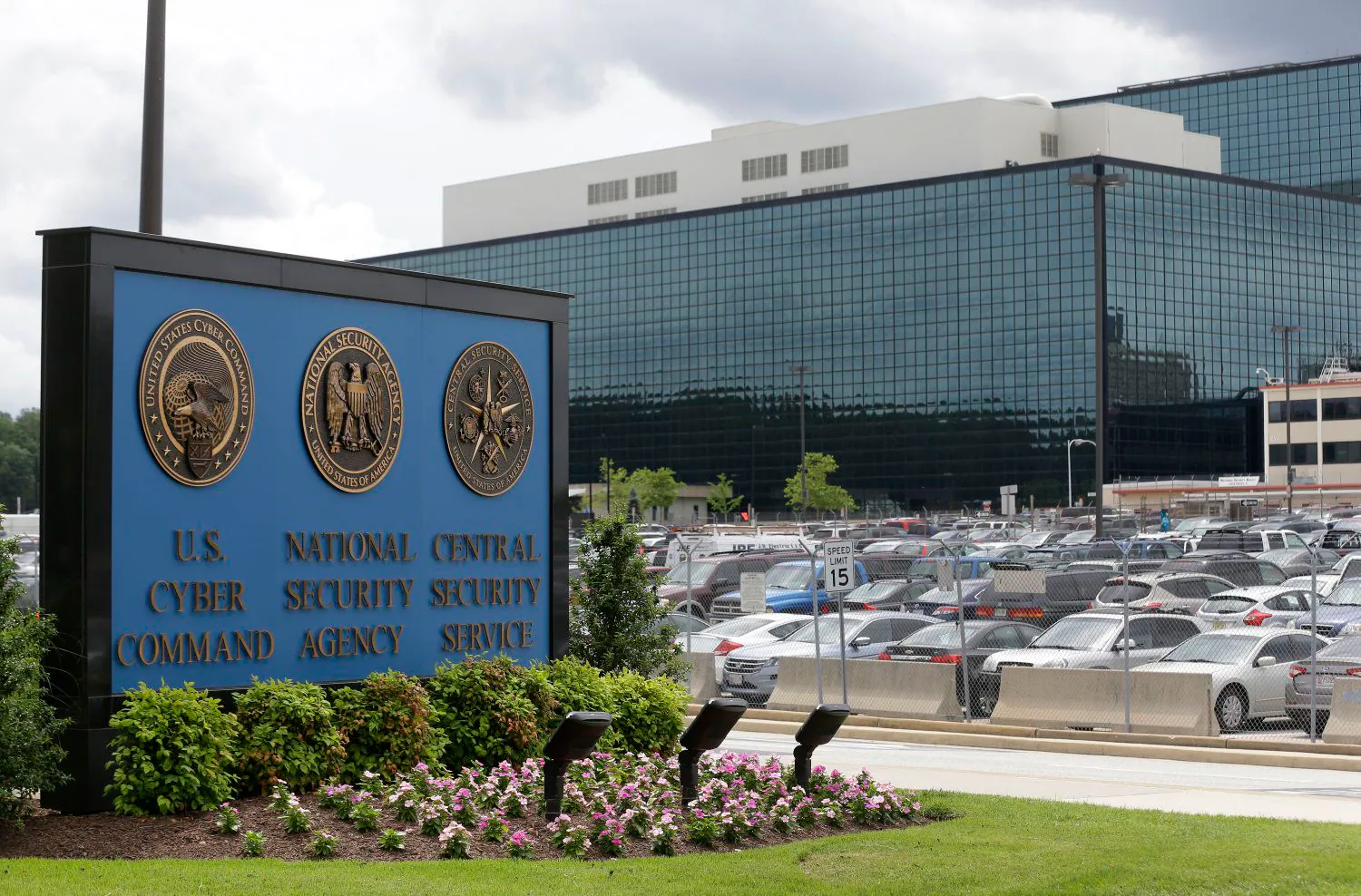
The NSA sits inside the executive branch as a Department of Defense component. The President, acting through the Secretary of Defense and the military chain of command, can direct NSA operations. The Director of National Intelligence does not sit in that operational chain the way the Secretary of Defense does, but the DNI does set community-wide priorities and coordination expectations that shape what gets produced and shared across agencies.
Executive control is not the same thing as executive immunity. Congress built a reporting and oversight regime after Watergate and the Church Committee investigations precisely because secret agencies with no meaningful supervision are a constitutional risk.
If “withhold” means refusing to brief the congressional intelligence committees on a significant intelligence matter, that can collide with statutory oversight expectations and can trigger inspector general and congressional remedies. If it means classification limits prevented broad sharing, that is a different issue. And if it means a dispute over what to write, how to characterize it, or when to elevate it, that is where accountability often becomes murky, because timing and framing are hard to regulate from the outside.
Who oversees the NSA?
The NSA is unusual because it is both an intelligence agency and a military component. It is part of the Department of Defense, and it also operates under the broader U.S. intelligence community architecture.
1) The President and the executive branch chain of command
- The President is the constitutional head of the executive branch and a principal consumer of national security intelligence.
- The Secretary of Defense oversees the NSA as a DoD agency.
- The Director of National Intelligence (DNI) coordinates the intelligence community and sets certain sharing, analytic, and prioritization expectations across agencies, even though day-to-day NSA operations run through DoD.
2) Congressional intelligence oversight
Congress funds the intelligence community and oversees it primarily through the House and Senate intelligence committees, plus armed services committees and appropriations subcommittees.
Members with proper clearances can receive classified briefings. That is the mechanism the Constitution relies on to reconcile two truths at once: the public cannot see everything, but a democracy cannot operate on executive secrecy alone.
3) Inspectors general and internal compliance offices
Inspectors general (IGs) are not courts, and they are not Congress. They are watchdogs embedded in the executive branch with statutory independence and the ability to investigate waste, fraud, abuse, and certain kinds of misconduct. They also operate inside real constraints, including classification rules, access fights, and the fact that they remain executive-branch officers.
For NSA-related issues, oversight commonly involves the DoD Inspector General, the Intelligence Community Inspector General (IC IG), and agency-level compliance structures depending on the subject.
4) Courts, but only in limited ways
Courts rarely referee ordinary intelligence-sharing disputes. But they do matter in specific lanes, including surveillance authorization and certain civil liberties claims. The Foreign Intelligence Surveillance Court (FISC) is part of that landscape, although it is not an “election oversight” tribunal.
What “withholding election threat intelligence” can mean
The word “withholding” does a lot of work. Accountability turns on what was withheld, from whom, and under what duty to disclose.
It also helps to be concrete about the underlying material. “Election threat intelligence” could include signals intelligence suggesting a foreign service is spearphishing county election staff, probing voter registration systems, directing influence operations through cutouts, or coordinating the release of stolen campaign material. The legal question is rarely whether those threats are serious. The question is how that information is handled once it exists.
Withholding from the public
There is generally no constitutional requirement that the executive branch publicly release raw intelligence about election interference as it comes in. Classification exists because some information would compromise sources and methods, diplomatic relationships, or ongoing operations.
That does not make secrecy harmless. It just means the Constitution channels most of the transparency demand into institutional oversight rather than direct public release.
Withholding from state and local election officials
Election administration is mostly state-run, but election threats often involve foreign actors and federal intelligence. Sharing with state officials is therefore a policy and intergovernmental coordination problem as much as a legal one.
Some information may be shareable only in sanitized form, and some may require security clearances. In addition, election-related intelligence can touch U.S. persons or incidentally collected domestic communications, which can trigger minimization and privacy rules that slow or narrow dissemination. A delay here can still be damaging, but it is not always a clean statutory violation. It can be an accountability failure that looks more like negligence, bureaucracy, or risk-avoidance than a bright-line illegal act.
Withholding from Congress
This is where constitutional tension gets sharp. Congress cannot run intelligence operations, but it can demand information necessary to legislate, appropriate funds, and oversee abuse.
Under the National Security Act of 1947, as amended, the oversight framework expects the executive branch to keep the congressional intelligence committees “fully and currently informed” of significant intelligence activities, with narrow accommodations for extraordinary sensitivity, including limited “Gang of Eight” briefings in some circumstances.
In practice, disputes happen over what counts as “significant,” what “timely” means, and whether the executive has provided enough detail for meaningful oversight. Those fights are often resolved through leverage and process, not quick court orders. Congress’s strongest tools are hearings, holds, appropriations conditions, and public accountability, not a fast judicial remedy.
The constitutional hook: separation of powers, classified
The Constitution does not mention the NSA. It does not even mention intelligence agencies. What it gives us instead is a structure.
Article II energy: executive control and secrecy
National security has always pulled toward executive initiative. The President is Commander in Chief, and the executive branch is designed for speed, unity, and confidentiality. Intelligence work fits that design.
Article I gravity: Congress funds, regulates, investigates
Congress writes the rules agencies must follow and controls the purse. It can subpoena, hold hearings, condition funding, and legislate new reporting requirements. That is the constitutional counterweight to an executive branch that might prefer to keep sensitive failures private.
The accountability problem
Election interference is not just another threat stream. It targets the mechanism by which the public controls the government. When intelligence about election threats is delayed, softened, or trapped in internal channels, the question is not only, “Was a law broken?” It is also, “Did the system of checks and balances work the way the Constitution assumes it will?”
Which laws and rules matter most?
Several overlapping legal regimes shape how intelligence moves.
1) Congressional reporting statutes
The modern intelligence oversight framework is built around congressional notification. The high-level idea is simple: agencies can run sensitive intelligence activities, but the committees charged with oversight must be kept informed enough to do their job. The hard part is operationalizing words like “significant” and “timely” in a world where reasonable officials can disagree and where the details may be too classified to debate in public.
2) Classification and “sources and methods” protection
Even when Congress is entitled to know something, it may only be briefed in secure spaces, at high classification levels, and with restrictions on what can be shared outside the committee. That is how the system tries to balance transparency with protection.
3) Raw reporting versus finished intelligence
Another common fault line is the difference between raw reporting and finished intelligence. Raw signals intelligence can be fragmentary, ambiguous, and tightly compartmented. Finished intelligence is evaluated, contextualized, and written for broader decision-making. Delays can happen at either stage, and disputes can be framed as prudence (“it is not corroborated yet”) or as suppression (“it was kept from the people who needed it”). Oversight often turns on which category is at issue and what the normal dissemination rules are for that product.
4) Whistleblower channels in the intelligence community
Intelligence community employees generally cannot take classified evidence to the press. But there are protected channels to bring urgent concerns to inspectors general and, under defined procedures, to congressional intelligence committees.
Those channels are the constitutional compromise in miniature: the public may not get the documents, but Congress can still learn of alleged wrongdoing through a controlled process.
5) Election security as an interagency mission
The NSA is not the only player. The FBI, DHS (including CISA), ODNI, and others have roles in threat warning, counterintelligence, and infrastructure protection. Sometimes what looks like one agency “sitting on” intelligence is actually an interagency routing problem or a dispute over who owns the warning function.
What if reporting was delayed or suppressed?
There is no single “withheld intelligence” criminal statute that automatically snaps into place. Accountability is usually layered.
- Inspector general investigations: An IG can examine whether internal policies were violated, whether leadership pressured analysts, or whether reporting chains were improperly altered.
- Congressional hearings and subpoenas: Committees can demand documents, testimony, and timelines, and can legislate new constraints if oversight failed.
- Appropriations consequences: Congress can restrict funding, condition funds on compliance, or mandate reporting milestones. Appropriations riders can also create more specific reporting requirements, depending on the program and year.
- Personnel and administrative discipline: Clearances, assignments, and employment can be affected if misconduct is found, even without criminal charges.
- Criminal exposure in narrow scenarios: This is fact-dependent. False statements to Congress, obstruction, unlawful disclosure, improper records handling, or misuse of classified systems can create criminal risk. But bad judgment and bureaucratic delay are often not crimes.
The hardest category to police is the one that lives between law and culture: risk-avoidance, political fear, and institutional incentives to keep controversial intelligence from becoming a headline.
Can a President influence reporting?
A President can influence priorities and can appoint leadership across the national security apparatus. That is inherent in Article II control of the executive branch.
What a President cannot lawfully do is turn intelligence agencies into personal political instruments. The legal constraints here are not always phrased as “the President may not politicize.” They are enforced indirectly through oversight, appropriations, internal rules, whistleblower pathways, and norms that treat analytic integrity as a national security asset.
This is why allegations that analysts or managers avoided reporting because of political pressure matter even if they do not fit neatly into a single statute. They raise a separation-of-powers concern: oversight systems that exist to keep intelligence accountable may be getting distorted by intimidation, self-protection, or simple fear of controversy.
FAQ
Does the Constitution require the NSA to protect elections?
Not directly. The Constitution sets up federal and state roles in elections, but it does not create an NSA duty statement. The duty to counter foreign election interference comes from statutes, executive directives, and the President’s national security responsibilities, with oversight by Congress.
Can the NSA keep intelligence from Congress by calling it classified?
Classification controls how intelligence is shared, not whether Congress can be informed at all. The normal accommodation is secure briefings and restricted access, not permanent non-disclosure to the oversight committees. Still, access, scope, and timing disputes recur, and Congress’s remedies are usually institutional and political rather than immediate and judicial.
If intelligence was “sat on,” is that automatically illegal?
Not automatically. It depends on whether a statutory reporting duty was triggered, whether officials misled oversight bodies, and whether internal rules were violated. Some of the most damaging failures in intelligence history were not crimes. They were accountability breakdowns.
Who is supposed to warn election officials?
It is often an interagency function involving DHS (especially CISA), the FBI, and ODNI, with NSA providing foreign signals intelligence. The practical question is less “which agency owns it?” and more “did the system get the warning to the people who needed it in time?”
Why this keeps coming back
Every generation rediscovers the same tension: intelligence must be secret to work, but democracy must be informed to be legitimate.
The Constitution does not solve that tension with a single clause. It solves it with institutions: inspectors general who can investigate, committees that can demand answers, and a funding power that can force reforms when norms fail.
When you ask whether the NSA can withhold election threat intelligence, you are really asking whether those institutions still function as intended, even when politics makes candor costly.