
The 14th Amendment is famous for two ideas most Americans can recognize on sight: due process and equal protection. But it opens with a third promise that sounds like it should be the main event.
“No State shall make or enforce any law which shall abridge the privileges or immunities of citizens of the United States.”
That is the Privileges or Immunities Clause. It reads like a broad shield for individual rights against state governments. And in 1868, in the immediate aftermath of the Civil War, that is very close to what many supporters thought they were building.
Then came one Supreme Court decision in 1873 that narrowed the clause so sharply that most modern constitutional litigation takes a detour around it, routing through the Due Process Clause or the Equal Protection Clause instead.
Join the Discussion
What it says, in plain English
The Privileges or Immunities Clause does one specific thing, at least on paper: it limits what states can do to U.S. citizens.
There are three moving parts worth noticing:
- “No State shall” means the target is state government action, not federal action. This was a Reconstruction amendment aimed at state abuses.
- “privileges or immunities” suggests certain core rights or legal protections that come with national citizenship.
- “of citizens of the United States” ties the protected status to national citizenship, not simply state citizenship.
If you stop here, the clause seems like a natural home for many of the rights Americans argue about today: speech protections against state censorship, self-defense against state bans, personal autonomy against state intrusion, and more.
The problem is not the grammar. The problem is what the Court decided those words mean.
Why Reconstruction lawmakers cared
The 14th Amendment was drafted in the shadow of the Black Codes, the postwar state laws that tried to recreate slavery’s control under new names. States restricted where freed people could live, what work they could take, whether they could testify, whether they could own property, whether they could travel, and whether they could be safe from violence.
Congress had already passed the Civil Rights Act of 1866, declaring that all persons born in the United States were citizens and were entitled to basic civil rights like contracting, suing, and owning property. But many lawmakers worried: if constitutional rights are not anchored in the Constitution’s text, they can be undone by later Congresses or hostile courts.
So the 14th Amendment constitutionalized citizenship itself and attempted to lock in limits on state power.
A major influence was the 1823 case Corfield v. Coryell (a lower-court opinion often quoted in the era), which listed “privileges and immunities” in a broad sense: protection of life and liberty, acquiring property, pursuing happiness, and traveling. That vocabulary fed the Reconstruction imagination: citizenship should come with a baseline set of rights that states cannot strip away.
Slaughter-House: the decision that shrank it
If you have heard that the Privileges or Immunities Clause is “dead,” you have heard an overstatement that contains a truth. The Supreme Court did not erase the clause. But in The Slaughter-House Cases (1873), it interpreted the clause so narrowly that it stopped doing most of the work many people expected it to do.
The dispute, without law-school fog
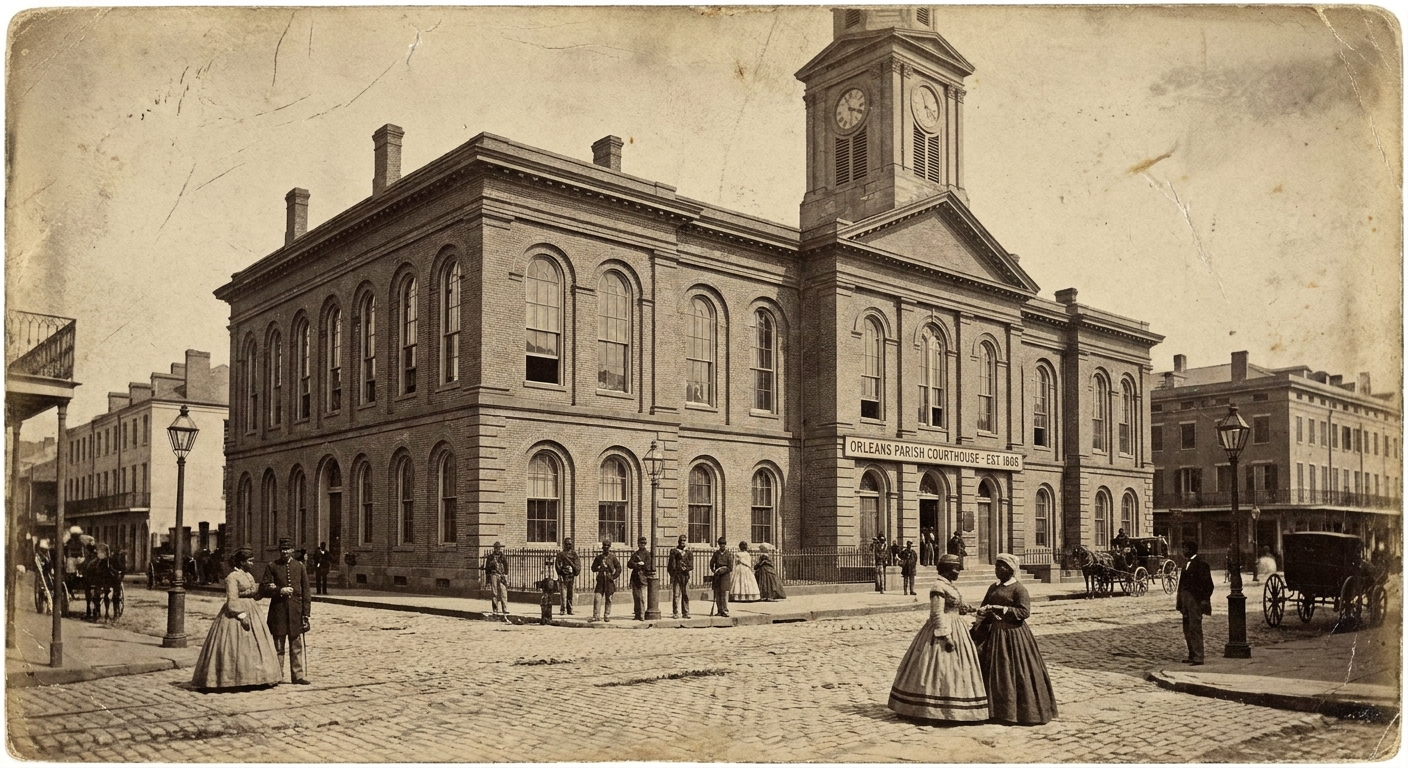
Louisiana created a single regulated slaughterhouse operation in New Orleans, partly justified as a public health measure. Local butchers argued that the monopoly crushed their livelihoods. They sued, claiming the state had violated the 14th Amendment, including the new Privileges or Immunities Clause.
This was not a civil rights case in the modern sense. It was an economic liberty case. But it became a landmark anyway because it forced the Court to say what the clause protected.
The Court’s move
The Court drew a hard distinction between:
- Privileges or immunities of state citizenship (mostly left to states), and
- Privileges or immunities of United States citizenship (a small set of national rights).
Then the Court defined the second category narrowly. The rights it associated with national citizenship were things like access to federal ports, protection on the high seas, the right to use navigable waters, access to federal courts, and the right to petition Congress.
Those are real rights, but they are not the daily, lived rights people usually mean when they talk about freedom, bodily security, speech, arms, or family life.
The practical result was this: the clause was not allowed to become a general weapon against state laws.
Why it mattered beyond butchers
Slaughter-House set a tone that echoed for generations. If Privileges or Immunities did not protect most substantive rights against states, litigants needed another route. And the rest of the 14th Amendment provided two alternative on-ramps: due process and equal protection.

What it protects today
After Slaughter-House, the clause never completely disappeared, but it became narrowly used. The best-known modern example is Saenz v. Roe (1999), where the Court relied on Privileges or Immunities to protect aspects of the right to travel, specifically the right of newly arrived citizens to be treated like other citizens of their new state after moving.
That is significant because it shows the clause is not just historical decoration. It can still do work.
But it also shows the limitation: the Court has generally confined it to a short list of national citizenship rights, rather than using it as a general “bill of rights against the states.”
Why lawsuits avoid it
If the clause seems like the obvious place to argue that states cannot violate fundamental rights, why do lawyers almost always reach for Due Process or Equal Protection instead?
1) Slaughter-House makes it uphill
Lower courts are bound by Supreme Court precedent. Slaughter-House is old, but it is still on the books. If you build your entire case on Privileges or Immunities, you are betting on the Supreme Court to revisit a 19th-century narrowing and to do so in a way that helps your client.
Many lawyers prefer not to gamble their case on a doctrinal resurrection.
2) Due process became the workhorse
The Due Process Clause says states cannot deprive any person of life, liberty, or property without due process of law. Over time, the Court read “liberty” to include not just fair procedures but certain substantive rights, creating what is called substantive due process.
That doctrine, not Privileges or Immunities, became the main vehicle for protecting unenumerated or deeply personal rights against states. It also became the mechanism for applying many Bill of Rights protections to the states through incorporation.
3) Equal protection drives discrimination claims
When a lawsuit is about unequal treatment based on race, sex, or other classifications, Equal Protection is the natural home. It offers established tests and decades of case law. Privileges or Immunities, as currently interpreted, does not offer the same well-developed framework.
4) The structure is built elsewhere
Even when the clause would feel conceptually cleaner, courts tend to decide cases using the tools they have already sharpened. Due process and equal protection have become those tools.
Its link to incorporation
One of the biggest “what if” questions in constitutional law is whether the Privileges or Immunities Clause was originally meant to be the main path for applying the Bill of Rights to the states.
Today, most of the Bill of Rights applies to states through the 14th Amendment’s Due Process Clause, via selective incorporation. That is why state and local governments must respect rights like free speech, free exercise, protections against unreasonable searches, and the right to counsel.
But many scholars argue that this incorporation project fits more naturally under Privileges or Immunities. The phrase sounds like it was designed to protect a package of fundamental rights of national citizenship. If the Court had taken that road in the late 1800s, the doctrine of substantive due process might look smaller, narrower, or different.
This debate is not merely academic. It affects how stable various rights are, what counts as a “fundamental” right, and how much room states have to experiment.
Modern flashpoints
The Privileges or Immunities Clause has a unique political and ideological flexibility. That is one reason it keeps returning in modern arguments.
Revival arguments you will hear
- Textual fit: It explicitly addresses state abridgment of rights tied to U.S. citizenship, which sounds like the job incorporation and other rights-protection doctrines now do indirectly.
- Doctrinal clarity: Some critics say substantive due process feels like a judge-made invention because “due process” reads like procedure. Privileges or Immunities may provide a more straightforward textual anchor for certain rights.
- Historical claims: Some originalist scholarship argues the Reconstruction Congress intended robust protection of fundamental rights against states, and that Slaughter-House thwarted that purpose.
- A live example: In McDonald v. Chicago (2010), the Court applied the Second Amendment to the states through Due Process, but Justice Clarence Thomas concurred separately and argued that Privileges or Immunities was the better constitutional home for incorporation.
Concerns you will also hear
- Uncertainty: If the Court revived the clause broadly, what exactly counts as a privilege or immunity? A long list? A short list? A list tied to 1868 practices? That uncertainty invites litigation and judicial discretion.
- Federalism worries: A broad clause could pull more state policy into federal courts, shrinking the policy space states traditionally control.
- Rights expansion and contraction risk: A new doctrinal framework could strengthen some rights while weakening others, depending on how the Court defines the category.
In other words, reviving the clause might not simply “add rights.” It could reshuffle the legal architecture that currently protects them.
Quick timeline
- 1866: Civil Rights Act of 1866 asserts national citizenship and baseline civil rights.
- 1868: 14th Amendment ratified, including Privileges or Immunities.
- 1873: Slaughter-House interprets the clause narrowly.
- Late 1800s to 1900s: The Court develops incorporation largely through Due Process.
- 1999: Saenz v. Roe uses Privileges or Immunities to protect aspects of the right to travel.
- 2010: McDonald v. Chicago spotlights the modern argument for using Privileges or Immunities instead of Due Process.
- Today: Ongoing debate about whether the clause should do more.
What it teaches
The Privileges or Immunities Clause is a reminder that constitutional meaning is not just a matter of what a sentence can bear. It is also a matter of what institutions decide to do with it.
The text looks expansive. The early postwar context suggests expansive aims. But the Supreme Court’s interpretation, starting with Slaughter-House, made the clause a narrow lane rather than a highway.
That is why so many of our most important modern rights battles happen in the language of due process and equal protection instead. Not because those words are always the best linguistic match, but because that is where the Court built the doctrines people can actually use.
And the unresolved question still hanging over the 14th Amendment is simple: was Privileges or Immunities meant to be the main engine of rights against the states, and if it was, do we want the engine back on?
Key terms
- Privileges or Immunities: Rights tied to U.S. citizenship that states cannot abridge, narrowly defined after 1873.
- Slaughter-House Cases (1873): Supreme Court decision that sharply limited what the clause protects.
- Incorporation: The process by which most of the Bill of Rights came to apply to the states, mostly through the Due Process Clause.
- Substantive due process: The doctrine that “liberty” in the Due Process Clause includes certain fundamental rights beyond procedure.
- Equal protection: The doctrine used to challenge discriminatory state action.