
When a nonprofit calls a congressional subpoena a “witch hunt,” it is invoking a very old American fear: that oversight can slide into punishment. The Constitution sits in the middle of that tension. Congress has real power to investigate and demand records. Nonprofits, in turn, can argue they have constitutional defenses when demands become needlessly broad, unduly burdensome, or aimed at exposing donors and associations without a sufficient legislative need. Courts vary in how aggressively they police claims that an investigation is retaliatory or politically motivated, and those disputes are usually fact-intensive.
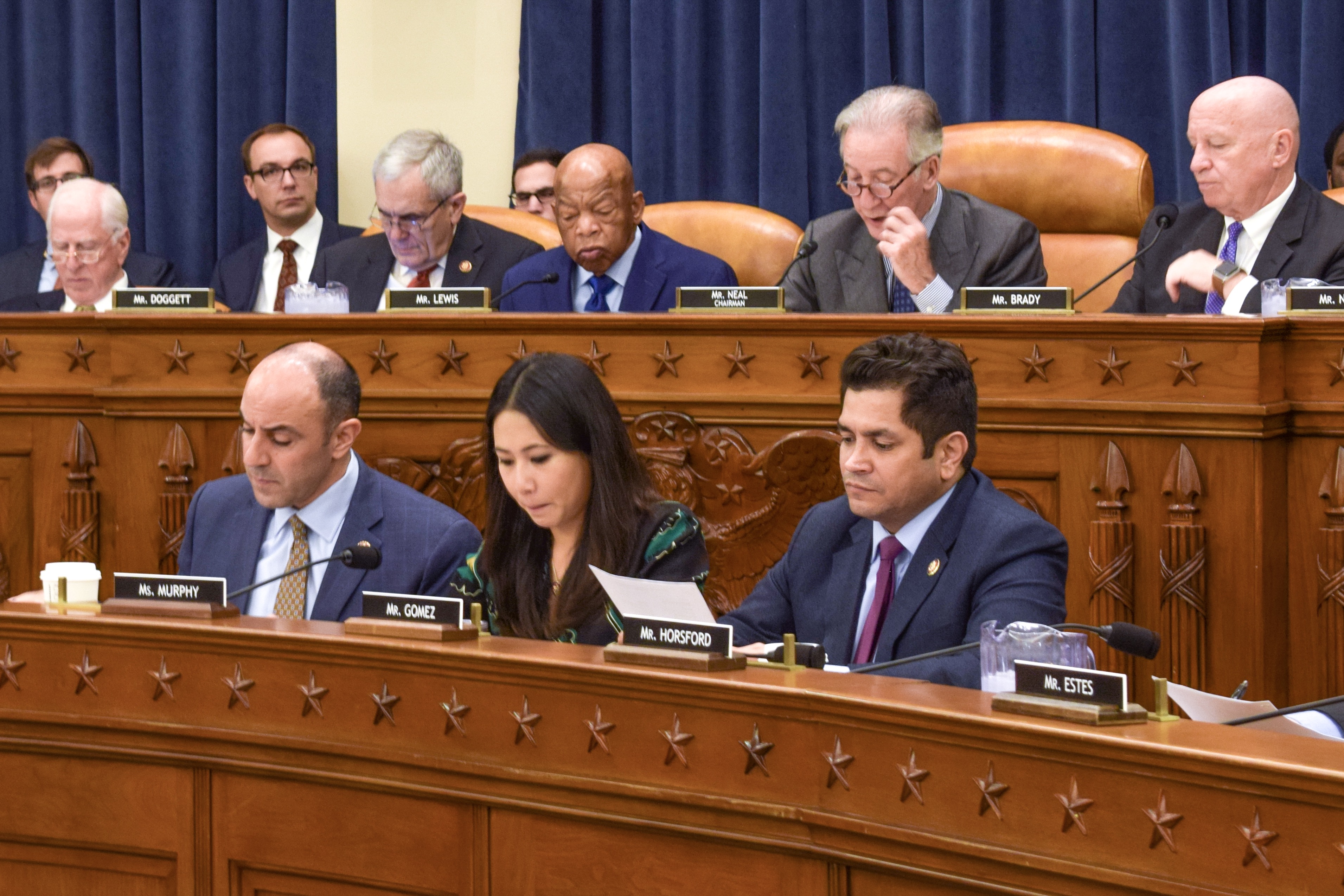
The immediate headline involves subpoenas issued by the House Ways and Means Committee and resistance from Singham-linked nonprofits. The durable question is bigger and more useful: can Congress subpoena a nonprofit at all, and what limits apply?
Join the Discussion
Yes, Congress can subpoena nonprofits
Congress’s subpoena power is not written out in a neat constitutional clause. Instead, it is treated as an implied power that comes with the job of legislating. If Congress is going to write laws, fund programs, and design regulatory schemes, it has to be able to gather facts.
The Supreme Court has recognized this basic principle for more than a century. In McGrain v. Daugherty (1927), the Court held that the power to investigate is an essential auxiliary to the legislative function. Later cases reaffirmed the core idea: Congress can compel testimony and documents as part of an inquiry that could inform legislation.
That includes inquiries directed at private entities, not just executive agencies. A nonprofit does not become immune from oversight because it is organized for advocacy, journalism, charity, or education. But the practical constraints matter: a subpoena is typically easiest to defend when it falls within the committee’s jurisdiction, is properly authorized under House and committee rules, and is tied to a stated legislative purpose rather than a general desire to know more about a group.
The key limit: a real legislative purpose
A subpoena is not a general warrant and not a license to rummage through someone’s files. The Constitution’s structure imposes a central limit: Congress investigates to legislate, not to prosecute, punish, or harass.
The Supreme Court has said this in different ways across decades. In Watkins v. United States (1957), the Court warned that Congress is not an “exposure” bureau with a general power to pry into private affairs. In Barenblatt v. United States (1959), the Court allowed aggressive Cold War era questioning in a specific context, but it still treated the inquiry as needing a valid legislative objective.
More recently, in Trump v. Mazars USA, LLP (2020), the Court emphasized careful review of congressional subpoenas when separation-of-powers concerns are high. Mazars set a multi-factor framework for subpoenas seeking a president’s personal records, and it is not a one-size-fits-all test for every subpoena to every private party. Still, its underlying proportionality instincts show up in litigation more generally: courts may ask whether a subpoena is reasonably tailored to a legitimate legislative goal and whether Congress has explained why it needs the specific information it demanded.
So if a committee cannot articulate how the information relates to potential legislation, oversight of existing laws, or evaluation of federal programs, it is on shaky constitutional ground. If it can, the inquiry starts from a position of strength.
Why nonprofits get pulled in
When subpoenas target nonprofits, the constitutional story often overlaps with a statutory one: tax exemption is a legal status Congress created and can regulate.
Congress writes the Internal Revenue Code. It defines what counts as a 501(c)(3) charity, a 501(c)(4) social welfare organization, or other tax-exempt entities. It also controls what kinds of political activity are permitted, what filings must be made, and what penalties apply for misrepresentation or prohibited conduct.
That matters for two reasons:
- Legislative purpose is easier to show. A committee can argue it needs records to determine whether the tax code is being exploited, whether disclosure rules are adequate, or whether enforcement tools need updating.
- Congress is not limited to the IRS’s perspective. Oversight can ask whether the existing enforcement structure works and whether new statutes are needed, even if an investigation is politically charged.
But tax status does not erase constitutional rights, and Congress still faces limits on how it conditions tax benefits. Viewpoint discrimination and other constitutional constraints can matter even in the tax-exemption context.
First Amendment risks: donor disclosure
The sharpest constitutional edge for many nonprofits is the First Amendment, particularly freedom of association. A subpoena can demand more than documents. It can demand a map of a group’s relationships: donors, members, partners, speakers, contractors, and internal communications about political strategy.
The Supreme Court has long recognized that forced disclosure can chill speech and association. In NAACP v. Alabama (1958), the Court protected the NAACP from being compelled to hand over membership lists, emphasizing the risk of harassment and retaliation. And in Americans for Prosperity Foundation v. Bonta (2021), the Court struck down California’s blanket collection of major-donor information for charities, reinforcing that compelled disclosure must be justified and appropriately tailored when it burdens association.
Modern doctrine often frames this as “exacting scrutiny” for compelled disclosure in many contexts: the government must show a sufficiently important interest and a substantial relation between the disclosure sought and that interest. Even when Congress has a real investigative purpose, a subpoena that sweeps up donor identities or membership lists may face serious pushback if the committee cannot justify why those identities are necessary.
In practice, that means nonprofits often argue for narrowing measures such as:
- redactions of donor or member names
- production under protective conditions
- limiting the time window and categories of records
- using summaries or aggregated data instead of individualized identities

“McCarthyism” and the legal question
Calling a subpoena “McCarthy-era” is a rhetorical claim, but it points to a real constitutional issue: investigations that exist primarily to expose, intimidate, or punish unpopular beliefs are constitutionally suspect.
During the mid-20th century, congressional investigations into alleged subversive activity produced a line of Supreme Court cases wrestling with how far Congress can go when the inquiry collides with speech, association, and due process. The Court did not ban such inquiries outright. But it repeatedly stressed that Congress must stay tethered to a legitimate legislative mission and must conduct questioning with clarity and fairness.
If a nonprofit challenges a subpoena in court, the fight usually turns on specifics, not slogans:
- What is the committee’s stated purpose?
- How do the requested records relate to that purpose?
- Is the request reasonably tailored or sprawling?
- Does it sweep in sensitive associational information without a clear need?
- Are there less intrusive ways to get what Congress needs?
One litigation dynamic complicates claims about motive. The Speech or Debate Clause gives members and committees significant protection for legislative acts, which can limit probing discovery into internal legislative deliberations. That does not make subpoenas immune from review, but it can shape how these disputes are litigated and what evidence is available.
Ways and Means authority
Different House committees have different jurisdictions and, sometimes, different statutory tools. Ways and Means is a central tax-writing committee, which can make tax-related legislative purpose easier to articulate than it might be for a committee with a looser mandate.
But committee power still flows through process. A valid subpoena typically depends on:
- House rules and the committee’s own authorizing rules
- whether the subpoena was properly approved or authorized
- whether the request fits within the committee’s jurisdiction
A nonprofit can challenge a subpoena as procedurally defective, substantively overbroad, or constitutionally burdensome. Sometimes those arguments overlap: a committee acting outside its jurisdiction can look less like legislation and more like a fishing expedition.
If a nonprofit refuses
A subpoena without enforcement is just stern stationery. Congress has a few enforcement pathways, and each has its own friction.
1) Negotiation and narrowing
The most common outcome is not jail, but bargaining. Committees and subpoena recipients often negotiate scope, timing, search terms, protective conditions, and what is produced publicly versus privately. In many disputes, there is also a procedural rhythm: meet-and-confer calls, rolling productions, agreed custodians, and (when privilege is asserted) privilege logs or categorical privilege descriptions.
2) Criminal contempt of Congress
Under federal law, Congress can vote to hold a witness in contempt and refer the matter to the U.S. attorney for the District of Columbia under 2 U.S.C. §§ 192 and 194. That route depends on executive branch prosecution decisions, and the Justice Department has long asserted enforcement discretion, which can complicate contempt referrals.
3) Civil enforcement in court
The House can sue to enforce its subpoena. This route tees up the constitutional questions directly: legislative purpose, overbreadth, privileges, and First Amendment burdens. It also takes time. Authority and justiciability issues have been litigated in past subpoena fights, and those threshold disputes can affect timing and outcomes.
4) Inherent contempt (rare)
Historically, Congress claimed an “inherent contempt” power to detain a recalcitrant witness. It is legally fascinating and practically rare in the modern era.
For nonprofits, the key point is this: refusal does not automatically win you moral points or legal points. It moves the dispute into an enforcement posture where a court may ask whether the committee’s demand is lawful and whether the nonprofit’s objections are grounded in recognized constitutional protections.
Common defenses
Not every objection is a First Amendment trump card. Courts generally separate burden from unconstitutionality. Producing records can be expensive and unpleasant without being unlawful.
Here are the defenses that show up most often in subpoena fights involving nonprofits:
- No legitimate legislative purpose. The committee cannot connect the request to potential legislation or oversight of existing law.
- Overbreadth and lack of tailoring. The subpoena demands far more than needed, across too many years, too many custodians, or too many unrelated categories.
- First Amendment associational chilling. Donor or membership disclosure would deter participation or expose supporters to retaliation, and the committee cannot justify the need for individualized identities.
- Attorney-client privilege and work product. Legal advice and litigation strategy are protected in many contexts, though disputes about scope are common.
- Confidentiality interests. Trade secrets, journalist-source issues, or sensitive security concerns sometimes appear, depending on the organization’s work.
To make “overbroad” concrete: “all internal communications across 10 years, for every employee, about anything touching foreign policy” looks very different from “communications from 2022 to 2024 related to a specific grant program, vendor relationship, or lobbying campaign identified in the committee’s letter.” Courts tend to look for a closer fit and reasonable tailoring, not perfection.
A final nuance: Fifth Amendment self-incrimination issues typically belong to individuals, not organizations. A nonprofit itself cannot usually invoke the Fifth Amendment to withhold records, but officers or employees may raise Fifth Amendment concerns in testimony depending on the facts.
So can Congress subpoena a nonprofit?
Yes. The constitutional baseline is that Congress can compel documents and testimony from private parties, including nonprofits, when it is acting in service of a legitimate legislative purpose and within the bounds of committee authority and process.
But the oversight power is not a blank check. The closer a subpoena gets to compelled exposure of donors, members, or internal political strategy, the more likely it is to trigger First Amendment resistance. And the more a subpoena looks like public shaming untethered to legislation, the more vulnerable it becomes in court.
The Constitution does not guarantee that oversight will be gentle. It does insist, at least in theory and sometimes in practice, that oversight must be about governance, not about targeting.
Quick FAQ
Does the Constitution explicitly give Congress subpoena power?
No. The Supreme Court treats it as implied from Congress’s legislative powers in Article I.
Can a committee subpoena donor lists?
It can try, but compelled disclosure of associations can trigger serious First Amendment scrutiny. The committee generally must show a strong need and a close relationship between the identities sought and a legitimate legislative purpose.
Can a nonprofit just ignore a House subpoena?
Ignoring it risks contempt and civil enforcement. The usual path is to object in writing, meet and confer, negotiate scope, and if necessary litigate.
Is calling it “McCarthyism” a legal defense?
Not by itself. But claims of viewpoint targeting and exposure-for-exposure’s-sake can overlap with real constitutional limits on congressional investigations.