Here is the question that never stays politely in its lane: When a state offers a public benefit meant to be broadly available, can it disqualify a religious preschool from that benefit because the school will not follow a nondiscrimination requirement that includes sexual orientation and gender identity?
On November 3, the U.S. Supreme Court will hear St. Mary Catholic Parish v. Roy. The dispute comes out of Colorado’s universal preschool program and a set of eligibility requirements that, on paper, look straightforward. The constitutional collision arrives when a religious preschool says it would otherwise qualify but cannot comply with the program’s equal-opportunity condition as applied to LGBTQ families.
Join the Discussion
What Colorado requires
St. Mary Catholic Parish v. Roy is not about a state law that directly prohibits a religious preschool from operating. The fight is over a participation rule.
To qualify as a provider in the universal preschool program and receive the public benefits that go with participation, Colorado requires preschools to satisfy a list of criteria. One requirement is explicit about equal access. It says that each preschool provider provide eligible children an equal opportunity to enroll and receive preschool services regardless of race, ethnicity, religious affiliation, sexual orientation, gender identity, lack of housing, income level, or disability.
That is the state’s basic deal. If you want into the program, you agree to follow the program’s eligibility conditions, including that equal-opportunity rule.
What the preschools argue
The Catholic preschools involved are overseen by the Archdiocese of Denver. Their argument is not that they want a special carveout just because they are religious. It is that they would be eligible but for a conflict between the program requirement and their religious practices.
In their briefing, they put it plainly: It is undisputed that these preschools would otherwise be eligible [universal preschool] providers,
the schools told the Supreme Court. They are excluded solely because of their religious exercise—namely, their religious practices of ensuring that all enrolling families are supportive of the Catholic Church’s teachings on sex and marriage and of treating enrolled four-year-olds in accordance with their biological sex.
That framing matters because it turns the case into a claim about disqualification. Colorado is offering a benefit. The schools say the state is conditioning access to that benefit on giving up religious exercise.
The legal tension
At its core, the Court is being asked to sort out two ways of describing the same set of facts.
- Program-first framing: Colorado is running a public program with conditions, including an equal-opportunity rule that applies to providers who want the benefits of participation.
- Religion-first framing: The preschools say they are barred from the program because of religious exercise, meaning the state has turned a generally available benefit into something they can only access by changing religious practices.
The stakes go beyond preschool administration. The case also has big implications for the future of federal antidiscrimination law, especially if the Court says a state must accommodate religious views even inside a program built around a uniform nondiscrimination rule.
Key precedents
The Catholic preschools can point to a pair of recent Supreme Court precedents that will very likely count in their favor.
Espinoza (2020)
In Espinoza v. Montana Department of Revenue (2020), the Court held that if a state provides educational subsidies that help parents send their children to private schools, the state cannot disqualify some private schools solely because they are religious.
Carson (2022)
In Carson v. Makin (2022), the Court held that Maine’s tuition assistance program violated the Constitution by excluding private schools that offered “sectarian” education. A State’s antiestablishment interest
the decision said, does not justify enactments that exclude some members of the community from an otherwise generally available public benefit because of their religious exercise.
Those lines appear to point in the preschools’ direction. Still, this case adds a complicating factor: Colorado’s eligibility condition is framed as a nondiscrimination rule that explicitly includes sexual orientation and gender identity.
What the justices decide
The question is whether Colorado has unlawfully discriminated against a religious preschool because it is barred from participating in the state’s universal preschool program due to its refusal to accept LGBTQ families.
One likely path, suggested by the Court’s recent education-funding cases, is a ruling that when a state provides an educational public benefit, it must make some sort of accommodation for the religious views of the recipients. The Court will decide whether Colorado’s universal program fits that pattern even with a nondiscrimination condition at the center of the dispute.
Kagan’s remarks
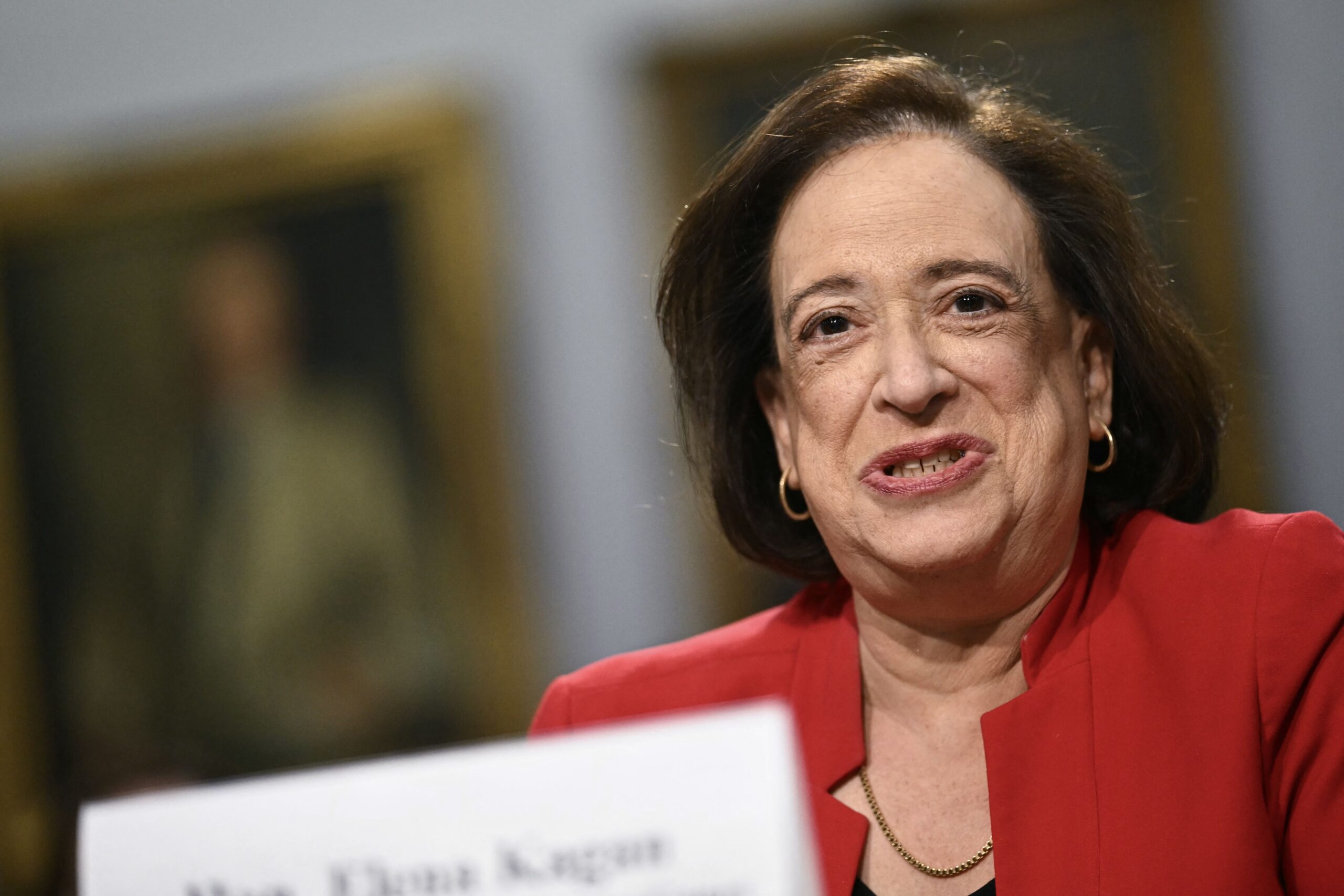
This case arrives alongside another ongoing argument about the Court itself. Justice Elena Kagan has defended her conservative colleagues from the claim that they are in the tank for President Donald Trump.
I don't see this as a court that is just like, 'We're just going to rubber stamp what the current administration does.' You know, quite the opposite,
Kagan said. I think that that is a bad rap.
She pointed to the fact that the Supreme Court had recently ruled against Trump on the two big issues that Trump himself valued the most: tariffs and birthright citizenship.
On Tuesday, Kagan publicly criticized the conservative majority’s voting rights and political gerrymandering decisions as producing, in her words, a democracy that does not work as well as it should.
She also said the majority has kind of blinded itself to the very deleterious effects of their rulings on how the political system works.
At the same time, she reiterated her defense of the conservative-dominated bench and said it was a bum rap
to suggest the Court had been too deferential to Trump.
The question for Nov. 3
When Colorado offers a universal preschool benefit, is it offering a public benefit that must be open to religious providers on equal terms, or is it offering a conditional program where the state may insist that participation means following its equal-opportunity rule, even when that conflicts with a provider’s religious exercise?
The Court will not just be parsing a program guideline. It will be deciding what happens when nondiscrimination conditions and religious exercise claims meet inside the same statewide benefit.