
Americans argue about bathrooms as if the question is cultural. But the next wave of fights will increasingly be fought through administrative complaints, federal investigations, and court orders that quietly redefine what privacy and safety mean in schools.
The core question sounds simple: Should schools be required to let biological males use women’s bathrooms if they identify as female?
Title IX does not answer that question in one clean sentence. Instead, it forces courts and agencies to weigh two ideas that modern law has treated as simultaneously true: sex-based protections matter, and discrimination based on gender identity can be unlawful. When those claims collide inside a locker room, there is no neat compromise that satisfies everyone.
Join the Discussion
The legal fight is about “sex”
Bathroom battles are often framed as a facilities issue. Build more single-stall restrooms, add privacy partitions, expand “all-gender” options, and the conflict dissolves.
Sometimes that works in practice. But legally, the dispute is about categories. Title IX is a condition on federal education funding that prohibits discrimination “on the basis of sex” in education programs. The bigger argument is whether “sex” in federal civil rights law is strictly biological or whether it includes gender identity.
That is why bathroom policies attract lawsuits. They are not really about plumbing. They are about whether a woman’s single-sex space is a protected boundary or a negotiable preference.
From sports to private spaces
Sports eligibility has been the most visible front in recent years, but it is only one corner of Title IX’s larger structure. The Supreme Court recently ruled that states could restrict girls’ school sports to girls, recognizing legitimate concerns about safety and privacy when boys who claim to be girls enter girls’ spaces.
Now the focus is shifting toward intimate spaces: bathrooms, locker rooms, changing areas, and showers. These are the places where sex segregation has never been treated as mere tradition. It has been treated as a privacy and safety rule.
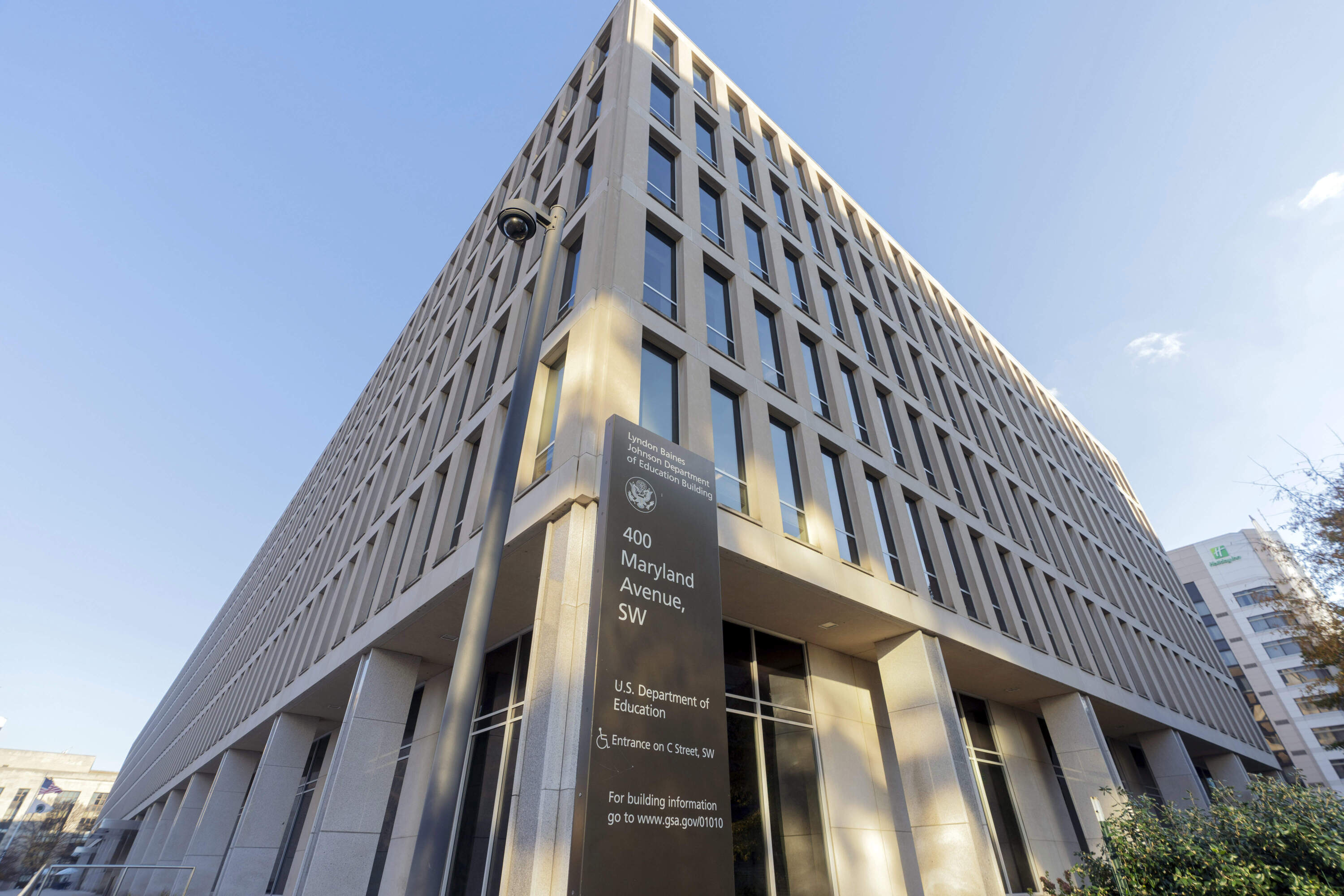
That shift is already showing up in enforcement. On June 17, 2026, the U.S. Department of Education’s Office for Civil Rights opened a Title IX investigation into Buncombe County Schools in North Carolina to determine whether the district violated Title IX by allowing biological men to access girls’ restrooms.
In its announcement, the agency stated that a parent complaint alleged that girls were being forced to share female-only restrooms with biological men and that the alleged exposure compromised girls’ equal access and could place them in unsafe situations.
Courts are split
One reason this debate feels endless is that it is not settled nationally. Courts have reached different conclusions about whether schools must allow students to use bathrooms that align with their “gender identity” rather than biological sex.
That split matters because it invites strategic litigation. Advocacy groups, parents, students, and state officials can pick cases that push the issue toward appellate courts and, eventually, toward the Supreme Court. The practical effect is that privacy rules can vary sharply by region. A policy that is required in one jurisdiction may be prohibited in another.
That is not a stable equilibrium. It is a legal pressure cooker.
Universities are a preview
Universities often act as a preview of where K–12 policy fights will go next. In recent years, a growing number of campuses have created “all-gender” restrooms and, in some cases, extended gender-inclusive access to other intimate spaces.
An analysis identified 12 of America’s most prestigious universities that have installed bathrooms designated for use by all genders, including transgender students and faculty: Stanford, Carnegie Mellon, Dartmouth, Columbia, UC Santa Barbara, Brown, Cornell, the University of Pennsylvania, Florida State, Villanova, Stony Brook, and California State Polytechnic Humboldt. Five of these schools are in the Ivy League.
Many of these universities provide campus maps showing where gender-inclusive facilities are located, including restrooms and locker rooms, and some institutions reportedly offer more than 50 such facilities.
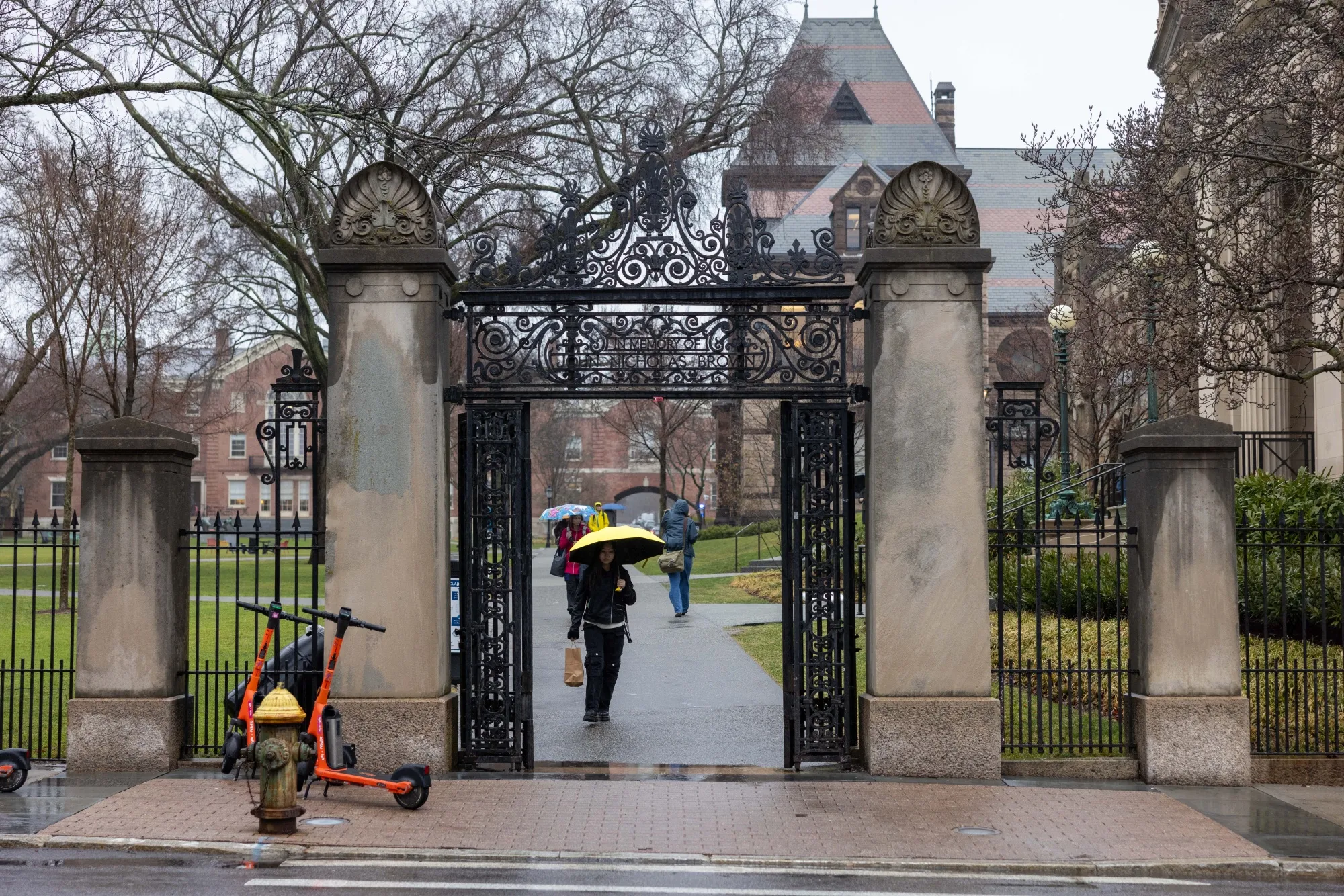
Schools also increasingly make their policy commitments explicit. Brown states that it “[support] all people in using the restroom and locker room that aligns with their gender identity.” Stanford has described plans to “designate multi-stall restrooms with enhanced privacy features as gender-inclusive restrooms.”
For supporters, these policies are about dignity and inclusion. For critics, they represent the quiet removal of sex-based boundaries that Title IX was historically understood to protect.
Privacy is a legal interest
American law has long treated certain spaces as different. We accept single-sex separation in bathrooms and locker rooms not because the Constitution demands it in so many words, but because privacy interests are real and predictable when bodies are exposed and vulnerability is high.
That is why the debate cannot be resolved by insisting that one side is merely “uncomfortable.” The law routinely recognizes privacy in intimate settings as a legitimate governmental interest. It also recognizes that minors are different. School is compulsory. Students cannot simply opt out of shared spaces the way adults can choose a different gym or setting.
In the coming Title IX cases, the key question will be whether sex-based privacy can still be treated as an enforceable boundary when a school has adopted a gender identity-based access policy.
Safety keeps reappearing
Many institutions adopt gender-inclusive rules with no intention of exposing anyone to harm. But law is built for worst-case scenarios, not best intentions. And the moment policy creates open access to female intimate spaces, administrators inherit a new problem: how to separate a sincere identity claim from opportunism.
Public controversies have already illustrated why parents and students raise alarms. In Wisconsin, a dispute arose after a transgender-identifying student allegedly showered near high school girls, prompting allegations that the girls’ privacy had been violated. In Virginia, a registered sex offender who identifies as a transgender woman was accused in 2025 of lurking in a women’s locker room in Fairfax, intensifying public fears about access rules that rely on self-identification.
None of those incidents, by themselves, decide what Title IX requires. But they shape the factual record that future plaintiffs will use to argue that sex-segregated spaces serve a concrete safety function, not an abstract moral one.
Federal policy can swing fast
Title IX is enforced through regulations and agency interpretations as much as through court opinions. That means presidential administrations can change the practical meaning of Title IX without Congress amending a single word.
On January 20, 2025, President Trump signed an executive order titled “Defending Women from Gender Ideology Extremism and Restoring Biological Truth to the Federal Government.” The order criticized efforts to “permit men to self-identify as women and gain access to intimate single-sex spaces and activities designed for women,” and it rescinded a prior directive that required gender identity-based access to single-sex spaces.
The order also argued that redefining “woman” undermines laws designed to protect sex-based opportunities, stating: “Invalidating the true and biological category of ‘woman’ improperly transforms laws and policies designed to protect sex-based opportunities into laws and policies that undermine them.”
Executive orders do not rewrite statutes. But they steer agencies, and agencies steer investigations, enforcement priorities, and the compliance advice schools receive. That is why a single election can change the lived reality of Title IX for students in a single semester.
So are schools “required” to allow it?
The honest answer is unsatisfying: it depends on where you live, what policy your institution adopts, and which legal theory wins in the next round of cases.
Some institutions treat gender identity access as mandatory to avoid discrimination claims. Others treat sex-based separation as mandatory to comply with Title IX’s protection of women’s equal educational opportunity, including privacy and safety in sex-segregated spaces. With courts divided, both camps can find legal support.
But you can see where the conflict is heading. The more that schools adopt multi-stall, mixed-sex policies in restrooms and locker rooms, the more likely it is that parents and students will file Title IX complaints asserting that sex-based privacy is itself a protected educational condition.
And because Title IX is tied to federal funding, the stakes are not symbolic. Investigations can lead to compliance agreements, policy rewrites, or, in extreme disputes, threats to funding.
The constitutional layer
Even when these cases are litigated under Title IX, the Constitution is never far away. The Fourteenth Amendment’s Equal Protection Clause and Due Process Clause shape how courts think about sex classifications, privacy expectations, and the permissibility of sex-separated spaces.
That is the deeper civic lesson here: we are watching the country renegotiate what “sex equality” means.
- If sex equality means erasing sex-based distinctions wherever possible, then sex-segregated bathrooms become suspect.
- If sex equality means protecting female opportunities and boundaries in contexts where biology matters, then sex-segregated bathrooms become a core safeguard.
Title IX was born in an era when the second view was assumed. The modern debate is whether the law can be made to serve both views at once without breaking.
What to watch next
If you want to understand how privacy and safety rules could change nationwide, watch these pressure points:
- OCR investigations, like the Buncombe County case, because they signal how the federal government will interpret Title IX in practice.
- Appellate court rulings on bathroom and locker room access, because they determine regional rules and create the splits that invite Supreme Court review.
- Policy language, especially whether institutions keep single-sex spaces and add optional all-gender alternatives, or whether they convert multi-stall spaces into mixed-sex facilities.
- Cases involving minors and locker rooms or showers, because those fact patterns sharpen the privacy and dignity arguments.
The next chapter of Title IX will not be decided in a philosophy seminar. It will be decided in the places where the law meets the human body, where “rights” stop being theoretical and start being personal.
And once a national rule emerges, whether through the Supreme Court or federal enforcement, it will not stay confined to sports. It will reshape how schools draw boundaries around sex, privacy, and equal access.
That is why this fight matters. Not because bathrooms are the center of American life, but because they are one of the few places where the legal system must say, out loud, what “sex” means.