
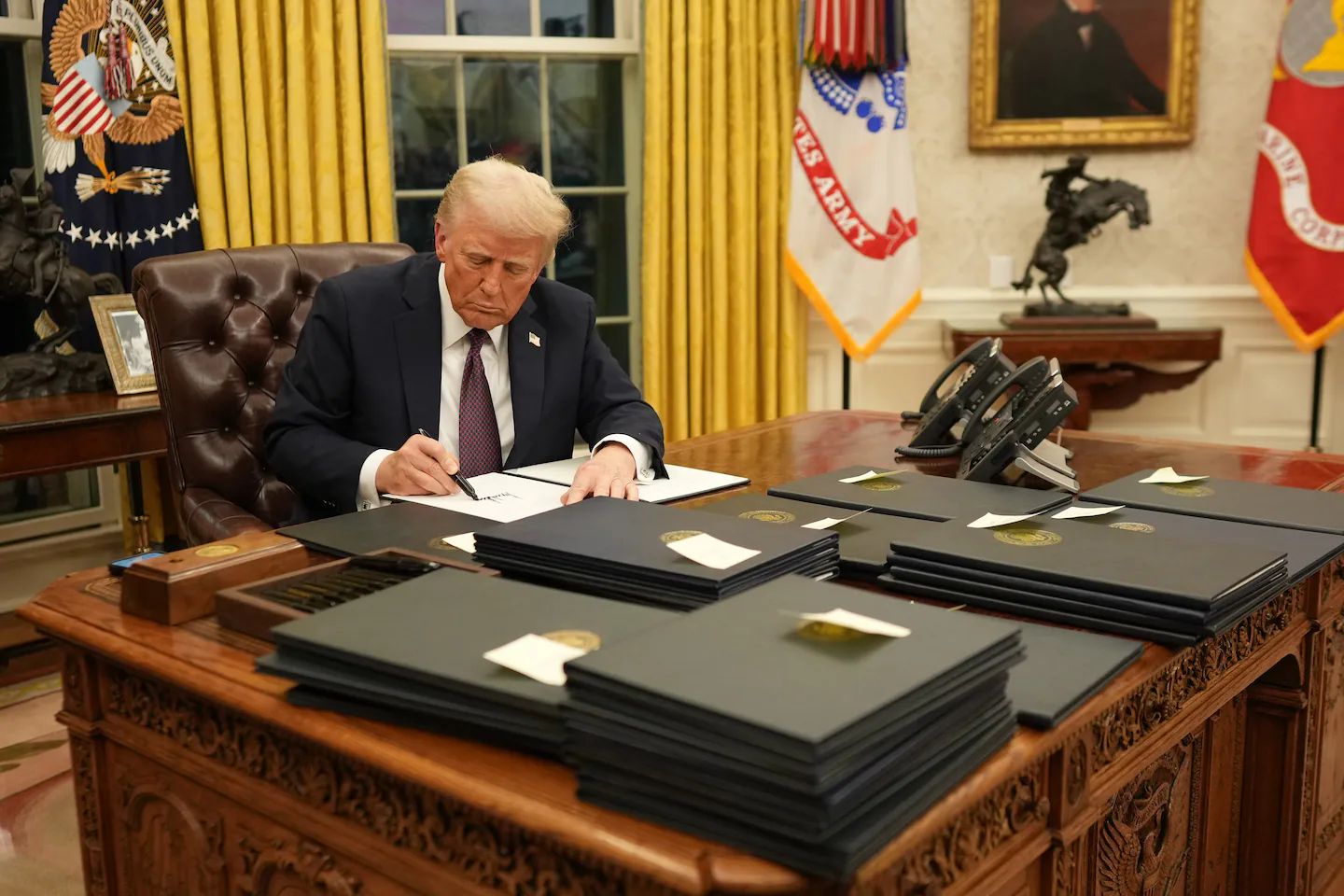
Presidents love the clean drama of a signature. One pen stroke, one camera flash, and the public is supposed to understand: something has changed.
On childhood vaccines, President Donald Trump is testing that idea again. His new executive order calls for fewer childhood vaccines and recommends splitting the combined measles, mumps, and rubella shot into separate injections. He has framed the move in the language of parental choice and public suspicion, arguing that today’s schedule is too heavy and too fast.
The civics question is simpler and sharper: can a president actually change what “the vaccine schedule” means in America, or is this mainly a way to steer federal agencies and signal to states and parents?
Join the Discussion
What the order does
The order pushes two major changes.
- Reduce the standard childhood schedule to 11 vaccines, down from the 18 recommended by the American Academy of Pediatrics (AAP).
- Split the MMR into separate shots rather than the combined vaccine.
Under the order, the immunisations recommended for all children are: measles, mumps, rubella, diphtheria, tetanus, pertussis, polio, Haemophilus influenzae type B, pneumococcal disease, human papillomavirus, and varicella (chicken pox).
Trump described the shift this way: “We’re reducing them,” and emphasized that it is not only fewer vaccines, but also giving them “in a series of visits to the doctor.”
The order also calls for the development of alternatives to aluminium used in some vaccines and directs testing to determine whether those alternatives are safer and more effective.
Trump, who has long voiced doubts about the MMR, defended the split-shot concept with rhetoric that is more visceral than scientific. He suggested the combined MMR could be “quite lethal” if given at once, comparing it to pouring a bottle of soda into a child’s body. The FDA package insert for MMR lists a single dose as 0.5 mL. When asked for evidence of the “lethal” claim, Trump said: “What I've heard is that there are some people that say it is that way.”
Those claims collide with current federal health guidance. The Centers for Disease Control and Prevention (CDC) states that the MMR vaccine carries a very small risk of febrile seizures for young children, and that “most people who get MMR vaccine do not have any serious problems with it.” The CDC also emphasizes that getting the vaccine “is much safer than getting measles, mumps, or rubella,” and that there is “no published scientific evidence that shows any benefit in separating the combination MMR vaccine into three individual shots”.
What it is not
This is the key legal framing: the order serves as guidance, not a mandate.
In other words, it does not instantly rewrite school rules, compel doctors, or automatically change what your state requires for classroom entry. Its force is real, but mostly indirect: it leans on federal agencies, influences messaging, and tries to shift what counts as the “official” baseline.
Orders are not laws
An executive order is not a statute. It is a set of instructions from the president to the executive branch, justified under Article II’s grant of “executive Power” and the president’s duty to “take Care that the Laws be faithfully executed.”
That means an executive order can do real things, but it can only do them through existing legal authority. If the law gives an agency discretion, the president can often steer how that discretion is used. If the law is clear, the president cannot erase it with a signature.
So the right way to read this vaccine order is not as a national command. It is a wager about influence: how much can the federal government reshape the default schedule, even when states still control the mandates?
Who controls the schedule
1) Federal agencies shape recommendations and approvals
At the federal level, three institutions matter more than White House talking points:
- FDA: approves vaccines for use and regulates labeling.
- CDC (and its advisory processes): publishes immunization schedules and vaccine safety guidance used by doctors, schools, insurers, and states. On its website, the CDC recommends two doses of the combined MMR vaccine, with the first at 12 to 15 months and the second between ages four and six.
- HHS: oversees the larger health bureaucracy and can direct priorities, communications, and rulemaking within statutory limits.
Trump’s order can pressure these agencies to revisit guidance, highlight different risks, commission studies, and shift funding and communications. That is not the same as a mandate. But in public health, federal recommendations still carry gravitational pull.
2) States control school-entry mandates
Here is the hard stop most Americans miss: school vaccine requirements are set by states. States decide what is required to attend public school, what exemptions exist, and how strictly they are enforced.
So even if federal agencies revised every schedule document tomorrow, a state could still require the combined MMR for school attendance, or it could choose to accept separate shots, or it could broaden exemptions. That is federalism in action, for better or worse.
How the White House can matter
In plain English, the president has four categories of leverage.
1) Management power over agencies
The president can instruct HHS leadership to pursue certain policies, open studies, review guidance, convene panels, and initiate rulemaking where statutes allow. Since taking office in 2025, HHS Secretary Robert F. Kennedy Jr. has sought to change and loosen vaccine regulations.
2) Budget and grant priorities
The White House can propose budgets and, once Congress appropriates funds, influence how discretionary pots are distributed. Grants to states and public health entities can be written in ways that encourage certain practices, though conditions must be tied to the program and cannot become coercive.
3) Federal workplaces and federal settings
The federal government can set rules for federal employees and certain federally controlled settings, within statutory and constitutional limits. That is narrower than a national mandate, but it is still a large footprint.
4) The bully pulpit
Presidents shape behavior by shaping perceived legitimacy. The order and the surrounding rhetoric can change compliance, trust, and turnout for shots. That is political power, not constitutional power.
Kennedy’s role and the message
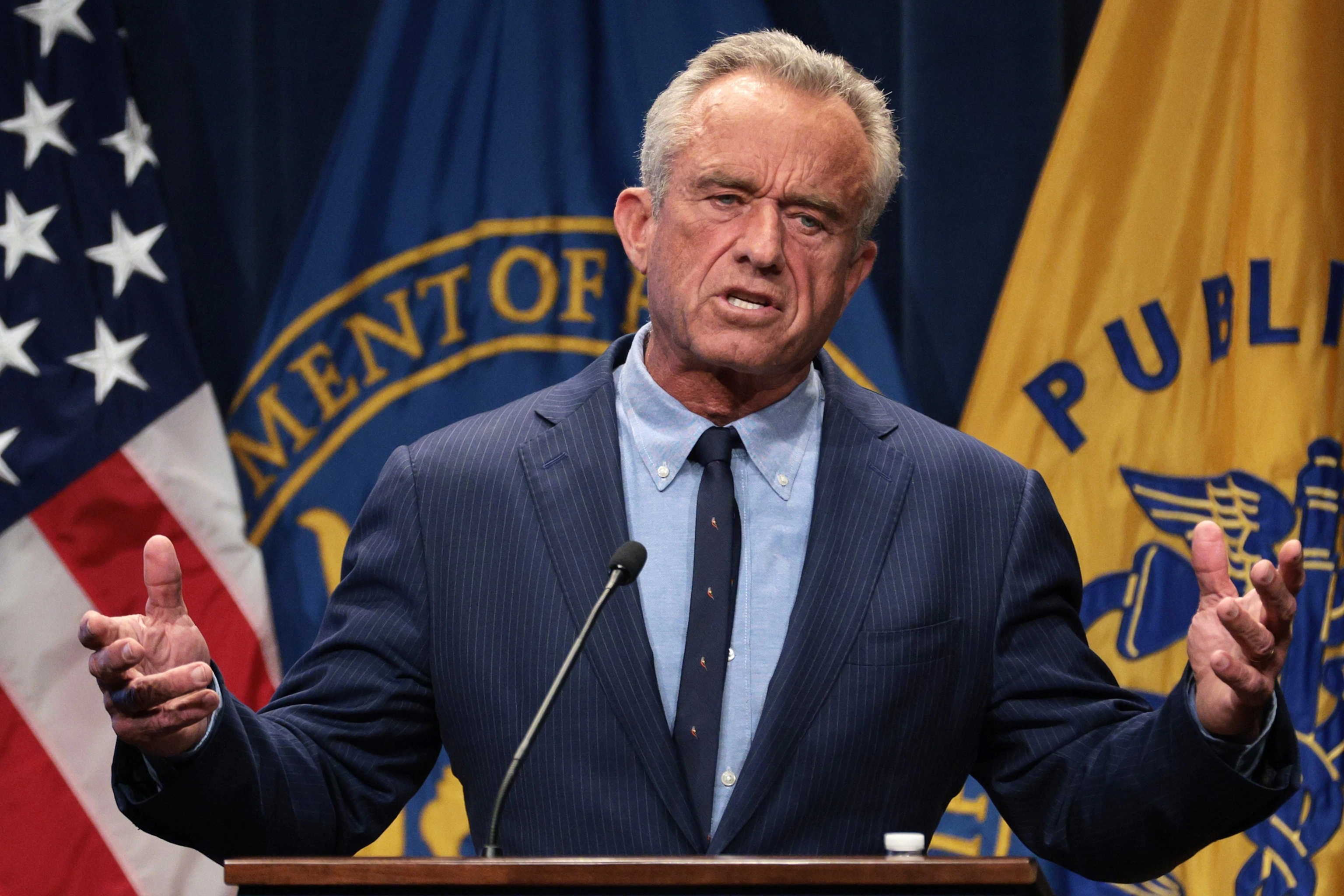
Kennedy has insisted he had “never questioned the efficacy of the MMR vaccine” and said the proposed changes were meant to give parents choice, not prohibit access to childhood vaccines.
Administration officials have also argued the order would mean children receive much less than the 72 shots recommended under the previous vaccine schedule, a figure that assumes annual flu and Covid-19 doses.
What experts warn about
Experts have criticized the order on a practical point that has nothing to do with ideology. Splitting shots means more appointments. That creates more chances to miss a visit and more time for a child to catch a disease in the gaps.
Dr. William Schaffner of the Vanderbilt University School of Medicine has warned that an increased number of visits would be harder for parents and providers to track and would add expense without scientific benefit.
The AAP’s position is blunt. How often and how many vaccines children receive is based on when vaccines work best with their immune systems and when children are most vulnerable to certain diseases. The AAP says there is no medical reason to delay or skip recommended immunisations.
Dr. Andrew Racine, president of the AAP, called the order “dangerous” and criticized it as not grounded in “gold-standard science”. “Delaying or skipping shots is risky, especially as measles continues to spread and children go back to school,” Racine said.
Aluminium and the new testing push
Trump’s order calls for developing alternatives to aluminium in vaccines and testing whether those alternatives are safer and more effective.
The AAP says studies have found no significant health risks associated with the tiny amounts of aluminium salts in vaccines. Small amounts of aluminium salts, found naturally in soil, water, and foods, have been used in some vaccines for decades to boost the body’s immune response. That means lesser quantities of the vaccine and fewer doses are needed.
What courts would look at
Courts do not decide whether separating MMR is wise. They decide whether the government followed the law.
If the order hardens into concrete agency action, lawsuits would likely focus on questions like:
- Did the agency exceed statutory authority?
- Was the decision arbitrary and capricious? Meaning it ignored evidence, contradicted the record, or failed to justify the change.
- Were proper procedures followed? Notice-and-comment requirements, advisory committee rules, and transparency obligations.
- Did funding conditions cross into unconstitutional coercion of states?
But until the government moves from guidance to concrete actions that affect approvals, funding, or official schedules, the fight is mostly political and bureaucratic, not judicial.
The facts the order runs into
The executive order lands in the middle of a long-running cultural argument about vaccines and autism. But the empirical record has been repeatedly tested, and it has not delivered what vaccine skeptics keep promising.
A high-quality data point is a 2019 Danish study of 657,461 children, which concluded the data did not support the claim that MMR causes or triggers autism.
Even within the president’s party, the pushback is not confined to public health institutions. Senator Bill Cassidy, a physician, criticized the order as “wrong” and wrote on X: “The President does not have the expertise to make these changes. Vaccines are overwhelmingly safe. Vaccines are effective. Vaccines DO NOT cause autism.”
What happens next
If you want a civics teacher’s forecast, here it is: the order’s immediate effect is psychological and bureaucratic, not directly legal.
- Psychological: it signals to hesitant parents that the federal government now shares their doubts, which can lower vaccination rates even without changing a single state rule.
- Bureaucratic: it invites agency leaders to reopen settled questions, reframe guidance, and redirect resources.
- Legal: it becomes truly consequential only if agencies translate it into concrete actions that affect recommendations, approvals, funding conditions, or access.
Then the constitutional system does what it always does. Congress fights. States diverge. Agencies interpret. Courts referee. The question is not whether the president can sign paper. The question is whether the rest of the system will treat that paper like a new default.
One hard question
When a president implies, without evidence, that a routine childhood vaccine could be “quite lethal,” we are not just debating medicine.
We are debating authority in a democracy. Who gets to define risk? Who gets to speak for “the science” in the name of the people? And what happens when the most powerful megaphone in the country tells parents to doubt the public health system?
The Constitution does not answer those questions for us. It only tells us where to aim accountability when the answers go wrong.