
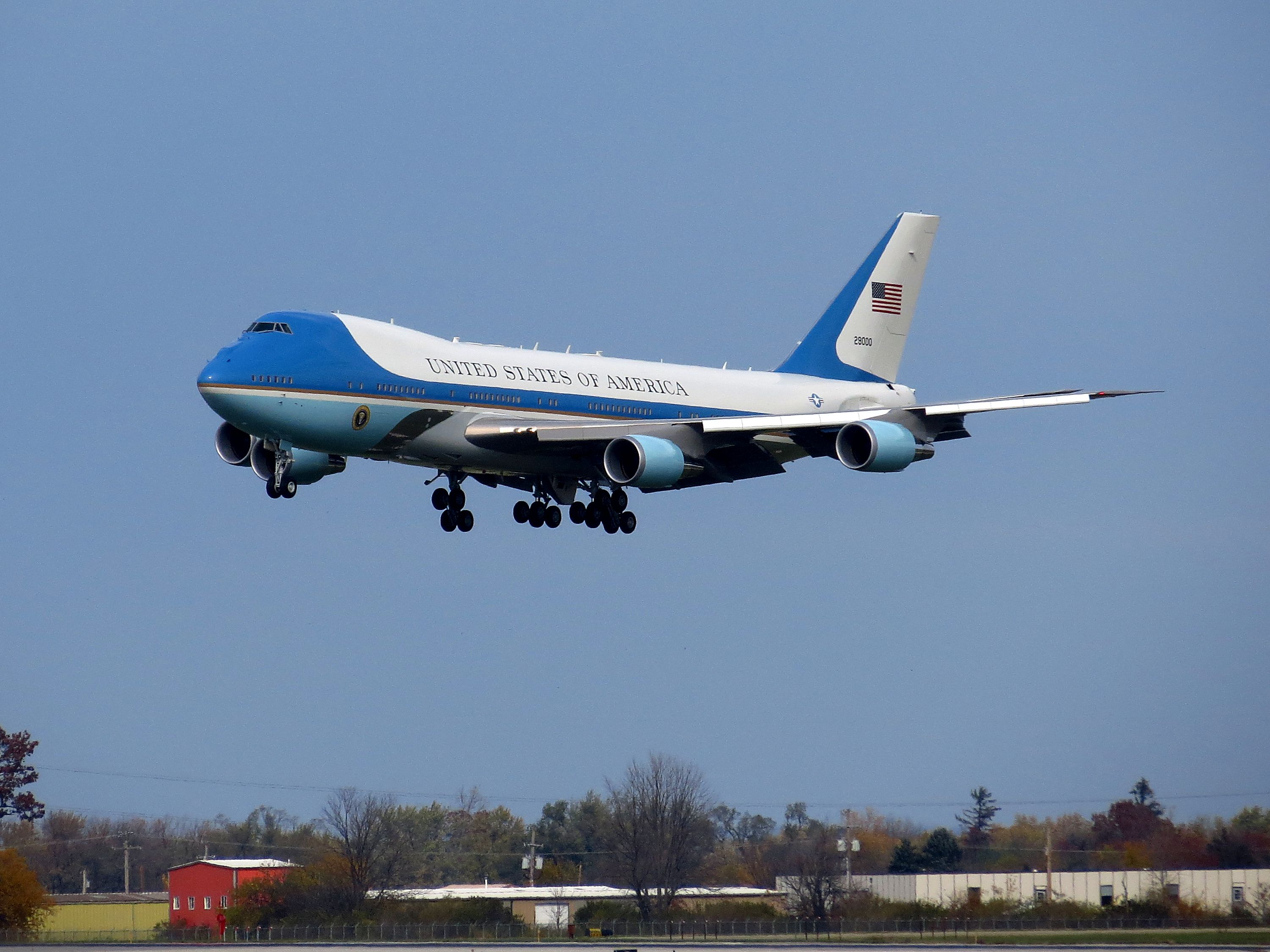
“Air Force One” is a call sign, not a single airplane. It is the radio call sign used when the President is aboard an Air Force aircraft. The constitutional issues people associate with “Air Force One” do not come from the call sign itself. They come from what it represents in practice: presidential power operating through federal property, in full public view, and sometimes under the pressure of foreign influence.
That is why reports and claims about a Qatar-linked Boeing 747 being offered to the United States and then potentially used for high-profile presidential travel get attention fast. Because early reporting can be incomplete, it helps to frame the scenario with a careful caveat: until there is a named official statement, document, or congressional record confirming the terms, treat any such offer as a claimed or hypothetical fact pattern for legal analysis, not a settled event.
If a foreign-linked aircraft is on the table in any form, the details matter, including: who the provider is (the Qatari state, a state instrumentality, or a private entity), what the transaction is (gift, lease, sale, or temporary loan), and who would hold title and control (an agency, the Department of Defense, or something else). Even if the aircraft is safe and even if it saves money, the Constitution asks a different first question: who is giving what to whom, and did Congress consent?
Join the Discussion
The constitutional hook
The Constitution contains a clause that is short, old, and suddenly very modern:
Article I, Section 9, Clause 8, often called the Foreign Emoluments Clause, says that no person holding any “Office of Profit or Trust” under the United States may, without the consent of Congress, accept any “present, Emolument, Office, or Title” from a foreign state.
The core idea is straightforward. The Framers worried that foreign governments could buy goodwill through gifts and favors, and that those gifts would distort American decision-making. They wrote a rule that forces sunlight and accountability: if foreign benefits are going to be accepted by federal officeholders, Congress must say so.
Does it apply to the President?
Historically, the executive branch has often treated the clause as applying to the President and other senior officials. At the same time, the scope of the clause has been debated in scholarship and argued in modern litigation, and there is no definitive Supreme Court merits decision that squarely resolves every edge question. The durable, practical takeaway remains this: the safer constitutional assumption is that the President is covered, and that acceptance of valuable benefits from foreign states triggers the consent question.
Is an airplane a “present” or an “emolument”?
A large aircraft provided on favorable terms can look like exactly what the clause is trying to regulate: a high-value transfer that could create gratitude, leverage, or the appearance of leverage. But the legal analysis turns on predicates that should be stated out loud:
- Is the provider a “foreign State” or an instrumentality of one, rather than a private party?
- Who is the recipient for constitutional purposes, and did an “officeholder” accept something of value connected to office?
Even if the arrangement is framed as “for U.S. use” rather than “for the President personally,” the constitutional question may remain because the benefit is tightly connected to the office and to official power. A serious counterargument also exists: if the United States accepts and controls the aircraft as federal property, some argue the President has not personally “accepted” a gift. That is one reason congressional consent, documentation, and clear title and control are not paperwork trivia. They are the constitutional point.
Consent is the release valve
The Foreign Emoluments Clause does not say foreign gifts are always forbidden. It says they are forbidden unless Congress consents.
So the key legality question becomes practical and specific:
- Was there an act of Congress authorizing acceptance of this aircraft, or authorizing acceptance of foreign gifts of this type and value, under defined conditions?
- If yes, what exactly did Congress permit: acceptance by the United States, acceptance by a particular agency, temporary use, permanent transfer, or something else?
- If no, then even a well-intended offer can run into a constitutional stop sign.
This is why the most important documents are not the press releases. They are the statute, appropriations language, and any formal congressional resolution that purports to give consent.
If acceptance occurred without consent, the range of outcomes can vary depending on the facts and any subsequent congressional action: the arrangement may need to be refused, unwound, or converted into a lawful purchase or lease, Congress could attempt retroactive authorization, and the episode can trigger oversight, inspector-general review, and litigation risk.
Air Force One and DoD
“Air Force One” refers to any U.S. Air Force aircraft when the President is aboard. In practice, the aircraft most associated with presidential travel are operated as part of the primary executive airlift mission, typically through the 89th Airlift Wing at Joint Base Andrews. That matters because it shifts the question from personal benefit to federal acquisition and use of a military transport platform.
The VC-25 aircraft associated with presidential travel are not just airliners with a paint job. They are heavily modified to support secure communications and core continuity functions during travel. That is why a foreign-provided airframe is not simply a “free plane.” It is a serious national-security acquisition problem.
If a foreign country provides a plane that will be used for presidential transport, the government is also deciding:
- Who owns the aircraft and who controls it
- Which agency pays for conversion, maintenance, and security upgrades
- How the aircraft is vetted for espionage and cyber risk
- How the aircraft is integrated into command-and-control and continuity planning
Congress sits at the center of this because it holds the power of the purse and because the emoluments text itself demands congressional consent.

Statutes and ethics
Even if the Foreign Emoluments Clause were satisfied through congressional consent, acceptance and use of a foreign-provided aircraft still runs through a second filter: statutory gift rules, agency acceptance authorities, and executive-branch ethics regulations.
Foreign Gifts and Decorations Act
For many federal officials, the baseline framework is the Foreign Gifts and Decorations Act (5 U.S.C. § 7342). It generally requires reporting and sets rules for handling gifts from foreign governments, including a “minimal value” concept in the statute and implementing rules. High-value items are not treated like souvenirs. Depending on the circumstances, they may need to be refused, returned, deposited with the government, or otherwise handled under lawful authority.
But it is also important not to overstate what that Act does. 5 U.S.C. § 7342 primarily governs gifts to officials and certain handling of gifts tied to official positions. A transfer of a large asset to the Department of Defense for operational use may instead depend on separate gift-acceptance authorities, federal property law, appropriations limits, and acquisition or procurement rules, especially if the arrangement becomes a purchase, retrofit, or long-term support program.
Gift to the United States versus gift to an official
Ethics rules draw a line between gifts to an individual official and gifts accepted by the government. But that line does not automatically solve the constitutional issue. The Foreign Emoluments Clause is aimed at foreign influence on officeholders, including influence routed through benefits connected to office. That is why the facts about control, use, and the benefit’s connection to official duties matter so much.
Conflicts and appearances
The ethics problem is not limited to quid pro quo. A foreign-supplied aircraft used for high-profile presidential travel creates a standing appearance question: does the provider gain prestige, access, or implied influence every time the plane is used? Ethics law often tries to prevent that kind of persistent ambiguity before it becomes the background condition of governance.
As a practical matter, Congress has sometimes addressed acceptance of foreign-provided benefits through statutes and conditions, and high-value foreign gifts offered to officials are commonly reported and turned over to the government rather than kept personally. Those familiar patterns are part of why clarity and documentation matter here.
Security and control
Presidential aircraft are hardened systems with sensitive communications and operational requirements. A donated or foreign-supplied airframe creates concerns that exist regardless of politics:
- Supply-chain trust: What components are installed, and by whom?
- Counterintelligence risk: How is the airframe inspected for hidden devices or compromised systems?
- Conversion costs: Even a “free” airframe can be enormously expensive to retrofit to presidential requirements.
- Operational control: The U.S. must have complete custody, maintenance authority, and security control.
None of this is spelled out in the Foreign Emoluments Clause. But it is part of why the clause exists. Foreign gifts are rarely only about money. They can create relationships, expectations, and perceived leverage.
So can Qatar donate a plane?
In principle, a foreign state could provide an aircraft to the United States only if the acceptance is legally authorized and constitutionally consented to. The hard part is that “authorized” is not a feeling. It is documentation, authority, and oversight.
For an arrangement to be on firm legal ground, you would expect to see:
- Clear congressional consent addressing acceptance from a foreign state (the constitutional requirement)
- Clear statutory authority for the receiving agency to accept and hold the property
- Transparent valuation and reporting consistent with 5 U.S.C. § 7342 and related rules where applicable
- Documented transfer of title and control to the U.S. government, not an individual
- Security certification and acquisition compliance appropriate for a presidential aircraft
If any of those pieces are missing, the legal vulnerability is not merely technical. It is exactly the kind of vulnerability the Framers were trying to force into the open.
Related clause
Readers sometimes mix up two separate provisions. The Foreign Emoluments Clause covers presents and benefits from foreign states unless Congress consents. A different provision, the Domestic Emoluments Clause (Article II, Section 1, Clause 7), limits what compensation the President can receive from the United States and from the states while in office. They address different risks, but they often arise in the same public debates.
Common questions
“Is it illegal for a foreign country to gift the President a plane?”
It can be, unless Congress consents under the Foreign Emoluments Clause and the arrangement is handled under applicable federal gift and property rules. A plane is a high-value benefit that would almost certainly trigger close scrutiny.
“What if the plane is donated to the U.S. Air Force, not to the President?”
That helps with the “personal gift” framing, but it does not necessarily make the emoluments question disappear. The clause is aimed at foreign influence on federal officeholders, and a government-provided aircraft used for the President’s official travel is tightly connected to the presidency. The counterargument is that acceptance by the United States, with full federal control, means the President has not personally accepted a gift. That debate is exactly why Congress’s role and the paper trail matter.
“Can the President just say yes?”
Not constitutionally, if the provider is a foreign state and Congress has not consented. The clause is a structural limit, not a personal preference.
“What about paying fair market value?”
A true purchase at fair market value can change the analysis because it is no longer a “present.” But the details matter: who set the price, what conditions attach, and whether the transaction is genuinely arms-length.
Why it matters
The Foreign Emoluments Clause is one of the Constitution’s least glamorous provisions. It does not read like a rallying cry. It reads like a compliance rule about gifts.
But that is the point. The Constitution is not only a statement of principles. It is also a system designed to resist predictable human pressures, including flattery, luxury, and gratitude toward powerful outsiders.
When the “gift” is a presidential aircraft, the clause stops being a trivia question. It becomes a live test of whether the United States can accept something valuable from a foreign power without also accepting a relationship that quietly changes the terms of American independence.