
The Supreme Court is not a court you can simply appeal to because you lost. It is a court that mostly gets to decide whether it will listen at all.
Every year, thousands of people ask the justices to take their case. Only a small fraction get a yes. And that “yes” is often triggered by one deceptively simple internal practice: the Rule of Four.
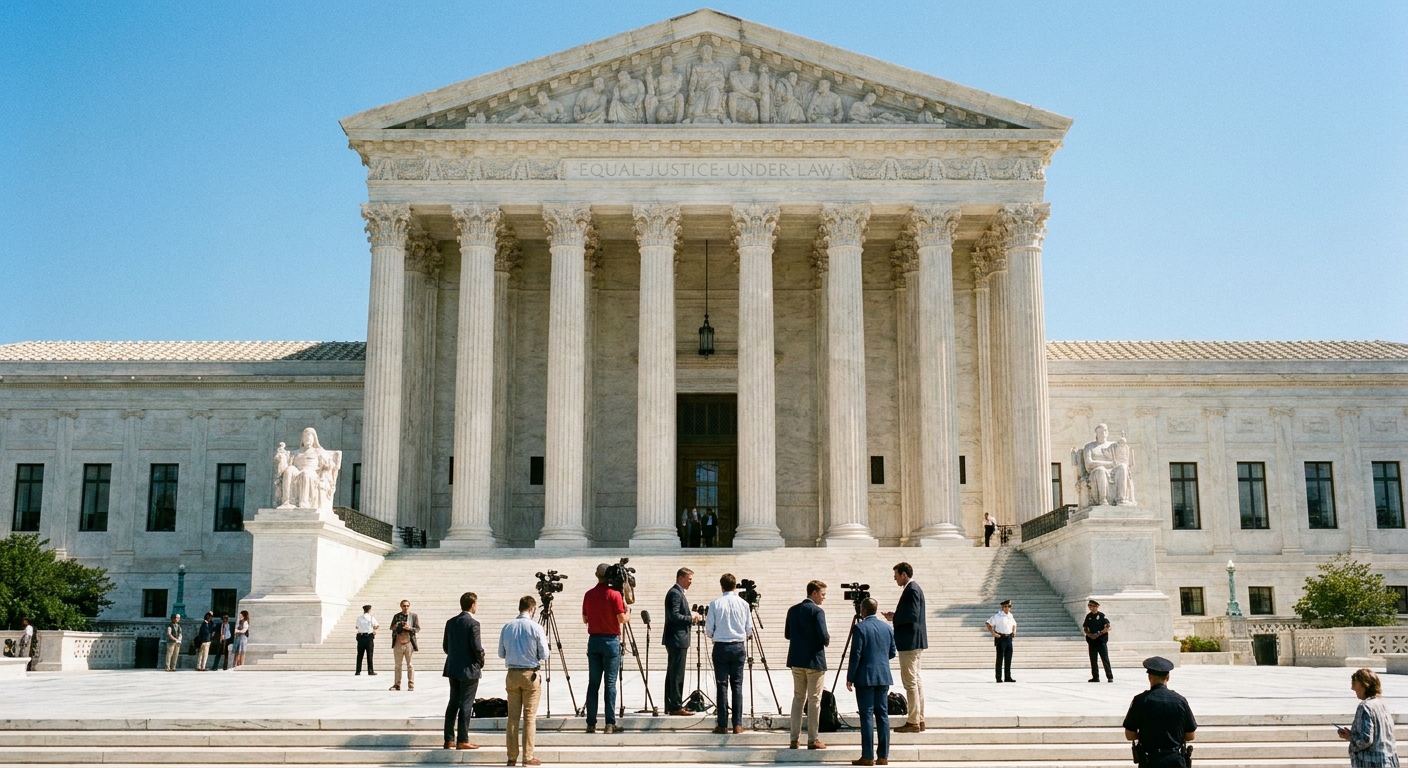
This page is about the voting rule and the machinery around it: the certiorari pool, how four votes grant review, and what it means when the Court denies cert. It is separate from the writ of certiorari itself, which is the formal request. The Rule of Four is about how the justices decide what to do with that request.
Join the Discussion
What the Rule of Four is
The Rule of Four means that four justices must vote to grant review in most cases that come to the Court by petition for certiorari.
That is it. No constitutional text. No statute with a magic number. It is an internal practice that has lasted because it solves a problem: it prevents a bare majority from controlling the Court’s docket so tightly that significant legal questions never get heard.
Congress, meanwhile, controls much of the Court’s appellate jurisdiction by statute. But within the Court’s discretionary certiorari process, the four-vote convention is the gatekeeper.
Why four and not five?
If it took five votes to hear a case, the same majority that could ultimately decide the case could also block the Court from ever taking it. Four votes gives a substantial minority the power to force a conversation.
It does not guarantee the minority will win on the merits. It only guarantees the issue gets onto the merits track. That typically means full briefing and often oral argument, but the Court can also dispose of granted cases in other ways.
Where it happens
The Rule of Four operates at the Court’s certiorari stage, when the justices decide which petitions to grant.
A typical path looks like this:
- A case is decided below (usually in a U.S. court of appeals or a state supreme court).
- The losing party files a petition asking the Supreme Court to review the judgment.
- The justices consider the petition in conference, often with internal memos prepared by clerks.
- If four justices vote yes, the Court grants cert and the case becomes part of the merits docket.
- If fewer than four vote yes, cert is denied, and the lower court’s judgment stands.
Granting cert is not the same as ruling for the petitioner. It means only one thing: the Court has decided the question is worth the Court’s attention.
A note on other paths
Most of the Court’s work arrives through discretionary cert petitions. There are also a few other routes, including rare mandatory-jurisdiction cases (far less common today than in the past) and limited procedural pathways like certified questions. But for most people, the Rule of Four shows up at the cert stage.
The certiorari pool
Thousands of petitions reach the Court, and each comes with its own record, procedural quirks, and claimed “important question.” The justices do not personally read every page. They rely on a system built for triage.
What the pool is
The certiorari pool is an arrangement in which many of the justices share their law clerks’ work reviewing petitions. A petition assigned to the pool will typically be read by a clerk, who writes a memo summarizing:
- the facts and procedural posture
- the legal question presented
- the arguments for and against review
- whether there is a circuit split
- how the petition fits the Court’s usual criteria
- a recommendation (grant, deny, or hold)
Those memos are circulated among participating chambers. They can become the first and most influential filter a petition encounters. Not decisive, but practical power: the difference between a question being framed as urgent and split-driven, or framed as messy and vehicle-problematic.
Do all justices participate?
Not necessarily. Some justices have, at times, chosen to stay out of the pool and have their own clerks prepare independent memos. But the core point remains: most petitions are evaluated through a clerk-driven screening process before they ever become a serious topic in conference.
What makes the Court say yes
The Supreme Court is not designed to correct every error. It is designed to settle major questions of federal law and keep the legal system coherent. The Rule of Four determines how many justices want to take the job, but certain factors make a grant more likely.
Circuit splits
The strongest reason to grant cert is a split among federal circuits or between a federal court and a state supreme court on a federal question.
If the same federal law means one thing in the Ninth Circuit and the opposite in the Fifth, the country ends up with non-uniform rules on the same issue. The Court often steps in to restore uniformity.
Big federal questions
The Court also looks for questions that:
- affect many people or institutions
- involve federal power, constitutional rights, or federal statutes
- keep arising and will keep arising
- need a clear national rule
A clean vehicle
Even if a legal issue is important, the Court may deny review if the case is a poor vehicle. That can happen when:
- the factual record is thin or disputed in ways that complicate the legal question
- the issue was not preserved properly below
- there are alternative grounds for the judgment that would prevent the Court from reaching the main question
- procedural defects make the case messy
In other words, the Court may agree an issue matters and still refuse to take your case.
The odds
For most petitioners, the hardest truth is not about rights. It is about capacity. The Supreme Court has limited time, limited argument slots, and limited space on its calendar for cases that do not move the law.
In a typical term, the Court receives thousands of petitions and grants review in only a small percentage. The exact number varies year to year, but the overall reality stays the same: the odds are long.
That is why the Rule of Four is so powerful. It is not just a vote count. It is the threshold that separates the many from the very few.
What denial means
When the Supreme Court denies cert, the immediate result is straightforward: the lower court’s judgment stands for the parties in that case.
But the broader meaning is often misunderstood.
Not a merits ruling
A denial does not mean the Court agrees with the lower court. It does not mean the decision is “right.” It does not mean the issue is settled nationwide.
It usually means the Court declined to review the case for any number of reasons, including:
- the Court wants more lower-court development
- the case is a poor vehicle
- there is no split yet
- the issue is important but not urgent
- the justices simply could not get to four votes
Occasionally, a justice will write a statement respecting the denial or a dissent from denial. But the Court as a whole usually gives no reasons.
Effect on lower courts
Here is the practical consequence: the lower court opinion remains binding only within that court’s jurisdiction.
- If a U.S. court of appeals decides a federal question and cert is denied, that rule is binding on federal courts within that circuit.
- Other circuits can disagree, and often do.
- State courts may treat the decision as persuasive authority, not binding.
So a denial of cert can leave the country with a patchwork of rules. Sometimes that is temporary. Sometimes it lasts for years.
Can the issue come back?
Yes. Denial of cert does not create Supreme Court precedent the way a merits opinion does. The issue can return in a different case, with a better record, a cleaner procedural posture, or a sharper split.
Conference
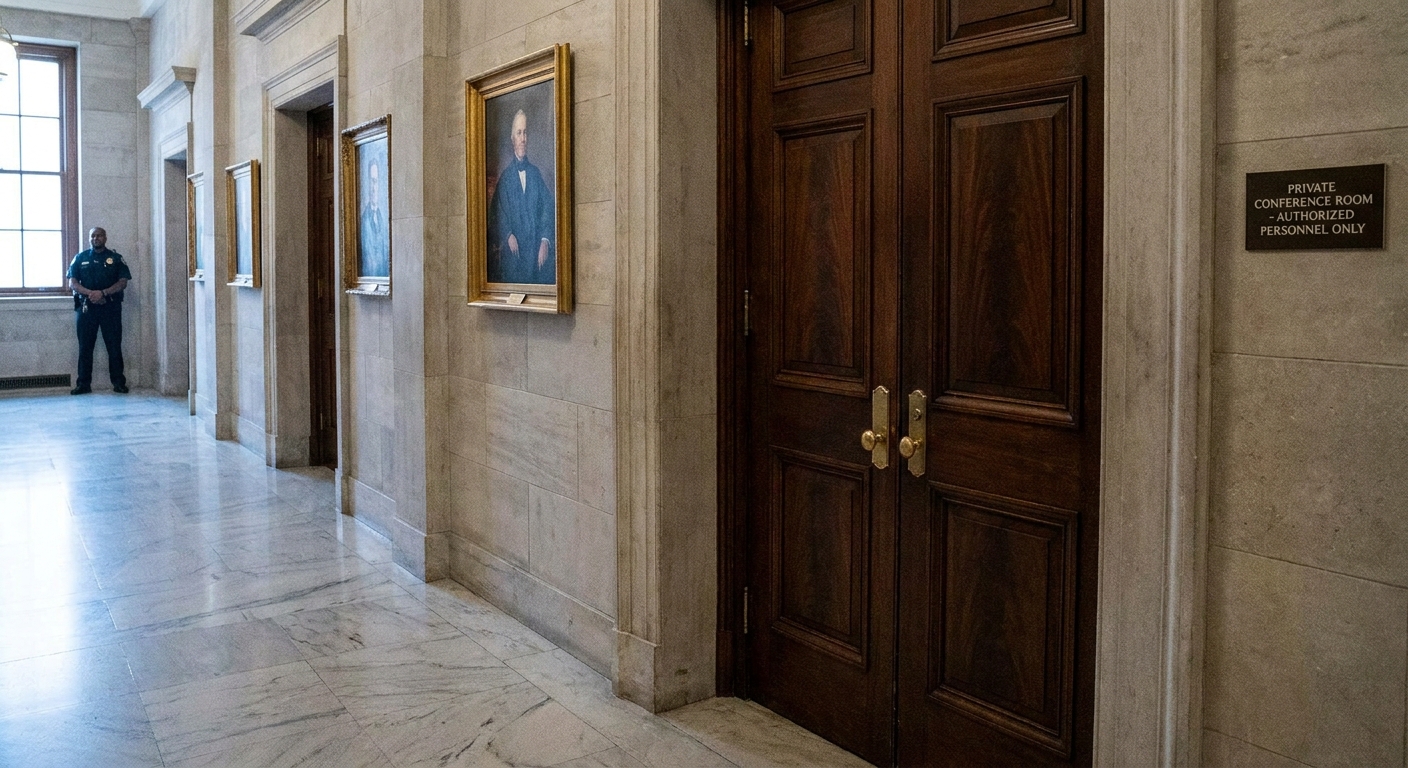
The Rule of Four is triggered in the justices’ private conference. No cameras. No public transcript. No clerk participation. Just the justices, discussing petitions and deciding what to add to the docket.
The external results are public: the Court releases order lists announcing grants and denials. Some petitions are “relisted” for discussion at a later conference, or “held” pending a related case, which is another piece of the docket machinery that outsiders only see through these short orders.
After a grant
People sometimes assume a grant guarantees a classic Supreme Court moment: oral argument, a long signed majority opinion, and clear guidance.
That is often how it goes. But a grant can also end in a per curiam opinion, a summary reversal, or, sometimes, a DIG, which is when the Court dismisses the case as improvidently granted. The big point is that a grant moves the case into the Court’s merits process, but it does not lock in one particular kind of ending.
Rule of Four vs. cert
These terms get blended online, but they are different parts of the same process.
- The writ of certiorari is the mechanism: a petition asking the Court to review a lower court judgment.
- The Rule of Four is the internal threshold: how many justices must vote to grant that request.
You can file a flawless petition for cert and still lose because you cannot get to four votes. And you can get four votes even when five justices will ultimately reject your position on the merits.
That is the point. The docket is not only about who is likely to win. It is also about which questions deserve a national answer.
Why it matters
The Court’s power is not limited to the opinions it writes. It also lives in the questions it refuses to answer.
When the Court denies cert on a high-profile issue, lower courts keep deciding. Conflicts deepen. Rights and rules vary by geography. And eventually, the pressure builds until four justices decide the uncertainty itself is the problem.
If you want to understand why some disputes explode into landmark decisions while others stall out for a decade, start here. The Rule of Four is the gate. The rest of the Supreme Court story happens only after it opens.
Quick takeaways
- Four votes can grant Supreme Court review. Not five.
- The certiorari pool helps clerks screen petitions and recommend grants, denials, and holds.
- The Court is most likely to take cases with a circuit split, a major federal question, and a clean vehicle.
- Denial of cert is not a ruling on the merits. It leaves the lower court judgment in place.
- A denial often preserves a patchwork of rules until the Court decides the issue needs a national answer.