
In Washington, the loudest Supreme Court news is often the news that does not happen.
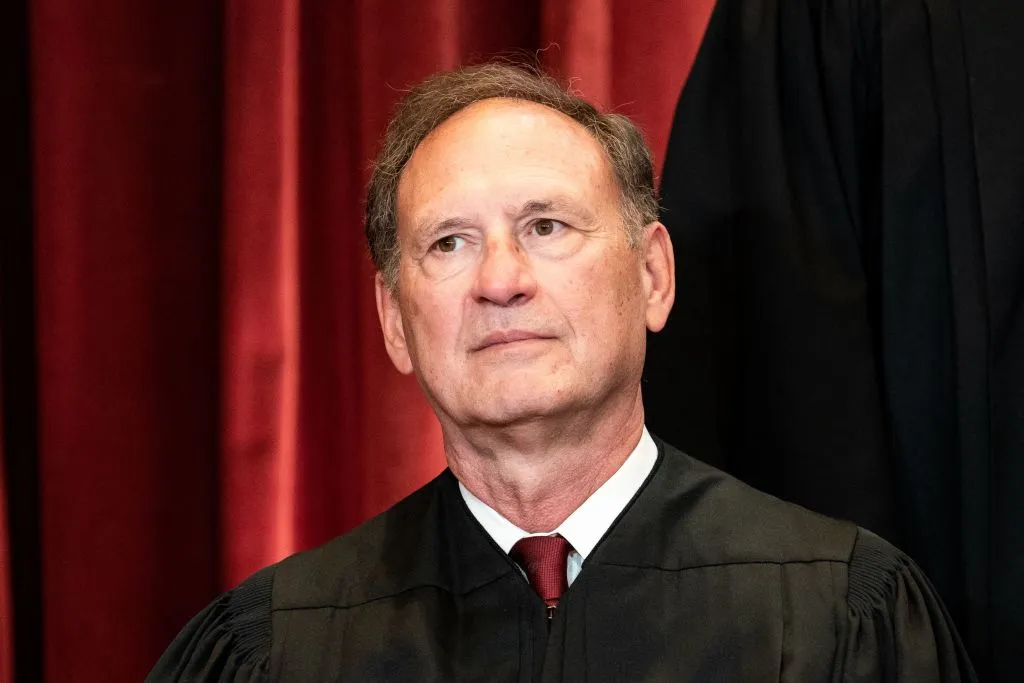
Multiple sources now indicate that Justice Samuel Alito is not expected to step down this term. The term lasts until the Court’s new year begins in October. Alito, who is 76, has already hired all four law clerks for the upcoming annual term, and a source said he is also in the process of hiring the rest of his clerks for the next term.
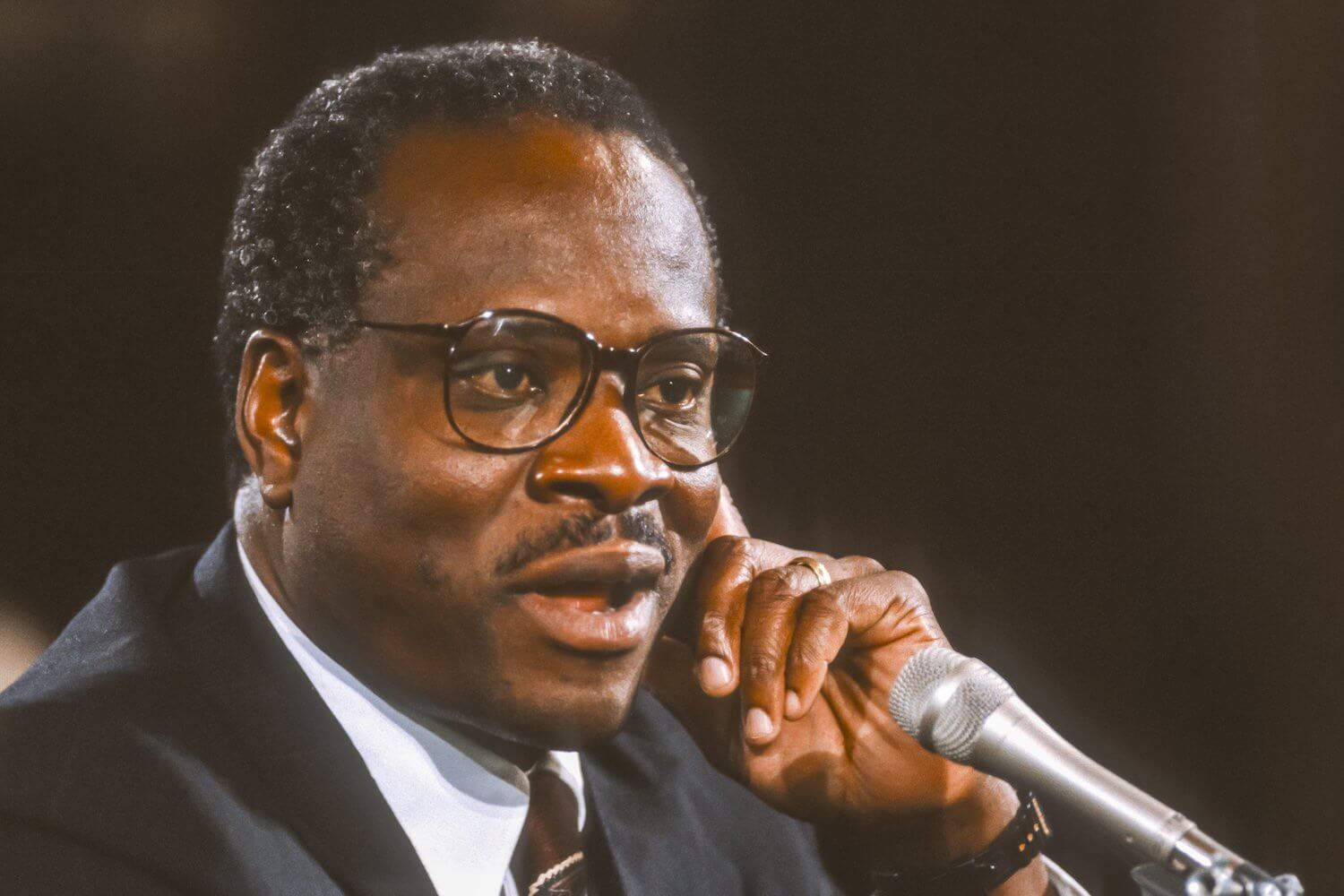
Justice Clarence Thomas, 77, has drawn less retirement speculation despite being one year older than Alito and serving for more than three decades. There is no comparable public signal that he is planning to retire now, and the chatter around him has been notably quieter.
That may sound like inside baseball. It is not. When two of the Court’s most reliably conservative votes stay in place, the immediate question shifts from who replaces them to how long the current Court stays exactly as it is, and what that stability does to the law.
Join the Discussion
Why rumors matter
The Constitution says federal judges hold office “during good Behaviour,” which in practice means life tenure unless a justice resigns, retires, is impeached, or dies in office. That design is supposed to insulate the Court from political retaliation.
But life tenure has an unintended side effect: it turns timing into power. A justice who leaves at a politically convenient moment can shape the Court’s direction long after their last opinion. A justice who stays can deny that opportunity, even if the political world is begging for a vacancy.
This is why retirement speculation is rarely about rest. It is about control, and about calendars. It is also why midterm elections hover over every whisper. Some observers have speculated Alito might want to ensure a conservative successor is confirmed by the current Republican-led Senate before the upcoming midterms. The speculation exists precisely because the opportunity can close fast.
What staying means
If Alito and Thomas remain on the bench, the Court’s ideological center of gravity does not move. That matters because these two justices are not merely conservative votes. Many court-watchers see them as driving forces in the Court’s conservative legal project, both in how they frame questions and in how far they are willing to push existing doctrine.
- Justice Thomas has spent decades pressing the Court to revisit major doctrines, especially where he believes the Court drifted away from the Constitution’s original public meaning.
- Justice Alito is often read as less theoretical and more pointed in tone, framing certain constitutional questions as contests between democratic authority and judicially created constraints.
In practical terms, their continued presence is often associated with a Court that remains skeptical of broad agency power, receptive to religious liberty claims against government restrictions, and open to reconsidering older precedents when a majority concludes they were wrongly decided.
That does not mean every term is destined to be revolutionary. It means the range of outcomes is likely to remain within the world this Court has already built.
The swirl around Alito
The rumor cycle around Alito has had specific fuel. In addition to age and tenure, the speculation intensified after it was revealed he was treated last month for dehydration after becoming ill at a Federalist Society dinner. A Supreme Court spokesperson said at the time that he was “thoroughly checked” and quickly returned to the bench.
Then came the political overlay. President Donald Trump said he is “prepared” to appoint up to three Supreme Court justices if vacancies arise, and said he has a shortlist of nominees in mind, though he did not mention any names.
“In theory, it's two or three, they tell me, if you just read statistics, it could be two, could be three, could be one,” Trump said. “I don't know. I'm prepared to do it. But when you mention Alito, he is a great justice.”
Trump also said he thinks Alito is “in very good physical health” and called him “one of the great justices of our time.” “Justice Alito is an unbelievable justice,” Trump said.
In other words, the public was handed a health headline and a political timeline at the same moment. That is usually enough to start people reading tea leaves, even when the institutional reality is that justices rarely telegraph their plans in a clean, definitive way.
Clerks and signals
The public often treats clerk hiring like a retirement announcement: if a justice hires clerks for the next term, they must be staying. If they do not, they must be leaving.
Reality is messier. Justices tend to hire their clerks two to three years in advance, and staffing choices are not a binding pledge. That said, in a system with so few reliable signals, clerk hiring is one of the only visible data points the outside world can see.
In this case, it is being read by some as a sign of continuity: Alito appears to be staffing up, not winding down, even if clerk decisions alone do not settle the question.
From who to when
Retirement speculation is never just about the Court. It is about the Senate.
This is the part civics students often miss: the President nominates, but the Senate confirms. That creates a second clock that runs alongside the justices’ life tenure: elections.
On Capitol Hill, Senate Majority Leader John Thune said the GOP majority would be able to fill a Supreme Court vacancy quickly. “That’s a contingency I think around here you always have to be prepared for. And if that were to happen, yes, we would be prepared to confirm,” Thune said.
Senate Judiciary Committee Chairman Chuck Grassley said he would recommend Sens. Ted Cruz or Mike Lee as top candidates if Alito were to retire. Grassley also said he hoped Alito would not step down, while adding his committee is “fully prepared” to process a nominee before the midterm elections.
When there is no vacancy, none of that becomes operational. But the moment a seat opens, the Court stops being a courthouse and becomes a calendar.
The next vacancy
Even if Alito does not retire this term, the underlying truth remains: the next vacancy is not a distant hypothetical. It is a structural certainty. The only unknowns are which seat and which political branch controls the confirmation pipeline when it happens.
And because Supreme Court appointments function like long-term constitutional change through personnel, the fight over the next vacancy will be less about a resume and more about a legal trajectory. Many observers expect flashpoints in at least three areas:
- Administrative power: how much deference federal agencies receive when interpreting statutes and regulating industry.
- Religious liberty: how the Free Exercise Clause interacts with nondiscrimination law and public funding.
- Substantive due process: whether unenumerated rights recognized by the Court remain stable, narrow, or vulnerable to reconsideration.
The quiet takeaway
We tend to talk about the Supreme Court as if it is an institution of text. It is also an institution of people. The Constitution sets the stage, but the cast determines the performance.
For now, the cast is not changing. That stabilizes the Court’s current majority and postpones the next confirmation brawl. It also means that anyone waiting for a sudden ideological reset will likely keep waiting.
But postponement is not the same thing as resolution. Life tenure delays the question of succession. It does not eliminate it. It just ensures that when the vacancy finally comes, the political system will treat it like a once in a generation event, because constitutionally speaking, it is.