
In everyday life, we assume the person who writes an email or takes a note “owns” it. The presidency does not work that way. When a president and the White House staff create documents while carrying out public duties, those materials are generally treated as public records, preserved for oversight, future historians, and the basic civic expectation that government actions leave a trace.
That simple idea is now under heavy pressure. A new Justice Department legal opinion has taken the position that the Presidential Records Act, the main statute governing White House records, is unconstitutional. If that view wins in court and in practice, it could shift the balance away from public custody and toward personal control by presidents and former presidents.

Join the Discussion
The short answer
Under the Presidential Records Act’s framework, presidential records are treated as records of the United States, not the personal property of the individual who temporarily holds the office. The National Archives becomes the custodian of those records when a president leaves office. Former presidents still have important interests and privileges, but the default under the statutory system is preservation and public custody.
The major exception is purely personal materials, such as items unrelated to official duties. The constant real-world dispute is not whether personal documents exist, but where the line is drawn between “personal” and “presidential,” especially in an era of text messages, encrypted apps, and fast-moving digital workflows.
Why the law exists
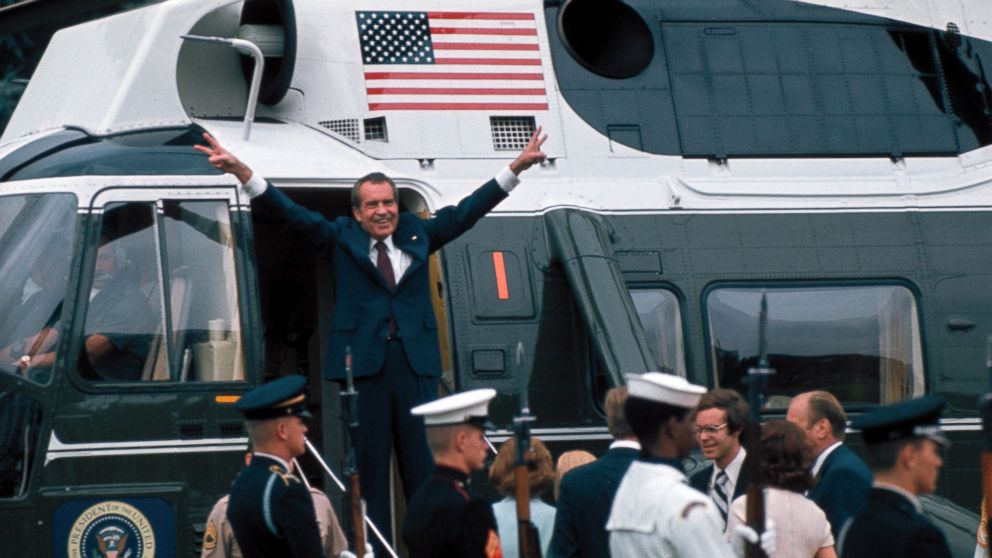
To understand why Congress got involved in White House paperwork at all, you have to go back to Watergate. In July 1974, the Supreme Court unanimously ordered President Richard Nixon to turn over White House recordings to a special prosecutor. Nixon left office only a few weeks later, and a new conflict erupted: were presidential papers private property that a former president could keep, sell, hide, or destroy?
Congress responded first by putting Nixon’s presidential materials under federal custody. Then, in 1978, it created a broader, forward-looking framework for future administrations: the Presidential Records Act (often shortened to PRA).
President Jimmy Carter framed the point in civic terms when he said the PRA “carries forward my commitment to making sure that our government is not above the law.”
What the PRA does
The PRA sets up a practical system for preserving the institutional memory of the presidency. In broad strokes, it does three things:
- Defines presidential records as materials created or received while performing official duties.
- Requires preservation of those records and limits destruction.
- Transfers custody to the National Archives when the president’s term ends, so the records are protected and can eventually be accessed under a controlled process.
Presidents still have powerful tools to protect sensitive information. Classification rules, executive privilege disputes, and statutory exemptions can delay or limit disclosure. But the PRA’s central premise is that the records themselves do not become private property simply because they were produced in the West Wing.
The constitutional claim
Earlier this month, the Justice Department’s Office of Legal Counsel concluded that the PRA violates separation of powers. In the memo, T. Elliot Gaiser wrote: “The PRA … unconstitutionally intrudes on the independence and autonomy of the President guaranteed by Article II.” He also argued the law creates “a permanent and burdensome regime of congressional regulation of the Presidency” without a valid legislative purpose.
Supporters of a stronger, less regulated executive branch put the argument even more bluntly. Gene Hamilton, who served as a deputy White House counsel last year and previously worked at the Justice Department, said: “The notion that the United States Congress gets to tell the President of the United States what he gets to do with his paperwork is, from a constitutional perspective, insane.”
At bottom, the dispute is not mainly about whether documents should be disclosed quickly. It is about whether Congress can require any durable recordkeeping and transfer system for the presidency at all.
Why historians are suing
Records are not just a “history” issue. They are an accountability issue. Without preserved materials, Congress cannot effectively oversee past actions, courts struggle to reconstruct facts, and the public is left with competing narratives and little evidence.
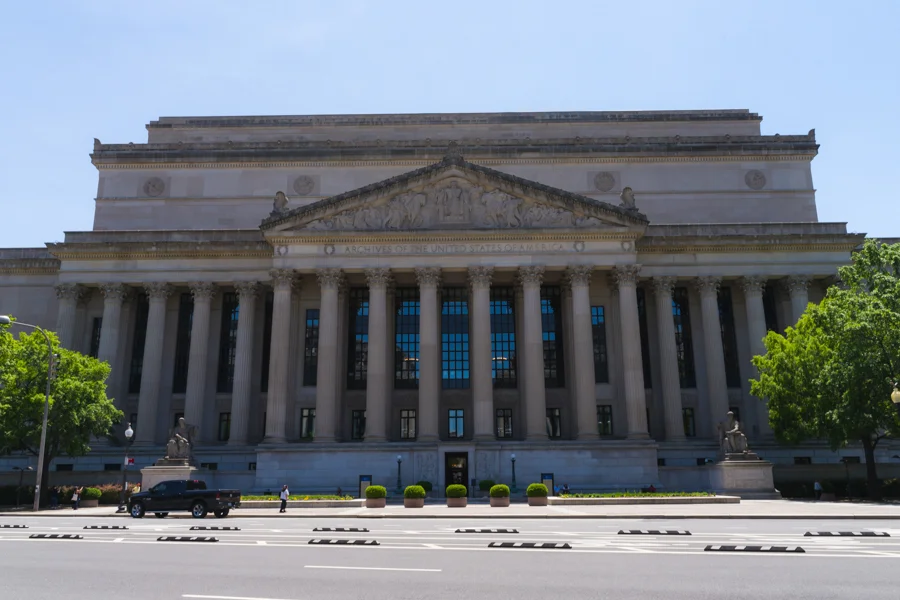
That is why the American Historical Association has gone to federal court in Washington, D.C., seeking to stop the destruction of presidential materials and to ensure the law is followed inside the current White House. The concern is straightforward: if a president can personally control or discard records that reflect poorly on the administration, the public’s ability to evaluate what happened collapses.
Historian Timothy Naftali, a former director of the Nixon Presidential Library, put the question in plain terms: “Do we want future presidents to be able to destroy at will documents that do not put them in the best light?”
The White House response
The White House says it is taking record preservation seriously. Spokeswoman Abigail Jackson said, “President Trump is committed to preserving records from his historic Administration and he will maintain a rigorous records retention program.” In a written statement, Jackson said staff members will undergo training on document preservation.
But lawyers for the historians and the watchdog group American Oversight argue that the training does not appear to apply to the country’s two highest-ranking leaders: Trump or Vice President Vance.
The Mar-a-Lago shadow
This argument is not emerging in a vacuum. It follows years of public controversy over presidential materials kept outside government custody, including a high-profile dispute over records found at a former president’s private property.
America First Legal issued a 2023 paper asserting that a president retains decisive authority over records even after leaving office. That position gained fresh attention because it came after an indictment accusing former President Donald Trump of obstructing justice by allegedly storing classified documents at Mar-a-Lago in a bathroom, a ballroom, and an office. The Justice Department later dropped that case after Trump won reelection the following year.
Naftali has argued that the current attack on the PRA functions as a kind of retroactive justification for removing what he calls public property from the White House to a private resort. “His attack on the Presidential Records Act is an attempt at post facto vindication for having taken public property to Mar-a-Lago,” Naftali said.
Can DOJ ignore a law?
Americans are used to seeing constitutional fights play out in court. What stands out here is the suggestion that the executive branch can effectively set aside a statute based on its own constitutional interpretation, even as lawyers for the historians point to Nixon-era precedent.
Dan Jacobson, a lawyer representing the historians, said the Supreme Court found an earlier version of the records law was constitutional in another case from the Nixon era, but that the new memo brushes past that precedent. He summarized the posture this way: “They just say we just think the Supreme Court is wrong and they use the word ‘wrong’ several times.”
Christopher Fonzone, a former leader in the Justice Department office that issued the new records act memo, likened it to “a bolt of lightning unanticipated by any Executive Branch or Supreme Court opinion or even contemporary legal scholarship,” in an essay on the website Just Security.
What is at stake
Even if you never read a presidential memo in your life, you benefit from the fact that records exist. Those materials help investigators reconstruct events. They allow journalists and scholars to test claims against evidence. They let future administrations learn from mistakes. They also protect presidents sometimes, by documenting lawful decision-making and showing what was known when.
Matthew Connelly, a history professor at Columbia University, warned that a presidency insulated from recordkeeping is a presidency “answerable to no one, not even the court of history.” He also put the civic principle in everyday language: “In America, I think most of us have now come to understand that the president works for us, right? The papers, the records of the decisions they make on our behalf, those are our papers, that’s our history.”
That is the heart of the matter. A presidency is not a private enterprise, and the trail it leaves behind should not depend on a president’s personal preferences, political needs, or fear of embarrassment.
How to think about the Constitution
This debate sits at the intersection of two constitutional instincts:
- Energy and independence in Article II, so the president can function without being micromanaged by Congress.
- Accountability and transparency, so the public can evaluate how power was used and other branches can perform oversight.
The PRA is Congress’s attempt to build a stable, nonpartisan recordkeeping system without forcing immediate disclosure of sensitive information. The new Justice Department approach would treat that system as an impermissible intrusion. If courts accept that view, it could encourage presidents to treat official documentation as personal property, with all the predictable consequences: selective preservation, strategic destruction, and disputes over access that last for decades.
What happens next
The court challenge brought by the American Historical Association and aligned watchdog groups is expected to move quickly, with both sides likely to appear in court early next month. The practical question will be whether the federal government must continue operating under the PRA as written, or whether the executive branch can substantially narrow or ignore it based on its own reading of Article II.
For readers trying to cut through the noise, a helpful test is this: if the presidency is power exercised on the public’s behalf, the records of that exercise should presumptively remain in public custody, preserved for oversight now and understanding later. Without records, “checks and balances” becomes a slogan rather than a working system.