
Most Americans understand censorship as something the government does directly. A law is passed. A speaker is fined. A publication is seized.
But the Constitution has always been haunted by a more modern temptation: the government does not have to ban speech itself if it can get someone else to do it.
In a case involving “ICE sightings” content shared through a Facebook group and a mobile app, a federal judge in Illinois concluded that government officials likely violated the First Amendment by leaning on private companies to remove speech. That conclusion matters, not because platforms are required to host everything, but because the First Amendment does not let government officials turn private companies into off-the-books speech police.
Join the Discussion
The speech at issue
The plaintiffs are tied to two different tools used by people who wanted to track and discuss immigration enforcement activity in the Chicago area.
- Kassandra Rosado ran a Facebook group called “ICE Sightings – Chicagoland”, created in January 2025, where users posted videos and information about ICE activity.
- Kreisau Group created a phone app called “Eyes Up” in August 2025, built for similar user-submitted posts and videos about ICE activity.
The officials’ public framing was that this kind of content was being used to “dox” and “target” or “threaten” ICE agents. The plaintiffs’ core claim is different: that officials did not simply criticize the content, but coerced private companies into taking it down.
The jawboning problem
There is a name for this category of First Amendment conflict: jawboning. It is the government using its office, its access, and its implied threat power to push a private intermediary to suppress speech the government dislikes.
This is where civic intuition often fails. People hear “Facebook disabled the group” or “Apple removed the app” and conclude, reasonably, that it is a private decision and therefore not a First Amendment issue.
Sometimes that is true. A platform can enforce its own rules. It can be inconsistent. It can be unfair. It can even be biased. The First Amendment generally does not police private moderation.
But when a government official crosses the line from persuasion into coercion, the constitutional character of the act changes. The government cannot do indirectly what it is forbidden to do directly.
What happened and when
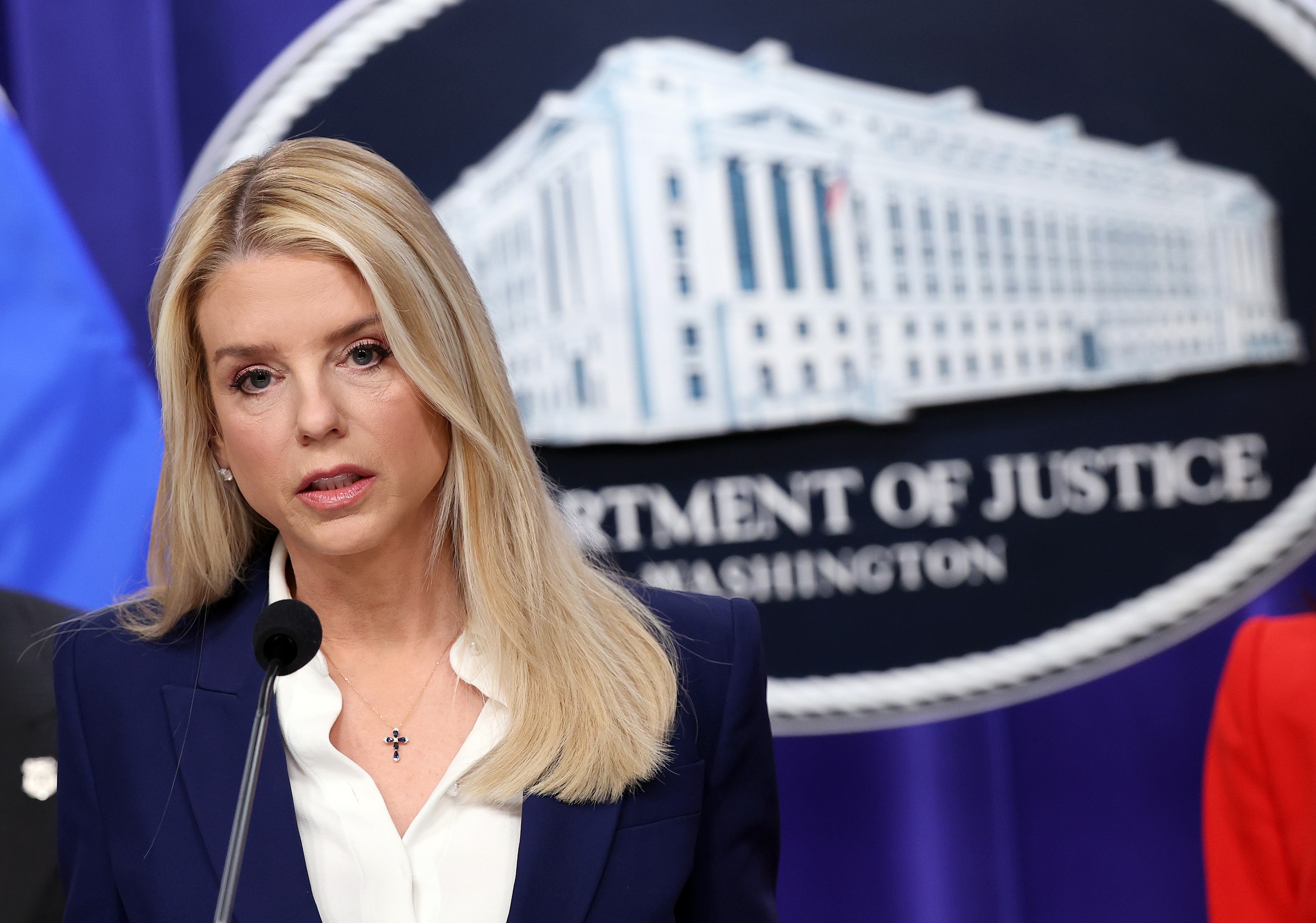
The case centers on alleged coercion directed at Facebook (the Chicagoland group) and Apple (Eyes Up). It also includes public statements by Pamela Bondi about Google in connection with a separate app, ICEBlock.
Facebook: Oct. 12 to Oct. 14, 2025
On October 12, 2025, social media influencer Laura Loomer posted a link to “ICE Sightings – Chicagoland” and tagged Pamela Bondi and Kristi Noem. On October 14, Bondi posted: “Today following outreach from [the DOJ], Facebook removed a large group that was being used to dox and target [ICE] agents in Chicago.” That same day, Noem posted: “Today, thanks to [the DOJ], Facebook removed a large page being used to dox and threaten our ICE agents in Chicago.”
Around October 14, Facebook disabled the group and told Rosado that the group “went against the Community Standards multiple times.”
Apple: around Oct. 2 and Oct. 8, 2025
Around October 2, 2025, Apple removed several apps that shared information regarding ICE activity, including ICEBlock, Red Dot, and Eyes Up. Speaking to Fox News on October 2, Bondi stated: “We reached out to Apple today demanding they remove the ICEBlock app from their App Store – and Apple did so.” On October 8, Bondi made a public statement that “we had Apple and Google take down the ICEBlock apps.”
Apple informed Kreisau Group that it removed Eyes Up after receiving “information” from “law enforcement” that the app violated Apple’s guidelines, specifically guideline 1.1.1, which prohibits “defamatory, discriminatory, or mean-spirited content.”
Why the judge found standing
One of the central legal hurdles in these cases is causation. Did the platform act on its own, or because the government made it effectively unsafe not to?
The court pointed to three factors suggesting the takedowns were likely traceable to government pressure rather than independent platform choice.
1) Prior reviews
According to the court’s account of the record, Facebook had previously reviewed the Chicagoland group and treated violations as limited “participant” issues that “don’t hurt your group,” with groups not penalized when members break rules without admin approval. Apple had also previously reviewed Eyes Up in August 2025, flagged unrelated issues that were resolved, approved the app, and at that time raised no concern tied to guideline 1.1.1 or “defamatory, discriminatory, or mean-spirited content.”
2) Rapid shifts after contact
Timing is not everything, but in First Amendment coercion cases, timing is often the tell. The court noted that Facebook and Apple changed course and removed the content immediately after defendants contacted them about it.
3) Officials took credit
The court also emphasized that officials did not merely express concern. They described the removals as something they caused. For example, Pamela Bondi said: “We reached out to Apple today demanding they remove the ICEBlock app from their App Store – and Apple did so.” She also stated that “we had Apple and Google take down the ICEBlock apps.”
That kind of public victory lap is not legally trivial. It can function like an admission: this was not a platform acting freely, but a platform responding to an asserted government demand.
The First Amendment line
The Constitution does not forbid government speech. Officials can criticize platforms. They can ask for cooperation. They can even try to persuade companies that certain content is harmful.
The problem is the pivot from “please consider” to “do this or else.” The Supreme Court summarized the core rule bluntly: “Government officials cannot attempt to coerce private parties in order to punish or suppress views that the government disfavors.”
Coercion does not always look like a signed order. Courts have long recognized that thinly veiled threats count as threats because recipients understand the reality of power. As the Supreme Court put it decades ago: “People do not lightly disregard public officers' thinly veiled threats to institute criminal proceedings against them if they do not come around.”
In this case, the judge concluded that the officials’ conduct likely crossed into coercion, including by using language like “demanding” and by pairing the takedown campaign with insinuations about prosecution.
No direct authority is not a shield
One of the most common misconceptions about jawboning is that it only counts when the official is the platform’s regulator.
But coercion can work even without formal authority. The court underscored that the constitutional question is contextual: would a reasonable recipient understand the official’s message as carrying an implied threat of adverse state action?
In the real world, major companies do not have to be regulated by a particular office to feel the pressure. The federal government is a many-headed institution. Investigations, prosecutions, public hearings, and policy retaliation can come from different directions. A company does not need a direct regulatory leash to understand that antagonizing high-level officials can carry costs.
What the government did not argue
An important detail in the record is what was not defended: the government did not argue that the plaintiffs’ speech fell within a recognized First Amendment exception or was otherwise unprotected.
That matters because it narrows the battlefield. The case is not primarily about whether the posts were ugly, reckless, or irresponsible. The constitutional issue is whether the government used its power to shut down protected speech by recruiting private gatekeepers.
What happens next
The ruling came in the posture of a preliminary injunction fight. Judge Jorge Alonso indicated the plaintiffs are likely to succeed on the merits of their First Amendment coercion claim. The court has not yet decided the precise terms of the preliminary injunction, but it ordered plaintiffs’ counsel to submit a draft injunction by Wednesday after discussing the form of the order with defendants’ counsel.
The precise wording of any injunction matters because this is one of the hardest areas of First Amendment law to remedy. Courts must stop coercion without banning lawful government persuasion. That is a reason to be specific, careful, and clear about what the Constitution allows.
The takeaway
When private platforms remove controversial content, Americans argue about “free speech” in a cultural sense. When government officials push those platforms to remove content, we are back in the Constitution itself.
The First Amendment does not just protect you from laws that criminalize your speech. It also protects you from pressure campaigns that achieve the same result through a quieter pipeline.
That is the principle on trial here. Not whether you like “ICE sightings” posts. Not whether Apple or Facebook should host them. The question is whether the government can treat Silicon Valley like a set of outsourced speech deputies. The court’s answer, at least for now, is likely no.