
You can live in the United States, be detained or arrested by immigration authorities in the United States, and face a removal order from the United States and still may not be allowed to see the underlying classified evidence the government says supports its case.
That is not a rumor. It is one of the features of a little-known legal mechanism created in 1996: the Alien Terrorist Removal Court, often shortened to ATRC.
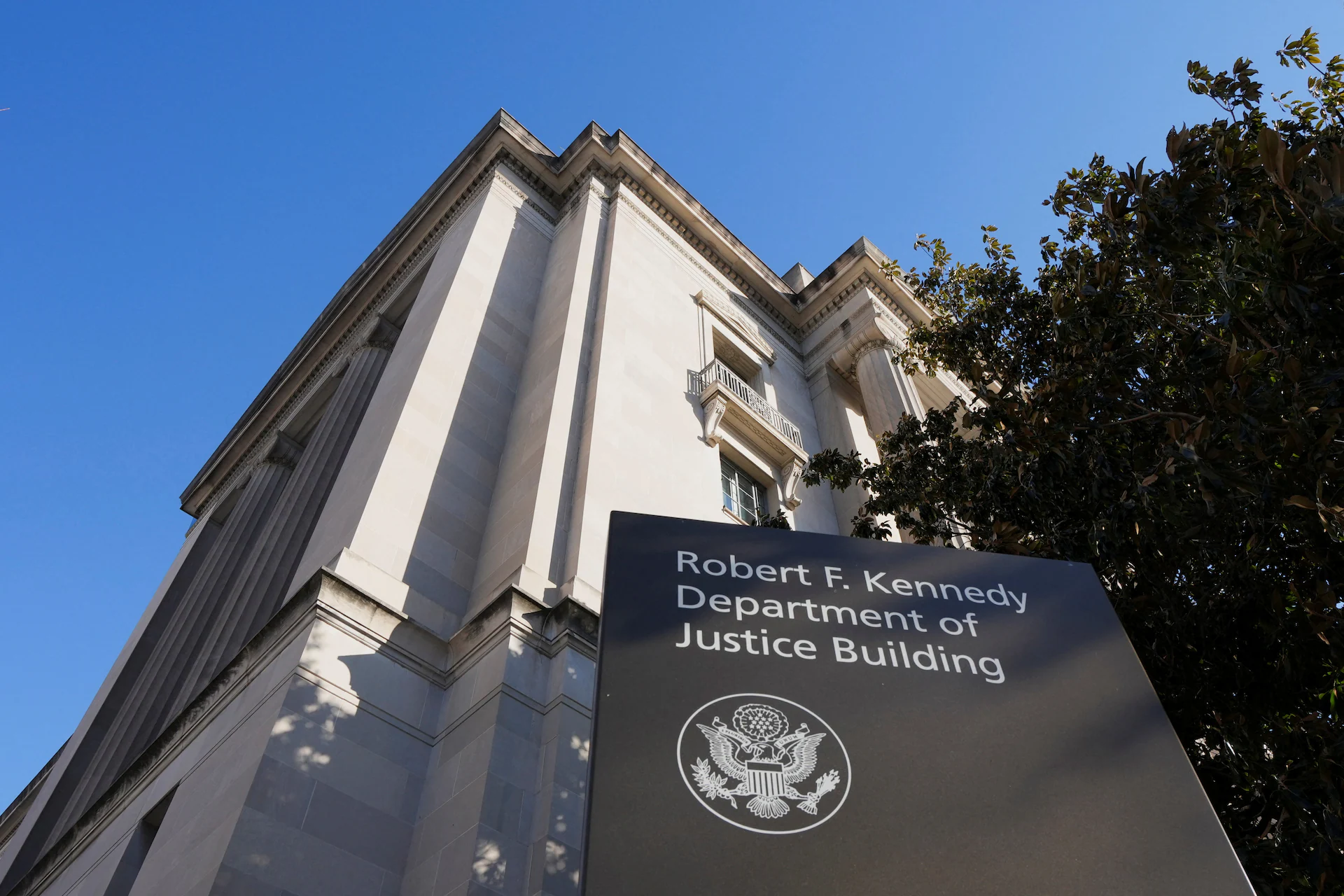
Recent news about the federal government attempting to revive this long-unused process, including a recent DOJ filing seeking to invoke the ATRC in a specific removal case, has pushed an obscure statute into the spotlight. So let’s do the civic-education version of that spotlight: not a hot take, not a recap, but a clear explanation of what this court is, why Congress created it, and how the Constitution’s due process guarantees still constrain it.
Join the Discussion
The short definition
The Alien Terrorist Removal Court is a specialized federal court process created by Congress in 1996 to decide one narrow question: whether a noncitizen (an “alien” in the statute’s terminology) should be removed from the United States on terrorism grounds when the government wants to rely on classified information it says cannot be disclosed in the usual way.
It is not the ordinary immigration court system (which sits in the Executive Branch). It is a federal-judge-supervised process outside the regular immigration courts designed for cases where the government claims, in effect: “We can prove this person is connected to terrorism, but the evidence is too sensitive to litigate openly.”
Statutory anchor: the ATRC comes from the Antiterrorism and Effective Death Penalty Act of 1996 (AEDPA) and is generally codified at 8 U.S.C. §§ 1531–1537.
Key facts
- Created: 1996 (AEDPA)
- U.S. Code: 8 U.S.C. §§ 1531–1537
- Purpose: terrorism-based removal when the government says key proof is classified
- Who starts it: the Attorney General under the ATRC statute (distinct from DHS, which handles most day-to-day immigration arrests and removal enforcement today)
- Who hears it: five federal district judges, publicly designated by the Chief Justice of the United States (8 U.S.C. § 1532(a)). Like the FISA Court, it is a statutory, specialized tribunal staffed by Article III judges designated to serve
- Standard of proof: the government must establish removability by a preponderance of the evidence (8 U.S.C. § 1534(c)(5))
- What the person receives: notice of allegations plus whatever unclassified summaries or substitutions the court orders in place of the classified material itself
- Where appeals go: review runs exclusively to the U.S. Court of Appeals for the District of Columbia Circuit (8 U.S.C. § 1535)
- Public use: historically rare. Public reporting and government-background materials discussing the statute generally describe it as seeing little to no real-world use for long stretches, which is why it is commonly called “dormant”
Where it came from
Congress created the ATRC in the mid-1990s, when terrorism and domestic security were central to federal policymaking. The legal problem lawmakers were trying to solve was not subtle:
- Removal cases are civil proceedings, not criminal trials.
- The government sometimes gathers intelligence it claims cannot be revealed without compromising sources or methods.
- Even in ordinary immigration court, evidentiary rules are looser than in criminal court, but the respondent still typically needs enough access to the case to mount a meaningful challenge.
The ATRC was designed as a compromise: keep the decision in a judge-supervised forum, while authorizing procedures meant to protect classified information.
Article III status
Yes in the way that matters for civics: the ATRC uses life-tenured Article III federal judges exercising federal judicial power in a specialized setting. As with other statutory specialty courts, the key point is not that it is “less constitutional.” Congress can ordain and establish lower federal courts. The key distinction is scope: the ATRC is not a court of general jurisdiction. It is a narrow forum for a specific kind of terrorism-based removal application involving classified information.
The often-made comparison to the FISA Court is about structure, not mission: both are specialized processes created by statute and staffed by designated Article III judges, and both can involve proceedings that are not fully public because they deal with sensitive national-security material.
How a case gets in
The ATRC is not a walk-in courthouse for the public. It is triggered by the Executive Branch. In simplified terms, the Attorney General files an application seeking removal of a noncitizen on terrorism-related grounds and asks to rely on classified information under protected procedures.
A quick, concrete way to picture it:
- The Attorney General initiates the case by filing the removal application under the ATRC statute.
- The government identifies the classified material it wants the judge to consider.
- The judge reviews the classified material and decides what can be disclosed, including whether the respondent will receive unclassified summaries or substitutions rather than the underlying classified content.
- The respondent, with counsel if they retain one, contests removability using the information they are permitted to see and the legal arguments available to them.
- If the court orders removal, the statute channels review to the D.C. Circuit (8 U.S.C. § 1535), with the practical reality that broader immigration judicial-review doctrines and later amendments can still shape the litigation posture.
That front door matters. The same federal government that enforces immigration law also controls whether this exceptional track is invoked. In most modern removal work, DHS is the day-to-day enforcement agency. The ATRC is different because Congress wrote it so that the Attorney General is the one who applies to the court.
Why it stayed quiet
If Congress created this court in 1996, why do so many people only learn about it when a headline appears?
There are a few practical reasons a statute like this can remain a legal backwater for years:
- Ordinary immigration tools usually work. The government already has multiple terrorism-related inadmissibility and removability grounds in the Immigration and Nationality Act.
- Criminal prosecution is often preferred. If evidence is admissible and strong, prosecutors may choose criminal charges rather than a deportation-only forum.
- Classified-evidence litigation is hard. Even with protective procedures, using intelligence in adjudication can trigger disclosure fights and appeals.
- Legal risk. Any special process invites due process challenges.
So when people call the ATRC “dormant,” read that as practical reality, not magic. It generally means the government has rarely chosen this route compared with the ordinary system, not that the statute vanished.
Inside or outside immigration court
In most cases, removal happens in ordinary immigration court. But U.S. law has long included exceptions, accelerated procedures, and national-security tracks.
The ATRC is one of those tracks. It exists because Congress anticipated cases where the government would argue that proceeding normally would force disclosure of classified information it does not want to reveal.
That said, “not ordinary immigration court” does not mean “no process.” The real constitutional question is whether the procedures satisfy due process.
Due process still applies
Immigration law lives in the space where people assume constitutional rights are either total or nonexistent. The truth is messier.
Noncitizens inside the United States generally have due process protections. The analysis can look different at the border or for someone treated as “seeking entry” under the law’s entry doctrines. But for a person physically present in the country, the government cannot deprive them of liberty without some meaningful process.
Due process is not a single checklist. Courts often describe it as context-sensitive. In many settings that looks like balancing the private interest, the government’s interest, and the risk of error created by the procedures used. Immigration cases do not always map neatly onto a single formula, especially across admission versus removal contexts, but the central idea still holds: procedure must be fair enough to reduce the risk of mistaken outcomes.
The ATRC exists because Congress tried to rebalance that equation in terrorism-linked cases by protecting sensitive intelligence. The constitutional tension is obvious: protecting information can also make it harder for the targeted person to contest the government’s claims.
The classified evidence problem
If you want to understand why the ATRC is controversial in principle, focus on one question: How do you defend yourself against evidence you cannot see?
In criminal court, the Sixth Amendment’s confrontation rights and the broader structure of criminal procedure push strongly toward open evidence and adversarial testing. Deportation is different. It is civil, and immigration adjudication already allows forms of evidence and procedure that would be unusual in a criminal trial.
The ATRC goes further by design. It allows the government to present classified information to the judge while limiting what the respondent can access. In practice, the respondent may be given an unclassified summary or substitute that describes the government’s allegations without revealing sources and methods, while the judge reviews the classified record directly. The deprivation is about access to the underlying material, not necessarily total ignorance of the government’s theory. But the due process pressure point is the same: a summary that is too thin can make a hearing feel formal without being meaningful.
What rights apply
Even in this specialized setting, baseline protections still matter:
- Notice of the allegations and the legal grounds the government is invoking.
- An opportunity to be heard, including presenting evidence and legal argument.
- Counsel (generally at the person’s expense in immigration matters).
- A neutral decision-maker, here an Article III judge designated to the ATRC.
- Review as provided by statute, routed to the D.C. Circuit (8 U.S.C. § 1535).
Two clarifications help keep expectations realistic. First, the statute’s core design assumes the judge can see more than the respondent can see. Second, the “special advocate” question is not just a policy debate here. The ATRC statute does provide a cleared special attorney who can challenge the classified evidence in certain circumstances, including when the respondent is a lawful permanent resident (8 U.S.C. § 1534(e)(3)). That is a major due process distinction because it creates an adversarial check on the classified record even when the respondent cannot fully access it.
Power and rights
The federal government’s power over immigration is broad, tied to sovereignty and foreign affairs. Courts often give the political branches substantial deference in this area.
But deference is not a blank check. The Constitution’s Due Process Clause still limits what procedures the government can use when it seeks to remove someone who is physically present in the country.
The ATRC makes that collision visible. The government asserts a national security interest. The individual asserts a basic rule of fairness: you should not lose your right to remain based on evidence you cannot effectively challenge.
Why it matters
Most Americans will never interact with immigration court, and even fewer will ever hear about the ATRC. But the constitutional lesson travels.
When government creates a special procedure for a feared category, whether “terrorism” or some future label, the question is rarely whether the government has power. It usually does.
The question is what process is required before that power can be used, and whether the procedures are designed to find the truth or merely to produce an outcome.
A rarely used court coming back into view is a reminder that the U.S. legal system has more than one track. Some tracks are ordinary, familiar, and adversarial. Others are built for exceptional circumstances. The Constitution is supposed to matter in both.
Quick FAQ
Is the ATRC the same as immigration court?
No. Ordinary immigration courts are part of the Executive Branch. The ATRC is a specialized statutory court process staffed by Article III federal district judges designated by the Chief Justice under 8 U.S.C. § 1532(a) for terrorism-linked removal applications involving classified information.
Can the government deport someone using secret evidence?
In certain national security contexts, the government can seek procedures that limit disclosure of classified information. The respondent may receive an unclassified summary or substitute rather than the underlying classified material, while the judge reviews the classified record. Whether that satisfies due process depends on the safeguards, including whether the court requires adequate substitutions and, in some cases, whether a cleared special attorney can test the classified evidence.
Does the Constitution protect noncitizens?
Many constitutional protections apply to “persons,” not only citizens. Due process is a key example, especially for noncitizens physically present in the United States. The analysis is different in admission and border contexts.
What law created the ATRC?
The Antiterrorism and Effective Death Penalty Act of 1996 (AEDPA), generally codified at 8 U.S.C. §§ 1531–1537.