
Most people imagine the criminal process begins with a dramatic trial. In real life, it often starts with something quieter and more consequential: an arraignment hearing.
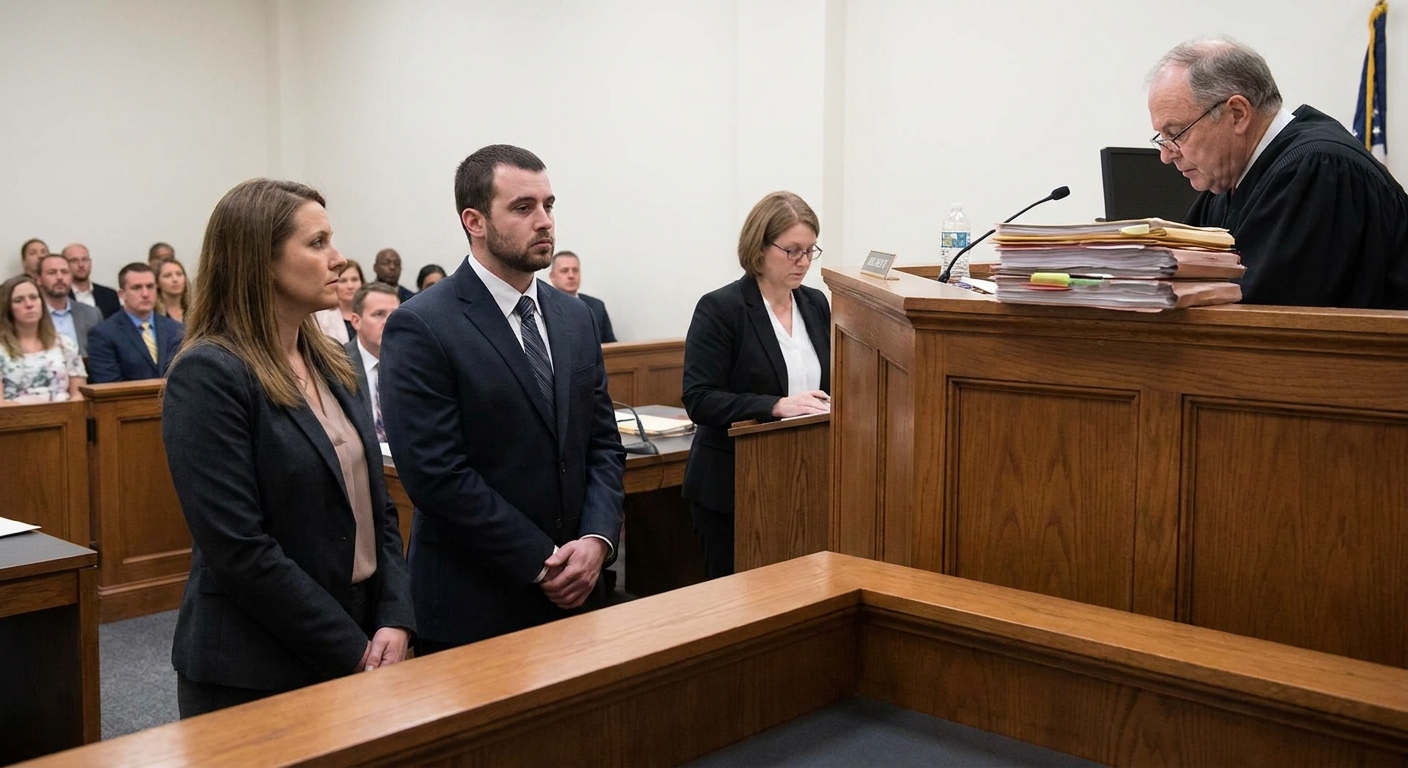
An arraignment is a formal court appearance where criminal charges are put on the record and the case officially moves into the court system. It is not a trial and it is not where guilt gets decided. It is the moment the court confirms who you are, tells you what you are charged with, records your response (your plea), and sets the rules for what happens next.
One important caveat: terminology and timing vary by jurisdiction. In many places, the first court appearance after arrest is called an initial appearance or first appearance, and the arraignment can happen later, especially in felony cases or after an indictment.
Join the Discussion
The basic definition
An arraignment hearing is a court proceeding where, typically:
- the judge ensures the defendant understands the charges
- the defendant is advised of key rights, including the right to counsel
- the defendant enters a plea, often not guilty at this stage
- the court may decide, review, or confirm release conditions, including bail, conditions of release, or pretrial detention
- future dates are set, such as a preliminary hearing, motion deadlines, or trial scheduling
Arraignments are usually brief. That does not mean they are minor. The decisions addressed here can determine whether someone goes home, stays in jail, or lives under strict conditions while the case moves forward.
Where arraignment fits
Arraignment sits near the beginning of a case, but the path to get there differs depending on whether you are in state court or federal court, and whether the charge is a misdemeanor or felony.
Here is a simplified, typical sequence. Your local court may combine steps, rename them, or schedule them differently, especially depending on whether you are in custody.
A common timeline in state court
- Arrest or citation
- Booking and initial custody decisions
- Initial appearance/first appearance (in many places, where rights and release may be addressed)
- Charges filed by a prosecutor (complaint, information, or indictment depending on the system)
- Arraignment in front of a judge (formal notice of charges and plea)
- Pretrial hearings, motions, discovery, negotiations
- Trial or plea
- Sentencing if there is a conviction or guilty plea
A common timeline in federal court
Federal cases add a few procedural layers, including appearances before a magistrate judge and the possibility of an indictment by a grand jury.
- Complaint or indictment
- Initial appearance (often includes advice of rights and detention or release arguments)
- Detention hearing (sometimes separate)
- Arraignment (formally presenting the indictment or information and taking a plea)
- Pretrial motions, discovery, plea discussions
- Trial or plea, then sentencing
The labels vary by jurisdiction, but the constitutional ideas underneath are consistent: notice of the accusation, counsel, and fair pretrial procedures.
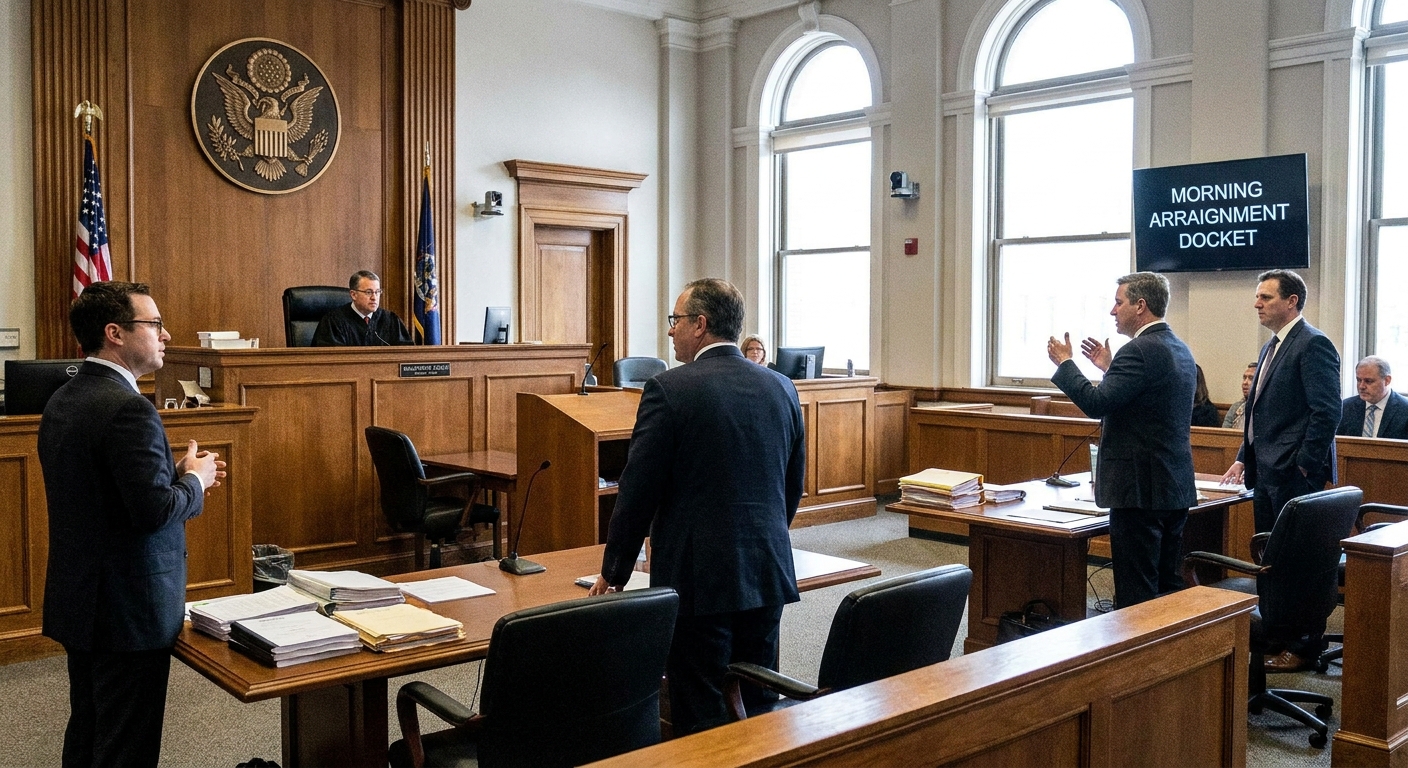
What happens at arraignment
Specific steps vary by court, but most arraignments follow a familiar script.
1) The court confirms identity
The judge calls the case, confirms the defendant’s name, and ensures the right file is in front of the right person. This may sound administrative, but it matters. Arraignment is a formal checkpoint for accuracy.
2) The judge states the charges
The court states what the government alleges. Sometimes the judge reads the charge titles. Sometimes the judge summarizes them. In many places, the charging document is also provided in writing.
3) The defendant is advised of rights
This is the part people rarely see in movies: the judge explaining core rights that apply throughout the case.
4) The defendant enters a plea
Common pleas at arraignment are:
- Not guilty (most common at the first plea entry)
- Guilty (less common and often not advisable without counsel)
- No contest (nolo contendere, where permitted)
A not guilty plea preserves all defenses and triggers the pretrial process, including discovery and motion practice. It is not a denial speech. It is a legal posture that says, “make the government prove it.”
In some courts, a defendant can also “stand mute,” and the court enters a not guilty plea on their behalf. Practices vary.
5) Release conditions may be addressed
Depending on the jurisdiction and what has already happened at an earlier hearing, the court may:
- release the defendant on their own recognizance (no money bail)
- set bail or a bond amount
- impose conditions such as no-contact orders, travel restrictions, monitoring, or drug testing
- order pretrial detention in limited circumstances permitted by law
In many places, the biggest real-world outcome tied to arraignment season is not the plea. It is whether you go home, and under what conditions. In other places, those decisions are handled primarily at an initial appearance, and arraignment is more narrowly focused on notice and plea.
6) The court sets next dates
The judge may set:
- a preliminary hearing date (in some felony cases)
- a pretrial conference
- deadlines for discovery and motions
- a trial date or scheduling date
7) It may happen by video
Many courts now use remote or video arraignments for at least some cases. That can change the feel of the proceeding, but the core purpose is the same: formal notice of charges, counsel, plea, and the next steps.
Rights that matter
Arraignment is not just a calendar event. It is one of the earliest points where constitutional protections become visible and practical in the courtroom.
Notice and due process
The idea that the government must tell you what it is accusing you of is foundational to due process. You cannot defend yourself against a mystery.
At the federal level, the Sixth Amendment guarantees that the accused shall “be informed of the nature and cause of the accusation.” State constitutions and criminal rules mirror that requirement, and the Fourteenth Amendment’s due process clause is what applies core fairness principles to state criminal proceedings.
The right to counsel
The Sixth Amendment right to counsel attaches at “critical stages” of a criminal prosecution. Arraignment is often treated as one of those moments because decisions made here can shape the rest of the case, especially release conditions and early plea posture.
If a defendant cannot afford an attorney, courts generally must appoint counsel in cases that can result in incarceration. In many systems, the constitutional line is tied to actual imprisonment (and certain suspended sentences that can lead to jail if violated). Gideon v. Wainwright (1963) is the landmark Supreme Court case behind the principle that a lawyer is not reserved for those who can pay.
Bail and the Eighth Amendment
The Eighth Amendment prohibits excessive bail. That does not mean bail must be offered in every case. It means when bail is set, it cannot be used as a pretrial punishment disguised as a number.
Preventive detention can also be lawful under certain frameworks. For example, federal law permits detention in limited circumstances based on flight risk and danger to the community, and the Supreme Court upheld that approach in United States v. Salerno (1987).
In practice, bail arguments turn on factors like flight risk, public safety, and the court’s confidence that the defendant will return. Many states have also reformed bail systems to reduce reliance on cash bail, especially for low-level offenses.
The right against self-incrimination
The Fifth Amendment protects against compelled self-incrimination. Arraignment is not the time to explain your side of the story on the record. That is what lawyers are for and what motions and trials are designed to test.

Arraignment vs. other hearings
People often mix up arraignment with other proceedings that happen close in time. The names can overlap, but the functions differ.
Arraignment vs. initial appearance
An initial appearance is often the first time a defendant appears before a judge after arrest. The judge may address counsel, rights, and release. In some places, that hearing also functions as the arraignment. In others, arraignment happens later after charges are filed in a particular form (such as an information or indictment).
Arraignment vs. preliminary hearing
A preliminary hearing is usually a felony-stage hearing where the judge decides whether there is enough evidence, often called probable cause, to move the case forward. Witnesses may testify. That is not what arraignment is for.
Arraignment vs. indictment
An indictment is a charging document issued by a grand jury (federal and some state systems). Arraignment is the court appearance where that indictment is formally presented and a plea is taken.
What to do and avoid
This is general educational information, not legal advice. If you are facing charges, talk to a licensed defense attorney in your jurisdiction.
Do
- Show up. Missing arraignment can trigger a bench warrant.
- Ask for counsel. If you do not have a lawyer, request one.
- Listen carefully. Conditions of release, especially no-contact orders, can be easy to violate accidentally.
- Confirm next dates. Write them down and make sure you understand what each date is for.
- If you are not a U.S. citizen, say so to your lawyer. Pleas and convictions can carry immigration consequences, and it is important to get advice tailored to your status.
Do not
- Argue the facts of the case in open court without counsel.
- Contact alleged victims or witnesses if any no-contact condition is in place or likely to be imposed.
- Assume bail equals freedom. Bail is only one part of release. Conditions can be just as binding.
Why it matters
Arraignment is one of the points where a criminal case stops being only a police event and becomes a court-managed constitutional process. The government’s accusation is formally stated. The defendant’s rights are formally invoked. And the court decides what liberty looks like while the case is pending, whether that means release, restrictions, or detention under the rules that apply in that jurisdiction.
It is also where a quiet truth becomes visible: in America, you do not need to be convicted to lose your freedom for a time. Pretrial detention, conditions of release, and the pressure to plead early can reshape a case long before any jury is sworn.
If you want to understand how the criminal justice system actually works, start here. The arraignment hearing is the front door.
Quick questions
How long does an arraignment take?
Many arraignments last only a few minutes per case, especially on busy dockets. More time may be spent waiting than speaking.
Can charges change after arraignment?
Yes. Prosecutors may amend charges as evidence develops, plea negotiations occur, or a grand jury returns an indictment. Courts typically require notice and follow procedural rules for changes.
Can you plead guilty at arraignment?
Often yes, but it may not be wise without counsel and without understanding the consequences. A guilty plea can waive important rights and trigger immediate sentencing or later sentencing hearings. It can also have collateral consequences, including immigration consequences for noncitizens.
If you are out on bail, do you still have to go?
Yes. Release does not excuse appearances. Skipping court can lead to a warrant and loss of bond.