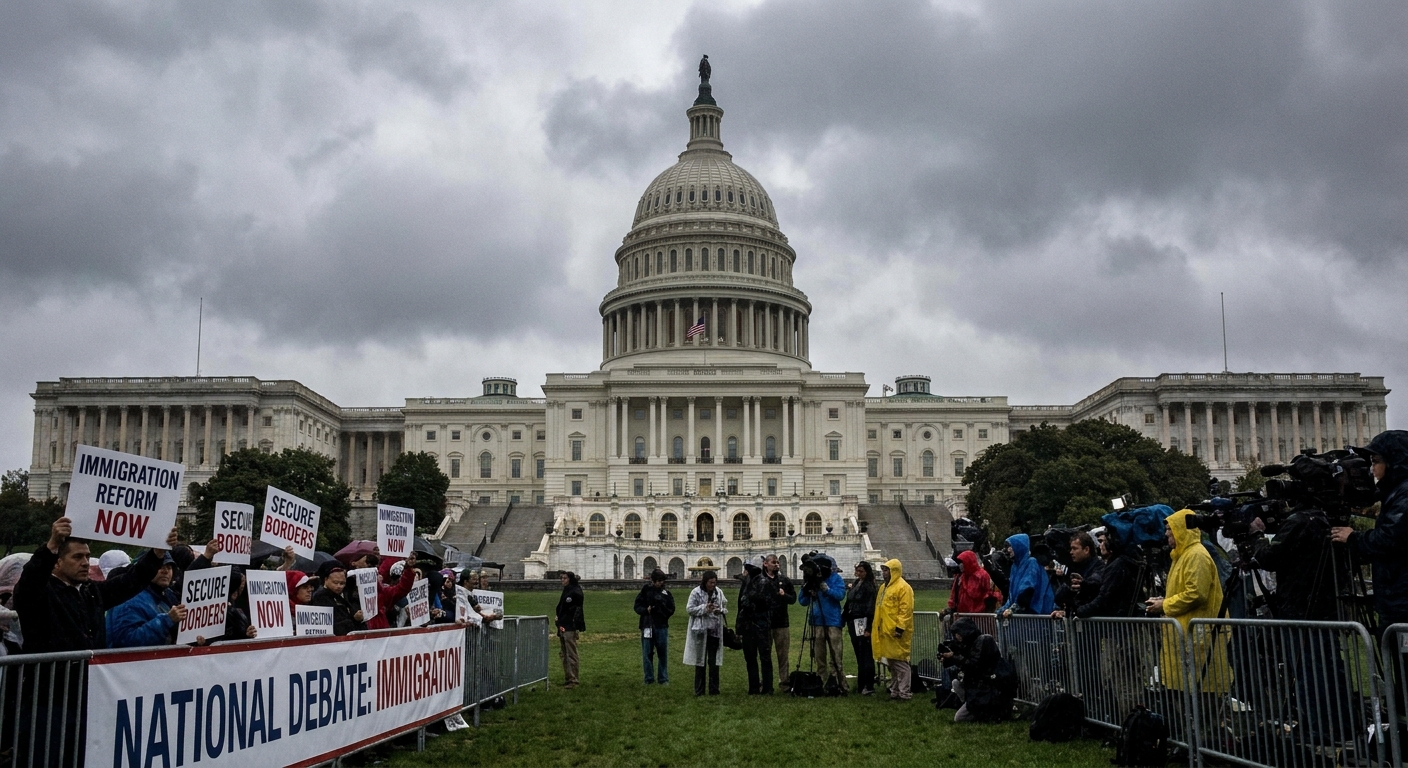
DACA is one of those programs that feels like it should be simple. Young people brought here as children apply, undergo background checks, meet criminal-disqualification criteria, work legally, and live with a reduced risk of removal during the deferral period. It has existed for years. Hundreds of thousands of recipients, and the families, schools, and employers around them, have built lives around it.
And yet, it has always had a built-in legal vulnerability hiding in plain sight: it was created by the executive branch, not by Congress. That is why DACA can be expanded, narrowed, frozen, or terminated through the same executive machinery that created it, although any change is constrained by statutes, the Administrative Procedure Act, and sometimes court injunctions. It is also why DACA keeps showing up in federal court.
Join the Discussion
What DACA does
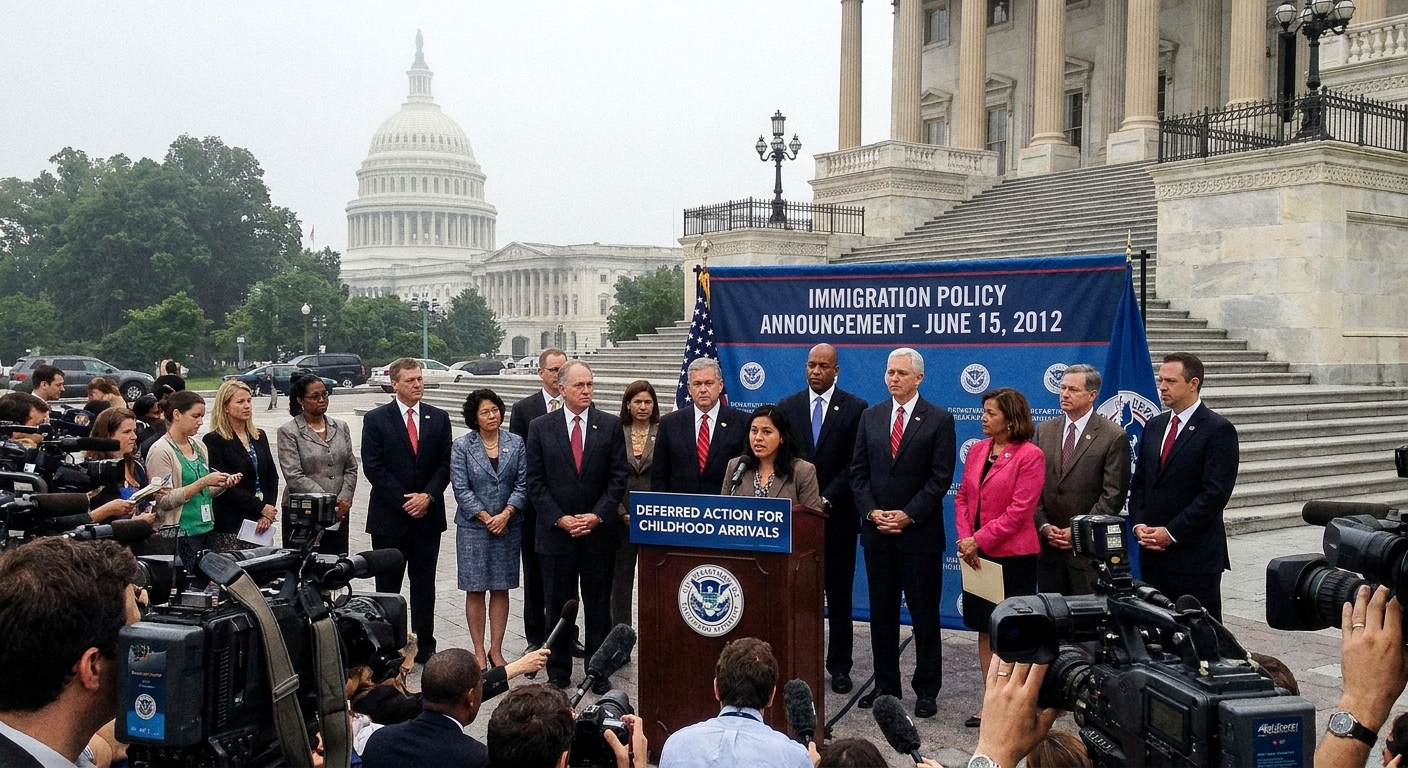
DACA stands for Deferred Action for Childhood Arrivals. It was announced in June 2012 by the Department of Homeland Security during the Obama administration, through a DHS memorandum often associated with then-Secretary Janet Napolitano.
DACA does not create lawful immigration status. It does something narrower and, in constitutional terms, more executive-friendly: it tells immigration officials to defer removal for a category of people as a matter of enforcement priority, typically in two-year increments.
Who qualifies
Eligibility has specific requirements, including arriving in the United States before age 16, meeting continuous-residence and physical-presence rules tied to 2007 and 2012 cutoffs, and satisfying education or military-service criteria. Applicants also must meet additional guidelines and are screened for disqualifying criminal history and other factors.
Core benefits
- Deferred action, meaning DHS treats the person as a low priority for removal during the deferral period.
- Work authorization (an employment authorization document) for many recipients, which can enable Social Security numbers and broader participation in the formal economy. The legal basis for this is a major point of dispute, because employment authorization flows through existing statutory and regulatory provisions rather than a DACA-specific statute.
- Advance parole has been available more broadly in some periods, allowing limited travel and reentry with prior permission. It has never been automatic. It is discretionary, and agency policies around it have shifted and tightened at different times.
Those pieces matter because they reveal the legal tension. Deferring removal looks like classic enforcement discretion. Work authorization looks more like a durable benefits program. DACA mixes both, and that mix is where the lawsuits live.
Why DACA is controversial
If you want the constitutional version of the DACA debate, start with a basic question: who gets to set immigration policy?
The Constitution does not contain a neat “immigration clause.” Instead, immigration authority is assembled from multiple sources: Congress’s power over naturalization, the federal government’s control of foreign affairs, and the executive branch’s responsibility to enforce the law.
Congress: writing the rules
Congress has the power to create immigration categories, eligibility criteria, and paths to lawful status. That includes the authority to grant relief like lawful permanent residence or citizenship, and to set the terms of work authorization.
Congress has repeatedly considered, but not enacted, the DREAM Act and related proposals that would create a statutory solution for many DACA-eligible individuals. That is also why DACA is often mentioned alongside the DREAM Act but is not the same thing: DACA is temporary, executive-created deferred action; the DREAM Act would be a statute with a defined path.
The president: enforcing the rules
Article II requires that the president “take Care that the Laws be faithfully executed.” That clause is why presidents cannot simply suspend statutes they dislike. But it is also why the executive branch inevitably exercises discretion. Immigration law is vast. Resources are limited. Not everyone who is removable will be removed.
DACA sits inside that reality. The legal fight is over whether DACA is an acceptable use of enforcement discretion, implemented through lawful administrative procedures, or an end-run around Congress.
Deferred action and discretion
Federal agencies make enforcement choices all the time. Immigration enforcement, in particular, has always involved priorities: who gets a notice to appear, who gets detained, who gets removed, and who gets time.
That general principle is often described as prosecutorial discretion, and in immigration it shows up as deferred action, stays of removal, parole authority, and other tools that allow DHS to manage limited resources and humanitarian concerns.
DACA’s defenders emphasize that it is, at bottom, a policy of prioritization: DHS is choosing to focus on people who pose threats rather than people who arrived as children and meet strict guidelines.
DACA’s critics respond that DACA is not merely prioritization. The program includes a large, identifiable class, a formal application system, and benefits like work authorization. In their view, that resembles legislation more than case-by-case discretion.
Related programs also matter for context. DACA is distinct from DAPA (Deferred Action for Parents of Americans and Lawful Permanent Residents), a later Obama-era initiative that was blocked in court and never implemented.
Key legal issues
1) Executive power vs. legislation
The Constitution draws a line between making law and executing law. Congress makes the law. The executive enforces it. When an executive policy begins to look like a broad rewrite of statutory rules, courts become more willing to say the executive crossed the line.
That line is not always bright. DACA’s scale and structure are why it is repeatedly described as legally fragile. It was never passed through Congress, so it never gained the kind of democratic legitimacy and durability that statutes enjoy.
2) The Administrative Procedure Act
Most of the major DACA litigation has run through the Administrative Procedure Act (APA), not directly through a single, decisive constitutional ruling. Put simply, the APA is the federal law that governs how agencies make major policies and how courts review them.
The APA requires procedures and reasoned explanations, and it allows courts to set aside agency action that is “arbitrary and capricious” or contrary to law.
That is why the most consequential court rulings about DACA often turn on questions like:
- Was DACA a kind of rule that required notice and comment?
- Did DHS adequately explain its reasoning when trying to end or revise it?
- Did the agency consider reliance interests, meaning the real lives built around the program?
3) Equal protection
Some challenges and defenses also invoke equal protection principles, especially when immigration enforcement priorities appear to target or burden specific groups. These claims are difficult and fact-specific, and courts often resolve DACA cases on administrative grounds first.
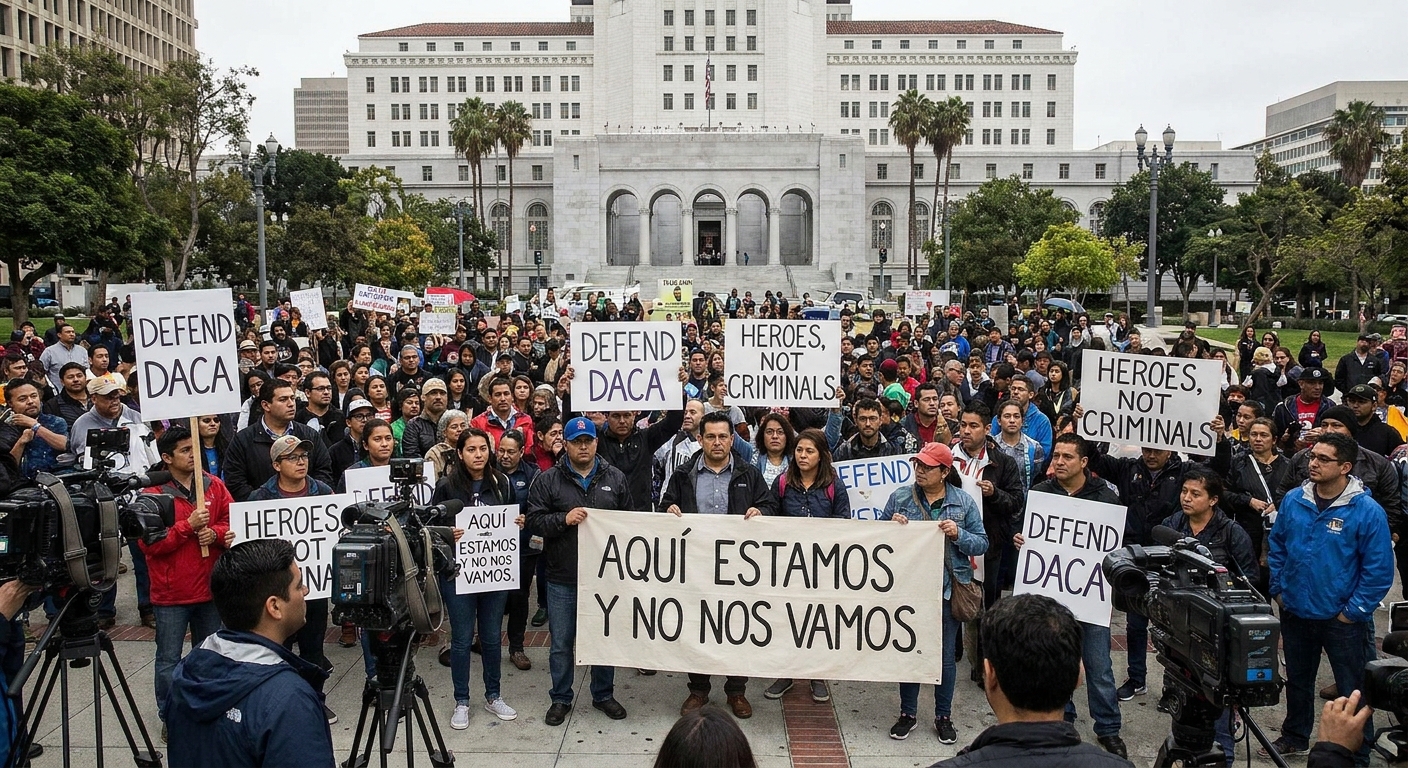
Supreme Court: Regents (2020)
The Supreme Court’s 2020 decision in Department of Homeland Security v. Regents of the University of California is often misunderstood. The Court did not hold that DACA was permanently protected, and it did not decide DACA’s underlying legality. It held that the Trump administration’s attempt to rescind DACA, as executed at that time, violated the APA because it was inadequately reasoned and therefore arbitrary and capricious.
In other words, the Court said: you cannot end a program of this magnitude with a thin explanation that fails to grapple with reliance interests and plausible alternatives.
The Court also made clear that rescission might be possible if done with proper reasoning and procedure. That distinction matters because it means DACA’s survival has depended as much on administrative law craftsmanship as on constitutional theory.
Why courts freeze DACA
After 2020, DACA returned to the lower courts. Several rulings have concluded, in varying forms, that the original 2012 policy was unlawful, often focusing on the claim that it exceeded DHS’s authority or violated the APA’s procedural requirements.
The most prominent post-2020 litigation has run through federal courts in Texas and the Fifth Circuit, where orders have often allowed current recipients to renew while restricting the government from granting DACA to first-time applicants.
Where things stand
As of May 23, 2026, the practical posture for most people has remained familiar: renewals have generally continued for existing recipients, while new applications have largely remained blocked or unprocessed due to ongoing litigation and court orders. The details can shift based on new rulings and DHS operational guidance, which is why status updates tend to be time-sensitive.
Those rulings have led to outcomes that look like this:
- Renewals allowed for existing recipients in many periods.
- New applications blocked during significant stretches of litigation.
- DHS attempts to fortify DACA through more formal rulemaking, which then becomes part of the legal battleground.
This is the practical effect of having a major national policy built on executive action. Every administration inherits a program that is both powerful and vulnerable.
What Congress can do
Courts can decide whether an agency acted lawfully. They cannot provide what DACA recipients have always lacked: a stable statutory status.
Only Congress can create a durable, national framework that answers the questions DACA was never designed to settle:
- Who qualifies for permanent relief?
- Is there a path to lawful permanent residence and citizenship?
- What happens to people who arrived as children but do not meet DACA’s guidelines?
- What enforcement priorities should exist alongside relief?
This is why the DACA story is, at its core, a civics lesson. The constitutional system is doing what it often does when Congress avoids a hard issue: the executive improvises, and the judiciary reviews the improvisation through the tools it has, especially administrative law.
Common questions
Is DACA a constitutional right?
No. DACA is a policy created by the executive branch. It is not a right stated in the Constitution or created by statute. That is why it can change with elections, agency decisions, and litigation.
Does DACA give lawful status?
No. DACA provides deferred action and, for many recipients, work authorization. It does not itself create lawful permanent residence or citizenship.
Why can presidents change it?
Because DACA was created by executive action. Executive-created programs are typically easier for later executives to revise or end than laws passed by Congress. The constraint is that changes still must comply with statutes, existing regulations, and APA requirements, and they can be halted by court orders.
Why do courts care about reliance interests?
Because administrative law requires agencies to be rational and to explain themselves. When a government policy induces people to take life-shaping steps like getting degrees, jobs, mortgages, and professional licenses, the government must acknowledge those consequences when it reverses course.
The bigger lesson
DACA exists because the American constitutional system is built to make law slowly. That slowness is a feature when it prevents sudden swings in fundamental rules. It becomes a bug when large numbers of people need clarity and Congress cannot or will not act.
If you want to understand why DACA keeps teetering, do not start with partisan slogans. Start with structure. DACA is what happens when a major national question is pushed into the space between branches, where executive power is real but not permanent, and where courts can police procedure without resolving the underlying policy dispute.