When people tell me voting used to be “simpler,” I always want to ask: simpler for whom?
A century ago, the act of voting could be surprisingly public, heavily mediated by party power, and shaped by rules that made it easier for some citizens and far harder for others. In 1926, Calvin Coolidge was in the second year of his elected term, Prohibition was firmly in place, and the country was still adjusting to a major constitutional change: women’s suffrage was only six years old.
So let’s take a clear-eyed walk through what voting often looked like around 100 years ago, and which election rules from that era can feel genuinely unfamiliar now.
Join the Discussion
Women were new to voting
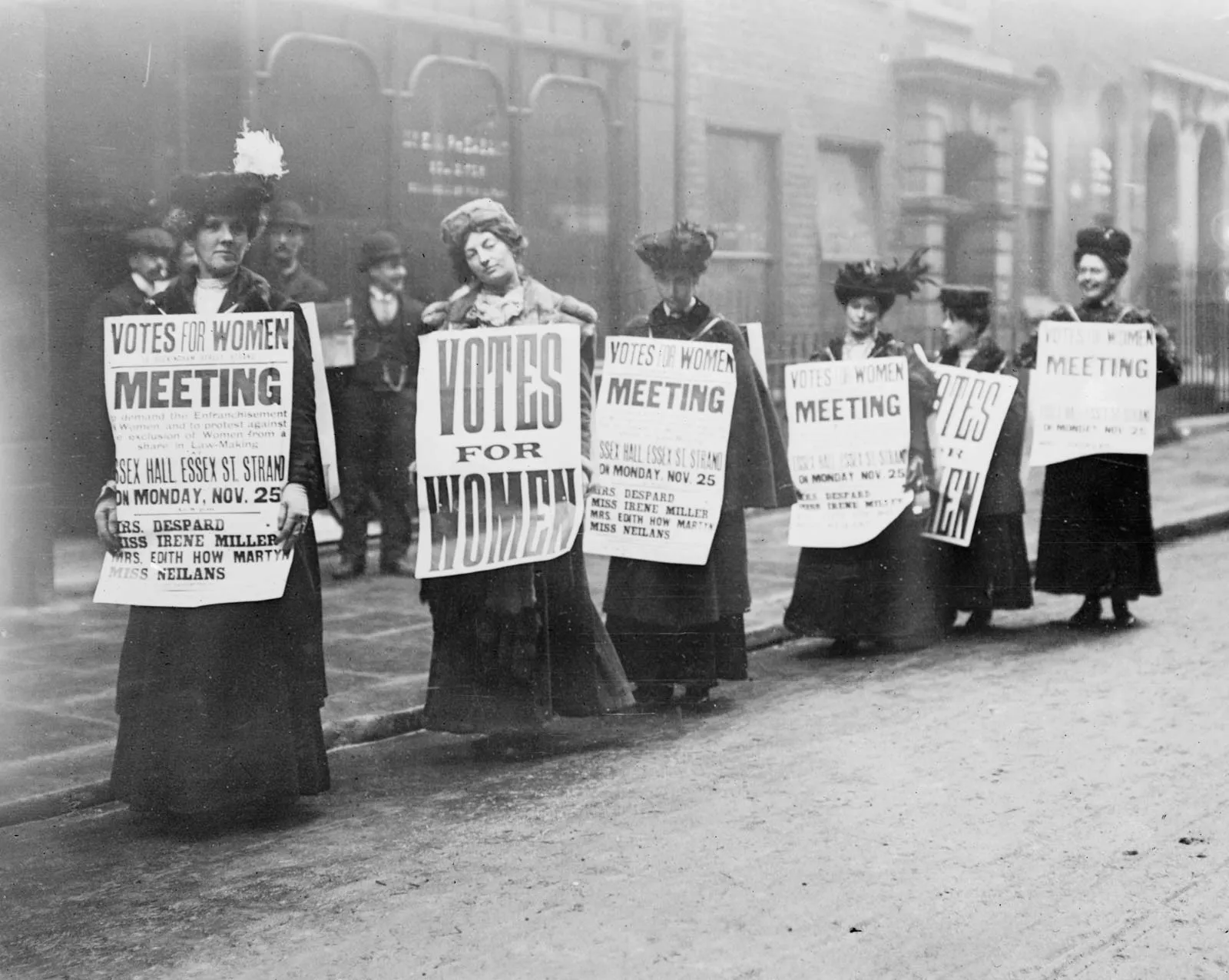
The 19th Amendment was ratified in 1920, banning denial of the vote “on the basis of sex.” In other words, by the mid-1920s, women’s voting rights were still new enough to feel unfamiliar in many communities.
And participation did not immediately match the size of the newly eligible electorate. In the 1920 election, about 35% to 45% of eligible women turned out to vote.
That number reflects something we still see today: the right to vote on paper does not automatically remove the practical barriers that keep people away. In the 1920s, those barriers were often built into the rules and practices of voting, and they weighed especially heavily on people of color.
Voting was not always private
One detail that can surprise modern voters is how “out in the open” early voting practices could be. In the earliest American elections, officials recorded votes in polling books alongside voters’ names and addresses. Later, paper ballots became more common, but secrecy was not guaranteed. Ballots might be placed into containers as visible as glass jars, which were not exactly the most top-secret of locations.
At the polls, it was also common to encounter political party representatives in the immediate voting area. Their presence could range from ordinary electioneering to intimidation and fraud intended to sway elections.
Today, we treat ballot secrecy as a basic protection. A century ago, the culture and mechanics of elections often did not deliver that same shield, especially for voters who were already vulnerable to coercion.
Machines changed the process
In the late 1800s, voting machines began to become popular in large cities. The first voting machine was patented in 1875. In 1910, Lenna R. Winslow received a patent for a voting machine that changed the ballot depending on the voter’s gender. The idea became effectively obsolete after the ratification of the 19th Amendment.
Lever machines and party-line voting
By the 1920s, most voters in large cities would have used Jacob H. Myers’ mechanical lever voting machines. These were not touchscreen devices. Voters pulled down large levers to mark ballots.
What would feel especially foreign to many voters today is that the machines made it possible to vote a straight party line. You could choose each contest one by one, or vote entirely in line with one political party.
The machines were usually kept in town halls and hidden within booths, and people stepped through curtains to cast their votes. Pulling the curtain open reset the machine for the next voter, though users were unaware that the machines worked this way. After the process was complete, the machines would open, revealing the results.
They were also expensive and imperfect: voting machines typically cost thousands of dollars, were not always reliable, and could be rigged relatively easily, resulting in miscounts.
Paper ballots lingered
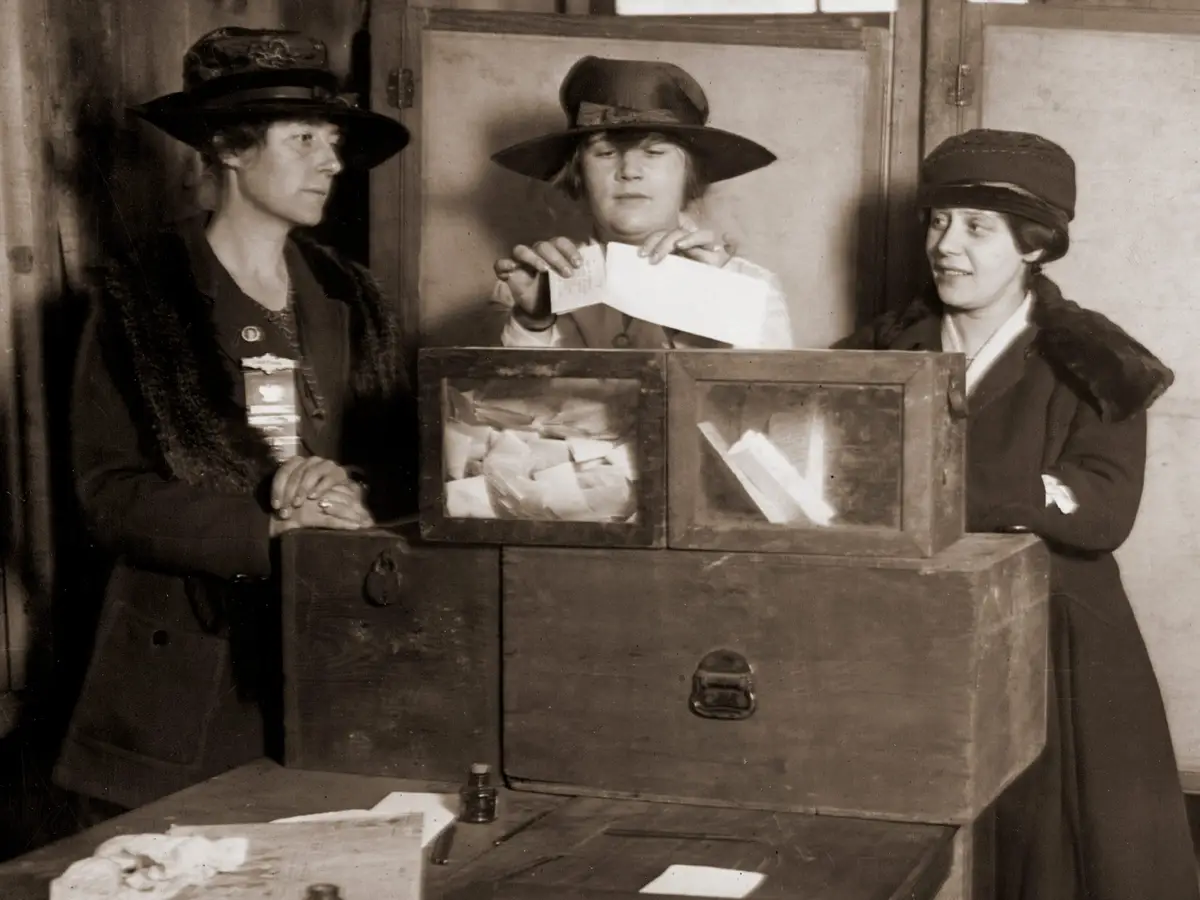
Even as cities leaned into machines, plenty of smaller towns and remote areas kept using paper ballots well into the mid-20th century. In some communities, paper ballots continued until the 1950s.
Those ballots were hand-counted by local election officials, and the counting locations could be startlingly informal by today’s standards. Hand counts might take place in local stores or even in private homes.
It was not until the 1960s that punch cards began spreading widely across the country.
Who “belonged” at the polls
Ahead of the election of 1920, there was concern among some organizers about what would happen when women were allowed to go to the polls. Officials in Cincinnati worried women might bring babies, whom they feared could be disruptive. Staff kept a bottle of milk on hand, but when no milk was needed, they drank it themselves.
By 1926, most states had become more accustomed to seeing women at the polls. But “women” was not one uniform category in practice. Not all women were welcomed equally.
Barriers blocked many voters
If you want the clearest answer to what would shock modern Americans, it is this: the 1920s election system used barriers that excluded large numbers of people.
Poll taxes and literacy tests
Depending on the state, voters could face poll taxes, literacy tests, and other hurdles at the point of registration or voting. Literacy tests, in particular, had a long and troubling history. The first such tests were introduced in 1855 in Connecticut to block Irish immigrants from voting. Over time, these tests also disenfranchised impoverished whites and African Americans.
After Reconstruction, literacy tests spread across the South as a tool to prevent African Americans from voting. White voters were often protected through grandfather clauses or through rigged tests that gave them much easier questions than non-white voters.
These tests remained in use across the South in the 1920s, and they proved effective at blocking women of color from voting after the ratification of the 19th Amendment.
Discrimination, intimidation, and violence
Barriers were not only “paperwork” barriers. Women of color often faced other forms of discrimination and intimidation at the polls during this time. In 1926, four Black women were beaten while trying to register to vote in Birmingham, Alabama.
Literacy tests, ballot taxes, and numerous other forms of voter intimidation were not outlawed until the Voting Rights Act of 1965.
Citizenship rules limited voting
Another part of the story that can surprise people is how directly citizenship law shaped who could vote.
- Native Americans were not granted U.S. citizenship and voting rights until the Snyder Act of 1924. Even then, some states continued to claim that people living on reservations were not residents of the state for many more years.
- Many Asian American immigrants did not have a pathway to citizenship until the Immigration and Nationality Act of 1952. Without citizenship, they were not eligible to vote, meaning many were excluded for decades after the 19th Amendment.
When we talk about “universal suffrage” in the United States, it is worth being honest about the timeline. In the 1920s, the promise of democratic participation was still constrained by law.
What I take from this
I often tell library patrons that history is most useful when it makes our present feel less automatic. Voting today can be frustrating and imperfect, but many of the guardrails we now consider normal grew out of eras when the system was stacked against whole categories of voters.
A hundred years ago, voting might mean pulling heavy levers behind a curtain, choosing a straight party slate in seconds, dropping a ballot into a container as visible as a glass jar, or navigating literacy tests and poll taxes that could turn you away. For some Americans, it meant being shut out entirely, or risking violence simply to register.
That is why election rules matter. They are not background details. They decide, in practice, whose voices are heard.