One of the easiest ways to see how law influences everyday behavior is to watch what happens right before a rule changes, or might. In Virginia, gun retailers say that is exactly what is happening now: as a slate of proposed gun controls moves through the legislative process, customers are rushing in to buy firearms and ammunition ahead of potential effective dates.
Whatever your views on gun policy, this kind of surge is a familiar pattern in American civic life. When people believe a legal door is about to narrow, many try to walk through it while they still can.
Join the Discussion
The numbers
Early signals of the rush show up in background check totals, which are often used as a rough indicator of sales activity. Virginia recorded 79,846 background checks in March 2026, compared with 47,069 in March 2025.
Background checks are not a direct sales count, and they do not map perfectly onto “one check equals one gun.” Depending on the jurisdiction, they can also include permit related checks. Still, a jump of this size is hard to miss, and it lines up with what retailers say they are seeing at the counter.
What retailers are seeing
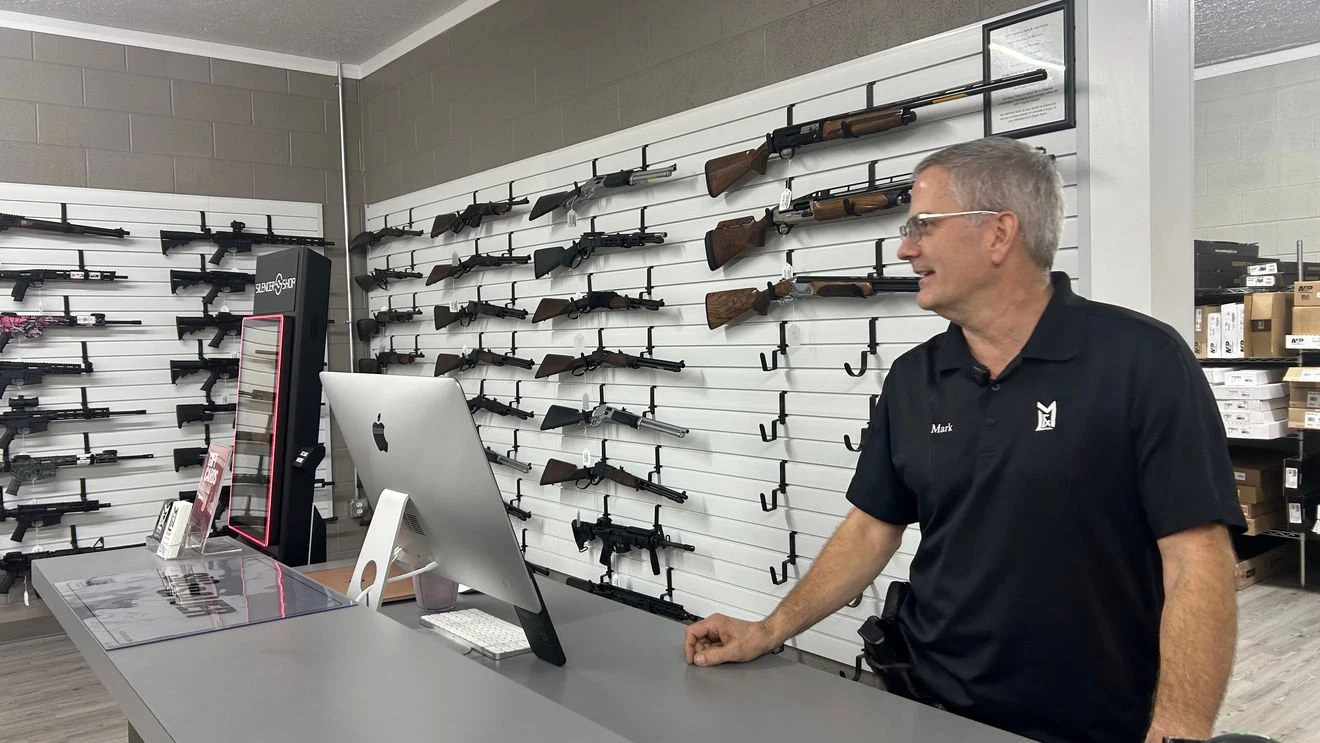
Retailers describe a dramatic change in foot traffic and daily volume that they connect to the proposed legislation and its timelines.
Ben Goldberg, who owns Knight and Pawn in Henrico County, put it bluntly: Every time the Democratic Party does any sort of gun legislation, gun sales go through the roof.
He said his store is seeing at least quadruple the volume
compared with before the current push.
At another shop, Stateside Tactical co-owner Mitchell Tyler described an even sharper shift, saying, I’d say we’re selling eight to ten times as many firearms each day as we were prior to this [legislative] session starting.

The deadline effect
In library terms, this is classic “due date behavior.” When a deadline is real and close, people who were undecided yesterday become highly motivated today.
In constitutional terms, it highlights something important about the Second Amendment debate as it plays out in state legislatures: the timeline can be as behavior shaping as the rule itself. A bill that might otherwise produce gradual changes can instead produce a sudden spike in purchasing if people believe they must buy now to keep certain options available later.
What buyers are reacting to
One proposed change drawing particular attention is a ban aimed at certain firearms commonly labeled “assault weapons,” with an effective date of July 1, 2026, if it becomes law. Under the described framework, possession of an AR-15 would be prohibited after that date unless the individual already possessed it before the effective date.
When laws are structured this way, they can create a powerful incentive: people who might never have purchased a firearm at all may decide to buy specifically because they fear they will not be able to do so later.
Behavior shifts early
One of the most misunderstood realities of public policy is that behavior can shift well before a new rule takes effect, and even before it is finalized. Expectations can shape decisions.
In Virginia’s case, the retailer accounts and the background check totals suggest anticipation alone is already reorganizing the marketplace. If the surge continues, it could lead to:
- Inventory pressure as stores try to keep popular models and ammunition in stock.
- Price volatility driven by demand spikes, even without any formal new taxes or fees.
- Administrative bottlenecks as background check systems and staffing face heavier volume.
- A shift in ownership patterns if large numbers of first time buyers enter quickly.
A calm takeaway
However Virginia’s policy debates resolve, the current surge offers a clear lesson: when lawmakers signal new boundaries, people often change their behavior quickly, especially when they believe a constitutional right or a long standing practice is being narrowed.
If you are trying to understand the Second Amendment in everyday life, you could do worse than simply watch what people do when an effective date is on the horizon, even a proposed one.