
Virginia is holding a rare kind of election with national consequences: a statewide referendum that would change the rules for drawing congressional districts and immediately swap in a new set of lines that could reshape who represents the Commonwealth in the U.S. House.
The proposed map is not subtle. Analysts expect it to give Democrats an advantage in 10 of Virginia’s 11 congressional districts, a significant shift from today’s delegation and a clear example of how redistricting fights have become a front line in the battle for control of Congress.
Join the Discussion
What the referendum would do
The ballot question asks Virginians to amend the Virginia Constitution to allow mid-decade congressional redistricting. In plain terms, that means the state would redraw its U.S. House districts before the next Census requires it.
If approved, the new districts passed by the Democratic-controlled General Assembly would take effect for the remainder of the decade. The referendum text contemplates the new lines being used only through the 2030 election, after which Virginia would return to its standard redistricting timeline tied to the Census.
That is an important detail for voters trying to understand the stakes. This is not a permanent rewrite of how Virginia will map itself after 2030. It is a permission slip for a one-time, mid-cycle reset with a sunset built in.
How Virginia got here
Under normal practice, states redraw congressional districts once every ten years, after the decennial Census. Virginia’s current map was created through a bipartisan commission process and is already in effect.
Right now, Democrats hold 6 of Virginia’s 11 U.S. House seats. They pushed forward with the new maps during the 2026 legislative session after a strong 2025 cycle, including Abigail Spanberger’s 15-point win in the governor’s race, a statewide sweep of both legislative chambers, and a Democratic victory in the attorney general race. The new plan would attempt to make Democratic wins easier in most districts by reshuffling where major voting blocs sit inside the lines.
What a 10–1 map means
Even without seeing a map, you can understand the strategy by focusing on a few geographic choices.
- Northern Virginia split: The proposal breaks up the northern part of the state, including the D.C. suburbs, into several districts that extend into the more conservative southern and western parts of the state.
- Urban anchors: The lines emphasize strongly Democratic population centers such as Richmond and Virginia Beach, shaping surrounding districts around those hubs.
This is a classic redistricting maneuver: redistribute dense partisan areas across multiple districts to influence more outcomes. Supporters call it a corrective response in a national arms race. Critics call it gerrymandering, plain and simple.

Why turnout is high
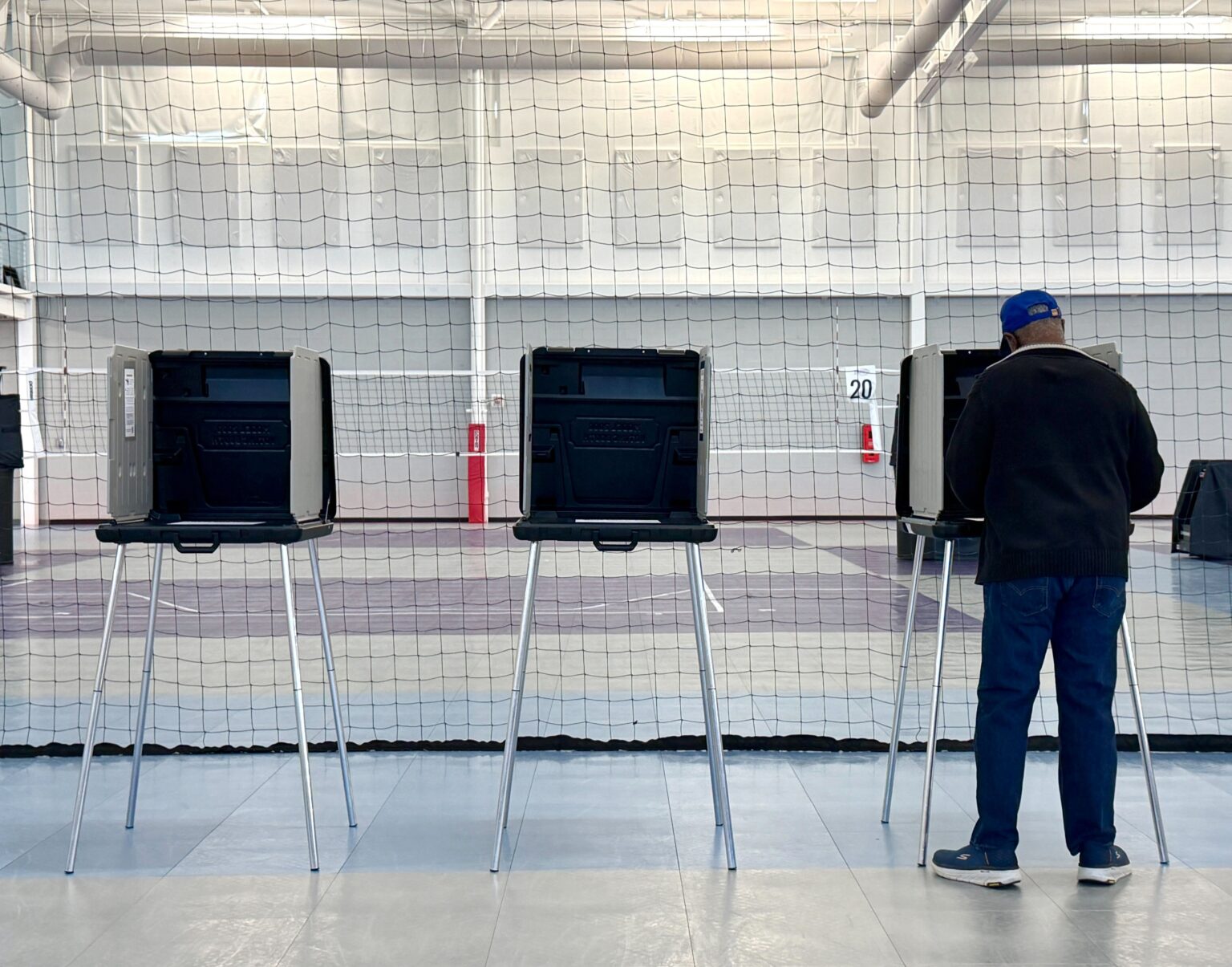
Special elections often draw thin crowds. This one has not. Early voting began March 6, and by Monday more than 1.35 million Virginians had already voted early. That is close to the 1.48 million total early votes cast in last fall’s statewide contests, a remarkable level of participation for an off-cycle referendum.
One reason is the nationalization of the issue. The lines that decide Virginia’s House seats do not just affect Virginians. They also influence whether either party can assemble a majority in the U.S. House, which in turn affects federal budgets, investigations, and the odds that major legislation ever reaches a president’s desk.
Stability vs. responsiveness
From a civic perspective, the hardest part of this referendum is that it asks voters to choose between two values that both matter.
Stability
District lines are supposed to provide predictable rules of the road. Frequent remapping can make representation feel temporary and transactional, and it can weaken the idea that voters choose their leaders rather than leaders choosing their voters.
Responsiveness
At the same time, advocates argue that when other states redraw maps mid-decade for partisan advantage, staying still can be its own kind of disadvantage. In that worldview, Virginia is not starting a fire. It is trying not to be burned by someone else’s.
This is why you have seen unusual coalitions form around the referendum, including voters who dislike partisan gerrymandering but also fear unilateral disarmament in a national redistricting fight.
Reformers split
One of the most telling voices in this debate has come from people who helped build Virginia’s commission-based approach. Brian Cannon, a reform advocate who has described himself as a Democrat for 25 years, has opposed the referendum and urged voters to keep the current commission-drawn map.
His argument is straightforward: if Virginia’s political environment is trending Democratic, Democrats should be able to win more seats without changing the rules midstream. Cannon has also said it is “ridiculous”, given that Abigail Spanberger won the state by 15 points, that Democrats cannot “win fair and square two more seats under the fair maps that we have.”
Separately, Mark Rozell of George Mason’s Schar School of Policy and Government has warned that the strategy is a “risky gamble” because it sets a precedent, and Virginia is more of a “purple state”. In other words, the rule you change today can become the rule used against you tomorrow.
Cannon also described a political dynamic that often shows up in ballot measures: intensity matters. He said he has observed Republicans “fired up” in early voting, while some Democrats feel conflicted enough to sit out entirely.
Money and messaging
This referendum has drawn enormous funding and heavy national messaging. Nearly $100 million has already been spent, and according to tracking data, about 95% of the donated money has come from dark money groups.
On the pro-referendum side, Virginians for Fair Elections has donated $64 million. On the opposing side, Virginians for Fair Maps has poured in nearly $20 million.
The language each side uses can be confusing to voters because both invoke the same civic ideals. As University of Virginia election analyst Kyle Kondik put it: “It’s funny, the themes about saving democracy and quote-unquote fairness, like both sides could make that point and make it in a valid way.” He added: “I mean, is it a quote-unquote fair map in Virginia? Of course it’s not. But in the broader context of this redistricting war that’s going on, then maybe the fairness argument makes more sense.”
National crosscurrents
Virginia’s vote is not happening in isolation. Over the past year, multiple states have engaged in mid-decade redistricting efforts. Some have succeeded, some have stalled, and the pattern has become familiar: when one side grabs seats through mapmaking, the other side looks for a counter-move elsewhere.
President Trump urged Virginians to vote against the measure, posting, “VOTE 'NO' TO SAVE YOUR COUNTRY!” He also criticized the proposal on the John Fredericks radio show, saying, “They say, 'oh, they'll do it once, and maybe they'll go back to what it was.' It's — the whole thing is ridiculous.”
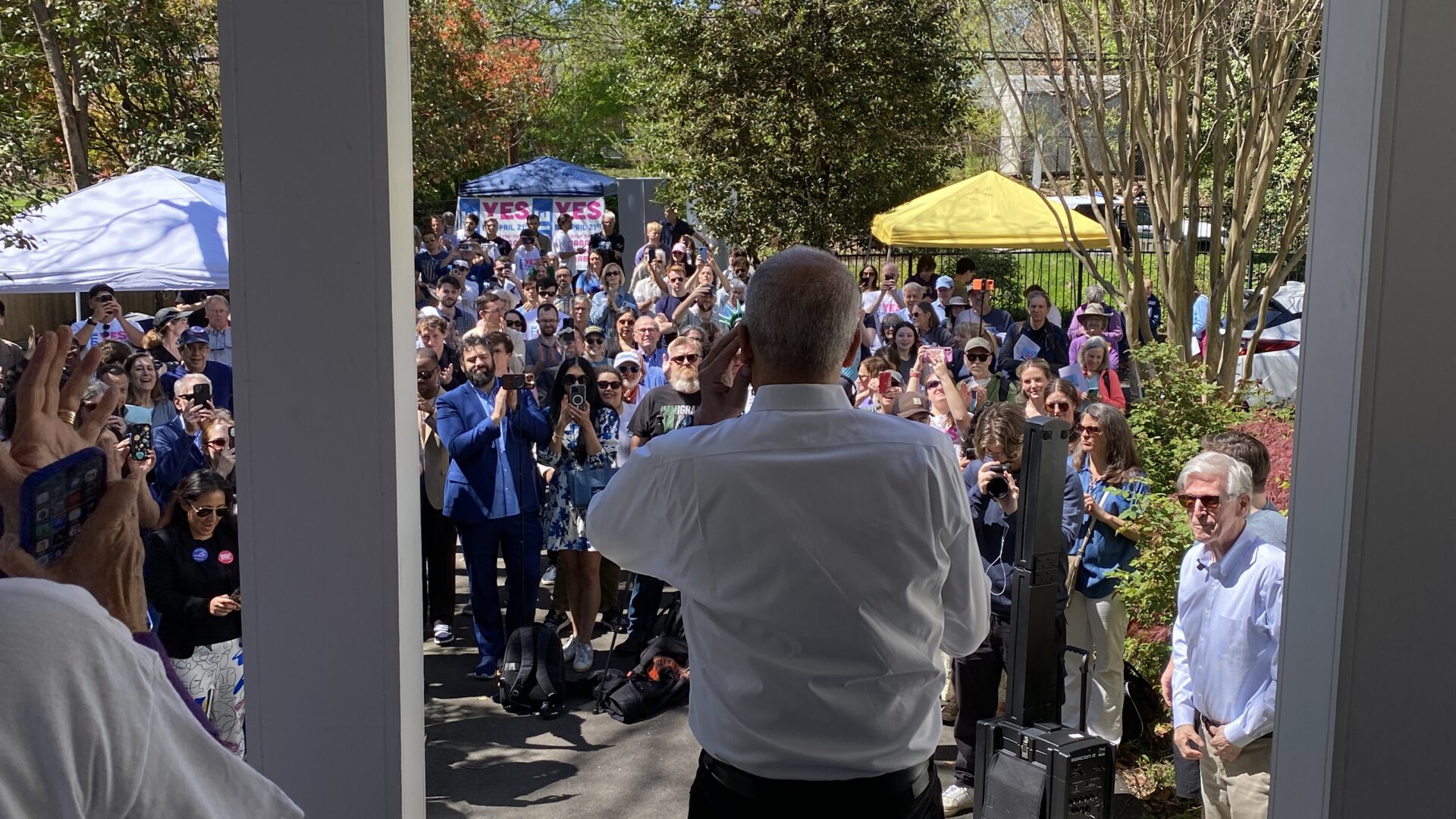
On the Democratic side, national figures have framed the referendum as part of a broader response to redistricting changes in other states. Former Attorney General Eric Holder, who chairs the National Democratic Redistricting Committee, argued that this is not “a fight only about Virginia.” He described the moment as urgent, saying: “We need to deal with the crisis that we have right now… and then get back to the redistricting commissions in California and in Virginia.”
What voters are deciding
If you are trying to decide how to vote, it can help to set aside the slogans and ask one simple library-style question: What rule do we want to set for the future?
- If Virginia approves mid-decade remapping now, it normalizes the idea that district lines can be reopened whenever politics change.
- If Virginia rejects it, the state keeps its current lines and its commission-era approach, but Democrats may lose a chance to offset national map changes elsewhere.
Neither choice is cost-free. The referendum is essentially asking whether Virginians prefer the predictability of the post-2020 system, or whether they are willing to accept a midstream change in the name of national political balance.
What to watch next
However the vote comes out, the long-term story is bigger than a single map. Courts, commissions, and state constitutions are all being tested as the country tries to answer a basic question: who gets to draw the lines that decide representation?
For now, Virginia’s decision is a reminder that constitutional rules are not only about rights and grand principles. Sometimes they are about procedures. And procedures, especially in elections, can be destiny.