
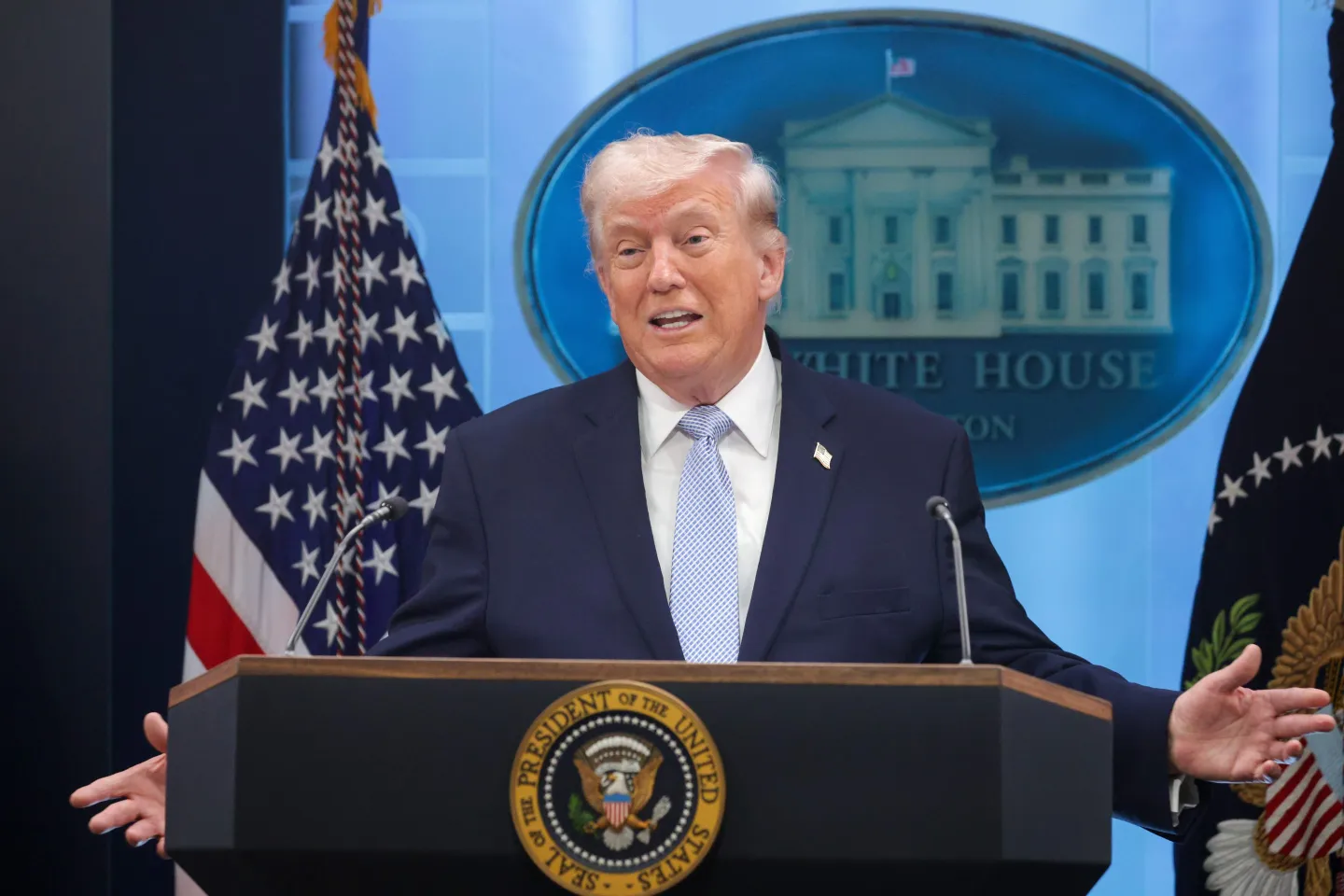
President Donald Trump said Sunday that the United States will begin an operation on Monday to “help free up” ships stuck in the Strait of Hormuz, a narrow and strategic waterway now at the center of overlapping blockades in the Gulf.
Trump described the effort as a “humanitarian gesture” requested by countries he called “neutral” to the conflict, whose vessels remain unable to move through what he characterized as “restricted Waterways.” He also paired that promise with a warning: “If, in any way, this Humanitarian process is interfered with, that interference will, unfortunately, have to be dealt with forcefully.”
Join the Discussion
What Trump says will happen Monday
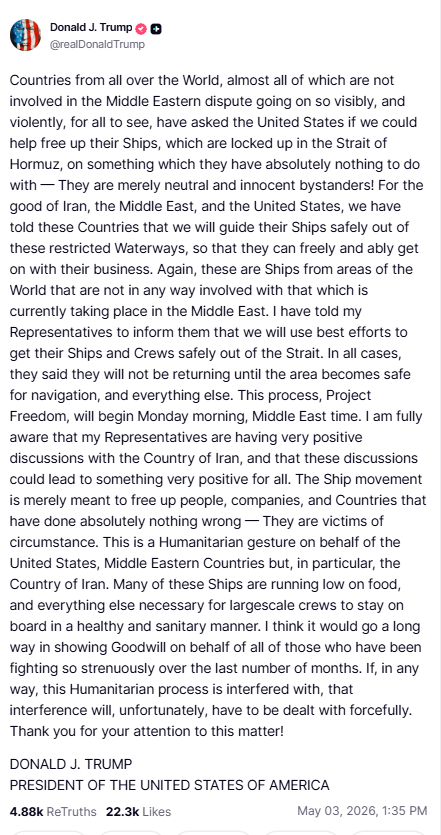
Trump said the U.S. push will start Monday under the name “Project Freedom.” In his telling, the goal is straightforward: guide ships safely out of the strait so they can resume normal commercial travel.
“For the good of Iran, the Middle East, and the United States, we have told these Countries that we will guide their Ships safely out of these restricted Waterways, so that they can freely and ably get on with their business,” Trump said. He did not identify which countries asked Washington for help.
Trump also stressed the conditions aboard some stranded vessels, writing that “Many of these Ships are running low on food, and everything else necessary for largescale crews to stay on board in a healthy and sanitary manner.”
Even readers who do not follow foreign affairs closely tend to recognize the pattern here: when a major shipping corridor tightens, energy markets react quickly, and those costs can reach American households within days.
In the weeks since an April ceasefire took hold, Iran’s blockade in Hormuz and a U.S. naval siege of Iranian ports have helped drive oil prices upward. In the U.S., petrol has reached $4.44 per gallon, up from less than $3 before the war began, adding pressure to inflation and intensifying public frustration.
A constitutional question hiding inside a foreign policy announcement
On its face, this is a national security story. For a civics-minded reader, it also raises the practical, recurring question of who in our system decides when American military power is used and what “use” looks like.
The Constitution names the president the Commander in Chief of the armed forces, which gives the executive branch substantial authority over operational decisions and the day-to-day conduct of military missions. At the same time, Congress holds core powers that shape and constrain those missions, including the power to declare war, fund the military, regulate commerce, and oversee executive action.
That tension becomes especially relevant when an operation is framed as “humanitarian” but includes an explicit warning that interference will be met “forcefully.” In plain terms, an escort mission can slide quickly into a combat mission depending on what happens on the water.
How risky is an escort mission in Hormuz?
What remains unclear is how “Project Freedom” would be carried out in practice and whether there is any coordination with Tehran. If the operation meets Iranian resistance, it could put strain on a ceasefire that has held for more than three weeks.
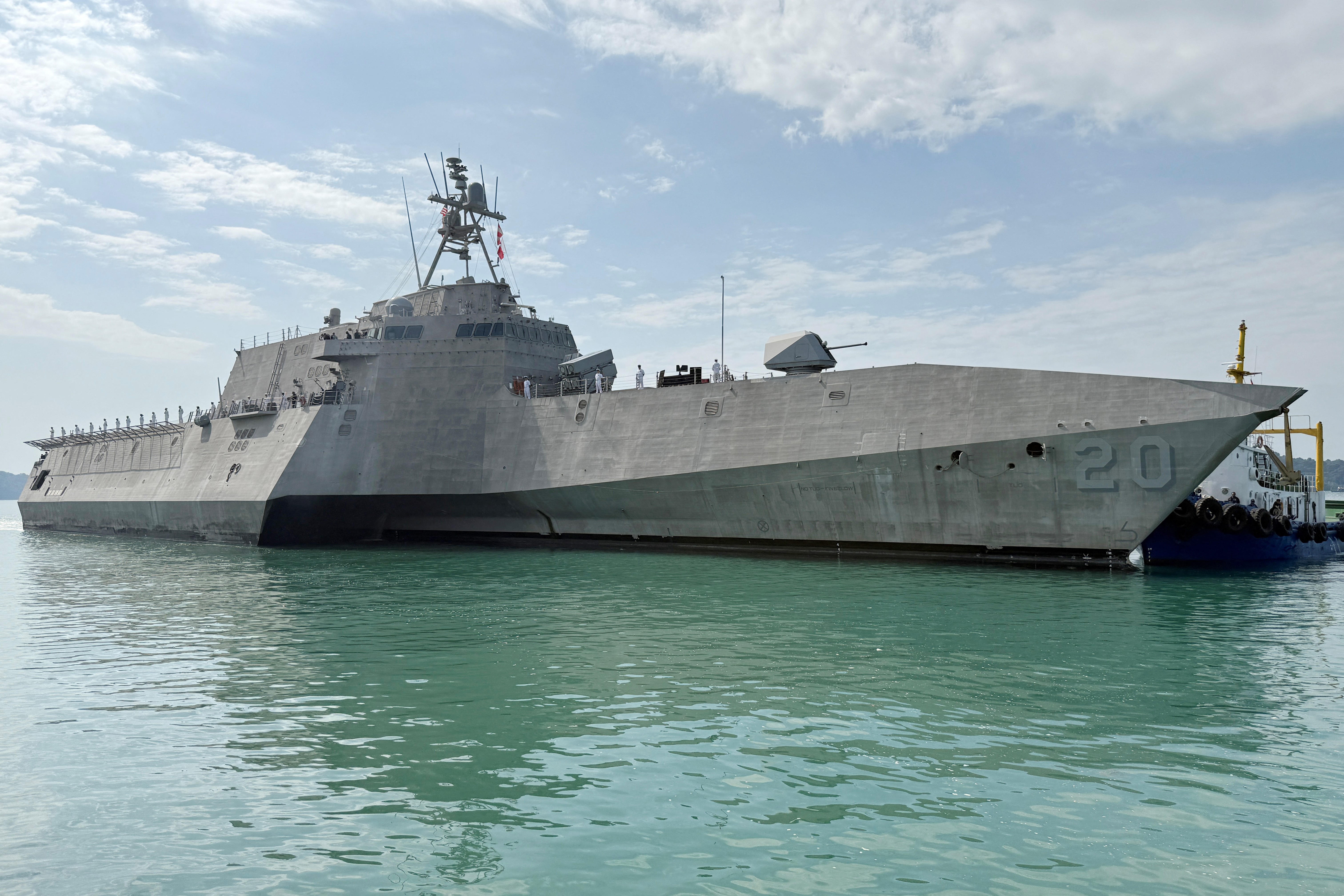
There is also the basic geography: Hormuz is narrow, and the surrounding coastline puts ships and naval assets close to land based fire. The U.S. military has previously said it is “not ready” to accompany vessels through the waterway, precisely because escorting ships could expose U.S. forces to attack from Iranian territory.
Negar Mortazavi, a senior fellow at the Center for International Policy, questioned whether Iran would view the mission through the same humanitarian lens the White House is using. “This is also going to bring US forces and assets closer to the shooting range of Iran, potentially, if it’s going to be an escort,” she said. Mortazavi added: “So I don’t know if this is a threat. Is this a negotiating tactic?… Or is this really the plan of the president?”
Diplomacy is still happening, Trump says
Alongside the announcement, Trump argued that diplomacy has not been abandoned. “I am fully aware that my Representatives are having very positive discussions with the Country of Iran, and that these discussions could lead to something very positive for all,” he said.
He also tried to separate the planned ship movement from broader war aims, saying: “The Ship movement is merely meant to free up people, companies, and Countries that have done absolutely nothing wrong. They are victims of circumstance.”
But Trump also rejected Iran’s latest proposal
Hours before the “Project Freedom” message, Trump said he had rejected a 14-point proposal from Tehran aimed at ending the U.S.-Israel war on Iran.
“It’s not acceptable to me. I’ve studied it; I’ve studied everything. It’s not acceptable,” Trump said in an interview with Kan, Israel’s public broadcaster. Specific details of the proposal were not made public, but Iranian officials have indicated their priorities include a permanent end to the war and lifting the blockade on Iranian ports before pursuing a broader nuclear deal.
Iranian officials said Sunday that Tehran has received a formal response from Washington to its proposal and is studying it.
What to watch next
- Rules of engagement: An operation framed as humanitarian can still involve armed force. The practical question is what actions U.S. forces are authorized to take if challenged.
- Ceasefire stability: If Iran sees an escort as escalation, the current truce could be tested quickly.
- Congress’s role: Even when Congress does not vote on a specific operation, it can shape policy through hearings, oversight, and funding decisions. That is where many separation-of-powers conflicts actually play out.
- Domestic impact: With petrol at $4.44 per gallon, public pressure at home could become a major driver of what the administration does next, regardless of the legal theory behind it.