
Every generation rediscovers the same uncomfortable truth about the First Amendment: it protects a lot of speech we wish people would keep to themselves.
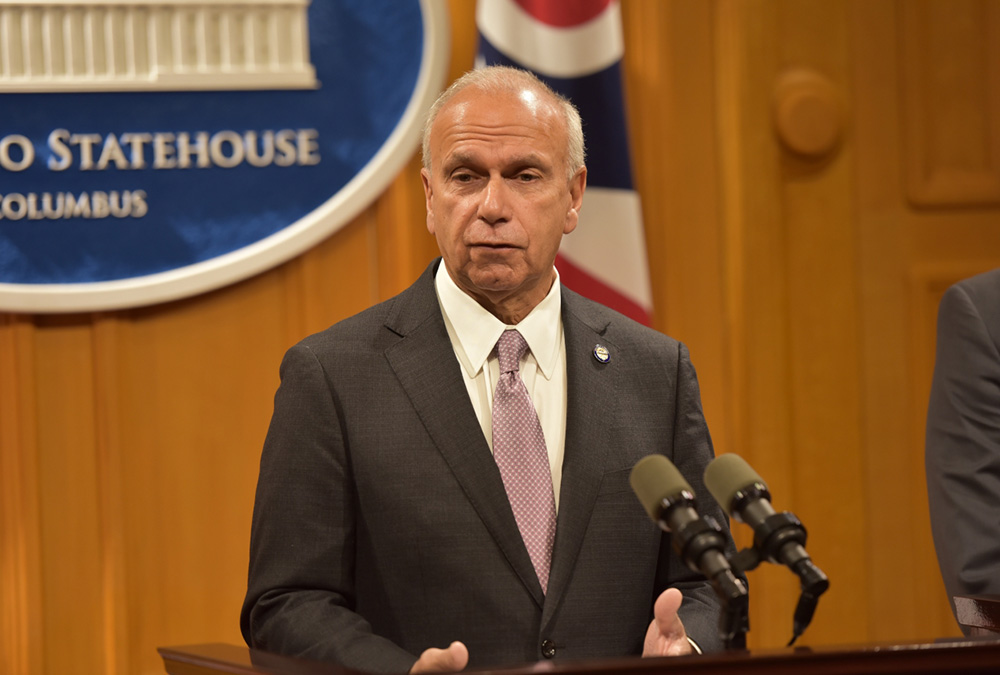
This time, the flashpoint is Ohio, where a progressive political blogger, D.J. Byrnes, spent 23 hours in jail after sending a state senator crude messages that included a digitally altered image of Shrek with exposed genitals. The senator, Jerry Cirino, did not shrug it off. On May 8, two days after Byrnes sent the texts, Cirino emailed Kirtland Police Chief Jamey Fisher, saying he was “officially filing a complaint” and asking police to file criminal charges. Byrnes was arrested that Monday based on what appears to be the three texts.
Byrnes runs The Rooster political website. The messages included political commentary, Byrnes calling Cirino his oft-repeated derisive nickname “Young Mussolini,” and Byrnes plugging his own newsletter.
Byrnes says he is innocent of the charge and posted on Instagram: “I believe that the facts presented in court will show that I’m innocent of the misdemeanor charge of telecommunications harassment.”
The joke, the vulgarity, the childishness, the political insult. None of that is the constitutional question. The real question is colder and more important: What, exactly, is the line between protected political nastiness and criminal speech?
Join the Discussion
What Ohio charged him with
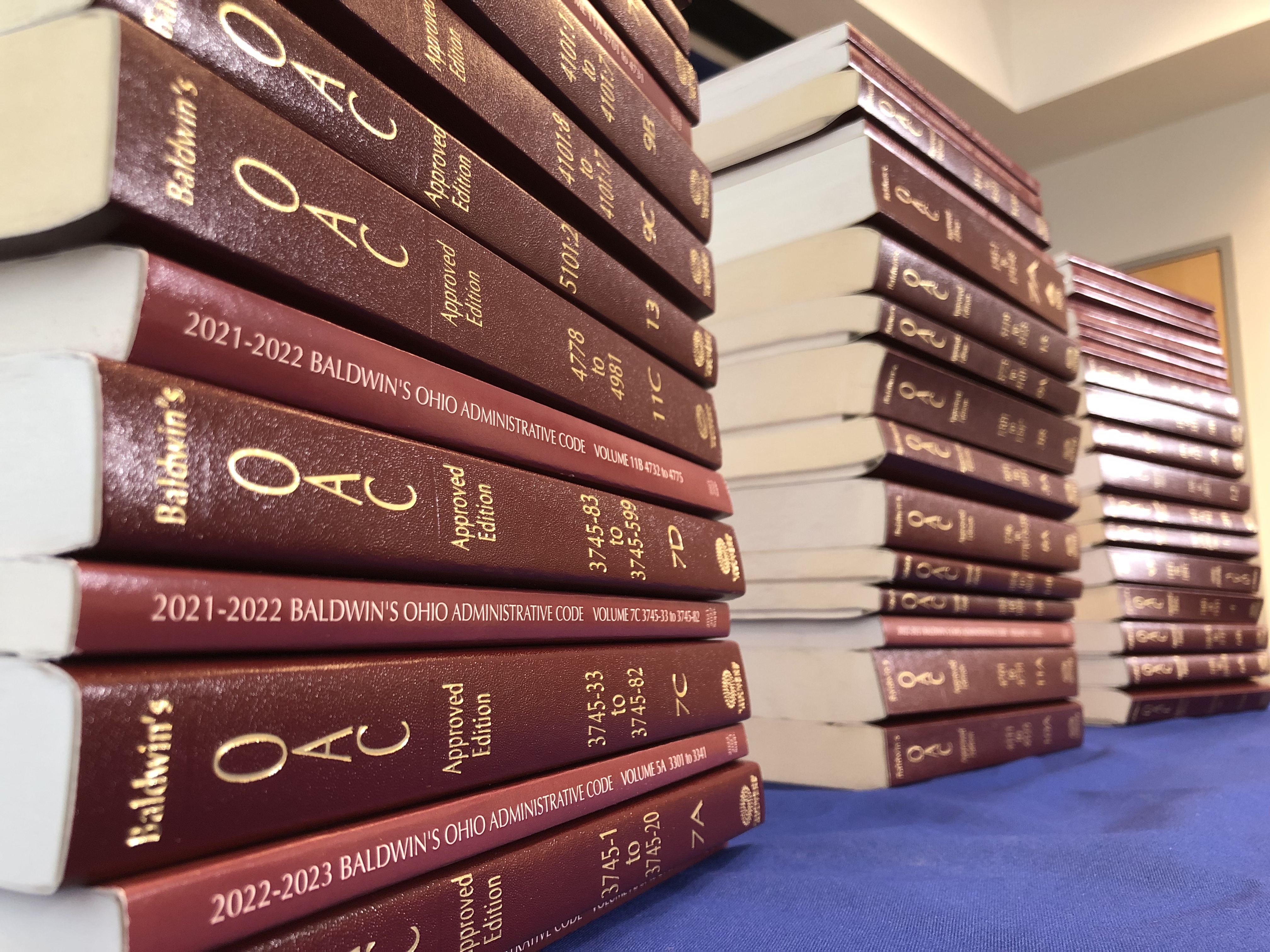
Byrnes was charged with telecommunications harassment under Ohio Revised Code 2917.21, a misdemeanor punishable by up to six months in jail. To be found guilty, the prosecution must prove Byrnes sent the texts with the intent to “harass, intimidate, or abuse” Cirino.
That intent requirement matters because the First Amendment does not give states a free pass to criminalize “being disgusting” or “being rude,” even toward public officials. If it did, every sharp-edged political era would become a hunting season for prosecutors.
Speech aimed at officials
Start with the baseline: criticism of government officials sits near the center of what the First Amendment is for. If citizens cannot mock officeholders, cannot needle them, cannot use ridicule as a weapon, then “consent of the governed” turns into a polite fiction.
And political speech does not have to be serious to count. Satire is not a loophole. Vulgarity is not a disqualifier. The Constitution does not require good taste as the price of admission.
That does not mean anything goes. It means the government needs a very specific reason to punish speech, and those reasons are narrow.
When harassment is punishable
Harassment laws can be constitutional, but only when they target something more than a one-off insult. The classic constitutional model is a repeated, unwanted course of conduct aimed at invading someone’s privacy or disturbing their peace.
Think of behavior designed to wear a person down rather than persuade anyone: dozens of middle-of-the-night calls intended to keep someone from sleeping, or a steady stream of messages day after day after the recipient has repeatedly demanded it stop.
Compare that with what is described here: a handful of afternoon texts, including a single image, from one number that is easy to block, and with no apparent prior request to stop. That looks much more like protected expression than criminal harassment, even if it is crude, juvenile, and personally targeted.
If “harassment” can be defined as “I didn’t like what you said to me,” then the word stops being a shield and becomes a censor’s baton.
True threats
One of the narrow exceptions to First Amendment protection is the true threat. Whatever else a democracy must tolerate, it does not have to tolerate credible communication of violence.
That is why the distinction matters so much. Harassment is often about persistence and intrusion. Threats are about violence and fear. The state can regulate true threats because they are not protected expression.
Based on what is described in the messages at issue, there is no indication they contained threats of violence. The content is obscene in the everyday sense, but “everyday obscene” and “legal obscenity” are not the same thing. Which brings us to the third rail.
Obscenity is a legal term
Americans use the word “obscene” the way we use “disgusting.” The law does not. In constitutional doctrine, obscenity is a very specific category of expression that can be prohibited.
The Supreme Court’s controlling test comes from Miller v. California. Under Miller, material is legally obscene only if it satisfies all three elements:
It appeals, taken as a whole, to the “prurient interest,” meaning an excessive interest in sex.
It depicts sexual conduct in a patently offensive way as defined by law.
It lacks serious literary, artistic, political, or scientific value.
This is a deliberately demanding standard. Fail even one prong, and the speech remains protected.
In the case described, an affidavit with Byrnes’ arrest report referred to the Shrek depiction as “fully nude with an exposed and erect humanlike penis engaged in an act of masturbation.” But context matters. The image was sent to another adult alongside political commentary, including Byrnes describing Cirino as “Young Mussolini.” That looks like political mockery, not obscenity. And when political value is even plausibly in the picture, Miller becomes a steep hill for the government to climb.
The question it raises
Here is the tough civics-teacher question: Do we want a country where a public official can seek an arrest over a handful of insulting political texts?
A lot of people will say yes, right up until their own side is the one being prosecuted. That is the trap. If the rule is “crude political speech can be treated as criminal harassment,” the rule will not stay neatly confined to one meme, one ogre, one senator, or one blogger. It becomes a tool. And tools get used.
None of this requires us to defend the taste of the message. The First Amendment is not a medal we award for maturity. It is a barrier we put in front of government power, especially when government feels embarrassed, insulted, or irritated.
Plain-English takeaway
If you are trying to locate the constitutional line, here it is in ordinary language:
Insults and vulgar political mockery are usually protected, even when they are directed at an individual official.
Harassment can be punished when it becomes a repeated, unwanted campaign that meaningfully invades privacy or disturbs someone’s peace, especially after clear notice to stop.
True threats are not protected. Credible violent intimidation is not speech the First Amendment is designed to shelter.
Obscenity is rare as a legal category and requires meeting the full Miller test. “Gross” is not the same as “obscene” in constitutional law.
Block the number, sure. Unless, of course, you are into that sort of thing.