
You have probably heard a politician say something like, “We are a republic, not a democracy.” It sounds like a slogan. But tucked into the Constitution is a sentence that actually uses the word “republican” as a legal promise.
Article IV, Section 4 declares: the United States “shall guarantee to every State in this Union a Republican Form of Government.” That line is called the Guarantee Clause.
It is one of the Constitution’s broadest commitments and one of its least successful courtroom tools, not because it is unimportant, but because the Supreme Court has largely treated it as a question for the political branches, not judges.

Join the Discussion
What the Guarantee Clause says
The full sentence sits alongside two other promises, which are easier to recognize as federal responsibilities:
- The United States guarantees each state a republican form of government.
- The United States protects each state against invasion.
- The United States, on application of a state’s legislature, or of the executive when the legislature cannot be convened, protects against domestic violence.
Those last two are about physical security. The first is about political structure. It is the Constitution telling the national government: states have to be governed in a way that is “republican” in character.
Importantly, the clause is framed as a federal duty, not an individual right. It does not say “no state shall.” It says “the United States shall guarantee.” That wording matters for how the courts have approached it.
What “republican government” means
The Constitution never defines “republican.” The Founding era used the term in a broad way, mostly to mean government by the people through representatives, as opposed to monarchy or hereditary rule.
In modern, practical terms, a republican form of government usually implies:
- Popular sovereignty, meaning legitimate authority traces back to the people.
- Representative institutions, such as legislatures that make law through elected officials.
- Rule of law, meaning officials are bound by legal constraints rather than personal will.
- Accountability mechanisms, including elections, impeachment, and lawful succession.
It does not necessarily require one specific institutional design, like bicameralism, a gubernatorial veto, or any particular election method. A state can be “republican” in the constitutional sense while still having major internal fights over who counts as “the people,” how representation should work, and what makes elections fair.
That is part of why the clause is both powerful in theory and slippery in litigation.

Why these lawsuits rarely win
For more than a century, the Supreme Court has tended to treat most Guarantee Clause disputes as nonjusticiable political questions. That is legal shorthand for: this is not the kind of issue courts can resolve with neutral legal rules, and the Constitution leaves it to Congress and the President.
The classic starting point is Luther v. Borden (1849), which grew out of a fight over which government was the lawful government of Rhode Island. The Court effectively said: determining a state’s legitimate government is a job for the political branches, because they recognize governments and can act on that recognition.
Later, in Pacific States Telephone & Telegraph Co. v. Oregon (1912), the Court rejected a challenge arguing that Oregon’s initiative and referendum system was “unrepublican.” Again, the Court treated it as a political question.
A key modern waypoint is Baker v. Carr (1962). The Court held that a malapportionment case could be heard under the Equal Protection Clause. In doing so, it contrasted equal protection claims with Guarantee Clause claims, describing the latter as the type of issue courts had historically declined to decide.
All of this produces a simple reality: if you walk into court and say, “This state policy violates the Guarantee Clause,” you are likely to be told that the Constitution gives you the wrong tool for that fight, or that the claim is not one judges can decide.
One extra point of precision: Guarantee Clause claims are not unheard of. They are often pleaded, then dismissed. What is rare is a court reaching the merits and granting relief under the clause. And no modern Supreme Court case has sustained a Guarantee Clause claim on the merits.
So who enforces it?
If the Guarantee Clause is mainly a duty of “the United States,” then the enforcement mechanisms are mostly political, not judicial.
Historically, the clause has been invoked as constitutional context for federal action when state government breaks down or is replaced by force, especially in periods of national crisis. One concrete example is the Reconstruction era, when Congress used its powers over representation and readmission as former Confederate states rebuilt governments and sought seats in Congress. Whatever you think of the politics, the structural point is clear: Congress is the branch best positioned to decide what counts as a functioning republican government for purposes of recognition, representation, and federal response.
It also helps to notice where the Guarantee Clause lives. Article IV, Section 4 pairs “republican government” with promises about invasion and domestic violence, both of which can demand fast, high-level political judgment about federal action. That placement is part of why courts have tended to treat the section as institutionally political in character.
That does not mean the clause is meaningless. It means its most direct leverage tends to show up in Congressional decisions and federal-state relations, not in individual lawsuits.
How it differs from equal protection
Many disputes that sound like “This is not a republic anymore” get reframed into claims courts will hear. The most common route is the Fourteenth Amendment’s Equal Protection Clause.
Different question
Guarantee Clause: Is the state’s governmental structure consistent with a republican form of government, in a big-picture sense?
Equal Protection: Is the state treating similarly situated people differently without a constitutionally sufficient justification?
Different posture
Equal protection is routinely litigated because it fits the standard courtroom model: a person claims the government treated them unfairly in a way the Constitution forbids, and a judge can apply developed tests of scrutiny and precedent.
The Guarantee Clause is harder to litigate because it tends to ask courts to define what “republican government” requires across an entire state. That looks less like adjudicating a concrete injury and more like supervising political design.
Same facts, different hook
If a state draws legislative districts that wildly distort representation, a Guarantee Clause challenge is likely to be dismissed. But an equal protection challenge might get traction, because courts can evaluate vote dilution and discrimination through established doctrines.
How it differs from voting cases
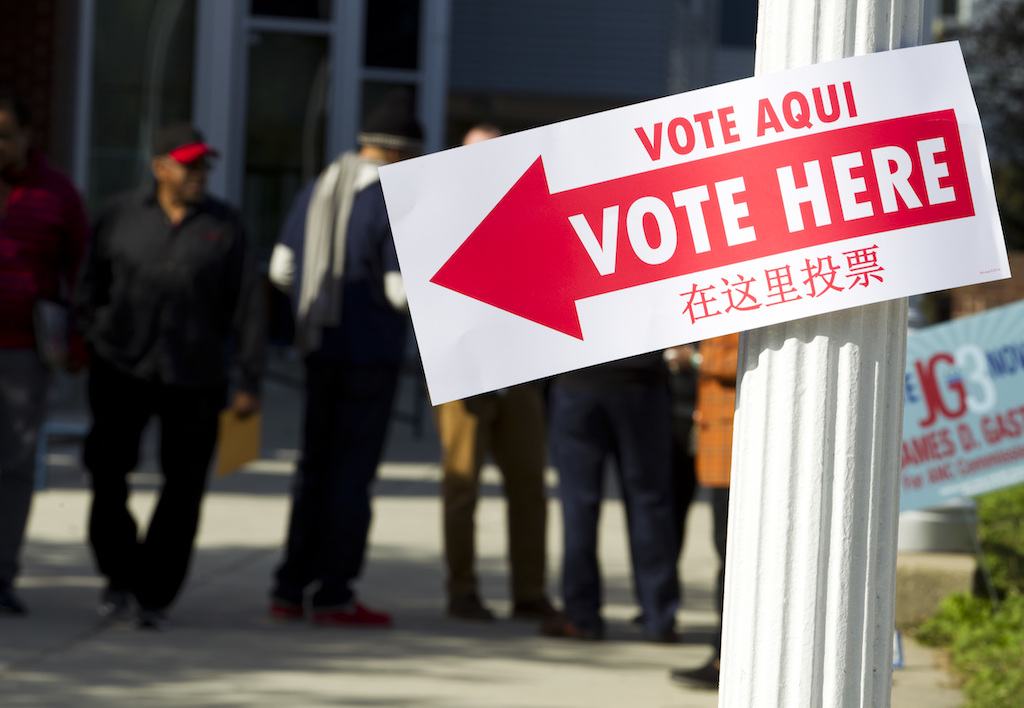
Guarantee Clause arguments often show up in the same conversations as election litigation, but the legal engines are different.
Election cases use narrower text
Modern election cases commonly rely on:
- The Elections Clause (Article I, Section 4) for rules about congressional elections and the role of state legislatures versus Congress.
- The Electors Clause (Article II) for presidential elections and the appointment of electors.
- The First and Fourteenth Amendments for burdens on voting, association, and equal treatment.
- Federal statutes such as the Voting Rights Act.
These frameworks give courts manageable standards: burdens, intent, discriminatory effects, procedural compliance, and so on.
The Guarantee Clause is not a checklist
The Guarantee Clause does not read like election administration law. It does not tell states how to run primaries, whether to allow mail voting, or how to structure voter ID rules. It addresses the character of state government at a structural level.
That difference matters. Many election disputes feel existential, but courts generally decide them through narrower, text-based hooks rather than by declaring a state “unrepublican.”
Is it totally dormant?
Not entirely. The Supreme Court has occasionally suggested that at least some Guarantee Clause disputes might be justiciable in theory, even if the Court has rarely found the right case with a workable legal standard.
In New York v. United States (1992), the Court noted that it was not deciding whether all Guarantee Clause claims are nonjusticiable, while ultimately resolving the case on federalism and anti-commandeering grounds instead. The suggestion was dicta, and it did not supply a clear, generally applicable test for future Guarantee Clause cases.
That is the pattern: the Guarantee Clause hovers in the background as a constitutional value, but other provisions do the work in actual litigation.
Common misconceptions
It means one political party
No. The clause predates modern political parties and uses “republican” in the classical sense of representative self-government.
It bans initiatives and referendums
People have tried this argument. The Supreme Court has historically been unwilling to treat these disputes as judicially manageable under the Guarantee Clause.
You can always sue under it
Most of the time, courts treat it as a structural guarantee enforced by the national government, not as a personal right with a clear cause of action.
Why it still matters
The Guarantee Clause matters because it names a constitutional baseline: state governments in the United States are supposed to be governments of accountable, lawful self-rule, not governments seized and held by force, heredity, or unchecked personal power.
It also matters because it shows how the Constitution distributes responsibility. Some constitutional promises are enforced primarily by courts. Others are enforced primarily by politics, institutional checks, and federal recognition.
If you are trying to understand why certain election or governance disputes end up framed as equal protection claims, statutory Voting Rights Act claims, or Elections Clause arguments, the Guarantee Clause is part of the reason. It is the big structural principle that often cannot carry a lawsuit by itself, so litigants reach for doctrines courts are actually willing to use.
Quick takeaway
- What it is: Article IV’s promise that every state will have a “Republican Form of Government.”
- What it is not: A detailed rulebook for elections or a simple individual right you can reliably sue under.
- Why it rarely succeeds in court: The Supreme Court has often treated it as a political question for Congress and the President, and modern merits wins under the clause are essentially nonexistent.
- How it differs from equal protection and election-law claims: Those doctrines provide clearer judicial standards and are the workhorses of modern voting and representation litigation.
The Constitution has more than one way to protect self-government. The Guarantee Clause is the statement of purpose. Other clauses are the gears that usually turn.