Every November, Americans rehearse the same script. We give thanks. We pass dishes. We tell ourselves we are stepping into a tradition that began with neighbors sharing a meal. And if someone brings up Indigenous dispossession, the room can go quiet, as if history just kicked open the front door without wiping its feet.
So here is the question I want to put plainly: should Thanksgiving celebrations explicitly acknowledge Indigenous dispossession, alongside gratitude and family tradition?
Not as a slogan. Not as a scolding. As an honest act of civic memory. Because the argument is not really about turkey. It is about what kind of nation we think we are when we retell our own origin stories.
Join the Discussion
Separate what gets mixed up
Thanksgiving debates get nowhere because we tend to treat one word as if it describes one thing. It does not. There are separate claims bundled into a single holiday, and they need to be pulled apart.
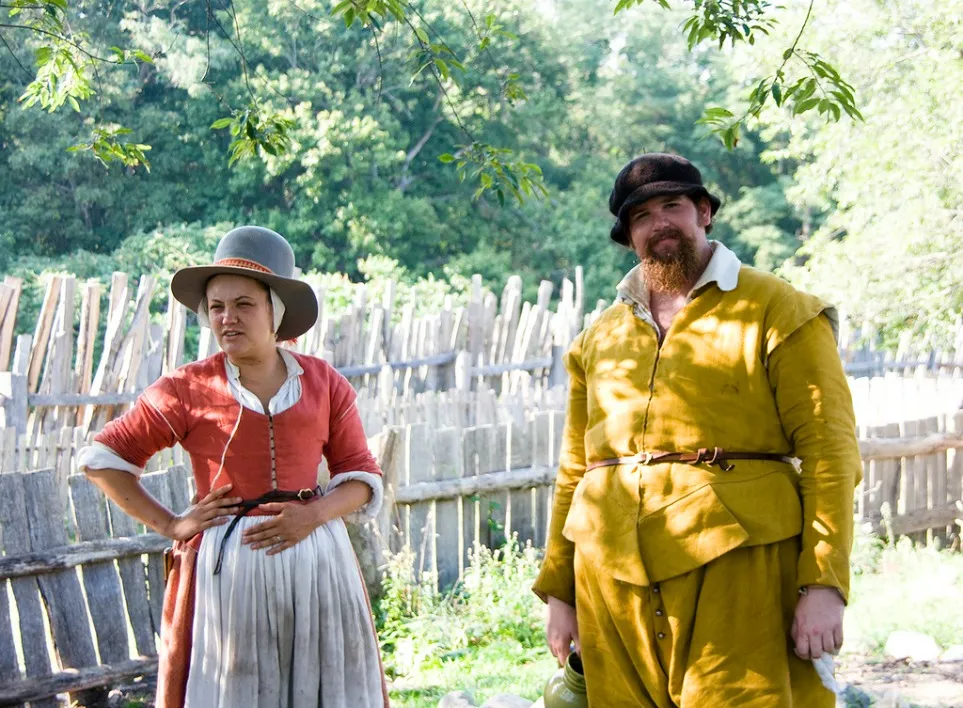
- Did the 1621 gathering happen? Yes. It was a real harvest gathering involving English settlers and Wampanoag people.
- Was there genuine cooperation? Yes. There was an alliance and a period of diplomatic cooperation.
- Was this the beginning of the modern holiday? No. The national holiday developed centuries later.
- Did the settlers and Indigenous people live happily together afterwards? No. Colonial expansion led to dispossession, warfare, and enslavement.
- Is Thanksgiving essentially a celebration of colonialism? That is an interpretation of its historical legacy, not a complete description of what the modern holiday means to everyone.
Once you see those as separate statements, you can stop arguing with straw men. The traditional story is not pure fiction. But it is also not the whole story. And the part we leave out matters.
How myth takes over
What happened in 1621 has been turned into something bigger than itself. A complex relationship gets flattened into a single symbolic meal, and that meal gets treated like a national birth certificate.
This is where the trouble starts. When a nation grabs one relatively cooperative moment and uses it as the foundation of its self-image, it is tempted to edit the next chapters out of the book. That is not just bad history. It is a bad habit of citizenship. It trains us to believe that uncomfortable consequences are someone else’s problem, or someone else’s era.
A holiday that is built on selective memory does not stay neutral. It quietly teaches a lesson: that we can celebrate the benefits of America without naming the costs of American expansion.
What acknowledgment is not
Some families resist any mention of dispossession because they fear Thanksgiving will be converted into a courtroom, with relatives assigned the roles of prosecutor and defendant.
But acknowledgment is not the same thing as accusation.
To say, plainly, that colonial expansion led to dispossession, warfare, and enslavement is not to declare that your family dinner is a moral crime scene. It is to refuse a comforting falsehood: the idea that the goodwill of one moment somehow cancels the harm of what followed.
And it is also to resist the opposite oversimplification: the claim that every modern Thanksgiving table is inherently a celebration of Indigenous suffering. The holiday’s legacy and the holiday’s present meaning are related, but they are not identical.
Patriotism is not mythology
In my civics classroom, I used to tell students that a democracy cannot survive on mythology alone. It needs patriotism, yes. But it also needs the discipline to tell the truth about itself.
There is a difference between patriotism and national mythology. Patriotism is the willingness to invest in a shared civic project, including its democratic ideals and the community we build together. Mythology is the insistence that our past was a steady march of good intentions and clean hands.
A mature national identity can tolerate discomfort. In fact, it has to. If our love of country depends on never naming the darker parts of our history, then our love is fragile. It becomes a demand for silence.
So should we say it out loud?
Yes, and for a simple reason: the two realities can coexist, provided we stop erasing the first to protect the second.
Thanksgiving can still be about gathering with family and friends, sharing food, and expressing gratitude. It can also make room for honest recognition that the country was built on land taken through a long process of colonial expansion that brought dispossession, warfare, and enslavement.
That is not a contradiction. It is adulthood.
What that kind of Thanksgiving can mean
- Appreciating the food, shelter, and opportunities you have.
- Sharing with people who matter to you.
- Recognizing the contributions of different cultures.
- Acknowledging the Indigenous peoples whose land the country was built on.
- Being honest about the historical costs of American expansion.
- Celebrating the fact that Indigenous communities have survived and continue to exist.
You do not have to choose between gratitude and historical awareness. The choice is between honesty and denial.
A table-sized way to do it
Making the acknowledgment explicit does not require a lecture or a performance. It requires clarity and restraint. Something like:
We are grateful to be together. We also recognize that this country’s story includes Indigenous dispossession, and we do not want our gratitude to depend on forgetting that.
That is it. One sentence. A refusal to make myth the price of peace.
If someone wants to talk more, you can. If not, you eat. The point is not to punish the holiday. The point is to stop asking history to stay outside because it makes us uncomfortable.