
Most Americans can name the Supreme Court nominees who dominate the headlines. Far fewer could explain how the judges who decide the overwhelming majority of federal cases actually get their jobs.
That matters because Article III district and circuit judges are not supporting characters. They are the first and often the last stop for most litigants in the federal system. They issue injunctions that can have nationwide effect, a powerful and contested practice that has become a recurring flashpoint in modern litigation. They interpret constitutional rights in real time. And because they usually serve for decades, they can shape the law long after the President who nominated them is out of office.
The Constitution’s instructions are short: the President nominates, and with the Senate’s advice and consent, appoints judges. The rest is custom, Senate rules, committee practice, and political incentives. Here is what the process looks like in the real world.
Join the Discussion
Article III in one sentence
Article III of the Constitution creates a federal judiciary with judges who hold office during good behavior, which has long been understood to mean life tenure absent impeachment and removal, and whose compensation cannot be reduced while they remain in office.
Two big implications follow:
- These are powerful jobs. Life tenure is designed to insulate judges from political retaliation, not to make them unaccountable.
- Vacancies are high stakes. A single confirmation can affect federal law across an entire region for a generation.
Lower federal judges come in two main Article III categories:
- U.S. District Judges (trial courts). They oversee criminal trials, civil lawsuits, evidence disputes, and early rulings that can end a case before trial.
- U.S. Circuit Judges (courts of appeals). They review district court decisions in three-judge panels and sometimes in larger en banc sittings. For most litigants, the circuit court is the end of the road unless the Supreme Court takes the case.
Step 1: A vacancy opens
Vacancies happen for familiar reasons: retirement, taking senior status, elevation to a higher court, resignation, or death.
Two things often surprise people:
- Senior status still creates a vacancy. A judge who takes senior status keeps hearing some cases, but their seat opens for a new appointment.
- Timing is strategic. Judges sometimes time retirements around presidential administrations. That is not illegal. It is a predictable consequence of life tenure combined with political reality.
When a vacancy is anticipated, the selection process can begin well before the seat is officially empty.

Step 2: The President picks a nominee
Formally, the nomination is the President’s choice. Practically, the short list is shaped by a network of influences:
- Home-state senators. Especially for district court seats, senators from the state often recommend candidates and act as gatekeepers.
- The White House Counsel’s Office and Department of Justice. They coordinate vetting and work through legal and political considerations.
- State and local legal communities. Bar associations, former clerks, federal prosecutors, public defenders, and state judges all feed the pipeline.
For circuit court seats, the process is usually more national and more ideological because circuit judges make broader precedent. District court selections tend to be more locally rooted, though that line has blurred over time.
Step 3: Vetting and paperwork
Before a name is sent to the Senate, nominees typically undergo extensive vetting, including:
- FBI background investigation and interviews with colleagues, opponents, and references.
- Financial disclosures, ethics questionnaires, and review for conflicts of interest.
- Work history and writings review, including briefs, articles, speeches, social media, and public statements.
The goal is not simply to catch scandal. It is also to anticipate confirmation fights. A nominee can be legally qualified and still be politically unconfirmable if the opposition believes there is a clear line of attack.
Step 4: Outside scrutiny
Even before a hearing is scheduled, nominations are often shaped by forces outside the Senate dais.
- Interest groups and professional networks research nominees, lobby senators, and frame the narrative.
- Opposition research can surface controversial filings, statements, affiliations, or patterns in a nominee’s record.
- Committee questionnaires often demand exhaustive detail on past cases, public statements, memberships, and potential conflicts, creating a paper trail that can become the hearing’s roadmap.
This layer is easy to miss because much of it happens off-camera, but it can determine whether a nomination sails through quietly or turns into a prolonged fight.
Step 5: ABA review
The American Bar Association’s Standing Committee on the Federal Judiciary has long rated nominees as “Well Qualified,” “Qualified,” or “Not Qualified.” The committee typically evaluates integrity, professional competence, and judicial temperament.
Two important caveats:
- The ABA is not part of the Constitution. It is an outside organization whose role depends on how much the White House and Senate choose to rely on it.
- Its influence varies. Some administrations consult the ABA early and treat it as a serious screen. Others treat it as one voice among many, and sometimes an adversarial one.
Even when the ABA rating does not decide an outcome, it often becomes part of the confirmation narrative. A “Well Qualified” rating can be used as a shield; a mixed or negative rating can be used as a weapon.
Step 6: Nomination goes to the Senate
Once the President formally submits a nomination, it is referred to the Senate Judiciary Committee. That referral is the start of the Senate’s active role, but not the end of behind-the-scenes bargaining.
If you are trying to understand why confirmations stall, focus on two words: committee calendar. A nominee can sit for weeks or months simply because the committee has not scheduled the next step.
Another procedural reality matters too: nominations can lapse at the end of a Congress. If the Senate does not act before adjournment, the nomination is typically returned to the President and must be re-submitted in the next Congress to restart the process.
Step 7: Blue slips and senatorial courtesy
For many lower-court nominees, the Judiciary Committee uses a tradition called the blue slip. The committee sends a blue form to each home-state senator asking whether they support moving forward.
What a blue slip means is not fixed. It depends on the Judiciary Committee chair’s policy at the time.
- For district judges, in many periods, a negative or withheld blue slip has effectively stopped a nomination, reflecting a broader norm sometimes called senatorial courtesy, the idea that home-state senators deserve significant say over local trial-court picks.
- For circuit judges, practices have shifted more dramatically in recent decades, with some chairs treating blue slips as advisory rather than controlling.
This is one of the least visible pressure points in the system. It is not in Article III. It is not in Senate rules. But it can decide whether a nominee ever receives a hearing.
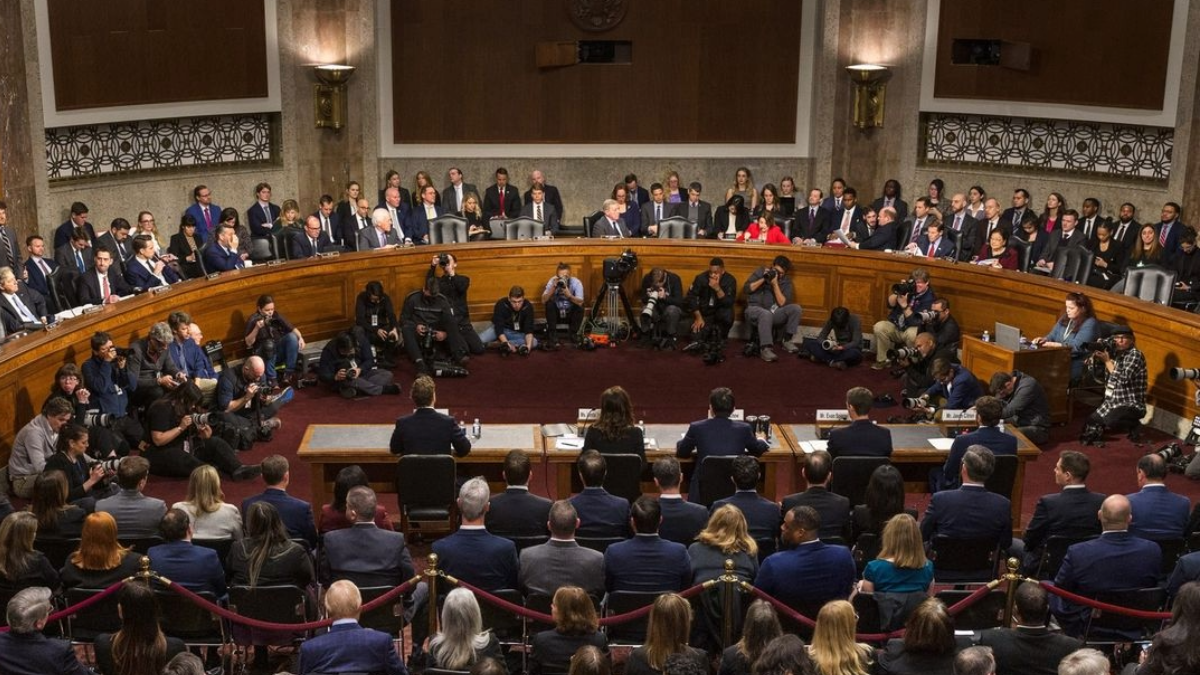
Step 8: Judiciary Committee hearing
The committee typically requires nominees to complete lengthy questionnaires and provide documents. Then, many nominees receive a public hearing.
What happens at the hearing
A hearing is part job interview, part constitutional seminar, part political theater. Senators ask about:
- Judicial philosophy (originalism, textualism, living constitutionalism, restraint).
- Prior cases and clients if the nominee was a judge, prosecutor, defense lawyer, or government official.
- Hot-button legal topics (abortion, guns, administrative agencies, religion, voting rules, executive power).
Nominees usually avoid committing to outcomes in future cases. That is not always evasiveness. It is a basic judicial ethic: judges are expected to decide cases based on facts and law presented in court, not on campaign-style promises at a confirmation table.
After the hearing: the vote to report
The committee then votes whether to report the nomination to the full Senate, favorably, unfavorably, or without recommendation. In practice, most nominees who reach this stage are reported, though party-line votes are common in polarized periods.
Step 9: The Senate floor and cloture
Once a nomination reaches the floor, Senate procedure becomes the battleground. The key term is cloture.
Cloture is the mechanism the Senate uses to end debate and move toward a final vote. It matters because unlimited debate is what makes a filibuster possible.
How cloture works for nominations
- A senator files a cloture motion.
- The Senate votes on cloture. If cloture is invoked, debate time is limited and the Senate can proceed toward a final confirmation vote.
- Then the Senate votes on confirmation.
Today, most judicial nominations can be confirmed by a simple majority. The Senate arrived there through a series of rule reinterpretations sometimes called the “nuclear option”, which reduced the effective threshold for ending debate on nominations.
The practical takeaway is this: for lower-court judges, the decisive question is usually not “Can the nominee reach 60 votes?” It is “Does the majority leader have the time and votes to prioritize the nomination?” Time is not abstract here. Post-cloture debate can still consume precious floor hours, and when the Senate’s calendar is crowded, even nominees with the votes can wait.
Step 10: Commission and oaths
After the Senate confirms, the President signs the judge’s commission. The judge then must take the judicial oaths before performing the duties of the office.
Then the work begins. District judges inherit heavy dockets. Circuit judges inherit precedent and the obligation to write opinions that will shape how the law functions in daily life.
Supreme Court vs lower courts
The constitutional mechanics are the same: nomination by the President, confirmation by the Senate.
The differences are mostly procedural and political:
- Timing and intensity. Supreme Court vacancies are rare, and each seat can shift national doctrine. Lower-court vacancies are frequent and often processed in batches.
- National spotlight. Supreme Court nominees face wall-to-wall media coverage and interest-group mobilization. District nominees might only draw local attention unless their record is controversial.
- Committee strategy. Supreme Court hearings are longer, more choreographed, and more politically costly for senators.
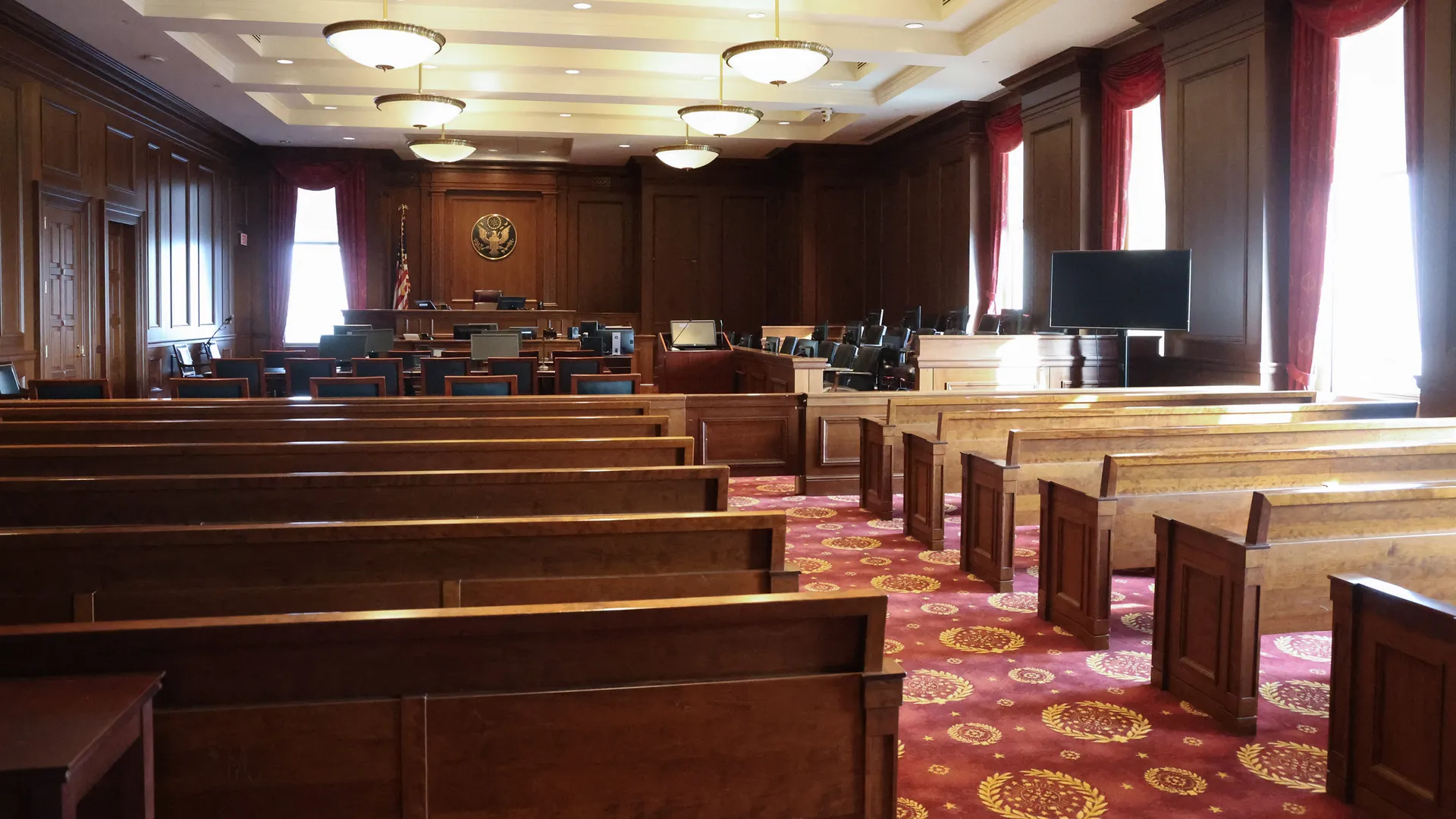
Still, if you want to understand constitutional law as it is experienced by actual litigants, lower courts are where most of it is applied and enforced. The Supreme Court takes a tiny fraction of petitions, largely through discretionary review, and it leaves the vast majority of federal judgments in place.
Why it is a flashpoint
Lower-court confirmations used to be more routine, not because judges were apolitical, but because both parties treated many seats as professional appointments rather than ideological prizes.
That bargain eroded for a simple reason: the lower courts now resolve more of the nation’s most contested questions, especially as Congress legislates less clearly and agencies regulate more broadly. When major policy disputes end up in court, the identity of the judge stops feeling procedural and starts feeling decisive.
Whether that is healthy depends on what you think courts are for. But the incentives are clear. If politics flows into litigation, politics will flow into judicial selection.
Sidebar: Non-Article III tribunals
Not every federal adjudicator is an Article III judge. Congress has created a range of non-Article III tribunals and judges whose authority and protections look different.
What makes them different
- No life tenure. Many serve fixed terms.
- Different appointment mechanisms. Some are appointed by the President and confirmed by the Senate; others are appointed through agency or judicial branch processes.
- Different constitutional foundation. These bodies are typically justified under Congress’s Article I powers or other structural authorities, not Article III.
Common examples
- U.S. Bankruptcy Judges, who are judicial officers of the district courts and generally serve 14-year terms, appointed by the U.S. court of appeals for the circuit in which the district sits.
- U.S. Magistrate Judges, who assist district courts and are appointed by district judges, typically for renewable terms of eight years (full-time) or four years (part-time).
- Administrative Law Judges (ALJs), who conduct hearings inside federal agencies under statutory schemes and executive-branch rules.
These judges can wield enormous practical power, especially in immigration, benefits, labor, securities, and regulatory enforcement. But their independence and constitutional status are different by design, and they often operate under tighter supervision, different removal protections, and different review pathways.
Quick recap
- Vacancy opens (or is anticipated).
- White House selects a nominee, often with heavy input from home-state senators and DOJ.
- Vetting includes FBI checks, disclosures, and record review.
- Outside scrutiny shapes the narrative and the hearing record.
- ABA rating may be sought and cited.
- Nomination is sent to the Senate and referred to Judiciary.
- Blue slips may accelerate or block progress depending on Senate practice.
- Judiciary hearing and committee vote to report.
- Floor action includes cloture to limit debate.
- Confirmation vote, then commission and oaths before the judge takes the bench.
If you remember one thing, remember this: Supreme Court confirmations are the constitutional drama you see. Lower-court confirmations are the constitutional infrastructure you live with.