
The Supreme Court issued a one-sentence emergency order that ends Virginia Democrats’ bid to revive voter-approved redistricting changes. The practical effect is straightforward: the 2021 congressional map stays in place, maintaining a narrow GOP edge.
The justices offered no explanation and no vote count, and there was no noted dissent. For a case with significant political consequences, the Court’s message was procedural and terse.
Join the Discussion
What the Court did
The Supreme Court declined an emergency request from Virginia Democratic lawmakers seeking to restore redistricting changes approved by voters. That request would have put different lines in place for the state’s congressional districts.
By turning down the request, the Court leaves intact a Virginia Supreme Court decision that voided the referendum as improperly placed on the ballot under the state constitution. Virginia’s high court called the referendum “null and void” in a 4-3 ruling.
What stays in place
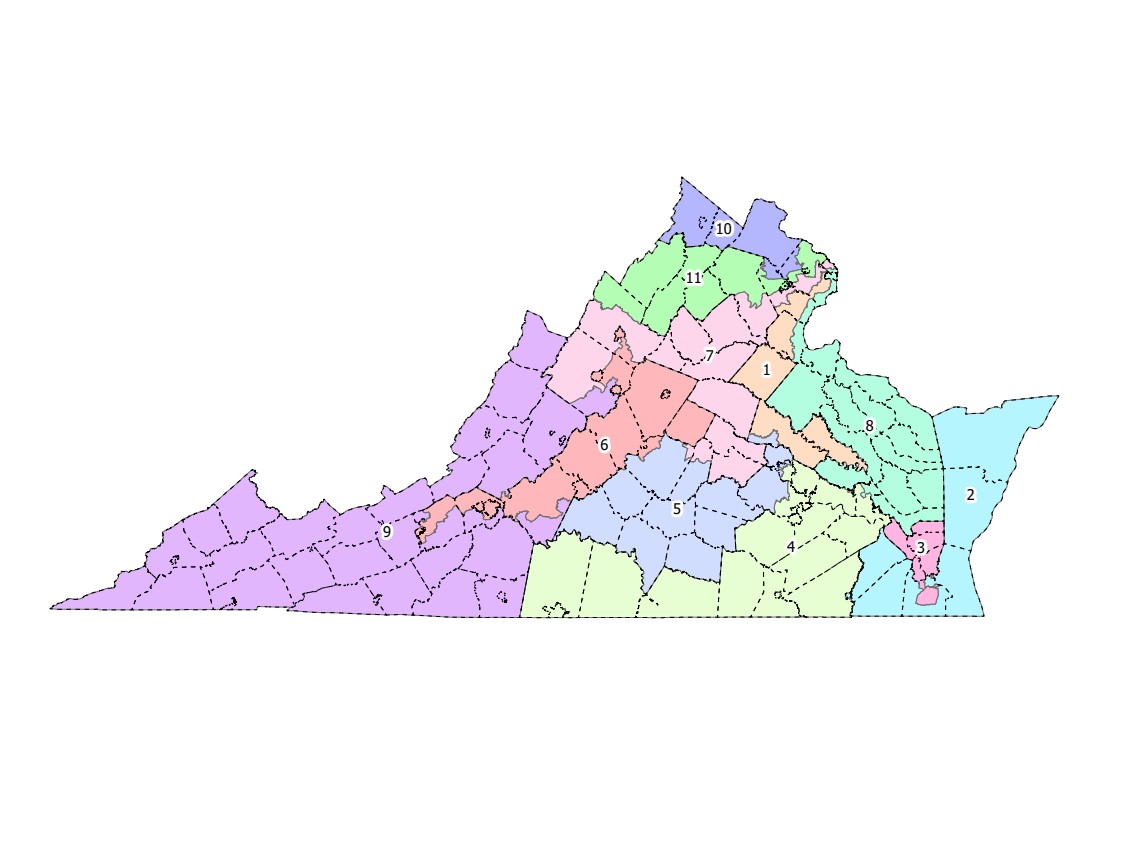
The ruling restores and preserves the 2021 map, which currently produces six Democratic and five Republican seats.
Democrats argued the voter-approved approach could have yielded the party as many as four additional House seats. That potential late-cycle boost is now off the table.
Why the order matters
Emergency requests often come down to timing. A map change close to an election can ripple through candidate plans, campaign spending, and voter expectations. The Court’s refusal to intervene means election preparations proceed under the existing lines.
It is also a reminder of how much modern election law can hinge on procedure. Here, the core issue was not a fresh rewrite from Washington, but whether a state referendum was placed on the ballot in a way that complied with the state constitution.
What officials said
Virginia Attorney General Jay Jones criticized the Supreme Court’s decision later Friday, calling it another example of what he described as a national attack on voting rights and the rule of law.
“Let's be clear about what is happening. Donald Trump, Republican state legislatures, and conservative courts are systematically and unabashedly tilting power away from the people for Trump's political gain,” Jones said in a statement.
Virginia Governor Abigail Spanberger also condemned the outcome, writing in a social media post that both the Supreme Court and Virginia’s high court had chosen “to nullify an election and the votes of more than three million Virginians.”
The bigger redistricting fight
The Virginia decision lands amid a broader, high-stakes redistricting battle in which Republicans have recently gained an edge. That has been aided by mid-decade map rewrites in GOP-led states and a Supreme Court ruling last month that weakened the Voting Rights Act.
Analysts say the cumulative effect could give Republicans roughly a dozen extra seats in November.
A calm takeaway
If you are trying to make sense of what changed, focus on the concrete outcome: the Supreme Court did not revive the voter-approved map, so Virginia’s 2021 lines remain in force for now, along with their current 6-5 split.