
America runs elections the way it runs a lot of things: locally, inconsistently, and with more rules than most voters realize until the rule hits them. One state can send a Senator to Washington with a simple plurality. Another can send you back to the polls a month later for a runoff.
A “runoff” is one of those rules. It sounds simple, and it is, at least in concept. If nobody wins outright, you vote again. But in practice, the United States uses several different systems that people casually call “runoffs,” and they do different things for different reasons.
Join the Discussion
What is a runoff election?
A runoff election is a follow-up election held after an earlier election when the rules require a higher threshold to win than the top finisher achieved.
Most commonly, that threshold is a majority, meaning more than 50 percent of the vote (often defined as a majority of valid votes cast). If no candidate clears that bar, the election “runs off” to a second round, usually featuring the top two finishers from the first round.
The basic runoff logic
- Round 1: Multiple candidates compete.
- No one reaches the required threshold: No winner is declared.
- Round 2: Voters choose between a smaller field, often the top two candidates.
- Winner: The second election produces a final winner, typically by majority. With two candidates, a majority is effectively guaranteed (unless unusual rules about blank ballots or write-ins come into play).
This is why runoffs are often described as a way to ensure the winner has broader support. But they also have tradeoffs, especially turnout and cost.
A quick example
Imagine a mayoral race with three candidates:
- Candidate A: 41%
- Candidate B: 35%
- Candidate C: 24%
Under a simple plurality rule, Candidate A wins. Under a majority rule, nobody wins yet. In the runoff, C is eliminated and voters make a head-to-head choice between A and B. The point is not that the runoff “fixes” everything. It is that it forces the final decision into a two-person contest.
Traditional runoffs vs. top-two
In U.S. election talk, “runoff” can mean two related but distinct structures:
1) Traditional runoff
This is the classic scenario. The first election is the general election in November (or the regularly scheduled municipal election date). If no one hits the required threshold, the jurisdiction holds a separate runoff election weeks later.
This structure shows up most often in state and local elections, and in some states for party primaries (more on that below).
2) Top-two elections
A top-two system is different. It is not a runoff after the general election. Instead, it changes what the primary is.
- All candidates run in a single first round (often labeled a primary), typically with all voters receiving the same ballot.
- The top two vote-getters advance to the general election, even if they are from the same party.
- The general election becomes, in effect, a built-in runoff-like round, but it happens on the normal general election date.
Top-two systems are often sold as “more moderate” or “more competitive,” because candidates must appeal to a broader electorate to finish in the top two. Critics argue they can reduce choices in November, especially in heavily one-party areas.
Where runoffs are used
There is no federal constitutional requirement for runoffs in most elections. The Constitution leaves most election administration details to the states, with Congress and federal law layering in rules for federal elections.
That is why runoff usage is a patchwork.
Runoffs in federal elections
At the federal level, the most famous runoff rule involves the U.S. Senate in some states.
- Georgia: If no Senate candidate receives a majority, Georgia law requires a runoff.
- Louisiana: Uses a “nonpartisan blanket primary” model in which all candidates run on one ballot, and if no one wins a majority, the top two advance to a later runoff. This is often mistaken for a top-two primary, but it is its own structure.
For the U.S. House, most states use plurality elections, meaning the top finisher wins in November without a runoff. But states can and do use runoff rules for some primaries for House seats.
Runoffs in party primaries
Some states require a candidate to win a majority in a party primary. If no candidate gets that majority, the state holds a primary runoff between the top two candidates. Texas is a prominent example of a state with primary runoffs for certain races.
Primary runoffs are often justified as a way to ensure the party nominee reflects the choice of more than a mere plurality of party voters.
Runoffs in state and local elections
Runoffs are widespread in mayoral races, city council elections, and some state executive or judicial contests. Large cities sometimes have their own runoff rules written into charters.
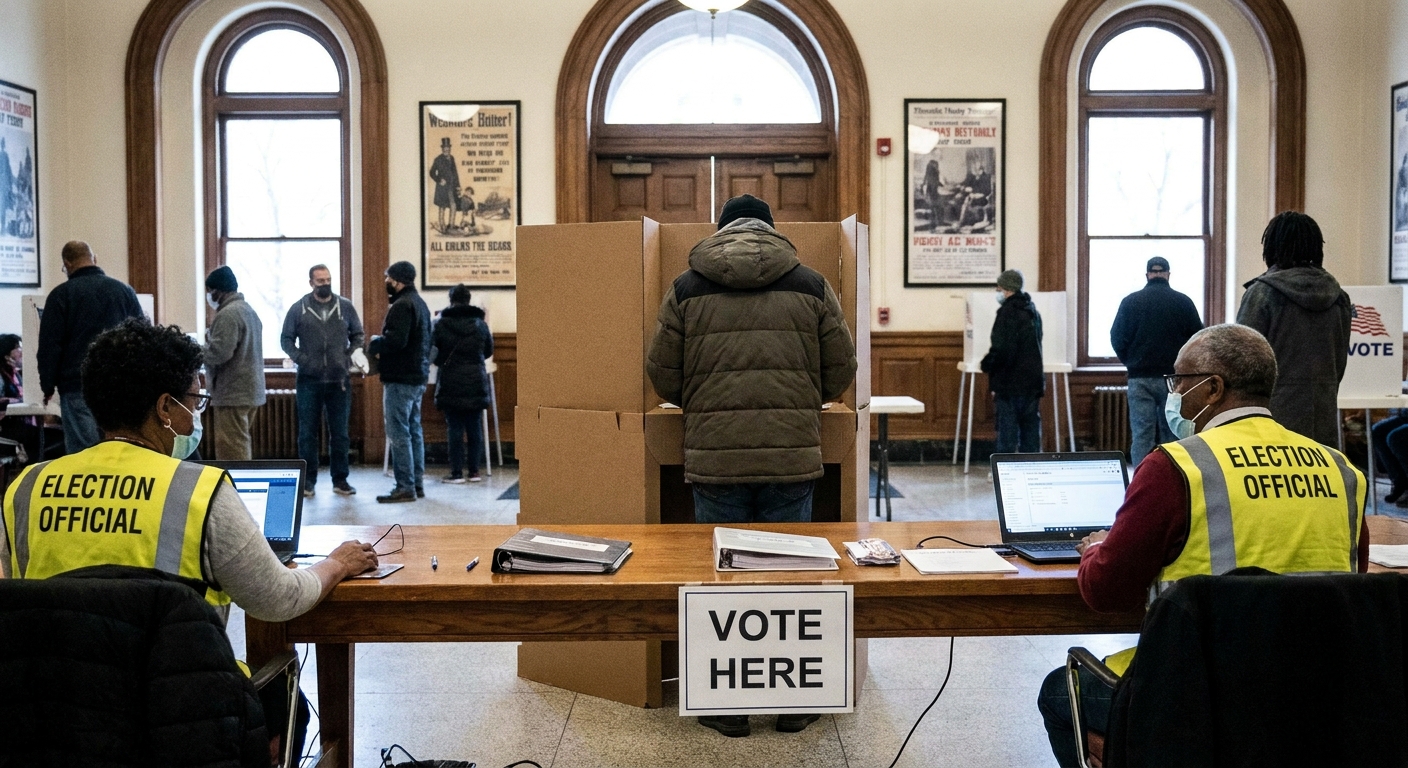
If you have ever wondered why your city election was in November and then suddenly there was another election in December, you have met the runoff.
Timing rules
Timing varies by state and locality, but it is always a balancing act between speed and logistics.
Common scheduling patterns
- About 3 to 5 weeks later: Common for high-profile state elections that want a fast final result. Georgia’s federal runoffs have typically been scheduled about four weeks after the general election.
- About 4 to 9 weeks later: Common for municipal runoffs and jurisdictions that need more time for ballot preparation and voter outreach.
- A fixed date set by law: Some states specify a runoff date relative to the first election.
Why not just hold the runoff immediately? Because election administrators need time to certify first-round results, prepare new ballots, print and distribute them, and comply with absentee and overseas voting timelines.
For federal elections, those timelines are not just best practices. They are shaped by federal requirements for military and overseas voters, including UOCAVA, which can constrain how quickly a runoff can be held if a state wants to ensure ballots are transmitted and returned on time.
But the longer the gap, the more the runoff can become a different electorate. The voters who show up the second time are often not the same voters who showed up the first time. That fact is central to the debate over whether runoffs “increase legitimacy” or simply “reshape the electorate.”
Why runoffs exist
Runoffs are not random bureaucratic cruelty. They are a response to a basic mathematical problem: in a field of three, four, or eight candidates, it is easy to win with less than 50 percent.
Majority support
The strongest argument for runoffs is legitimacy. A mayor elected with 28 percent of the vote can feel like an accident of vote-splitting. A runoff forces a final head-to-head choice that produces a clearer mandate.
Preventing spoiler outcomes
Runoffs are also meant to reduce spoiler dynamics where two similar candidates divide the electorate and allow a third candidate to win with a plurality.
Party control in primaries
In primary elections, runoff rules can be a way for parties to ensure their nominee has majority support among participating voters. In practice, primary runoffs can also become intense internal party contests, especially when interest groups rally around one of the remaining candidates.
Politics and incentives
Runoffs also persist for less lofty reasons. Critics argue they can advantage incumbents, party establishments, or whichever coalition is best positioned to re-mobilize voters for a lower-turnout second round. Supporters respond that the second round is still a fair test: whoever organizes, persuades, and turns out voters wins.
Runoffs and the Constitution
The U.S. Constitution does not require states to use runoffs for most offices. It also does not forbid them.
The Constitution’s core election architecture is broader:
- Article I, Section 4 gives states the power to set the “Times, Places and Manner” of congressional elections, subject to alteration by Congress.
- Seventeenth Amendment requires direct election of Senators but does not specify whether a plurality is enough.
- Article II and the Twelfth Amendment set the Electoral College framework for the presidency, which is its own majority system with its own runoff-like fail-safe in the House if no candidate wins an electoral majority.
Most runoff rules are creatures of state constitutions, state statutes, and local charters.
Top-two systems
Top-two systems reshape the election calendar by making the first round a winnowing election and the second round the general election.
Where top-two is used
Top-two systems are used most prominently in California and Washington for many state and federal offices. Details vary by state, including how parties are listed on the ballot and how candidates qualify.
One common source of confusion: Louisiana is not typically described as “top-two.” It uses a nonpartisan blanket primary with a possible later runoff, which looks similar from a distance but runs on a different calendar and set of rules.
Arguments for top-two
- Broader appeal: Candidates may need votes beyond a narrow party base to reach the top two.
- More competition in one-party areas: Two candidates from the same party can face each other in November.
- Fewer separate elections: There is no extra runoff date with separate turnout dynamics.
Arguments against top-two
- Fewer choices in November: Third parties and independents can be filtered out before the highest-turnout election.
- Strategic voting pressure: Voters may feel forced to pick a “viable” candidate early.
- Party identity confusion: Depending on ballot rules, top-two can weaken parties’ ability to select nominees.
Runoffs vs. ranked-choice voting
When people complain about runoffs, they often point to a simple fact: runoffs require two elections. Two elections cost more, take longer, and usually produce lower turnout in the second round.
Ranked-choice voting (RCV), sometimes called an instant runoff, is designed to capture the same idea without requiring a separate election.
Traditional runoff
- You vote once in Round 1.
- If needed, you return to vote again in Round 2.
- Turnout often drops in Round 2.
Ranked-choice “instant runoff”
- You rank candidates on one ballot.
- If no one has a majority, the last-place candidate is eliminated and votes transfer based on next rankings.
- The process repeats until someone reaches a majority.
RCV is not universally adopted, and it brings its own administrative learning curve. Counting rules can also vary by jurisdiction (including how eliminations are handled). And while RCV often rewards broadly acceptable candidates, it does not guarantee the winner would beat every other candidate head-to-head in a hypothetical matchup. Still, it exists in the same reform conversation because it tries to answer the same question: how do you pick a majority-supported winner when more than two candidates compete?
Turnout and cost
Runoffs tend to reduce turnout in the second round, especially when:
- the runoff falls on an unusual date,
- the election is local and receives limited media coverage,
- voters feel fatigue after a long campaign,
- weather or holidays interfere.
That turnout drop is not just a civic trivia fact. It changes who has power. A candidate can place second in a crowded field, then win a runoff by mobilizing a smaller but more consistent electorate.
There is also the blunt administrative reality: a second election means more staffing, more ballots, more polling place logistics, and more spending by election offices. Supporters argue the cost is the price of a clearer majority decision. Critics argue it is an expensive way to re-run what could be handled with a different voting method.
Common questions
Is a runoff the same as a recount?
No. A recount is re-tallying votes from the same election. A runoff is a new election.
Is a runoff the same as a special election?
No. A special election fills a vacancy or handles an unusual election event outside the normal schedule. A runoff is a second round triggered by the rules of an earlier election.
Can a runoff include more than two candidates?
Usually it is the top two, but some jurisdictions have different thresholds or rules. Local charters can be surprisingly creative.
Why not just use plurality winners everywhere?
Plurality is simpler and faster, but it can produce winners opposed by a majority of voters in fragmented fields. Runoffs are one attempt to fix that, even if they introduce new problems.
Do runoffs affect federal offices?
Yes, in certain states and contexts. The biggest examples are Senate runoffs in states that require a majority to win, Louisiana’s majority-or-runoff system, and primary runoffs for party nominations.
What to watch for
If you want to know whether a runoff could happen where you live, look for three things:
- The winning threshold: Is it a plurality or a majority requirement?
- The type of election: Does the rule apply to primaries, generals, or both?
- The calendar: If a runoff is required, when is it scheduled and how are absentee and overseas ballots handled?
The constitutional story here is not that the Founders gave us runoffs. It is that the Constitution gave states broad authority to design elections, and states have been experimenting, fighting, and revising ever since.
Runoffs are one of those experiments that never quite stops being debated. They promise majority rule, but they test how much effort a democracy can reasonably ask of voters to get there.