
On election night, you are not watching “the results.” You are watching unofficial tallies roll in. Networks project winners. Candidates concede. Social media declares victory. But none of that is the legal finish line.
The legal finish line is a quieter sequence: local officials reconcile records, fix human mistakes, confirm eligible ballots, run audits, and then a state authority certifies the totals. Only then does “who won” turn from a headline into a government fact.
This article explains, in plain English, how the process works in the United States, why it varies by state, when recounts and audits kick in, who pays, and what changes in presidential years under the Electoral Count Act.
Join the Discussion
Election night is not certification
“Election results” are often treated like a single event. Legally, they are a pipeline. Here is the basic sequence you see in most states, with timing that can vary:
- Unofficial reporting: precincts and central count facilities report preliminary totals as ballots are processed.
- Canvassing: officials verify the paperwork and reconcile the numbers.
- Audits (often): jurisdictions check tabulation accuracy, sometimes before certification and sometimes after, depending on state law.
- Recounts (if triggered or requested): votes are counted again under rules set by state law, usually before final certification for that contest.
- Certification: a state or local authority signs off on final totals and winners.
What makes this confusing is that states use the same words differently. “Canvass” can mean a local board meeting in one place and a statewide legal process in another. “Audit” can mean a serious statistical test or a basic review of logs. The structure is consistent, but the details are not.
Canvassing: the quiet work that makes numbers add up
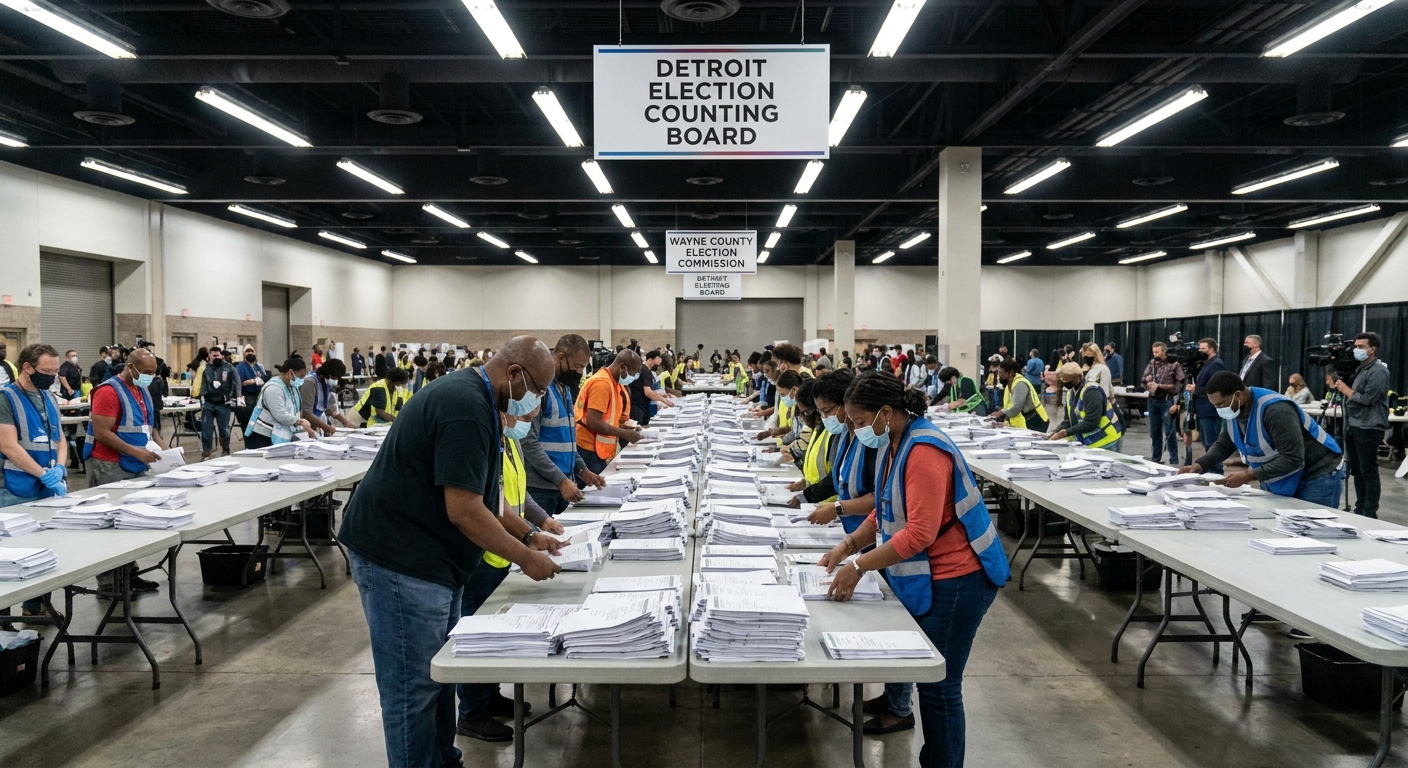
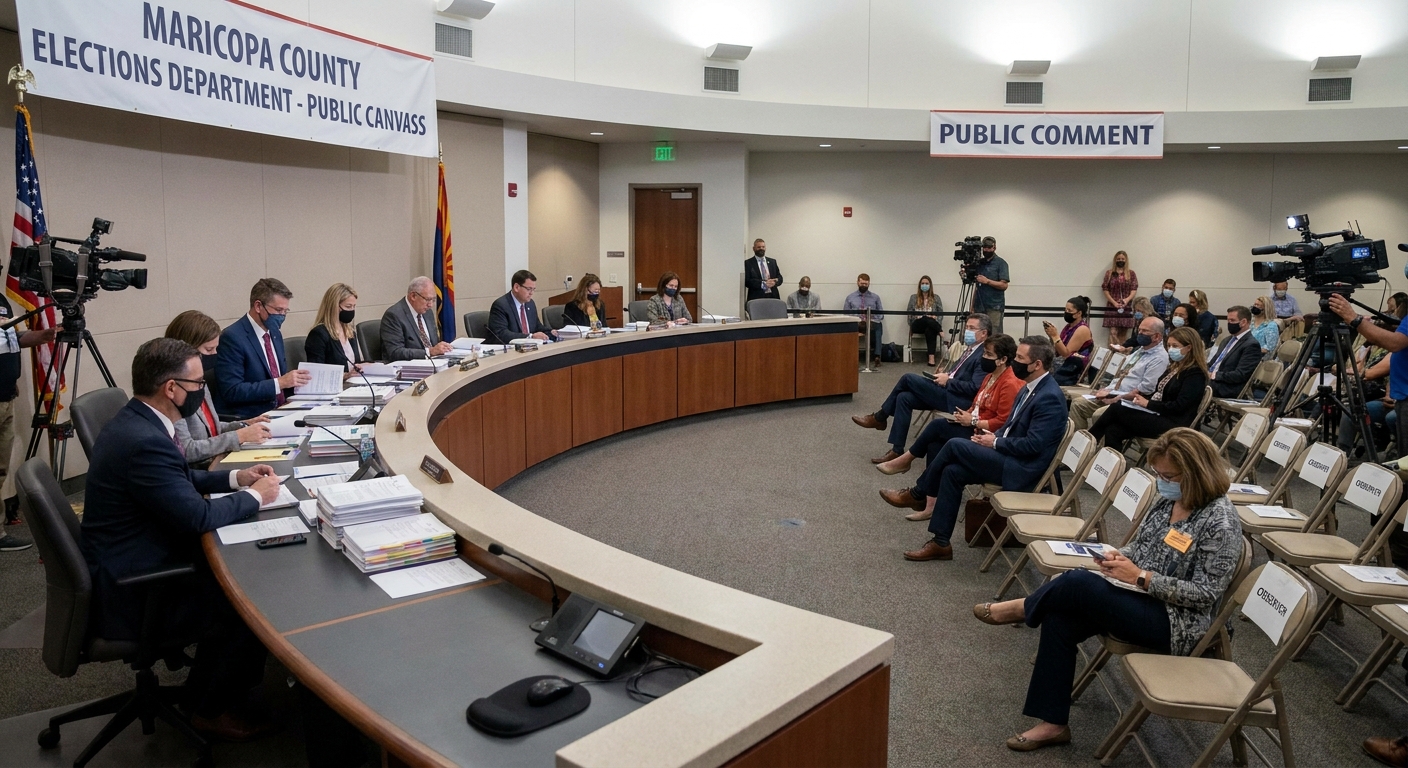
Canvassing is the part where election administrators prove that the vote totals came from real ballots, processed under the rules, with reconciled records. It is less glamorous than a recount, but more common and, in normal elections, more important.
What canvassing usually checks
- Ballot accounting: how many ballots were issued, cast, spoiled, and counted. The goal is to reconcile ballots with voter check-in records and tabulator totals.
- Chain of custody logs: documented transfers and storage of ballots and memory devices.
- Provisional ballots: ballots cast when eligibility could not be confirmed at the polling place, then reviewed later.
- Mail ballot verification: signature verification, cure processes, and deadlines.
- Duplicated ballots: when damaged or unreadable ballots are copied to be machine-countable, with bipartisan procedures where required.
- Error correction: obvious reporting mistakes like transposed numbers, precinct totals assigned to the wrong contest, or scanner batches uploaded twice.
Canvassing is also where you see the most routine “post-election movement.” Late-arriving mail ballots that are timely under state law, cured signatures, and validated provisional ballots can change margins. That is not a red flag. It is the system finishing the job.
State-variation callout: mail ballot deadlines
Some states require mail ballots to be received by Election Day. Others accept ballots postmarked by Election Day and received later. That single rule can create very different election-night optics.
Certification: who makes it official
Certification is the legal act of declaring final totals and naming winners. The certifying authority depends on the office and the state. Common patterns include:
- County or local canvass boards certify local results first.
- A state canvassing board or secretary of state compiles and certifies statewide results.
- Legislative chambers sometimes certify their own members, consistent with each chamber’s constitutional power to judge elections and qualifications.
Certification is typically treated as a ministerial duty: officials verify that required steps were completed and then sign off on the totals. It is not supposed to be a discretionary “veto” over the outcome. If officials claim statutory preconditions were not met, the usual mechanism for resolving that dispute is litigation, not an indefinite refusal to certify.
Audits: checking the count after the count
Audits are quality control. They answer a narrow question: did the tabulation system produce the correct outcome from the ballots that were legally cast?
Because election administration is mostly state and local, audits range from rigorous to minimal. The strongest modern approach is the risk-limiting audit, often called an RLA. In practice, strong tabulation audits usually depend on a paper record, such as hand-marked paper ballots or a voter-verified paper audit trail (VVPAT), because you need something physical to compare against the machine totals.
Risk-limiting audits, in plain English
An RLA is a statistical test that uses random sampling of paper ballots to confirm whether the reported outcome is very likely correct. The “risk limit” is the maximum chance the audit would fail to detect a wrong outcome.
Think of it like a smoke detector. It does not prove there was never smoke. It is designed to make the chance of missing a real fire very small. If the samples show discrepancies large enough to threaten the outcome, the audit expands and can escalate toward a full hand count.
Other common audit types
- Ballot-polling audits: randomly sample ballots and infer the outcome statistically, without comparing to specific machine cast vote records.
- Comparison audits: compare hand interpretation of sampled ballots to the corresponding machine records.
- Procedural audits: review logs, seals, access controls, and chain of custody to ensure processes were followed.
State-variation callout: not every “audit” checks what people think
Some state laws use the word “audit” for a routine re-tabulation of a small set of precincts. Others require an RLA statewide for certain contests. “Audit” is not a standardized guarantee unless you know which kind your state uses.
One key limit: tabulation audits generally do not revisit individual voter eligibility determinations already made during canvassing. However, procedural audit findings (for example, chain of custody gaps) can become inputs to later disputes or litigation.
Recounts: when do votes get counted again
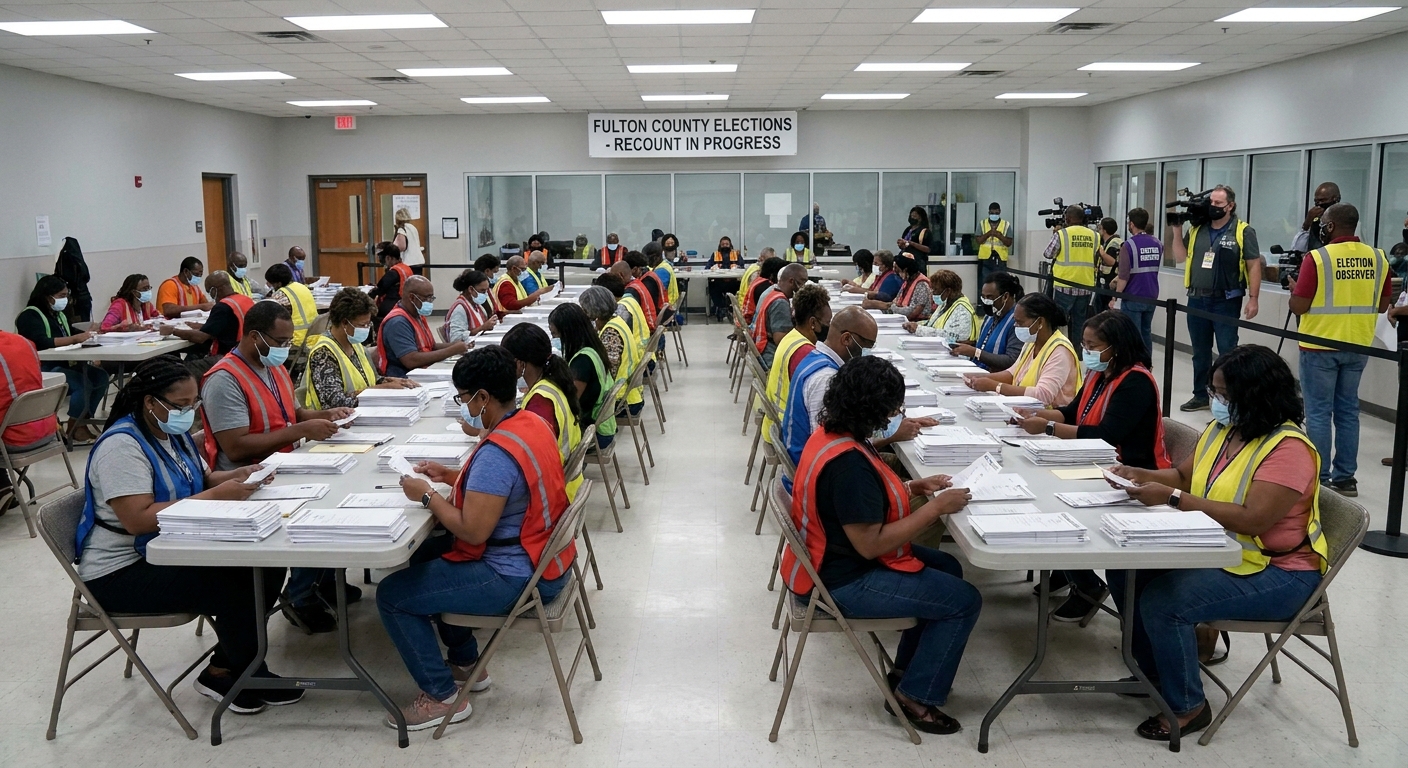
A recount is a second count of votes in a contest, run under defined procedures and supervision. Recounts can be automatic, requested, or sometimes ordered by a court in an election contest.
Common recount triggers
- Automatic recounts: triggered when the margin is within a threshold, often a percentage or a fixed number of votes.
- Candidate-requested recounts: allowed when a candidate asks by a deadline and meets statutory conditions.
- Discretionary recount authority: in some states, a canvassing body can order additional counting if discrepancies appear.
Who pays for a recount
This is one of the most misunderstood parts of recount law. A common framework is:
- If the recount is automatic, the government pays.
- If the recount is requested, the requesting candidate may have to pay upfront, often as a deposit.
- If the recount changes the outcome or changes the margin by a certain amount, the state may reimburse the requester.
What a recount actually does
Depending on the state, a recount may re-examine:
- Voter marks on paper ballots, including ambiguous marks under the state’s standards.
- Scanner interpretations and any adjudication logs where machines flagged ballots for review.
- Batch totals and, in some jurisdictions, compilation steps to ensure precinct totals were correctly carried into the contest totals.
Recounts usually do not open the door to adding new categories of ballots that were already rejected under state law, unless a court orders a different legal interpretation in a contest.
State-variation callout: machine recount vs hand recount
Some states treat a recount as a second machine tabulation. Others default to hand counting, at least for certain contests. Close margins can hinge on how the state resolves borderline voter marks, and those standards are state law, not federal law.
Contests and courts: when the fight becomes legal
Audits and recounts are administrative processes. Election contests are lawsuits or formal challenges that ask a court or designated tribunal to intervene.
What election contests usually argue
- Ballot access and eligibility disputes: whether certain ballots should have been counted or rejected under the statute.
- Procedure violations: whether officials failed to follow required steps and whether that failure could have affected the outcome.
- Equal protection claims: whether similar voters were treated differently in a way that is constitutionally significant.
- Deadlines and cure processes: whether voters were given required notice and opportunity to correct defects.
Courts are typically cautious. They look for concrete statutory violations, measurable impact, and clear remedies. “The election felt wrong” is not a cause of action. Election law is technical on purpose, because the remedy for error can be extraordinary, like altering totals or ordering a new election.
Where federal law shows up
Most election rules come from state statutes, but federal constitutional and statutory claims arise in predictable places: equal protection, due process, the Voting Rights Act, and federal protections for military and overseas voters. Federal courts can also become involved when a presidential election dispute creates time pressure that collides with state certification deadlines.
Presidential years: certification and the Electoral Count Act
In presidential elections, certification is not just about naming a winner of a state contest. It is about producing a lawful slate of electors for the Electoral College.
Here is the simplified chain:
- Voters choose a presidential ticket, which effectively chooses a slate of electors under state law.
- The state completes canvassing, and any recounts required by law. (Audits may occur before or after certification depending on the state.)
- The state issues official documentation identifying the appointed electors, commonly called the Certificate of Ascertainment.
- Electors meet and cast electoral votes.
- Congress counts electoral votes in a joint session under federal law.
What the Electoral Count Act is trying to prevent
For much of U.S. history, the Electoral Count Act of 1887 governed how Congress handles disputes over electoral votes. After the 2020 election, Congress updated that framework through the Electoral Count Reform Act of 2022, which modernized key procedures.
At a high level, the modernized law is designed to reduce ambiguity at the moment where ambiguity is most dangerous: when Congress is asked to decide whether to count a state’s electoral votes.
One or two changes that matter in practice
- Higher bar for objections in Congress: objections now require more member support to be considered, which is intended to discourage performative challenges.
- Clearer “one state, one slate” framework with a court pathway: the reforms aim to reduce confusion over competing electoral submissions and emphasize judicial resolution of certain disputes on an expedited timeline.
Key practical ideas for readers
- States run elections, but federal law runs the count. States administer the vote and certify outcomes. Congress counts electoral votes under the Electoral Count Act framework.
- Certification is the bridge. If the state has not finished its processes, it may not be able to provide clean, authoritative documentation of its electors.
- Courts are positioned as the decider for certain disputes. One aim of the 2022 reforms was to channel disagreements toward judicial resolution rather than improvisation inside Congress.
If you want the conceptual takeaway: presidential certification is not only about “who won the state.” It is about producing a legally defensible record that can survive the transition from state administration to federal counting.
Why totals can change without anything suspicious
Close elections are where the public learns that elections are not a single tally. They are layers of rules applied over time. Common, legitimate reasons totals move after Election Day include:
- Late-reported precincts or batches due to logistics or equipment issues.
- Mail ballots processed after Election Day where state law allows receipt later.
- Provisional ballots accepted after eligibility review.
- Signature cures or missing-information cures where state law provides notice and time to fix defects.
- Correction of clerical reporting errors during canvassing.
The public tends to treat “changed totals” as evidence of manipulation. Administrators treat changed totals as evidence that the pipeline is working: incomplete inputs are being finalized under documented procedures.
What to watch in your state
You can learn a lot by checking a few simple points for your state and county:
- Certification deadlines: when counties certify and when the state certifies. (In many states this takes days to weeks, because curing, provisional review, and overseas ballot timelines are built into the calendar.)
- Mail ballot rules: received-by vs postmarked-by, and the cure process for signature issues.
- Recount thresholds: automatic trigger margins and the deadline for requesting a recount.
- Who pays: whether a candidate must post a bond or deposit for a requested recount.
- Audit type: whether the state uses risk-limiting audits and whether audits are statewide or selective.
If you do nothing else, do this: separate administrative uncertainty from legal uncertainty. Administrative uncertainty is “ballots still being processed.” Legal uncertainty is “a court might change what counts.” Only the second category can rewrite the rules after the count.
The constitutional thread
The Constitution does not contain a step-by-step manual for recounts or audits. It does something more American: it divides responsibility.
- States largely administer elections, including recounts and certification, under their own laws.
- Federal constitutional constraints, like equal protection and due process, limit how states can treat voters and count ballots.
- In presidential elections, federal law governs the counting of electoral votes in Congress, with the Electoral Count Act providing the rules of the road.
That division is why election disputes can feel like they are happening in multiple theaters at once. They are. A close statewide margin can be a county canvass issue, a state statutory issue, a state court issue, and, in a presidential year, part of a federal timeline that ends in Congress.
And that is the point of the system. It is not built for speed. It is built to turn millions of individual choices into a result sturdy enough to survive losing candidates, skeptical voters, and the next peaceful transfer of power.